Thermal Optics for Beginners
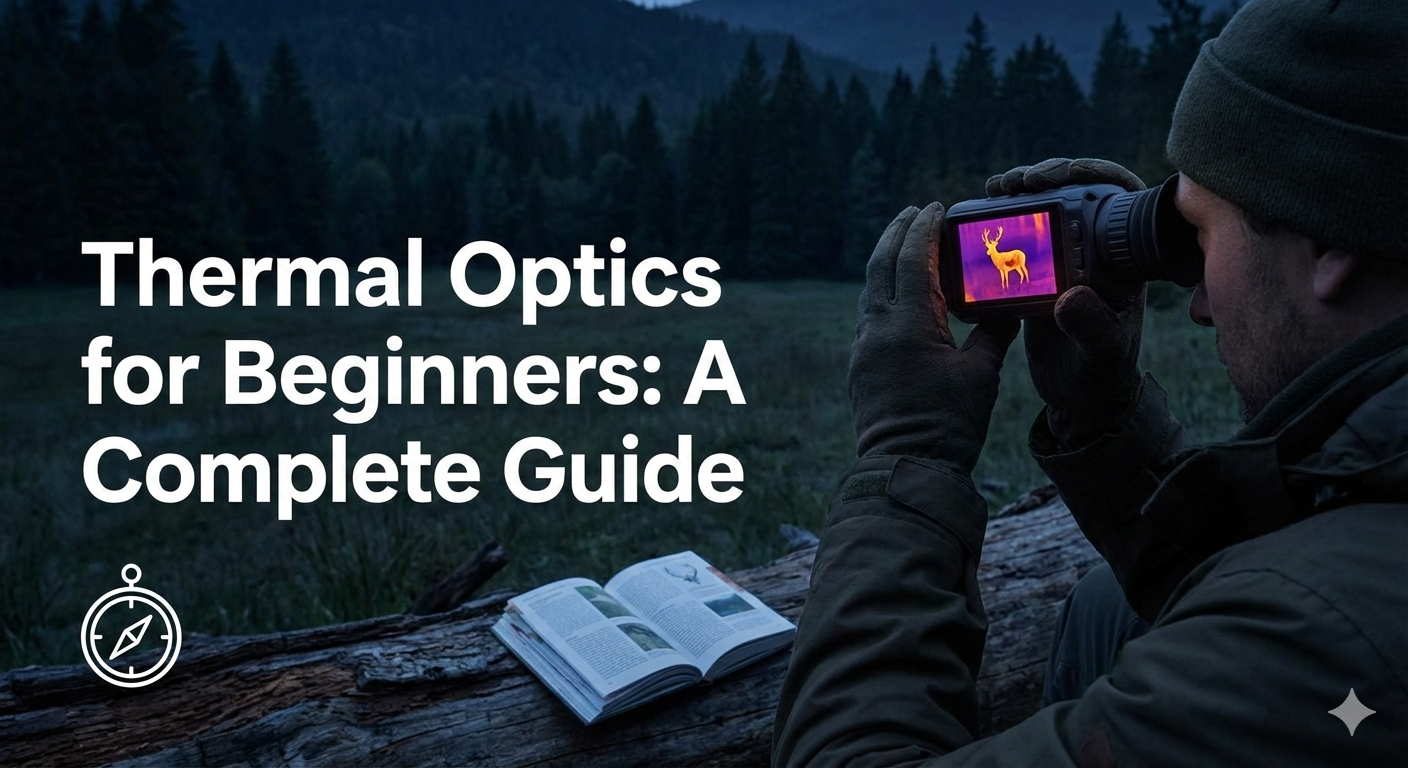
Thermal optics help you see heat differences, not visible light. Instead of showing color and detail the way a normal scope or binocular does, a thermal device creates an image from infrared energy. For beginners, the key idea is simple: thermal can help detect warm objects in darkness, brush, fog, or uneven light, but it does not identify everything perfectly and it does not replace safe target identification.
This guide explains thermal optics in plain language: what they do, where they help, where they struggle, and what beginners should understand before using one for hunting, observation, or range work. It is not a product roundup and it does not include affiliate links.
Table of Contents
What Thermal Optics Do
Thermal optics detect infrared radiation and translate heat differences into a visible image. Warm animals, people, vehicles, rocks, trees, and ground surfaces can appear differently depending on temperature, distance, weather, and the device settings.
The general technology is related to thermography, where temperature differences are turned into an image. In the hunting and shooting world, thermal optics are usually used for detection, scanning, and sometimes aiming where legal and appropriate.
Thermal vs. Night Vision
Thermal Imaging
Thermal imaging works from heat contrast. It can be useful in total darkness because it does not need visible light the same way traditional night vision does. It can also help spot warm objects against a cooler background.
Night Vision
Night vision amplifies available light or uses an infrared illuminator. It often shows more natural scene detail than thermal, but it may struggle more in complete darkness without illumination. It can also be affected by bright lights and reflective surfaces.
Which Is Better?
Neither is automatically better. Thermal is often stronger for detection, while night vision can be better for detail and navigation. Many serious users think of them as different tools rather than direct replacements.
Main Types of Thermal Optics
Thermal Monoculars
A thermal monocular is a handheld scanner. It is often the simplest beginner-friendly thermal tool because it can be used for observation without pointing a firearm at anything. For many hunters, scanning with a handheld device is safer and more practical than using a weapon-mounted optic for every look.
Thermal Scopes
A thermal scope is designed for aiming where legal. It must be mounted, zeroed, and used according to the firearm, optic, and local hunting laws. Beginners should not treat a thermal scope as a shortcut around target identification or backstop awareness.
Clip-On Thermal Devices
A clip-on thermal device mounts in front of another optic. These can be useful, but setup is more complex. Alignment, rail space, zero shift, optical compatibility, and weight all matter. For beginners, clip-ons usually require more guidance than handheld scanners.
Specs Beginners Should Understand
- Sensor resolution: higher resolution usually means more detail, but lens quality and processing also matter.
- Refresh rate: a smoother image can help when scanning or tracking movement.
- Detection range: seeing heat at distance is not the same as identifying the target safely.
- Base magnification: too much starting magnification can make scanning harder.
- Field of view: wider field of view helps beginners find and follow objects.
- Battery life: thermal devices use power quickly, especially in cold weather.
- Weather rating: hunting and outdoor use demand realistic durability and water resistance.
Do not judge thermal optics by one big number. A balanced device with usable field of view, clear controls, good battery life, and realistic range can be more helpful than a high-spec device that is heavy, confusing, or poorly matched to your use case.
Where Thermal Optics Help
Thermal optics can help with detection in low light, locating animals against cooler backgrounds, scanning fields, recovering awareness after sunset where legal, and checking areas where visible-light optics struggle. They can also be useful for property observation, wildlife viewing, and some range-support tasks.
The best use is usually detection first, decision second. Seeing a heat signature should start a careful identification process, not end it.
Thermal Optics Limitations
Thermal does not show the world the way your eyes do. It may not show antlers clearly, may flatten background detail, and may struggle when the environment has similar temperatures. Heavy rain, humidity, warm rocks, recently driven vehicles, sun-heated ground, and thick cover can all make interpretation harder.
Beginners should be especially careful with detection range claims. A device might detect a heat source far away, but detection is not the same as recognition or safe identification. Ethical and legal decisions require more than a glowing shape on a screen.
First-Use Checklist
Before using thermal optics in the field, learn the controls in a safe, non-hunting setting. Adjust the focus, brightness, contrast, color palette, and calibration settings until you understand what each control changes. A beginner who cannot quickly adjust focus or brightness may misread the image when conditions change.
- Charge the battery and carry a legal, safe backup lighting/navigation option.
- Confirm whether the device is handheld, weapon-mounted, or clip-on and use it only as intended.
- Check local hunting rules for species, season, public land, and nighttime use.
- Practice identifying safe backgrounds and known objects before relying on field interpretation.
- Do not use thermal detection alone as final target identification.
Safe and Legal Use
Thermal optics do not change the basic rules of firearm safety. Review safety guidance from sources like the NSSF, keep the muzzle in a safe direction, and never use an optic to “check†something you are not willing and legally allowed to aim at.
Thermal use for hunting varies by state, species, season, public land rules, and time of day. Always check the current wildlife agency rules for your location before using thermal gear in the field. If the law or situation is unclear, do not guess.
FAQ
Can thermal optics show objects behind walls?
No. Consumer thermal optics generally detect surface heat differences. Movie-style “wall vision†is not how normal hunting or observation thermal gear works.
Can thermal optics work in complete darkness?
Yes, thermal optics can work without visible light because they detect heat contrast. Performance still depends on the device, weather, distance, and the temperature contrast in the scene.
Is thermal better than night vision for hunting?
Thermal is often better for detection, while night vision may show more natural detail. The better choice depends on legal use, terrain, species, budget, and how you plan to identify the target safely.
Do beginners need a thermal scope?
Not always. A handheld thermal monocular can be a safer first thermal tool because it lets you scan without aiming a firearm. A thermal scope adds mounting, zeroing, legal, and safety responsibilities.
What is the biggest beginner mistake with thermal optics?
The biggest mistake is treating detection as identification. A heat signature tells you something warm is there. It does not automatically prove species, legality, backstop, or shot safety.
Final Takeaway
Thermal optics are powerful detection tools, but beginners should understand their limits. Choose the type that matches your use, learn the key specs, follow current laws, and treat every heat signature as the start of careful identification. Good thermal use is patient, legal, and safety-first.