Best Antelope Cartridges: Practical Choices for Ethical Hunting
The best antelope cartridge is the one you can shoot accurately from real field positions, that is legal where you hunt, and that pairs with a suitable hunting bullet. Pronghorn and antelope-style open-country hunting often rewards flat trajectory, manageable recoil, and confidence more than raw power. You do not need the biggest cartridge on the shelf; you need a rifle and load you can place well under field conditions.
This guide compares five common cartridge classes hunters often consider for antelope: .243 Winchester, 6.5 Creedmoor, .25-06 Remington, .270 Winchester, and .308 Winchester. It is a selection guide, not a handloading guide, legal guide, or promise of field performance. Always check current state regulations, use safe factory ammunition or manufacturer-published data, and confirm your rifle at the range before hunting.
Table of contents
- Quick Picks
- What Matters in an Antelope Cartridge
- Cartridge Comparison
- .243 Winchester
- 6.5 Creedmoor
- .25-06 Remington
- .270 Winchester
- .308 Winchester
- Reloading Dies for These Cartridges
- Bullet Choice Matters
- Range Practice and Field Positions
- Safety and Regulation Checks
- Frequently Asked Questions
- Final Recommendation
Quick Picks
| Cartridge | Best fit | Why hunters compare it |
|---|---|---|
| .243 Winchester | Low recoil and careful shot placement | Easy to shoot well, especially for recoil-sensitive hunters. |
| 6.5 Creedmoor | Balanced recoil and modern bullet options | Common, accurate, and easy to practice with. |
| .25-06 Remington | Flat-shooting open-country setups | Long-standing pronghorn-style hunting reputation. |
| .270 Winchester | Versatile big-game rifle owners | Useful when one rifle covers deer, antelope, and similar game. |
| .308 Winchester | Hunters who already shoot it well | Widely available and capable when range and bullet choice are sensible. |
What Matters in an Antelope Cartridge
Antelope country is usually open, windy, and unforgiving of rushed shots. A useful cartridge should help you keep the rifle steady, see or manage recoil, and place an appropriate bullet where it belongs. Flat trajectory helps, but it does not replace range confirmation, wind judgment, or restraint when conditions are not right.
The four practical factors are recoil, bullet construction, realistic distance, and ammunition availability. Recoil matters because a cartridge you flinch with is a poor hunting choice even if the ballistics chart looks impressive. Bullet construction matters because a hunting bullet must expand and penetrate appropriately for the game. Distance matters because open country can tempt hunters into shots they have not practiced. Availability matters because the best theoretical cartridge is not helpful if you cannot buy suitable ammunition and practice with it.
For regulation and hunter-safety context, use your state wildlife agency as the final authority. A national starting point is the U.S. Fish and Wildlife Service hunting overview, but season rules, minimum calibers, legal ammunition, tag requirements, and access rules are set at the state level.
Cartridge Comparison
These five options are not ranked from strongest to weakest. They are different answers for different hunters. A new or recoil-sensitive hunter may shoot the .243 Winchester better than a larger cartridge. A western hunter who already owns a .270 Winchester may have no reason to buy a new rifle. A range-focused shooter may prefer the 6.5 Creedmoor because practice ammunition and modern bullet choices are easy to find.
.243 Winchester
The .243 Winchester is the low-recoil choice in this group. It is often considered by smaller-framed hunters, newer hunters, and anyone who values easy practice. Its advantage is shootability: less recoil can make it easier to stay relaxed, press the trigger cleanly, and spot mistakes during practice.
The tradeoff is margin. The .243 needs a suitable hunting bullet and careful shot selection. It is not the cartridge for forcing hard angles, guessing at distance, or stretching beyond a hunter’s practiced range. Used sensibly, it can be a practical antelope option; used casually, it gives less room for error than larger choices.
6.5 Creedmoor
The 6.5 Creedmoor is popular because it balances moderate recoil, useful bullet options, and easy practice. For antelope-style hunting, that balance matters. It is comfortable enough for many hunters to practice with regularly, and the cartridge has broad factory-ammunition support.
It is not magic, and it does not remove the need to confirm your rifle, understand wind, and use a proper hunting bullet. Its real value is that many hunters can shoot it well. If you already own a 6.5 Creedmoor rifle and have a hunting load that groups reliably, it is one of the more practical modern choices.
.25-06 Remington
The .25-06 Remington has a long reputation in open country. Hunters compare it for antelope because it can offer a flat-shooting feel with lighter recoil than many larger big-game cartridges. It appeals to hunters who want a classic pronghorn-style rifle rather than a general-purpose woods rifle.
The main drawback is availability. In many areas, .25-06 ammunition and rifle options may be less common than .243 Winchester, 6.5 Creedmoor, .270 Winchester, or .308 Winchester. If you already own one and can find suitable factory hunting ammunition, it makes sense. If you are buying your first rifle, check local ammunition availability before committing.
.270 Winchester
The .270 Winchester is the versatile big-game option. Many hunters already own one for deer, elk-light situations, and mixed western hunting. For antelope, it offers more power than needed in many cases, but it remains practical when the hunter shoots it well and chooses an appropriate bullet.
The .270’s strength is flexibility. If you want one rifle to cover deer and antelope, it is hard to ignore. The downside is recoil compared with the lighter choices. If the recoil makes you practice less or shoot worse from field positions, a softer cartridge may serve you better.
.308 Winchester
The .308 Winchester is not the flattest option here, but it is widely available and familiar to many hunters. Its value is practical: rifles and ammunition are common, and many hunters already know how their .308 performs. For sensible distances and proper bullet choice, it can work well.
The tradeoff is trajectory and recoil compared with the lighter cartridges. If you use a .308, know your real drop, confirm your zero, and do not rely on guesswork. For a hunter who already owns a reliable .308 and practices regularly, buying another rifle just for antelope may not be necessary.
Reloading Dies for These Cartridges
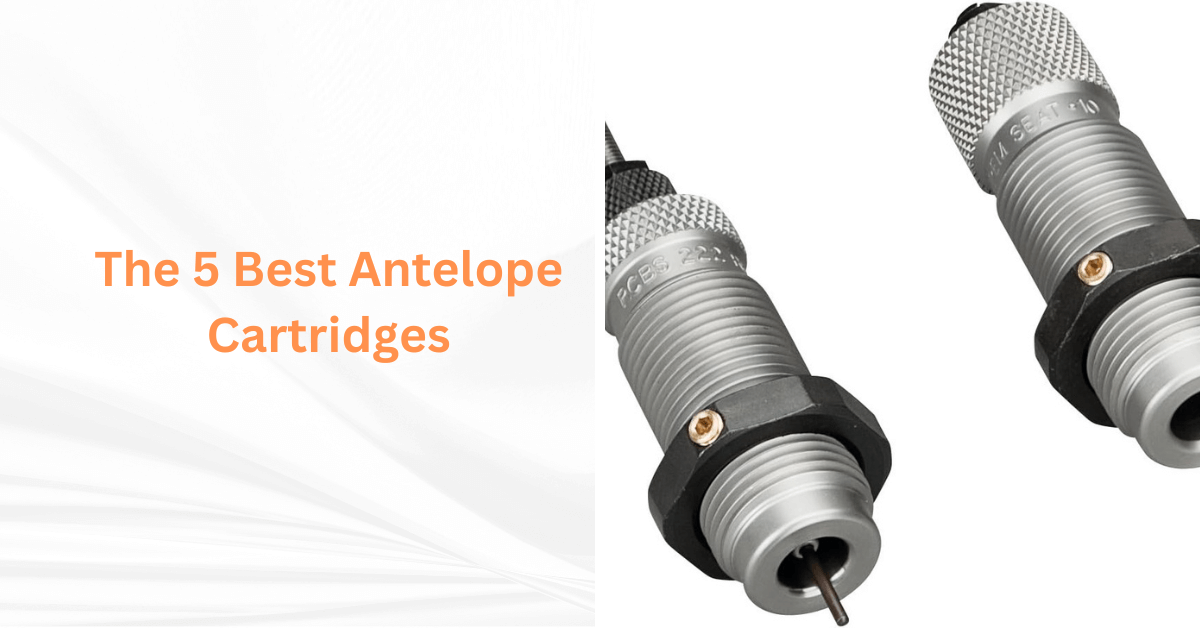
Amazon does not sell loaded centerfire rifle ammunition for shipment, so there is nothing to link here for factory .243 Winchester, 6.5 Creedmoor, .25-06 Remington, .270 Winchester, or .308 Winchester ammunition. If you shoot factory ammunition, buy it from a local retailer or a licensed ammunition dealer instead. What Amazon does carry are the reloading components that hunters who handload actually use, including full-length die sets for each of these five cartridges. If you already reload, or are considering it, the table below is a reference point. If you do not reload, this section will not apply to you and you can skip ahead to bullet choice.
| Cartridge | Die Set | Best fit | Check Price |
|---|---|---|---|
| .243 Winchester | RCBS Full-Length Die Set, Group A | Bolt-action reloaders new to .243 Win | Check Price |
| 6.5 Creedmoor | Hornady Custom Grade New Dimension 2-Die Set | Bolt-action reloaders wanting concentric bullet seating | Check Price |
| .25-06 Remington | RCBS Full-Length Die Set | Reloaders who already own a .25-06 rifle | Check Price |
| .270 Winchester | RCBS X-Series Full-Length Die Set | Reloaders who want fewer case trims over time | Check Price |
| .308 Winchester | RCBS Small Base Taper Crimp Die Set | Semi-auto and AR-style .308 rifles | Check Price |
1. RCBS Full-Length Die Set, Group A (.243 Winchester)
Best for: Bolt-action .243 Winchester shooters who already reload or want to start with a straightforward two-die setup.
Key specs (from Amazon product listing): RCBS brand, part number 11401, polished and heat-treated steel construction, 2-die set with full-length sizer die and seater die. Shell holder sold separately.
Pros
- Full-length sizer and seater die from an established reloading brand
- Polished, heat-treated steel built for repeated use
- Simple two-die setup that is easy to learn on
Cons
- Shell holder is not included and must be bought separately
- No micrometer seating adjustment
- Only useful if you already own a press and other reloading basics
Skip this if: You only shoot factory ammunition and have no reloading press, scale, or dies already, since this product alone will not get you loading ammunition.
2. Hornady Custom Grade New Dimension 2-Die Set (6.5 Creedmoor)
Best for: Bolt-action 6.5 Creedmoor reloaders who want Hornady’s floating bullet alignment sleeve for concentric seating.
Key specs (from Amazon product listing): Hornady brand, steel construction, 2-die set with full-length sizer die and seating die, plastic storage box, two Sure-Loc rings, elliptical expander, and spare decapping pins. Built-in taper crimp on the seating die.
Pros
- Floating bullet alignment sleeve improves seating concentricity
- Built-in taper crimp removes the need for a separate crimp die
- Includes a storage box and spare decapping pins
Cons
- No shell holder included
- Best suited to bolt-action rifles; semi-auto shooters may want small base sizing instead
Skip this if: You shoot a semi-auto 6.5 Creedmoor rifle and need small base sizing dies for reliable chambering.
3. RCBS Full-Length Die Set (.25-06 Remington)
Best for: Reloaders who already own a .25-06 Remington rifle and want a straightforward two-die set matched to the cartridge’s open-country reputation.
Key specs (from Amazon product listing): RCBS brand, part number 12001, case-hardened steel, precision-drilled and reamed dies, 2-die set.
Pros
- Case-hardened steel dies built to consistent RCBS tolerances
- Straightforward two-die set with a long history of reported reliability
- Matches a cartridge that already has a strong open-country reputation
Cons
- .25-06 has a narrower base of reloading accessories than .243 Win or .308 Win
- Shell holder sold separately
Skip this if: You do not own or plan to buy a .25-06 Remington rifle, since this die set has no use in any other caliber.
4. RCBS X-Series Full-Length Die Set (.270 Winchester)
Best for: .270 Winchester reloaders who want fewer case trims across many reloading cycles.
Key specs (from Amazon product listing): RCBS brand, part number 37512, X-Die sizer and standard seater die, made in USA.
Pros
- X-Die design reduces how often brass needs trimming to length
- Made in USA
- Useful for hunters who already handload for a do-it-all .270 Win rifle
Cons
- Some reviewers noted the initial shoulder bump adjustment takes patience
- No shell holder included
- Costs more than a basic two-die set
Skip this if: You load small batches occasionally and do not mind trimming brass by hand, since the X-Die’s main benefit is reduced trimming frequency over many reloading cycles.
5. RCBS Small Base Taper Crimp Die Set (.308 Winchester)
Best for: Semi-auto and AR-style .308 Winchester rifles that need tighter case dimensions to chamber reliably.
Key specs (from Amazon product listing): RCBS brand, part number 15507, small base sizing die and taper crimp seating die, fits 7/8 inch-14 threaded presses.
Pros
- Small base sizing helps semi-auto and AR-style .308 rifles chamber reliably
- Taper crimp seating die suits autoloader function
- Long review history from reloaders
Cons
- Small base sizing works brass harder, which can shorten case life over many reloads
- Not needed if you only shoot a bolt-action .308
Skip this if: You shoot a bolt-action .308 Winchester exclusively, since a standard full-length die set is gentler on brass and does the job just as well.
Bullet Choice Matters
Cartridge name is only part of the decision. Bullet construction, bullet weight, and the way your rifle groups that ammunition matter just as much. For antelope, choose a bullet designed for hunting medium-sized game, not a target-only bullet selected because it groups well on paper. Manufacturer ammunition pages and packaging are the correct places to verify intended use.
A useful rule is simple: do not assume any cartridge is ethical with every bullet. A .243 with the wrong bullet is a poor choice. A .270 with a bullet that does not suit your shot conditions can also be a poor choice. The responsible path is to choose a suitable factory hunting load, test it in your rifle, and stay within the distance where you can place it reliably.
Range Practice and Field Positions
Antelope hunting often exposes the difference between bench accuracy and field accuracy. A rifle that shoots well from a bench may feel very different from sitting, kneeling, prone, or supported over a pack. Before hunting, practice with the same ammunition, clothing layers, sling, bipod, sticks, or pack support you plan to use in the field.
Use the bench to confirm your zero and ammunition consistency, then practice from field positions. If your groups open up quickly away from the bench, shorten your practical hunting distance until your field accuracy catches up. The Hunter Ed safety and education resources are a helpful starting point for responsible hunting fundamentals, but your state course and local range practice should guide your final preparation.
Safety and Regulation Checks
Before choosing any cartridge for antelope, verify legal requirements for the state and unit you plan to hunt. Some states specify legal methods, ammunition restrictions, minimum calibers, season dates, hunter-orange requirements, and tag conditions. Those rules can change, so never rely on an old article as your final legal source.
Also think about the entire shot, not just the cartridge. Confirm the animal, know what is beyond it, understand your backstop, and pass shots when wind, angle, distance, or animal movement makes placement uncertain. Ethical hunting is built on restraint as much as equipment choice.
Frequently Asked Questions
Q: What is the best all-around antelope cartridge?
A: For many hunters, 6.5 Creedmoor and .270 Winchester are easy all-around answers because ammunition is common and both can be practiced with. The better choice depends on your rifle, recoil tolerance, and the distances you can shoot accurately from field positions.
Q: Is .243 Winchester enough for antelope?
A: It can be, when legal, paired with a suitable hunting bullet, and used by a hunter who keeps shots within a realistic practiced range. It is not a cartridge for careless shot angles or distance guesses.
Q: Is .308 Winchester too much for antelope?
A: No. It is more cartridge than strictly needed for many antelope hunts, but it is practical if you already shoot it well and choose a suitable hunting bullet. Its main drawback compared with flatter options is trajectory, not capability.
Q: Should I buy a new rifle just for antelope?
A: Not automatically. If you already own a legal rifle, can find suitable hunting ammunition, and can shoot it accurately from field positions, practice may help more than buying another rifle. A new rifle makes sense when recoil, weight, ammunition availability, or fit keeps you from shooting your current rifle well.
Q: Does Amazon sell live ammunition for these cartridges?
A: No. Amazon does not sell loaded centerfire rifle ammunition for these cartridges due to shipping restrictions. Buy factory ammunition from a local retailer or a licensed ammunition dealer. What Amazon does carry are reloading components, including full-length die sets, for hunters who load their own ammunition.
Q: Do I need to reload my own ammunition to hunt antelope?
A: No. Most antelope hunters use factory ammunition and never touch a reloading press. Handloading is an option for hunters who want more control over bullet choice and load consistency, not a requirement.
Q: What is the difference between a full-length die set and a small base die set?
A: A full-length die set resizes the case body and shoulder to standard dimensions and works well for bolt-action rifles. A small base die set resizes the case slightly smaller, which helps semi-auto and AR-style rifles chamber reliably, at some cost to case life since the brass is worked harder.
Final Recommendation
For antelope, choose shootability first. The .243 Winchester is attractive for low recoil, the 6.5 Creedmoor is a balanced modern option, the .25-06 Remington is a classic open-country pick, the .270 Winchester is a versatile big-game choice, and the .308 Winchester works well for hunters who already know it. The best cartridge is the one that is legal, paired with the right hunting bullet, and proven by your own practice. If you already handload, matched reloading dies for whichever cartridge you choose are a reasonable next purchase. If you do not reload, factory ammunition from a licensed dealer is the simpler path and works just as well.