Public-Land Bowhunting Strategy: Access, Wind, Pressure, and Ethical Shots
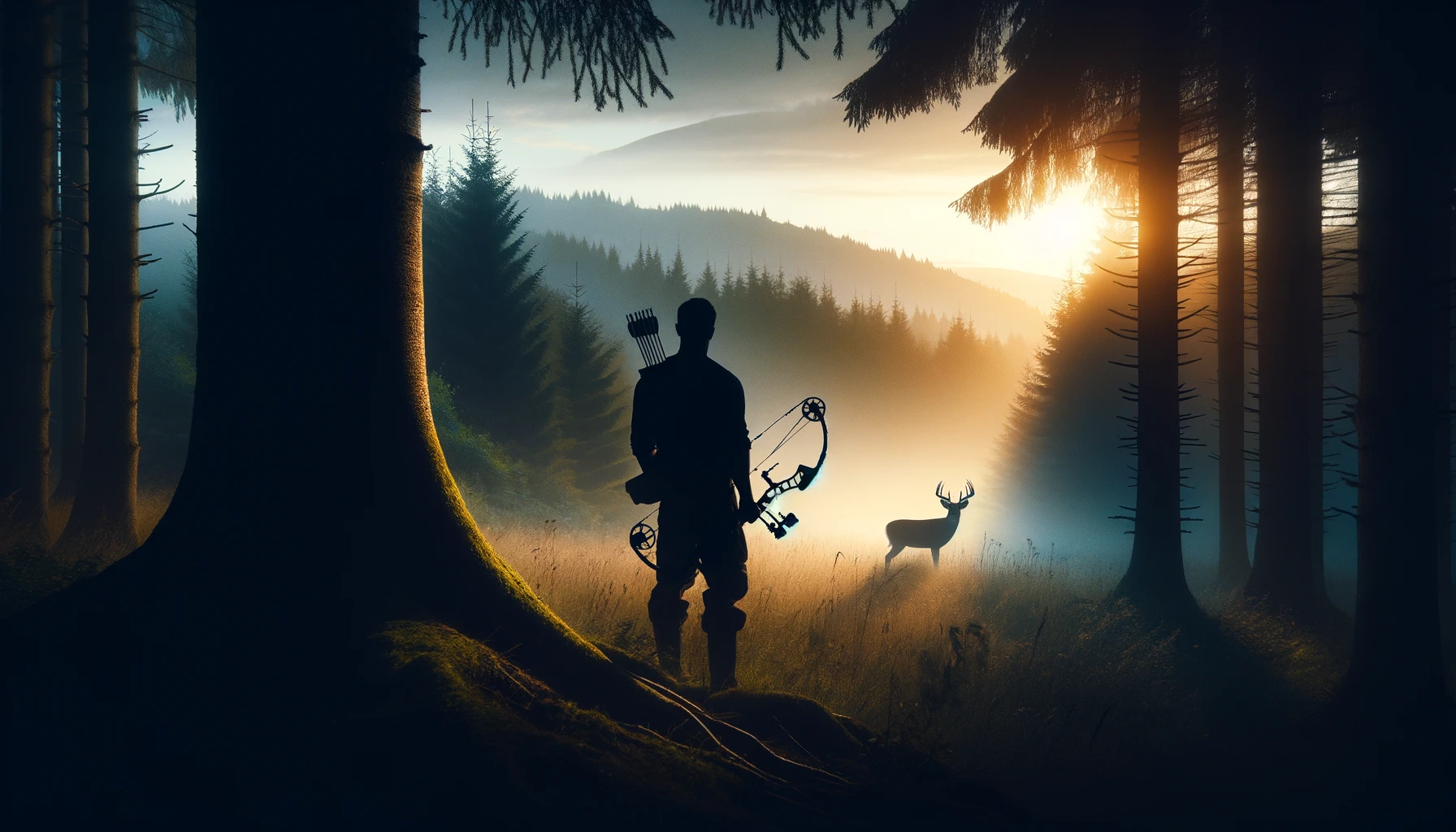
Public-land bowhunting is mostly a planning problem: find legal access, avoid the most obvious pressure, use the wind, and choose shot opportunities that match your skill and the rules. The best setup is not the most dramatic one. It is the one you can reach quietly, hunt safely, and leave without making the next sit worse.
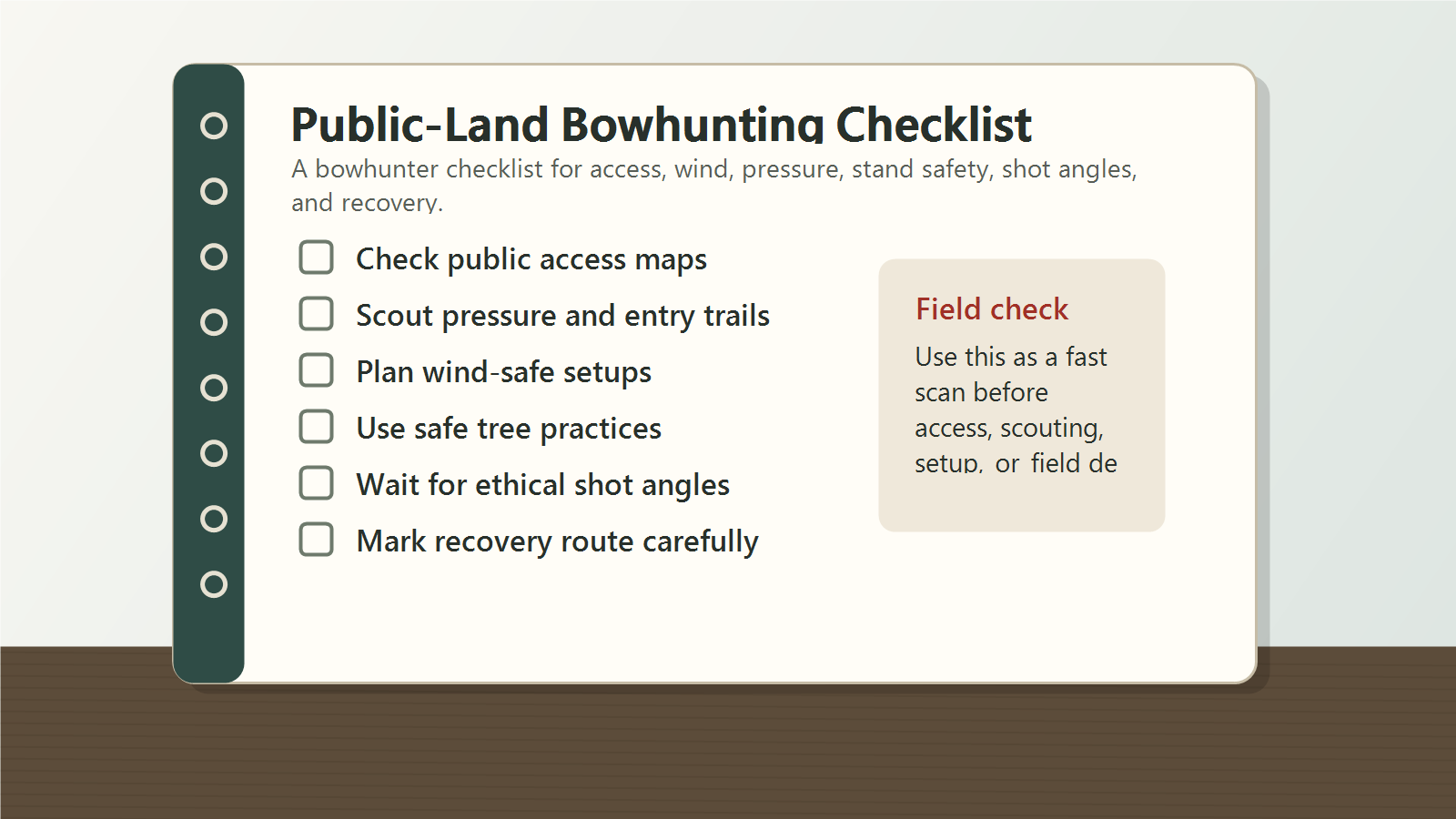
Table of contents
Quick Public-Land Bowhunting Plan
Start with legal access, then pick a route that avoids the easiest parking-lot pressure. Hunt a wind that keeps your scent out of bedding cover or likely travel routes. Set up where you can draw without being seen, keep your shot distance realistic, and leave the area with as little noise and ground scent as possible.
Make the first decision at the map
Before you walk in, mark the parking area, property boundary, access trail, water, thick cover, food sources, and likely human pressure. Public land rewards hunters who avoid random wandering. A simple route plan saves energy and lowers the chance of walking through the deer sign you hoped to hunt.
Build a backup plan
Another truck at the gate should not end your hunt. Have a second parking area, a second wind option, and a low-impact scouting route ready. Backup plans help you stay calm and keep you from forcing a bad stand because the first idea was taken.
Keep the hunt legal and quiet
Rules can change by state, weapon type, season, permit, and public-land unit. Check current regulations before every trip. After that, the field goal is simple: move slowly, avoid skyline movement, keep gear quiet, and only hunt a setup that gives you a safe shot and a safe recovery path.
Rules, Access, and Boundaries
Public land can include state wildlife areas, national forests, Bureau of Land Management parcels, wildlife refuges, county land, timber company access, and walk-in programs. Each can have different rules. The U.S. Forest Service offers a useful hunting planning and safety overview, but your state wildlife agency and land manager are the final source for current rules.
Check the exact unit
Do not rely on a general map color alone. Confirm the unit name, season dates, legal weapon, antler rules, blaze-orange rules, bait rules, tree-stand rules, access hours, and any special permit requirements. Some public parcels are open for one method and closed for another.
Respect private boundaries
Public parcels often border private farms, homes, timber land, and leased hunting ground. Mark boundaries before the hunt and keep a margin for safety. If a deer crosses private land after a shot, follow your state rules and get permission where required before recovery.
Use ethical pressure
Legal access does not mean careless access. Do not crowd another hunter, walk through an active setup, or use someone else’s stand without permission. The Boone and Crockett Club’s fair chase statement is a good reminder that good hunting includes respect for animals, land, and other people.
Scout Pressure Before Deer
On public land, human pressure shapes deer movement. Fresh tracks and rubs matter, but so do boot tracks, parking patterns, trail-camera straps, flagging tape, old stands, and easy access routes. Learn where hunters go first, then look for deer routes that avoid that pressure.
Read parking lots and trailheads
Check where vehicles gather on weekends, evenings, and opening week. Obvious parking areas can still produce deer, but the best bow setup may be offset from the main trail, behind a terrain fold, or near a quiet exit route other hunters ignore.
Look for overlooked cover
Small cover pockets near access can hold deer when pressure is high. That might be a brushy ditch, island of cover, creek bend, cattail edge, old clear-cut, or steep bench. The key is not distance alone. It is whether deer feel safer there than on the obvious route.
Scout without burning the spot
Use wind-aware scouting, keep visits short, and avoid walking directly through bedding cover unless the season plan calls for a high-risk move. If you find fresh sign, mark it, back out, and decide whether the wind and access support a hunt.
Wind, Entry, and Exit Routes
A good public-land setup can fail before sunrise if the entry route spreads scent through the bedding cover or food edge you plan to hunt. Wind, thermals, and exit routes should be part of the first plan, not something you fix after getting there.
Hunt a wind you can leave on
Many hunters choose a wind for the sit but forget the exit. If the evening exit blows scent into the main trail, the spot may hunt worse the next day. Plan how you will leave after dark without crossing the best deer movement when possible.
Use terrain to hide movement
Ditches, creek banks, old logging roads, brush lines, and low ridges can hide your approach. Open field edges may look easy on a map, but they often expose movement. Pick the route that keeps you hidden and quiet, even if it takes longer.
Avoid overusing one access route
If every hunt starts and ends on the same path, deer may learn that pressure. Rotate access when legal and practical. Even small changes can help protect a good stand from repeated ground scent and noise.
Stand and Ground Setup Choices
Public-land bowhunters need setups that match the rules and the terrain. Some areas allow portable stands or saddle setups. Others restrict screw-in steps, cutting limbs, permanent stands, or overnight gear. Check the rules before carrying equipment in.
Set up for the draw
A bow setup is not only about seeing deer. You need enough cover to draw without being picked off. Place the setup where a tree, brush screen, terrain edge, or momentary blind spot lets you come to full draw before the deer enters the lane.
Keep lanes natural
Do not cut lanes unless the land rules clearly allow it. Even when trimming is legal, keep it modest. A natural opening, trail pinch, creek crossing, fence gap, or inside corner often works better than forcing a large open lane that makes deer nervous.
Know when ground setups make sense
Ground setups can work when trees are poor, cover is thick, or a mobile stand would be noisy. Sit with cover behind you, clear only the minimum foot space needed, and keep the bow positioned so movement is controlled.
Shot Discipline for Bowhunters
Public-land success should not come at the cost of poor shot judgment. A close deer can still be a bad shot if the angle, distance, brush, alertness, or background is wrong. The International Hunter Education Association has hunter safety resources through IHEA-USA that are worth reviewing before the season.
Set a personal distance limit
Your field limit should be shorter than your best backyard group. Wind, cold hands, steep angles, low light, and a live animal all add pressure. Pick a distance that you can repeat from hunting positions, not only from a flat practice range.
Watch angle and body language
Quartering-away shots are often cleaner than steep, frontal, or hard-quartering angles. An alert deer can move at the shot. If the deer is tense, facing you, screened by brush, or already leaving, wait or pass.
Mark the shot before moving
After the shot, pick a landmark where the deer stood and where it was last seen. Listen. Wait if the situation calls for it. Rushing into the trail can make recovery harder and can push a wounded deer farther.
Mobile Gear and Pack Setup
Public-land bowhunting favors quiet, simple gear. Carry what helps you hunt safely and recover ethically, but avoid packing so much that every move becomes noisy and slow.
Pack for the full exit
Include a headlamp, backup light, first-aid kit, knife, game bags where needed, license, tags, water, snacks, weather layer, and a way to navigate after dark. If you need help organizing the load, use our guide on how to organize your hunting backpack.
Quiet every loose item
Metal buckles, stand parts, carabiners, and loose tools can ruin a calm entry. Tape, wrap, or separate noisy items before the season. Test the pack by walking, kneeling, and drawing at home.
Carry less on short hunts
A short evening hunt near the truck does not need the same load as an all-day sit. The lighter the setup, the easier it is to move carefully and adapt to fresh sign.
After the Shot and Recovery
Recovery planning starts before the shot. Public land may involve other hunters, boundaries, thick cover, water, steep terrain, and poor phone service. Think through the recovery route before choosing a lane.
Know the rules for tracking
Some states have rules around tracking dogs, crossing boundaries, tagging, quartering, evidence of sex, and transportation. Check those rules before the season. If recovery may cross private land, permission matters.
Protect the sign
Do not stomp through the impact site. Mark the spot, take a quiet breath, and look for hair, blood, tracks, and direction of travel. Move slowly and avoid spreading sign with your boots.
Ask for help early
If the shot looked poor, the blood trail is weak, or the deer crossed a boundary, pause and get help. Good recovery decisions are part of ethical bowhunting.
Common Public-Land Mistakes
Most public-land bowhunting problems come from rushing. Rushed access, rushed setup, rushed shot decisions, and rushed recovery all create avoidable trouble.
Hunting sign with no access plan
Fresh sign is useful only if you can hunt it on the right wind and reach it without warning deer. If the access is poor, save the spot for a better day or scout a different angle.
Competing with other hunters
Do not turn the hunt into a race from the parking lot. If another hunter is already headed toward your plan, adjust. Public land is shared land, and a calm backup plan is better than crowding.
Using story language instead of field notes
Real improvement comes from notes: wind, access, sightings, pressure, acorns, crop status, water, moonlight if relevant, and recovery details. Save the big words for camp. Use field notes to make the next hunt better.
Related Guides
For a wider public-land approach, read our public-land deer hunting guide. Newer hunters should start with the first-time hunting guide. If you are still building seasonal habits, our deer hunting tips for beginners can help with scouting, timing, and shot discipline.
FAQ
How do I find less pressured public-land bowhunting spots?
Start by identifying where most hunters park and walk. Then look for legal access to overlooked cover, terrain breaks, small bedding pockets, creek crossings, or routes that require quieter planning rather than just a longer walk.
Should I hunt far from the parking lot?
Distance can help, but it is not the only answer. A close spot with poor human traffic and good wind can be better than a far spot that every serious hunter uses. Pressure, access, and wind matter together.
What wind is best for public-land bowhunting?
The best wind keeps your scent out of bedding cover, food edges, and likely travel routes while still letting you enter and exit cleanly. If the wind helps the sit but ruins the exit, wait for a better plan.
Can I leave a tree stand on public land?
Rules vary by state and land manager. Some areas allow temporary stands with dates and identification rules, while others restrict overnight gear. Check the current regulation for the exact property before leaving equipment.
What should I do if another hunter is near my setup?
Give them space and move to a backup plan. Public land is shared, and crowding can create safety problems and poor hunting for both people.