Monocular vs Spotting Scope: Which Outdoor Optic Should You Choose?
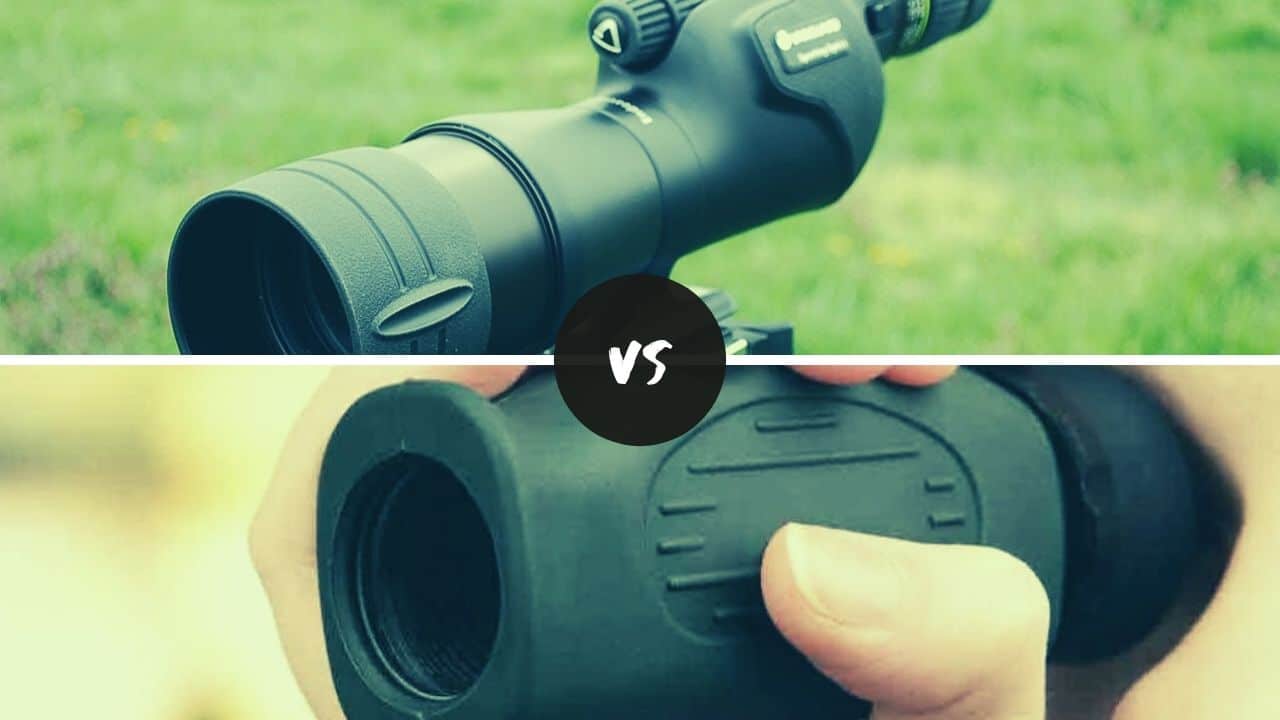
A monocular is better when you want a small, quick, lightweight optic for short scouting, hiking, travel, or casual wildlife viewing. A spotting scope is better when you need high magnification, more detail at long distance, and a stable view from a tripod. The right choice depends on distance, weight, setup time, image detail, and how long you plan to glass.
Table of contents
For most hunters and outdoor users, a monocular is the “keep it in your pocket” option. A spotting scope is the “set up and study” option. Neither replaces binoculars for all-day two-eye glassing, but each has a clear place in a practical optics kit.
Table of contents
- Quick Answer
- Main Difference
- What Is A Monocular?
- What Is A Spotting Scope?
- Monocular vs Spotting Scope Comparison
- Which Is Better For Hunting?
- Which Is Better For Birding And Wildlife?
- Which Is Better For The Shooting Range?
- Which Is Better For Astronomy?
- Buying Factors That Matter
- Common Mistakes
- FAQ
- Final Takeaway
Quick Answer
Choose a monocular if portability, fast one-hand use, and lower weight matter most. Choose a spotting scope if long-distance detail, higher magnification, target inspection, or serious wildlife observation matters more than size and setup time. A compact monocular may be 8x or 10x, while many spotting scopes commonly operate around 20x to 60x and usually need a tripod.
If you hunt in thick woods, hike long distances, or want a backup optic, a monocular makes sense. If you glass open country, check bullet holes at the range, identify birds across water, or study animals from a fixed point, a spotting scope is usually the better tool.
Main Difference
The main difference is magnification and stability. A monocular is a compact single-eye optic designed for quick viewing. A spotting scope is a more powerful telescope-style optic designed for detailed observation from a steady support. More magnification sounds better, but it also magnifies hand shake, heat shimmer, and focus errors.
That is why a handheld monocular can be useful at 8x or 10x, while a spotting scope at 40x or 60x needs a tripod and patience. The monocular wins on speed and carry comfort. The spotting scope wins on detail at distance.
What Is A Monocular?
A monocular is a compact optical device used with one eye. It is similar to half of a binocular in concept, but it is smaller, lighter, and easier to carry. The monocular reference overview describes it as a compact refracting telescope used to magnify distant objects.
Best For
- Fast scanning on a hike or hunt.
- Lightweight backup optics.
- Short to medium distance observation.
- Travel, camping, and casual wildlife viewing.
- Users who want one-hand operation.
Limitations
A monocular is not ideal for long glassing sessions because one-eye viewing can feel tiring. It also offers less depth perception than binoculars and far less long-distance detail than a spotting scope. For serious open-country glassing, it is usually a supplement, not the main optic.
What Is A Spotting Scope?
A spotting scope is a compact high-power telescope built for viewing distant objects in detail. The spotting scope reference overview notes that these optics are commonly used for birdwatching, hunting, target shooting, and other activities where more magnification than ordinary binoculars is useful.
Best For
- Long-distance animal identification.
- Checking targets at the shooting range.
- Birding across water, fields, or open country.
- Digiscoping with a phone or camera adapter.
- Careful observation from a fixed position.
Limitations
A spotting scope is heavier, slower to deploy, and usually needs a tripod. It also costs more once you add a tripod, head, case, and phone adapter. In brush, timber, or fast-moving hunting situations, the setup time can make it the wrong tool.
Monocular vs Spotting Scope Comparison
| Factor | Monocular | Spotting Scope |
|---|---|---|
| Portability | Excellent | Fair to moderate |
| Typical use | Quick handheld viewing | Detailed long-range viewing |
| Magnification | Usually lower | Usually much higher |
| Stability need | Often handheld | Tripod strongly recommended |
| Best distance | Short to medium | Medium to long |
| Setup speed | Fast | Slower |
| Cost | Usually lower | Usually higher |
The table gives the practical answer: use the monocular when movement matters, and use the spotting scope when detail matters. If you need both, carry a small monocular for quick checks and keep the spotting scope in the vehicle, blind, pack, or range bag for longer viewing sessions.
Which Is Better For Hunting?
For close-cover hunting, a monocular is usually easier to carry and faster to use. It can help check movement, terrain, or a distant opening without adding much weight. For open country, mountain hunting, or long sits over big fields, a spotting scope can show details a monocular cannot.
The key is not to use magnification as a shortcut for judgment. You still need legal identification, safe backstop awareness, ethical shot distance, and field skill. If you are building a broader optics setup, our rangefinding optics guide can help connect glassing and distance decisions.
Which Is Better For Birding And Wildlife?
A monocular works for casual birding, especially when you are walking and want less weight. A spotting scope is better for serious birding across wetlands, shorelines, large fields, or long distances. It gives the detail needed to study markings, posture, and behavior from farther away.
For moving birds at close or medium range, binoculars are usually easier than both. A spotting scope shines when the bird is perched, feeding, standing, or moving slowly in open view.
Which Is Better For The Shooting Range?
For the shooting range, a spotting scope is usually the better choice. The higher magnification and tripod support make it easier to see target impacts without walking downrange. A monocular may help at short distances, but it will not match a steady spotting scope for checking small groups or holes at longer range.
If you shoot from a bench, choose a tripod or tabletop stand that lets you look through the scope without breaking position too much. Stability matters as much as magnification. A shaky high-power scope is less useful than a steadier lower-power view.
Which Is Better For Astronomy?
A spotting scope is usually better than a monocular for casual sky viewing because it has more magnification and a larger objective lens. However, neither is a full replacement for a telescope designed for astronomy. Spotting scopes can be useful for the moon, bright planets, and terrestrial viewing, while compact monoculars are limited for night-sky detail.
If astronomy is the main goal, choose gear built for that purpose. If you want one outdoor optic that can also look at the moon occasionally, a spotting scope is the more flexible option.
Buying Factors That Matter
Magnification
More magnification is not always better. It narrows field of view, increases shake, and can make heat shimmer more obvious. Choose enough power for the job, not the highest number on the box.
Objective Lens Size
A larger objective lens can gather more light, but it also adds weight and bulk. This matters more on spotting scopes because they are often used at higher magnification and lower light.
Tripod Quality
A spotting scope is only as useful as the support under it. A cheap, wobbly tripod can ruin the view. For range or wildlife use, budget for a stable tripod and smooth head.
Weatherproofing
Outdoor optics should handle rain, dust, and temperature changes. Look for waterproofing, fog resistance, protective lens caps, and a body that is easy to grip with gloves.
Common Mistakes
Buying Too Much Power
High magnification looks impressive, but it can be frustrating without stability and good light. Choose a useful range you can actually hold or support.
Forgetting Weight
A spotting scope that stays at home because it is too heavy does not help. Be honest about how far you walk and whether the extra detail is worth the pack weight.
Ignoring Eye Relief
Eye relief matters, especially if you wear glasses. Short eye relief can make it harder to see the full image and can make long viewing sessions uncomfortable.
Expecting One Tool To Do Everything
A monocular, binocular, and spotting scope solve different problems. If you need an all-around hunting optic, binoculars may still be the better main tool, while a monocular or spotting scope fills a more specific role. For a related comparison, see our guide on rangefinders vs binoculars for hunting.
FAQ
Can a monocular replace a spotting scope?
Only for short or casual viewing. A monocular is easier to carry, but it does not provide the same long-distance detail or tripod-supported stability as a spotting scope.
Is a spotting scope always better?
No. A spotting scope is better for long-distance detail, but it is heavier, slower, and usually needs a tripod. For quick handheld viewing, a monocular can be the better choice.
What magnification is best?
For monoculars, 8x or 10x is practical for many users. For spotting scopes, common zoom ranges such as 20-60x are useful, but the best setting depends on light, distance, heat shimmer, and tripod stability.
Should hunters carry both?
Sometimes. A hunter in open country may carry binoculars and a spotting scope, while a hunter in thick cover may only need a small monocular or binocular. Match the optic to terrain and distance.
Final Takeaway
Choose a monocular when compact size, fast access, and low weight matter most. Choose a spotting scope when long-distance detail and tripod-supported viewing matter most. For hunting, birding, range work, and wildlife observation, the best optic is the one that fits the distance, terrain, and time you will actually spend behind the glass.