How to Start a Fire Without a Lighter: 11 Safe Outdoor Methods
Starting a fire without a lighter is possible, but the first decision is whether you are allowed to have a fire at all. Check fire restrictions, wind, drought, local rules, and your ability to put the fire fully out before you try any method.
This guide covers safer outdoor fire-starting methods for emergencies and camp practice. It does not replace park rules, land-manager orders, or wildfire restrictions.
Table of Contents
- Quick answer
- Check fire rules first
- Choose a safe fire site
- Prepare tinder and kindling
- Use a ferro rod
- Use flint and steel
- Use sunlight with a lens
- Use friction fire only as an advanced skill
- Treat battery methods as emergency-only
- Work in damp conditions
- Put the fire fully out
- Build a safer backup kit
- FAQ
Quick Answer: The Safest Way to Start a Fire Without a Lighter
The safest practical method is a ferro rod with dry tinder, prepared kindling, a clear fire area, water nearby, and permission to burn. A magnifying lens can work in strong sun. Flint and steel can work with the right tinder. Bow drill and hand drill methods require practice and should not be treated as reliable beginner emergency tools.
Start small
A small fire is easier to control, easier to feed, and easier to put out. Do not build a larger fire than you need for warmth, signaling, or cooking.
Never use accelerants
Do not use fuel liquids, spray cans, explosive materials, ammunition parts, or other accelerants. Those choices can injure people and start a fire you cannot control.
1. Check Fire Rules First
Before any method, check whether fires are allowed where you are. The National Park Service advises visitors to check local fire regulations and conditions before building a campfire, and to keep fires attended and controlled. Start with the land manager, campground host, park page, forest district, or local fire authority.
Check burn bans and red flag warnings
Do not start a fire during a burn ban, red flag warning, high wind, drought, or local restriction. If the rule is unclear, skip the fire.
Use official pages
Park blogs and old campground posts can be stale. Use official pages such as the National Park Service campfire guide, local agency alerts, and posted campground rules.
Have water ready before ignition
Water, a shovel, and a clear escape route should be ready before the first spark. Do not light first and look for water later.
2. Choose a Safe Fire Site
A safe fire site matters more than the ignition method. Use an existing fire ring when fires are allowed. Keep the fire away from tents, packs, dry grass, roots, leaves, overhanging branches, and gear.
Clear the area
Clear loose leaves, needles, duff, and grass around the fire area where allowed. Fire can move through hidden roots and dry organic layers even when the surface looks calm.
Keep the fire contained
Use an established fire ring, fire pan, or approved stove area. Leave No Trace guidance recommends minimizing campfire impacts and keeping fires small when they are allowed.
Respect local wood rules
Use only wood that local rules allow. Many areas discourage moving firewood because pests and disease can travel with it. Do not cut live trees for a quick flame.
3. Prepare Tinder and Kindling Before You Spark
Most failed fire-starting attempts fail before the spark. You need tinder that catches easily, thin kindling that grows the flame, and larger sticks ready before you begin.
Tinder
Good tinder is dry, fine, and airy. Examples include dry grass where legal to collect, shaved wood curls, dry inner bark where allowed, or carried tinder such as cotton balls prepared at home.
Kindling
Kindling should be pencil-lead to pencil-thick at first. Thick sticks placed too soon can smother the flame.
Fuel
Use small fuel and add gradually. A fire that needs constant rescue is usually too wet, too large, or poorly prepared.
4. Use a Ferro Rod
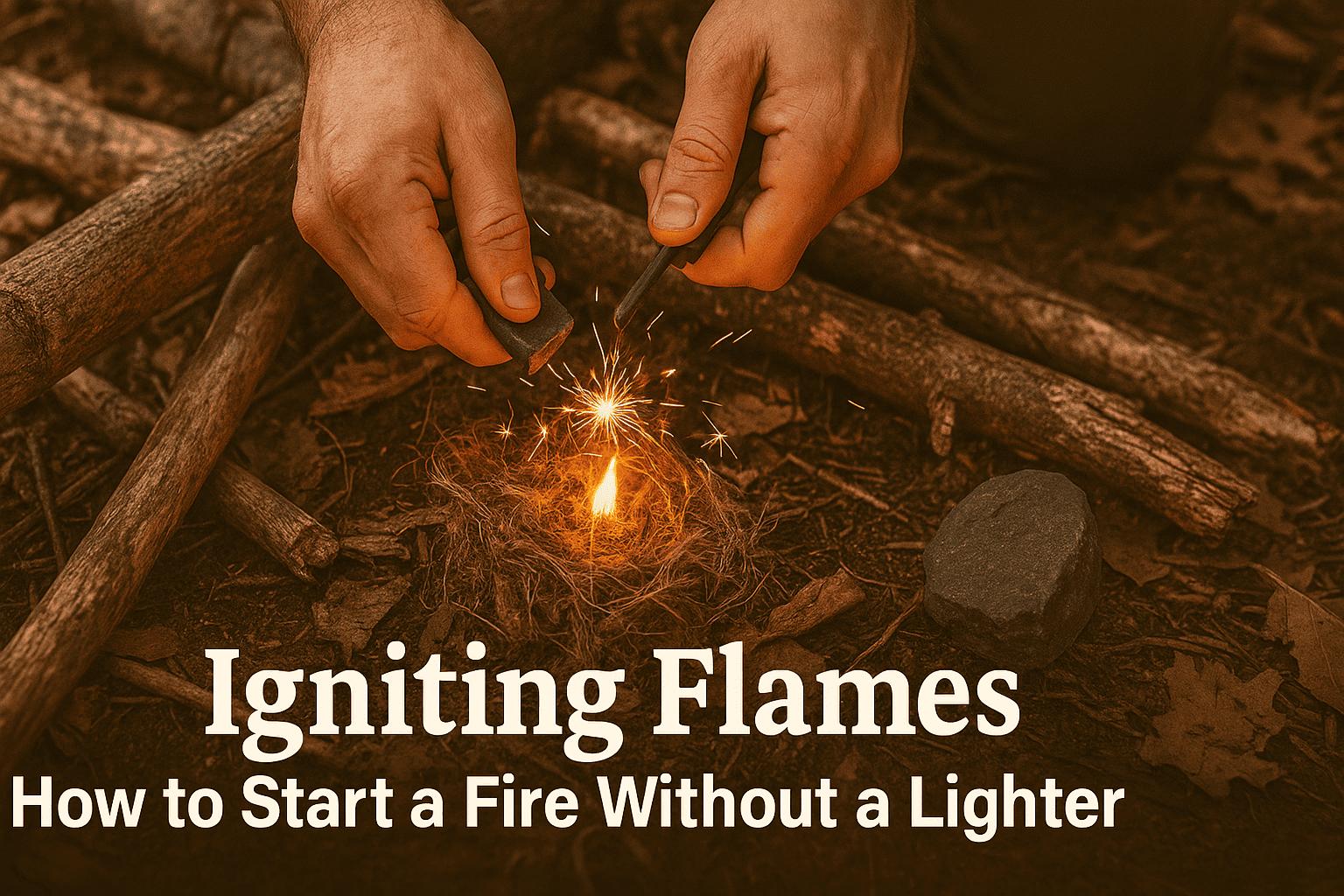
A ferrocerium rod is one of the best no-lighter options for most people because it throws hot sparks and works even when damp if your tinder is ready. It still requires practice.
Place the rod close to tinder
Put the striker near the tinder and scrape sparks into one small target area. Pull the rod back while holding the striker steady to avoid knocking the tinder apart.
Protect the spark from wind
Use your body, pack, or a safe natural windbreak to reduce wind. Do not build a windbreak from dry debris that can catch fire.
Feed the flame slowly
Once tinder lights, add tiny kindling first. Give the flame oxygen and space.
5. Use Flint and Steel
Traditional flint and steel can work, but it usually needs char cloth or very fine tinder. It is less forgiving than a ferro rod and should be practiced before you need it.
Use the right tinder
Char cloth catches a small spark more easily than rough natural tinder. Carry it dry in a small container.
Move ember to tinder bundle
Once the char cloth holds an ember, place it in a tinder bundle and blow gently. Keep your face clear of smoke and sparks.
Practice in legal conditions
Learn this method at home in a safe, legal practice area before relying on it outdoors.
6. Use Sunlight With a Lens
A magnifying lens, eyeglass lens, camera lens, or clear water-filled container can focus sunlight onto tinder. This only works with strong direct sun, a steady hand, and dry tinder.
Focus the smallest bright point
Move the lens until the light makes a small bright point on the tinder. Hold steady until the tinder smokes and forms an ember.
Keep backup options
Clouds, shade, rain, and low sun can make lens fire impossible. Do not count on sunlight as your only emergency method.
Store lenses safely
Do not leave strong lenses where they can focus sun onto paper, cloth, or dry leaves.
7. Use Friction Fire Only as an Advanced Skill
Bow drill, hand drill, and fire plough methods are real skills, but they are not quick beginner fixes. Wood selection, dryness, form, pressure, speed, and endurance all matter.
Practice before emergencies
If you want to learn friction fire, practice with supervision or a reliable field course. Do not make it your only backup on a cold trip.
Use dead and down material where allowed
Do not cut live trees or damage protected areas for a practice fire. Follow Leave No Trace guidance and local collection rules.
Stop before exhaustion
Friction fire can burn time and energy. In a real emergency, shelter, insulation, water, and signaling may matter more.
8. Treat Battery Methods as Emergency-Only
Battery and steel wool methods can create heat quickly, but they can also burn fingers, short a battery, damage gear, and ignite tinder unexpectedly. Treat them as hazardous emergency options, not casual camp tricks.
Keep batteries protected
Loose batteries can short against keys, foil, tools, or other metal. Store them safely and inspect them for damage.
Do not use damaged batteries
If a battery is swollen, leaking, hot, crushed, or corroded, do not experiment with it.
Keep people clear
Use eye protection and keep sparks away from clothing, hair, tents, packs, and dry ground.
9. Work in Damp Conditions
Damp weather makes fire harder and often makes a fire less appropriate. If fire is legal and needed, the goal is to find dry material without damaging the site.
Look for sheltered dead wood
Dead branches under dense cover, standing dead twigs where collection is legal, and the dry inside of split wood can work better than wet ground debris.
Make feather sticks
Thin curls expose dry inner wood and catch sparks more easily. Cut away from your body and keep fingers behind the blade.
Know when not to burn
High wind, unstable weather, poor site conditions, or lack of water are signs to use clothing, shelter, stove, or signaling options instead.
10. Put the Fire Fully Out
A fire is not out because visible burning has stopped. Smokey Bear teaches the standard: drown, stir, drown again, then feel that everything is cold. If it is too hot to touch, it is too hot to leave.
Drown and stir
Add water, stir ashes and coals, break up hot spots, and add more water. Steam and hissing mean heat remains.
Feel for heat
When safe, use the back of your hand near the ashes to check for heat, then closer only if it is cool. Do not leave warm coals.
Use established safety guidance
Review Smokey Bear campfire safety and the National Park Service Leave No Trace principles before relying on campfires in the field.
11. Build a Safer Backup Fire Kit
The best no-lighter plan is not to need a risky improvised method. Carry backups and keep them dry. For broader trip planning, pair this with our backcountry gear selection guide and primitive survival shelter guide.
Carry more than one ignition source
A lighter, stormproof matches, ferro rod, and dry tinder give you better odds than one improvised trick.
Keep tinder dry
Use a small waterproof bag or container. Replace tinder after a wet trip.
Pack warmth that does not require fire
Fire is not a substitute for insulation. Carry clothing, rain protection, shelter, and emergency warmth for the conditions.
FAQ
What is the easiest way to start a fire without a lighter?
For most prepared hikers, a ferro rod with dry tinder is the easiest reliable backup. It still requires practice and a safe legal fire site.
Can I start a fire during a burn ban if it is an emergency?
Do not assume you can. In a real emergency, prioritize calling for help, shelter, insulation, and signaling. Follow local law and emergency guidance.
Is a bow drill good for beginners?
No. It is a useful traditional skill, but it is difficult without practice, dry material, and good technique.
Should I use gasoline or alcohol to start a campfire?
No. Do not use flammable liquids or accelerants to start a campfire. Use proper tinder, kindling, and legal fire-starting tools.
How do I know the fire is out?
Drown it, stir it, drown it again, and check for heat. If any part is still warm, keep working. Too hot to touch is too hot to leave.
Final Takeaway
Learning how to start a fire without a lighter is useful, but safe judgment comes first. Check the rules, prepare the site, keep water ready, keep the fire small, and put it fully out before you leave.