How to Make Arrows for a Bow Safely
Making arrows for a bow is less about carving random sticks and more about building a safe, straight, properly matched arrow. A usable arrow needs the right spine, length, shaft condition, nock fit, insert, point weight, and fletching alignment for the bow and archer.
This guide explains the process at a high level so beginners understand what matters before buying parts or working on arrows. If you are new to archery, have your finished arrows checked by a qualified archery shop or coach before shooting them.
Table of Contents
Quick Answer
To make arrows for a bow, choose shafts with the correct spine for your draw weight and arrow length, cut them squarely to a safe length, install inserts and nocks correctly, fletch the shaft evenly, add the correct point weight, and inspect every arrow before shooting. Do not shoot damaged, cracked, underspined, or poorly fitted arrows.
Safety Comes First
An unsafe arrow can fail at release or fly unpredictably. Carbon shafts can splinter, wood shafts can warp, and incorrect spine can make tuning difficult or dangerous. Before shooting a handmade or assembled arrow, flex-test and visually inspect the shaft, check the nock, and confirm the arrow is matched to the bow.
For a deeper inspection habit, read a trusted archery safety guide such as Archery360’s arrow inspection guide. If that page redirects, use the site search for “inspect your arrows” and follow the current version.
Arrow Parts You Need to Understand
A modern arrow is a system, not just a shaft. The main parts are the shaft, nock, insert or outsert, point or broadhead, and fletching. Each part affects fit, weight, balance, and flight.
Shaft
The shaft is the body of the arrow. Common materials include carbon, aluminum, wood, and hybrids. Beginners should avoid improvising shafts for real shooting and should use manufacturer-rated shafts that match their bow setup.
Nock
The nock clips onto the bowstring. It should fit securely without being too tight. A poor nock fit can create release problems, inconsistent flight, or unsafe string separation.
Insert and Point
The insert holds the field point or broadhead. Point weight changes the total arrow weight and dynamic spine, so do not swap point weights casually after building the arrow.
Fletching
Fletching stabilizes the arrow in flight. Vanes or feathers must be placed evenly and bonded cleanly. Uneven fletching can create wobble, poor grouping, or clearance problems.
Match Spine, Length, and Point Weight
Arrow spine is the shaft’s stiffness. It must match the bow’s draw weight, arrow length, point weight, and intended use. A shaft that is too weak or too stiff can be hard to tune and may behave unpredictably.
Use a current manufacturer spine chart for the exact shaft model you buy. Easton maintains an arrow sizing and spine chart, and other arrow makers publish their own charts. Do not assume one chart applies to every shaft brand or model.
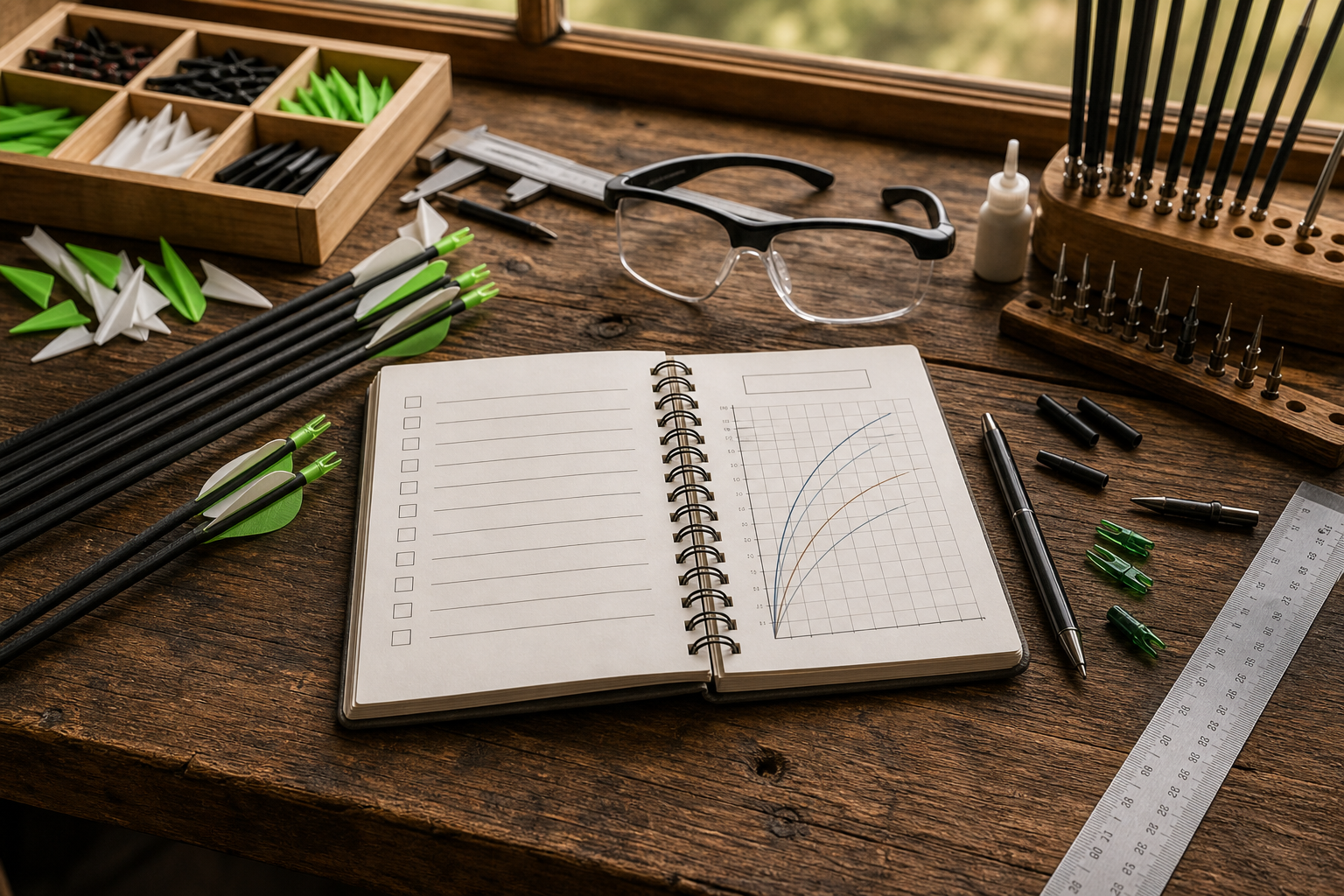
Basic Arrow-Making Process
1. Choose the Right Shaft
Start with a rated shaft that matches your draw weight, draw length, and point weight. Avoid mystery shafts, cracked shafts, or old arrows with unknown history.
2. Measure Safe Arrow Length
Arrow length should be measured safely with the bow setup and archer in mind. Do not cut arrows too short. A too-short arrow can fall off the rest or create a dangerous draw condition.
3. Cut and Square the Shaft
Use the correct arrow-cutting equipment for the shaft material. After cutting, square the end so inserts seat cleanly. Poor cuts can cause weak insert bonding and inconsistent point alignment.
4. Install Inserts and Nocks
Use the adhesive recommended for the shaft and insert. Keep glue away from areas where it can interfere with fit. Let the adhesive cure fully before shooting.
5. Fletch the Arrow
Use a fletching jig so vanes or feathers are spaced consistently. Match the fletching style to your rest, broadhead choice, and shooting purpose.
6. Inspect Before Shooting
Spin-check the finished arrow, inspect the shaft, verify nock fit, and confirm the point or broadhead is seated correctly. The general arrow reference is useful for terminology, but safety checks should come from the shaft manufacturer or an archery professional.
What to Check If the Arrow Flies Poorly
If a new arrow fishtails, porpoises, groups badly, or makes unusual contact with the rest, do not keep shooting and hope it settles in. First inspect the shaft and nock for damage. Then check whether the arrow length, point weight, fletching clearance, and spine match the bow setup.
Many arrow problems are really setup problems. A nocking point, rest position, cam timing, peep alignment, or release habit can make a good arrow look bad. That is why it helps to test new arrows from a known safe setup and keep notes about shaft model, length, point weight, and fletching.
Do not try to fix poor arrow flight by randomly adding heavier points, cutting shafts shorter, or switching broadheads without checking the full system. Those changes can alter dynamic spine and may make the arrow less safe or less consistent.
Arrow Making Checklist
- Use shafts with known brand, model, spine, and length specs.
- Confirm draw weight, arrow length, and point weight before cutting.
- Use proper cutting and squaring tools for the shaft material.
- Install inserts with the adhesive recommended for that shaft.
- Check nock fit on the actual bowstring.
- Fletch with a jig for consistent spacing and orientation.
- Inspect every finished arrow before the first shot and after impacts.
Keep one finished arrow as your reference sample. When you build the rest of the set, compare length, nock alignment, point seating, vane placement, and spin before putting the arrows into regular practice.
Common Mistakes
- Cutting arrows too short.
- Using the wrong spine for the bow.
- Changing point weight without checking spine again.
- Shooting cracked, splintered, or unknown shafts.
- Skipping insert curing time.
- Assuming homemade wood shafts are safe for modern high-energy bows.
Frequently Asked Questions
Can beginners make arrows at home?
Beginners can assemble arrows at home if they use rated parts, correct tools, and manufacturer charts. A shop or coach should check the first finished arrows before shooting.
Can I make arrows from sticks?
Primitive arrow making exists, but random sticks are not a safe shortcut for modern bows. For real shooting, use shafts designed and rated for archery.
What is the most important arrow spec?
Spine is one of the most important specs, but it works together with length, point weight, total arrow weight, and bow setup. Treat the arrow as a complete system.
Should I inspect arrows every time?
Yes. Inspect arrows before shooting and after hard impacts. Any cracked, splintered, loose, or questionable arrow should be removed from use.
Final Recommendation
Making arrows is rewarding, but safety and fit come first. Choose rated shafts, match spine correctly, cut and assemble with proper tools, and inspect every arrow before shooting. If you are unsure, let an archery shop build or check your first set.