How to Hunt Groundhogs Safely and Legally
To hunt groundhogs well, start with permission, current local regulations, and a safe shooting plan before you ever think about gear. Groundhog hunting is usually a field-edge and pasture hunt: you find active burrows, watch feeding windows, use the wind and cover, and take only shots with a clear backstop.
This guide is written for hunters who want a practical, legal, and ethical approach. Rules can change by state, county, land type, and season, so treat the field method below as hunting strategy and confirm the legal details with your state wildlife agency before you go.
Table of Contents
Quick Answer
The best way to hunt a groundhog is to scout active burrows, set up downwind with a clear view of feeding areas, wait during cooler parts of the day, and only take a shot when the groundhog is fully visible with a safe backstop behind it. The most important parts are landowner permission, regulation checks, and safe shot angles.
Check the Rules First
Groundhog and woodchuck rules are not identical everywhere. Some states treat them as furbearers, some list them with small game, and some allow landowners more flexibility for damage control. Before hunting, check seasons, license requirements, allowed methods, public-land rules, and local firearm restrictions.
A good starting habit is to read your state wildlife agency page every season. For example, Pennsylvania publishes current hunting seasons and limits through the Pennsylvania Game Commission seasons and bag limits. Use that kind of official source for the state where you will actually hunt.
Safety rules are not optional. Review the NSSF firearm safety rules, know what is beyond the target, and avoid shots toward roads, houses, livestock, equipment, or any skyline where the bullet path is unknown.
Where to Find Groundhogs
Groundhogs prefer areas where food, burrow sites, and visibility overlap. Productive spots often include hay fields, pasture edges, orchards, garden edges, brushy fencerows, old barns, pond banks, and raised ground near crop fields. They like to feed where they can quickly return to a burrow if alarmed.
Wildlife agencies and extension resources often describe woodchucks as burrowing animals that can cause property or crop issues. The Massachusetts woodchuck profile and the Missouri Department of Conservation woodchuck page are useful background references for behavior and habitat.
How to Read Groundhog Sign
Look for fresh dirt around a burrow entrance, clipped vegetation, worn trails, tracks in soft soil, and droppings near feeding areas. An active den often has a clean entrance and fresh disturbance. An old or inactive hole may look washed in, covered with leaves, or surrounded by tall undisturbed grass.
Scout From a Distance
Do not walk directly to every hole right before hunting. Use binoculars from a distance and mark likely burrows on a map or phone. Groundhogs can be alert around their den sites, and too much foot traffic can make them stay underground longer.
Groundhog Hunting Gear Checklist
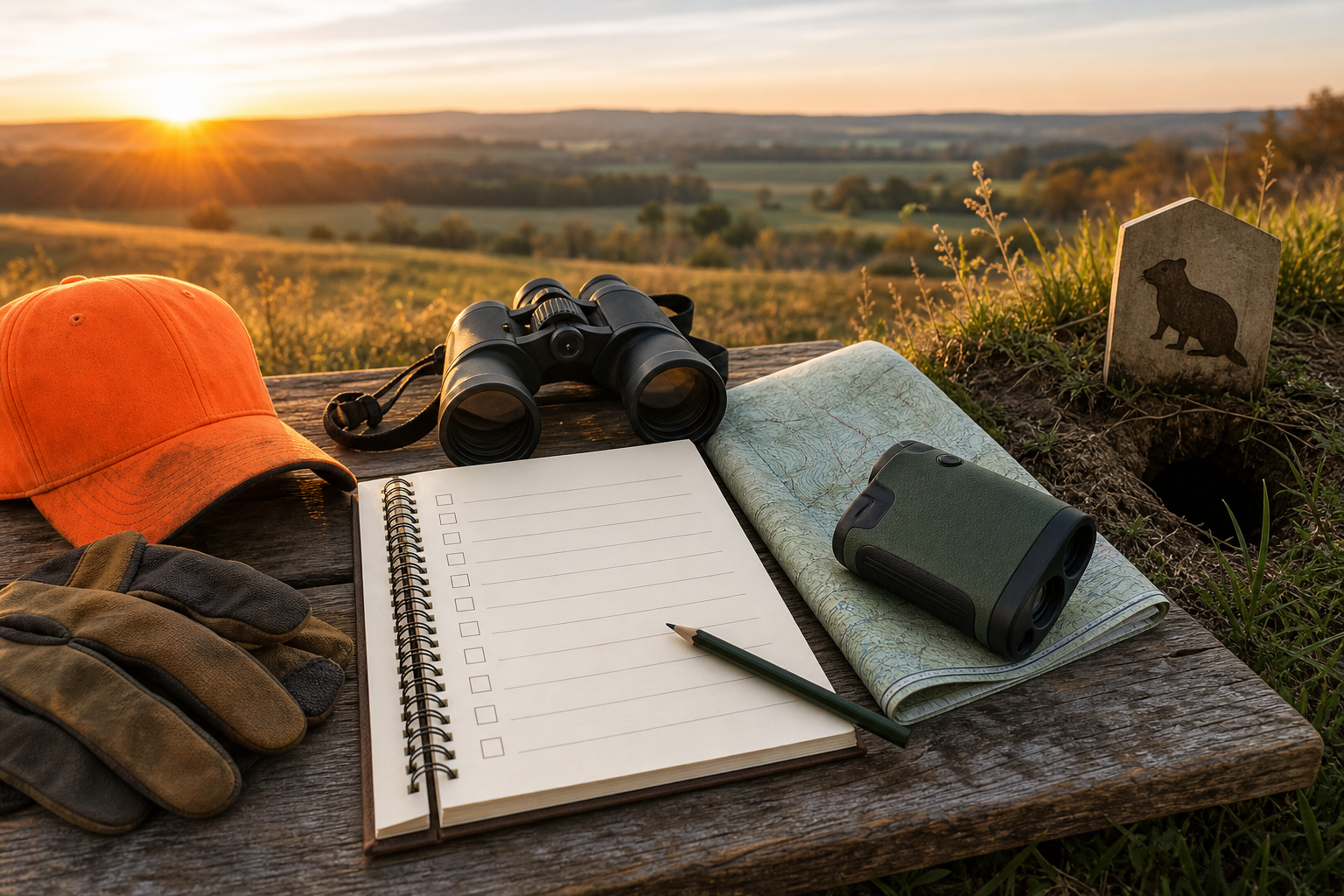
You do not need a complicated setup to hunt groundhogs, but you do need gear that supports observation, safe shooting, and legal compliance. Keep the kit simple and avoid carrying more than you can use quietly.
- Valid license, written permission if needed, and current regulation notes.
- Binoculars for watching burrows without walking into the area.
- Rangefinder or confirmed distance markers where legal and appropriate.
- Stable rest such as a bipod, shooting sticks, or pack support.
- Hearing and eye protection when firearms are used.
- Orange or high-visibility clothing where required or smart for the property.
- Water, sun protection, insect control, and a small first-aid kit.
- Notebook or phone note for burrow locations, wind, and safe shooting lanes.
How to Set Up Safely
A safe setup starts behind the trigger. Pick a position where the field of fire ends in a reliable backstop such as a dirt bank or downward angle into the ground. Avoid low-angle shots across flat fields unless you can clearly account for the entire path beyond the target.
Use Wind and Cover
Groundhogs rely heavily on alert behavior near their burrows. Set up with the wind in your favor, avoid unnecessary movement, and use shade, fence lines, hay bales, or terrain to break up your outline. If the animal ducks into the burrow, wait quietly instead of rushing the spot.
Confirm the Target
Do not shoot at movement, partial shapes, or sound. Confirm the groundhog clearly, confirm that hunting it is legal at that time and location, and confirm the backstop. If any part of that chain is uncertain, pass the shot.
Common Groundhog Hunting Methods
Still-Hunting Field Edges
Move slowly along field edges and pause often to glass. This works best when you already know where burrows are located. Keep your route quiet, stay out of the open when possible, and avoid cresting hills where your outline appears against the sky.
Watching Active Burrows
The simplest method is to sit where you can watch one or more active burrows and feeding strips. Cooler morning and evening periods can be productive, but weather, pressure, and local food sources matter. Patience usually beats constant walking.
Working With Landowners
Many groundhog opportunities come from farms, gardens, hay fields, and private land. Be clear about where you may park, where you may shoot, what buildings or livestock must be avoided, and whether the landowner wants you to report burrow locations or damage areas after the hunt.
Mistakes to Avoid
- Assuming one state’s groundhog rules apply everywhere.
- Shooting without a clear backstop.
- Walking directly over active burrows before setting up.
- Using a field position that points toward roads, houses, barns, or livestock.
- Ignoring wind and movement around the den site.
- Failing to communicate boundaries with the landowner.
Frequently Asked Questions
Is groundhog hunting legal?
It depends on your state, land type, season, license status, and local rules. Always check your current state wildlife agency regulations before hunting groundhogs or woodchucks.
What time of day is best for groundhog hunting?
Groundhogs are often easier to spot when they are feeding outside the burrow, commonly during cooler parts of the day. Local weather and pressure matter, so scout your specific property rather than relying on one fixed time.
Where should I set up for groundhogs?
Set up where you can see active burrows and feeding areas while keeping a safe backstop behind any possible shot. Downwind, shaded, and slightly elevated positions can help if they are safe and legal.
Can beginners hunt groundhogs?
Beginners can hunt groundhogs if they are licensed, supervised where required, trained in firearm or bow safety, and disciplined about backstops and legal rules. A mentor or hunter education course is strongly recommended.
Final Recommendation
The best groundhog hunt is planned before the first shot opportunity appears. Confirm permission and regulations, scout burrows from a distance, choose a safe backstop, and keep the setup simple. If the shot angle, rule, or target is not clear, wait. Good groundhog hunting rewards patience and field discipline more than rushing.