How the Moon Influences Deer Behavior: What Hunters Should Know
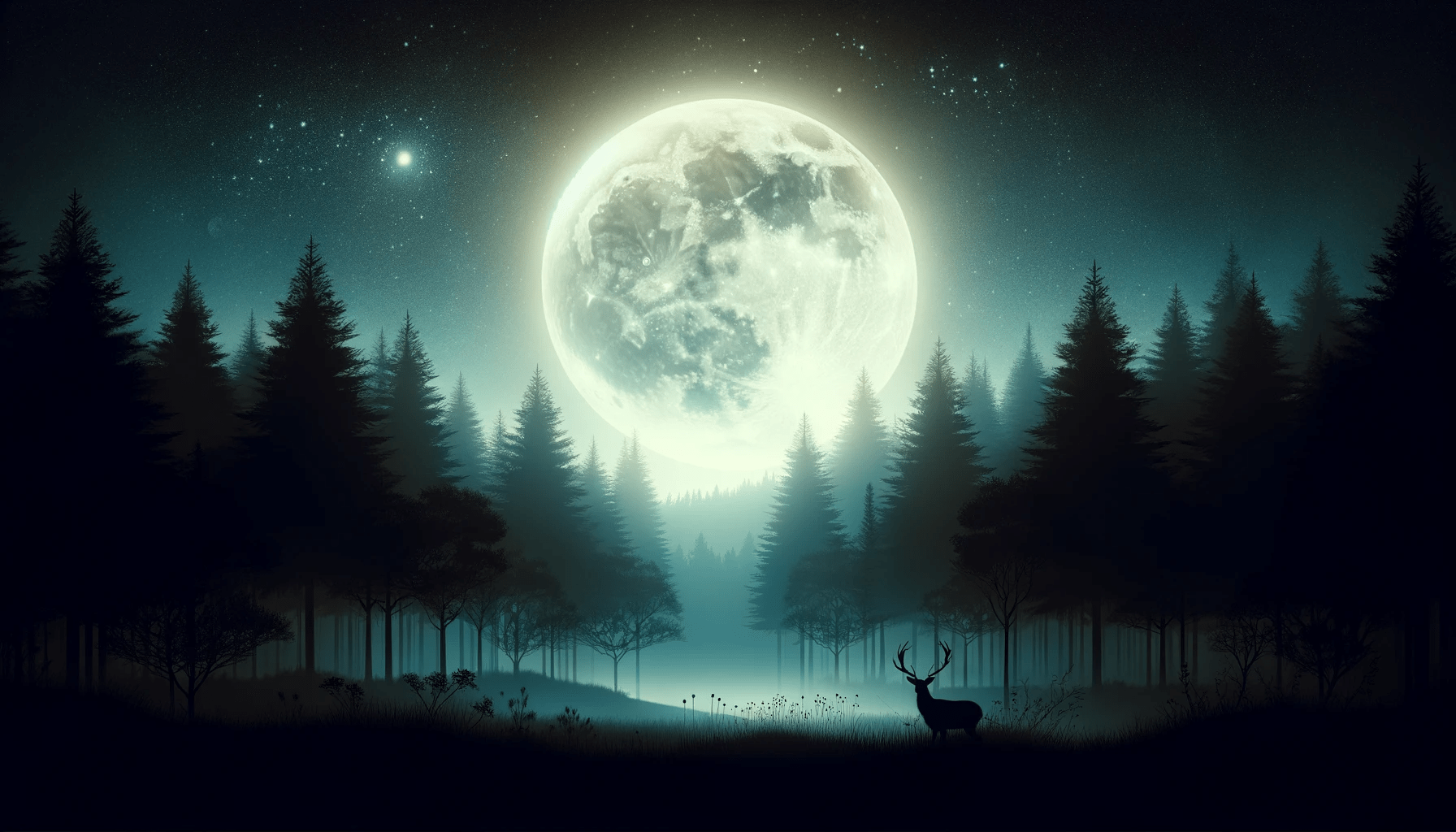
The moon may affect deer behavior a little, mostly through night visibility, but it should not be treated as the main driver of deer movement. For most hunters, weather, hunting pressure, food, cover, rut timing, wind, and daylight patterns matter more than the moon phase alone. Use moon information as a small planning note, not as a prediction system.
This is especially important during the rut. Bucks move because breeding pressure, doe location, temperature changes, security cover, and hunting pressure push them to move. A bright moon might shift some activity into nighttime in some places, but daylight movement can still happen. A new moon does not automatically create daytime action either.
Table of contents
Quick Answer: Does the Moon Influence Deer Behavior?
Yes, the moon can influence visibility and may affect when some deer move, but the effect is not strong enough to plan a hunt around by itself. A full moon can make it easier for deer to move at night. A darker night can change how deer use cover. But local pressure, weather, food, rut status, and wind often explain deer movement better.
The safest hunting takeaway is plain: do not skip a good wind, fresh sign, cool front, or active rut area just because the moon chart looks average. And do not expect a weak location to become good because the moon phase looks perfect.
Best Way to Think About the Moon
Treat the moon like a background condition. It may help explain what you see, but it should not outrank sign, wind, access, pressure, and legal shooting hours.
Moon Phases Explained Simply
The moon phase describes how much of the moon appears lit from Earth. A new moon is dark or nearly dark. A full moon is bright. Quarter moons sit between those ends. Hunters often talk about moon phase because brightness can change nighttime visibility.
Moonrise and moonset also matter if you track this closely. A full moon that is high at midnight is different from moonlight that overlaps early evening or late morning. Still, the practical value is limited unless you combine it with deer sign and local conditions.
The Four Basic Moon Terms
- New moon: darker nights and less moonlight.
- First quarter: increasing light after sunset.
- Full moon: brighter nights when skies are clear.
- Last quarter: moonlight often shifts later in the night or toward morning.
What Research Suggests About Deer and Moon Phase
Mississippi State University deer research summarized by MDWFP does not support the idea that moon phase alone drives where and when deer move. Some studies and biologists have found small shifts in timing, while hunters often report patterns that may also be caused by weather, pressure, mast crops, temperature, or rut activity. That is why moon claims should be written carefully.
For a practical hunter, the lesson is not that the moon is useless. The lesson is that it is one variable in a messy system. Deer live by food, safety, breeding pressure, bedding cover, and human disturbance. Moonlight may affect how those needs are met on a given night, but it does not erase the other factors.
Do Not Treat Moon Tables as Certainty
Moon tables can be interesting, but they should not replace scouting. If a moon table says movement should be good but your access is noisy and the wind is wrong, the hunt is still weak. If the moon table looks poor but you have fresh sign and a cold front, the hunt may still be worth sitting.
Moon Phase and the Rut
The rut is mainly driven by breeding biology and seasonal timing, not by one night’s moon phase. Photoperiod, or the changing amount of daylight, is a major seasonal cue. Local herd structure, weather, pressure, and doe movement shape what hunters actually see from the stand.
During the rut, bucks may move in daylight even under a bright moon because they are checking doe groups, scent lines, bedding edges, funnels, and travel corridors. A full moon might make some deer more active at night, but rut pressure can still put bucks on their feet during legal shooting hours.
Rut Timing Is Local
Do not use a national moon calendar to decide the rut in your area. Use local observation, state wildlife information, trail-camera history where legal, scrape activity, doe behavior, and past seasons from the same property.
Full Moon Deer Movement
A full moon can give deer more light at night, especially under clear skies. Some hunters believe this means more nighttime feeding and less early-morning movement. Sometimes that may fit what you see. Other times deer still move in daylight because weather, pressure, or breeding activity changes the pattern.
If you hunt during a full moon, consider mid-morning and midday sits when conditions make sense. Do not abandon dawn and dusk automatically. Watch the weather. A cold front after a warm spell can matter more than the moon phase.
Full Moon Field Notes
- Clear skies make moonlight more useful to deer than cloudy nights.
- Heavy pressure can push deer nocturnal with or without a full moon.
- Rut activity can override simple moon expectations.
- Midday movement may be worth watching in active rut areas.
New Moon Deer Movement
A new moon means darker nights. Some hunters like this because they believe deer may move more during daylight after darker overnight periods. That can happen, but it is only one possible pattern. Cloud cover, food location, predator pressure, people, and temperature still matter.
During a new moon, focus on normal high-value factors: fresh tracks, scrapes, rub lines, bedding-to-food routes, wind, and quiet entry. If the sign is old or the wind is poor, the moon phase will not fix the setup.
New Moon Field Notes
- Darker nights may reduce visibility in open feeding areas.
- Deer may still move at night using smell, hearing, and familiar cover.
- Morning sits can be useful near secure travel routes.
- Fresh sign still matters more than a dark sky.
Factors That Usually Matter More Than Moon Phase
If you have limited hunting days, prioritize the factors you can see and act on. Wind decides access. Pressure changes deer behavior. Food and cover decide where deer spend time. Weather changes movement and comfort. Rut status changes buck risk-taking. These are usually stronger hunting signals than moon phase.
For public land, pressure may be the biggest factor. Deer often react to where people park, walk, glass, call, and sit. If the moon looks perfect but other hunters are pushing the same field edge, your better move may be a quieter access route.
Rank Your Conditions This Way
- Legal season, tag, and shooting hours.
- Wind and safe access.
- Fresh sign and known deer use.
- Food, bedding, funnels, and cover.
- Weather change, especially temperature and wind shifts.
- Rut status and doe location.
- Moon phase as a small extra note.
How to Use Moon Data Without Overthinking It
Use the moon to shape small choices, not the whole hunt. If the full moon is bright and clear, you might add a midday sit or focus closer to bedding cover. If nights are dark, you might pay closer attention to morning travel. But keep the plan grounded in sign, wind, safety, and legal access.
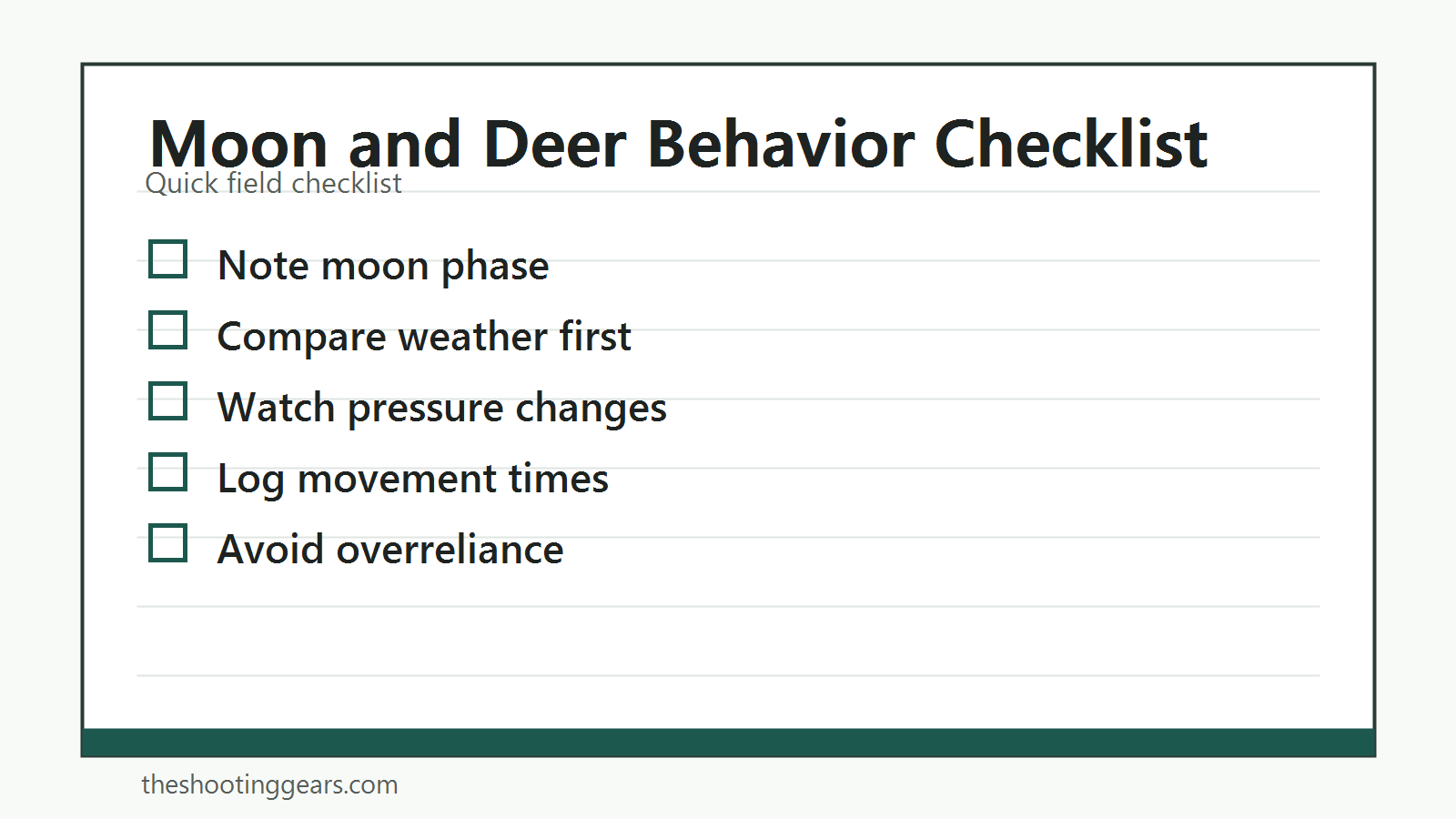
Keep notes for your own area. Write down moon phase, moonrise, weather, pressure, wind, temperature, deer sightings, and fresh sign. After a season or two, your own local records will be more useful than broad claims. For related field timing, see our guide to hunting the rut and our article on weather, lunar phases, and rut behavior.
Simple Moon-Aware Hunt Plan
- Check moon phase, but do not stop there.
- Choose a stand only if the wind works.
- Use fresh sign to confirm deer are using the area.
- Adjust timing based on weather and pressure.
- Keep safety and target identification ahead of all timing theories.
FAQ
Does a full moon make deer move all night?
Not always. A full moon can improve night visibility, but weather, pressure, food, cover, and rut activity still matter. Some deer may move more at night. Others may still move during daylight.
Is the new moon better for deer hunting?
It can be good, but it is not automatically better. A new moon means darker nights, which may affect movement, but local sign and conditions matter more than the moon chart.
Can moon phase predict the rut?
No. Moon phase should not be treated as a reliable rut predictor. Rut timing is tied to seasonal biology and local herd patterns, then shaped by weather and pressure.
Should I hunt midday during a full moon?
Midday can be worth trying during the rut or after a weather change, especially near bedding cover or travel corridors. But do not choose midday only because the moon is full.
What matters more than moon phase for deer movement?
Wind, hunting pressure, food, cover, weather, fresh sign, rut status, and safe access usually matter more. Moon phase is a secondary detail.
Are moon apps useful for deer hunting?
They can be useful for tracking moonrise, moonset, and light levels, but they should not make decisions for you. Use them with your own scouting notes and local conditions.
Final Thoughts
The moon is worth noting, but it is not the boss of deer movement. Hunt good sign with the right wind. Pay attention to pressure and weather. During the rut, stay near doe activity and travel routes. Let the moon explain small details, not override the basics.