Coyotes Hunting Prey: Behavior, Food Sources, and Movement Clues
Coyotes hunt by matching opportunity with efficiency. They look for vulnerable prey, use wind and cover, adjust to human pressure, and switch between solo hunting, pairs, and loose family-group behavior depending on food, season, and location.
This guide explains coyote prey strategies as wildlife behavior, not as guaranteed hunting tactics. Coyote movement changes with weather, food sources, breeding season, pup-rearing, human pressure, and local habitat, so treat every pattern as a clue to observe rather than a promise.
Table of Contents
Quick Answer
Coyotes usually target easy meals first: rodents, rabbits, carrion, fruit, insects, and occasionally larger prey when conditions favor them. Their hunting strategy is flexible. In open ground they may use sight and sound, in cover they may work edges and wind, and near people they often become more nocturnal or cautious.
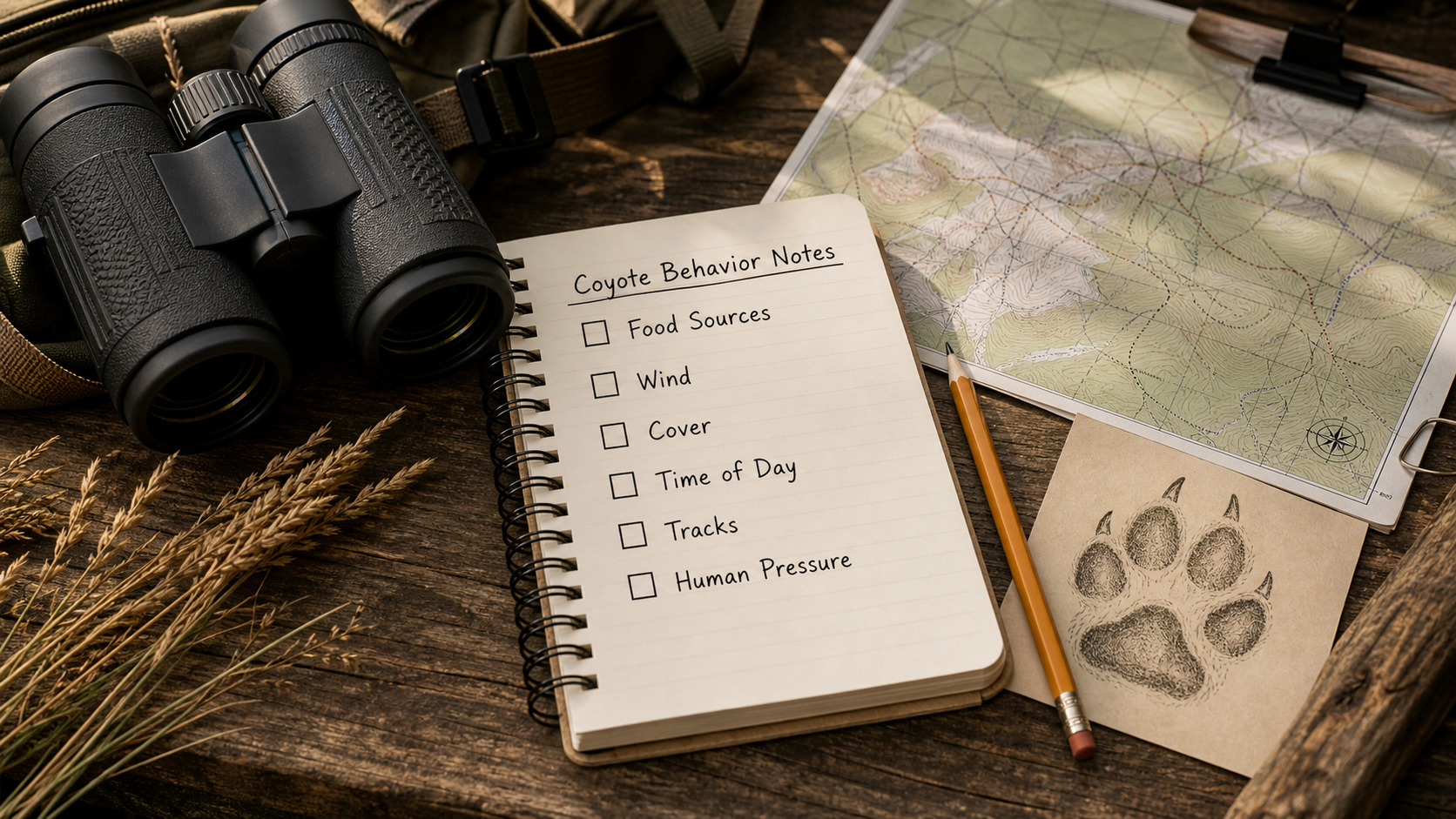
Coyote Behavior Notes Checklist
Good coyote observation starts with the landscape. Instead of asking only where coyotes are, ask why they would be there. Food, cover, wind, water, denning areas, human disturbance, and travel corridors usually explain more than a single track or howl.
- Food sources: rodents, rabbits, carrion, fruit, livestock afterbirth, insects, and seasonal prey.
- Cover: brush, creek bottoms, field edges, shelterbelts, timber, tall grass, and terrain breaks.
- Wind: coyotes often use scent information, especially in cover or around food.
- Time: activity can shift toward dawn, dusk, or night where human pressure is high.
- Tracks and scat: repeated sign matters more than one isolated mark.
- Human pressure: roads, farms, pets, hunters, and neighborhoods can change movement.
What Coyotes Eat
Coyotes are opportunistic omnivores. They eat small mammals, birds, reptiles, insects, fruit, carrion, and human-associated foods when available. The coyote species overview is a helpful broad reference for diet and range, while local wildlife agencies are better for local behavior and management concerns.
Small Prey Often Comes First
Rodents and rabbits are common targets because they are available and efficient to pursue. A coyote hunting mice in a field may pause, listen, pounce, and repeat. Around brush or field edges, it may travel slowly and check scent, movement, and sound before committing energy to a chase.
Larger Prey Is Context Specific
Coyotes can affect young, sick, injured, or vulnerable animals, but it is too simple to say they always hunt large prey the same way. Snow, drought, cover, prey health, scavenging opportunities, livestock practices, and local predator-prey balance all matter.
How Coyotes Find Prey
Coyotes use a mix of scent, hearing, sight, memory, and travel routes. In open country, they may scan and listen. In thick cover, scent and edge movement can matter more. Near farms, they may learn where rodents, carrion, or easy food appear regularly.
The most important idea is flexibility. Coyotes are successful because they adapt. A method that works in a quiet pasture may fail near a busy road or pressured public land. Food availability often explains the pattern better than the animal’s personality.
Solo, Pair, and Group Hunting
Many coyotes hunt alone, especially when pursuing small prey. Pairs may travel together during breeding season or around territories. Family groups can be more visible at certain times of year, but that does not mean every group is actively coordinating a large-prey hunt.
Howling also gets misread. A few coyotes can sound like more animals than are actually present. Vocalizations may relate to contact, territory, social behavior, or location, not only hunting. The Humane Society’s coyote encounter guidance is useful for understanding human-coyote conflict and safe responses around people and pets.
Habitat, Wind, and Human Pressure
Habitat shapes strategy. Open fields give coyotes visibility but less concealment. Creek bottoms and brushy edges give cover and travel routes. Suburban edges may provide food, but people, pets, traffic, and noise change behavior. Coyotes often adjust movement to avoid risk while still checking reliable food areas.
Why Pressure Changes Patterns
Repeated disturbance can make coyotes shift time, routes, and cover. That is why old sign is weaker evidence than current sign. A place that held activity last month may be quiet now if food moved, cover changed, livestock practices changed, or people increased pressure.
Seasonal Pattern Changes
Coyote behavior can shift through the year. Breeding season, denning, pup-rearing, harvest seasons, winter stress, and changing food availability all influence movement. In some areas, coyotes become more visible when cover is low or snow shows tracks. In others, food abundance can spread them out.
If you are studying coyote behavior for hunting, wildlife watching, or land management, use current local signs and rules. Seasons and legal methods vary widely, so confirm coyote hunting regulations with your state wildlife agency before taking action.
Reading Current Sign
Current sign is more useful than a dramatic story. Tracks near fresh mud, scat on travel routes, repeated camera activity, fresh hair, bird alarm behavior, and recent howling can all suggest coyote use. But one clue by itself is weak. Look for a pattern that connects food, cover, wind, and travel.
Also separate coyote behavior from domestic dog activity when possible. Tracks, scat location, travel lines, and repeated timing can help, but identification is not always perfect. If you are making wildlife management decisions around livestock, pets, or neighborhoods, contact local wildlife professionals rather than relying on guesswork from sign alone.
Ethical Observation and Hunting Context
Understanding predator behavior should lead to better decisions, not shortcuts. Around homes and pets, remove attractants, secure trash, supervise small animals, and follow local wildlife guidance. In hunting contexts, confirm laws, land permission, safe backstops, and firearm or archery safety before any shot.
For general hunter responsibility and preparation, resources such as Hunter Ed can help reinforce safety, planning, and ethical decision-making. Local wildlife biologists and state agencies are better sources for local population and management questions.
FAQ
What prey do coyotes hunt most?
Coyotes often target rodents, rabbits, birds, insects, carrion, and seasonal food. Their diet changes by location and availability.
Do coyotes hunt alone or in packs?
Many coyotes hunt alone, especially for small prey. Pairs and family groups can occur, but group travel does not always mean coordinated hunting.
What time are coyotes most active?
Coyotes can be active day or night, but they often shift toward dawn, dusk, or nighttime where human pressure is high.
Does howling mean coyotes are hunting?
Not necessarily. Howling can be social contact, territorial communication, or location signaling. It is only one clue, not proof of a hunt.
Final Takeaway
Coyote hunting behavior is flexible because coyotes are flexible. Watch food sources, cover, wind, current sign, and human pressure together. The more you read the whole landscape, the better you will understand why coyotes move the way they do.