Western Hunting Challenges: Terrain, Weather, Access, and Ethical Planning
Western Hunting Challenges: Terrain, Weather, Access, and Ethical Planning
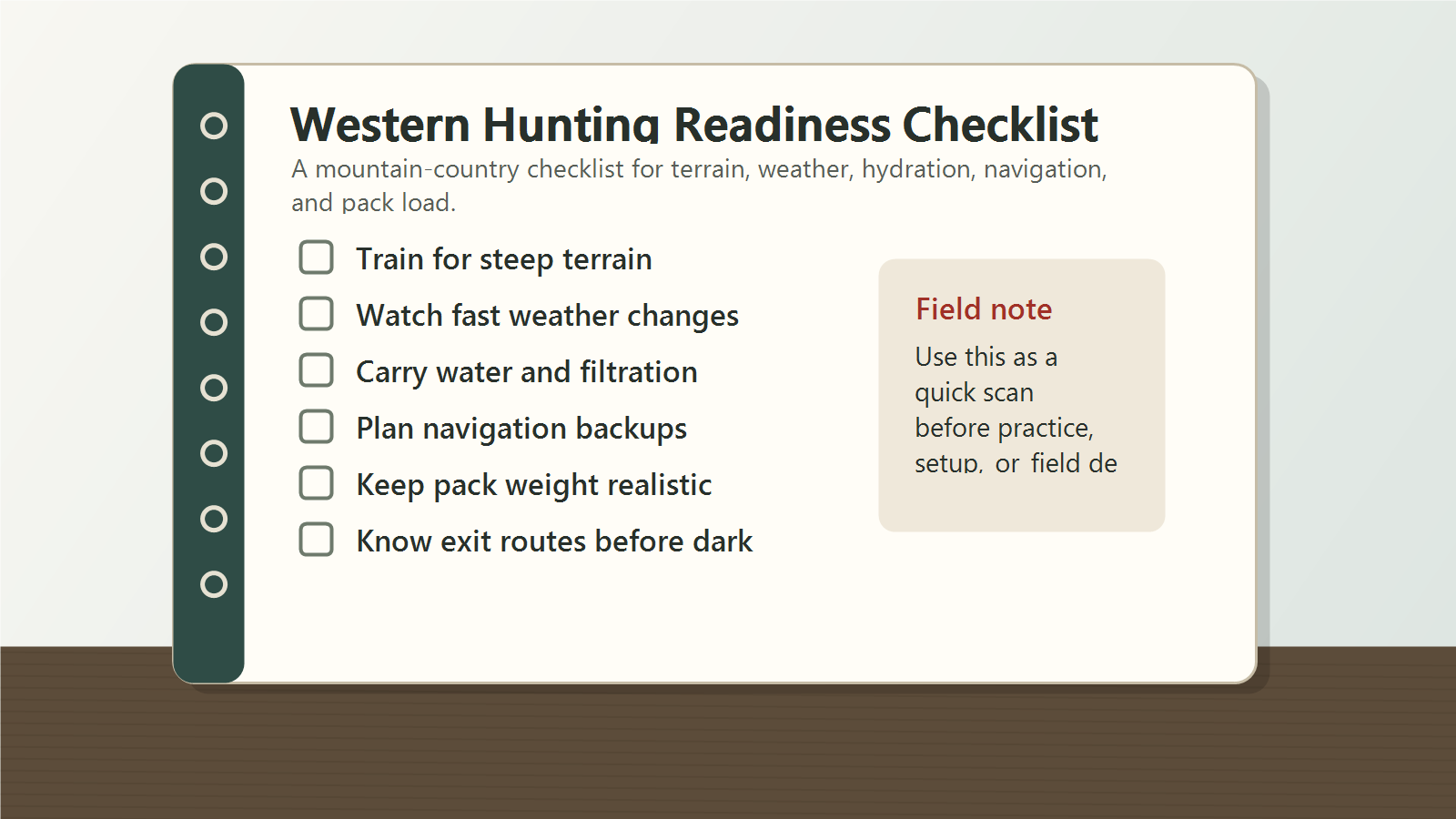
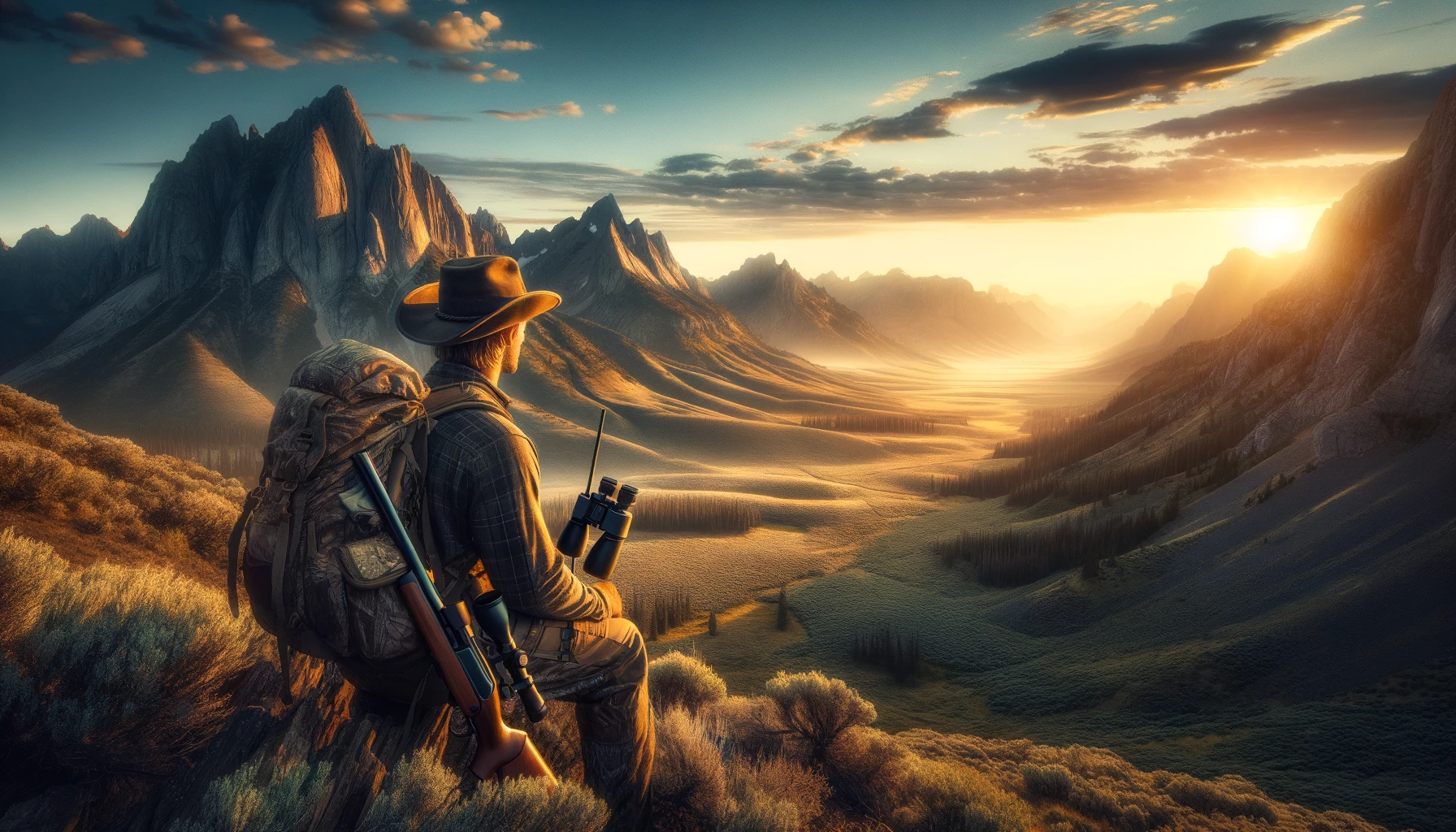
Western hunting asks more from a hunter than a calm walk to a stand. Elevation changes, dry air, fast weather swings, long approaches, private and public boundary changes, and hard recovery work can all show up on the same trip. The hunters who handle that well are not the loudest or the most aggressive. They are the ones who prepare in layers: regulations first, route second, physical effort third, and shot judgment last.
This article is built for that kind of hunt. Start with the rules for the exact unit or property, then match your plan to the ground, the forecast, your body, and the animal you are chasing. A western hunt rewards patience, basic fitness, careful navigation, and a clean limit on what shot you will take. It does not reward guesswork.
Table of contents
Quick Answer
The cleanest western hunting plan is simple: confirm the unit rules with your state wildlife agency, study the actual boundary lines, check the forecast from NOAA, and build a route that you can walk without wearing yourself out before the work starts. If the ground, the weather, or your condition makes the plan sloppy, change the plan. Good western hunters do not force a bad setup just because they reached it.
Use official public-land and safety sources early. The Bureau of Land Management explains how public access works on many western tracts, state wildlife agencies publish season and tag rules, and the National Weather Service gives you the weather warnings that matter before a climb, a ridge crossing, or a long pack-out. Leave No Trace guidance is useful too, because public land only stays useful when hunters treat it carefully.
Start With the rulebook
Before boots hit dirt, read the regulations for the exact unit, season, weapon, and species. The state wildlife agency site should tell you what is legal, what is closed, what the tag structure looks like, and whether the hunt area has special rules. For a western example of how agencies organize this information, Colorado Parks and Wildlife is a useful reference point at cpw.state.co.us. Your own state agency is the final authority.
Use the forecast like a planning tool
Weather is not background noise in the West. It is part of the route. Check heat, cold, wind, lightning, snow, and rain before every long approach. NOAA safety pages at weather.gov/safety/heat and weather.gov/safety/cold are useful reminders that a dry day can still become a dangerous day. If the sky can change faster than your plan, your plan needs a margin.
Plan the exit before the shot
Recovery is part of the hunt, not a later problem. Know how you will reach the animal, where shade or cool air might be, and how you will get meat out without rushing or drifting off the legal route. If that answer is vague, keep scouting or choose another basin, ridge, or drainage.
Terrain Is the First Obstacle
Western ground is often the first thing that changes the size of the hunt. Steep ridges, talus slopes, open benches, sage flats, burns, and basin country all punish poor pacing. A route that looks short on a map can become a long, slow climb when the slope bites and the wind is in your face. Terrain is not just where the animal lives. It is what the hunter has to negotiate to reach it.
Steep ground changes your speed
On steep country, your pace is controlled by traction, breath, and balance, not by ambition. A route that feels easy downhill can be punishing on the return trip with weight on your back. Pick lines that reduce fall risk, expose you less to wind, and leave energy for the final approach and the exit.
Loose rock and snow deserve respect
Rock slides, frozen gullies, mud, and patchy snow can make a short move risky. If footing is poor, shorten your steps, keep your hands free, and do not treat a steep sidehill like a trail. In shoulder season, one warm day can hide a slick patch under crusted snow or thawed mud. That is a good time to move slower, not a good time to prove anything.
Use land shape to save effort
Benches, saddles, breaks, drainages, and contour lines can save more energy than the latest gear ever will. Use terrain to keep your line efficient. A good route may not be the shortest one; it may be the one that lets you climb with better footing, stay out of the wind, and avoid needless sidehilling. The animal uses shape to move safely, and you should too.
Weather and Altitude
Altitude adds workload even before you notice it. Dry air makes you lose water faster. Thin air can make a normal pace feel too fast. Afternoon storms can bring lightning, cold rain, hail, or a fast temperature drop. The safe answer is not fear. It is planning with a wider buffer.
Altitude is a workload problem
At higher elevations, your breathing rate rises and your recovery between climbs slows. That means your normal flatland pace may be too aggressive. A measured pace is not weakness. It is how you keep your judgment intact for glassing, tracking, and the shot itself. If you arrive a day early, use that day to acclimate with short walks and plenty of rest.
Heat, cold, wind, and lightning all matter
Heat can drain you before sunrise if you are climbing steep ground in heavy clothing. Cold can numb fingers, reduce dexterity, and make a shot feel worse than it is. Wind can push your scent, your arrow, or your balance. Lightning can turn a ridge or high point into a place you should leave. NOAA warnings are worth checking because western weather often changes faster than people expect.
Know when the mountain says no
A bad weather window can be a good decision point. If a storm cell is building, if the temperature is dropping hard, or if the ridge is icing up, delay the push. Some hunts are lost because a hunter was in a hurry to keep a calendar. None are won by pretending a dangerous approach is still worth it.
Access and Boundaries
Access is one of the hardest western hunting problems because public land, private parcels, leases, road easements, and walk-in rules can intersect in the same area. A map that looks open from a distance may have fences, checkerboard corners, locked gates, or restricted corridors up close. Do not assume access because you can see land on a screen.
Read the map like a legal document
Start with official maps, then confirm on the ground. The BLM hunting and recreation pages at blm.gov/programs/recreation/hunting are a useful entry point for public-land access, but they do not replace local rules, travel restrictions, or unit-specific closures. Look for county roads, state routes, easements, access signboards, and private inholdings before you commit to a hike.
Respect fences, gates, and surface ownership
Some western areas look open because the airspace above them is open. That does not mean the surface is open. Stay off private ground unless you have permission. Do not cross a fence or use a road just because it is convenient. A clean access habit protects the hunt, the landowner, and the next person who wants to hunt there.
Permission changes the whole plan
If a hunt depends on private access, get the terms in writing or in a form you can show if needed. Know where you may park, how you may enter, what days are allowed, whether livestock are present, and whether you may recover an animal across a boundary. Good permission is clear permission. Vague permission creates problems later, usually at the worst possible time.
Legal Units and Tags
Western states often divide hunting opportunity into units, zones, districts, or hunt codes. Those details matter as much as the terrain. A good glassing knob in the wrong unit is still the wrong unit. A legal season in the wrong weapon class is still not legal. Read the map and the tag together, not separately.
Match the hunt area to the license
Know whether your tag is general, limited, either-sex, antler-specific, or tied to a specific species or method. Some western hunts involve draw odds, preference points, special permits, or late changes after emergency closures. Your state wildlife agency rules determine the structure, and those rules can differ even between nearby places.
Do not build a plan on old data
It is easy to make a trip plan from an old map or a note from last season. That is risky. Regulations change, season dates shift, roads close, fires alter access, and units can be reorganized. Use current agency information every season, even if you hunted the same place before. Hunting memory is useful; hunting memory without verification is not.
Special rules can change the hunt shape
Some areas have weapon restrictions, motor restrictions, camping rules, onX-style digital access overlays, shoot-from-road limitations, or distance requirements from roads and buildings. Do not guess. If a rule seems small, treat it as real. Small legal mistakes can end a hunt, create a citation, or make a recovery problem much worse.
Physical Preparation
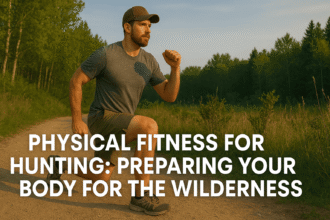
Physical prep matters because western hunting is often a long day of walking, bending, glassing, kneeling, and carrying. You do not need to pretend the hunt is a mountain race. You do need to be ready for sustained work without becoming sloppy when tired. That means steady training, basic mobility, and honest self-assessment.
Train for the actual effort
Prepare for hills, stairs, pack weight, and repeated stops and starts. Walk with a loaded pack. Climb with control. Add distance slowly. The goal is not to brag about mileage. The goal is to keep your legs, hips, back, and lungs from becoming the limiting factor during the part of the hunt that still requires clear thinking.
Feet, knees, and back deserve attention
Boot fit, sock choice, and blister prevention can make or break a western trip. So can knee stability and lower-back readiness. If your feet hurt badly after a short practice hike, that will not improve on a ten-mile day at elevation. Small fit problems become large problems when the route is steep and the pack is heavy.
Pacing is part of toughness
Pacing is not soft. It is what lets you keep hunting after the first climb. Use a speed that you can repeat, then pause before you need a dramatic recovery. If you are gasping, you are also making worse calls about wind, angle, and distance. A measured pace leaves room for judgment, and judgment is still the most important tool in the pack.
Hydration and Fuel
Dry air and long climbs can empty a hunter faster than expected. Dehydration shows up as fatigue, slower thinking, less steady movement, and a worse recovery after the shot. Food matters too. You do not need a complicated diet on the mountain. You do need water, sodium, and steady calories at the right time.
Start hydrated, not behind
Drink before the climb starts. Carry enough water for the actual route, not the optimistic route. Add electrolyte support if the weather is hot or the hike is long. Waiting until you are thirsty is usually too late in dry country, especially when the hunt already has you breathing harder than normal.
Eat before you feel empty
Long climbs burn more than people expect. Eat before your energy drops. Simple food that travels well is fine. The point is to keep your pace, decision-making, and body temperature stable. A hunter who crashes from poor fueling is more likely to rush the rest of the plan and less likely to make a clean shot call.
Recovery starts after the climb, not after the tag
Once you reach the glassing point or setup, keep sipping water and keep eating in small amounts. If the route out may be long, build in a pause before the return. The body that handled the climb still has to handle the pack-out. Treat that as part of the day, not as an afterthought.
Navigation and Mobility
Western navigation has to work when the light is poor, the slope is repetitive, and the landmarks all start looking the same. A paper map, a compass, and a GPS or phone with saved maps belong together. One tool can fail or run out of battery. The trio gives you a better chance of making the right move.
Use both digital and paper navigation
Mark your truck, camp, boundary lines, water, steep drainages, likely bedding areas, and exit routes before you leave. Then confirm in the field. A map app is useful, but paper still helps when the screen is wet, the battery is low, or the glare is bad. Navigation errors often happen when a hunter is tired and hurrying, so slow down before you need to correct a mistake.
Leave a trail of decisions, not just footprints
Tell someone where you are going, which drainage or ridge you plan to use, and when you expect to be back. If the plan changes, update that person. In wide country, a clean communication habit matters as much as a good route. It gives help a starting point if weather or injury changes the day.
Move with light and wind in mind
Early starts and late exits are normal in western hunting. Bring a headlamp with fresh batteries and use it before you need it. Keep wind direction in the plan, because a clean route on paper can become a poor route if it dumps your scent into the basin or sends your noise toward the animal. Mobility is not just about feet. It is about how you move through the whole field.
Recovery and Meat Care
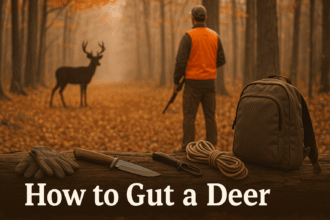
Once the animal is down, the job changes fast. The shot itself may be brief, but the recovery may take longer than the hunt that led to it. In western country, heat, distance, and rough terrain all raise the stakes. Meat care is not optional and it does not wait for perfect conditions.
Field care begins at the shot
The first task after a clean hit is to stay calm, confirm the result, and approach carefully. Then tag and field dress or cool the animal according to your species, local rules, and conditions. If the weather is warm, create airflow and shade as quickly as possible. If the weather is cold, keep dirt and snow off the meat while you work.
Warm weather shortens your margin
In heat, every minute matters. Choose your cutting and packing sequence so you can cool the meat first and argue with the terrain later. If quartering or boning is legal and appropriate in your state, it can help move meat faster. Use clean bags, avoid contamination, and keep the meat protected during the walk out.
Pack-out plans should be made before the hunt
Think about how many trips are realistic, how much weight you can carry safely, and whether you need help. A solo hunter may need to stage meat, leave a route marker, or use a better access point than the one used for the stalk. Do not improvise the pack-out from pure adrenaline. The best outcome is the one that keeps the meat in good shape and keeps you upright.
Ethical Shot Limits
Western country can tempt hunters into stretching distance because the landscape is open and the view is long. That is not the same as being ready for the shot. Ethical shot limits are about your skills, the wind, the rest you have, the animal’s angle, the light, and what happens after the trigger or release. If the shot is not honest, do not take it.
Range is only one part of the decision
A distance that looks reasonable on a hillside may be poor once the angle, wind, breathing, and footing are factored in. A shot can be legal and still be the wrong call. The ethical limit is where your ability, your equipment, and the field conditions line up with a high chance of a clean result.
Angles and rest matter more than ego
Steady rest, clear target identification, and a workable angle are part of the shot. If you are bent awkwardly, shaking from exertion, or unsure of the background, pass. If the animal is feeding in a way that gives only a poor presentation, wait or move, if movement can be done cleanly. Calm restraint is a skill.
Passing a shot can be the right field decision
Hunters sometimes feel pressure to shoot because the animal is there, the season is short, or the trip was expensive. None of that changes the standard. A missed or wounded animal costs more than a missed chance. Ethical planning means knowing your boundary before you ever see the animal, then respecting that boundary when it matters.
Final Thoughts
Western hunting asks for discipline in places where the map is large and the margin is small. The good news is that the work is not mysterious. Check the state rules, confirm access, read the weather, respect altitude, train for the actual effort, and keep your shot standard honest. Those habits do not need drama. They need repetition.
If you keep the plan grounded in official regulations, safe weather judgment, clean navigation, and careful meat care, the hunt becomes more manageable and more respectful to the land and the animal. That is the kind of preparation that holds up when the ridge is steep, the wind shifts, or the day runs long.