Best Bows for Women
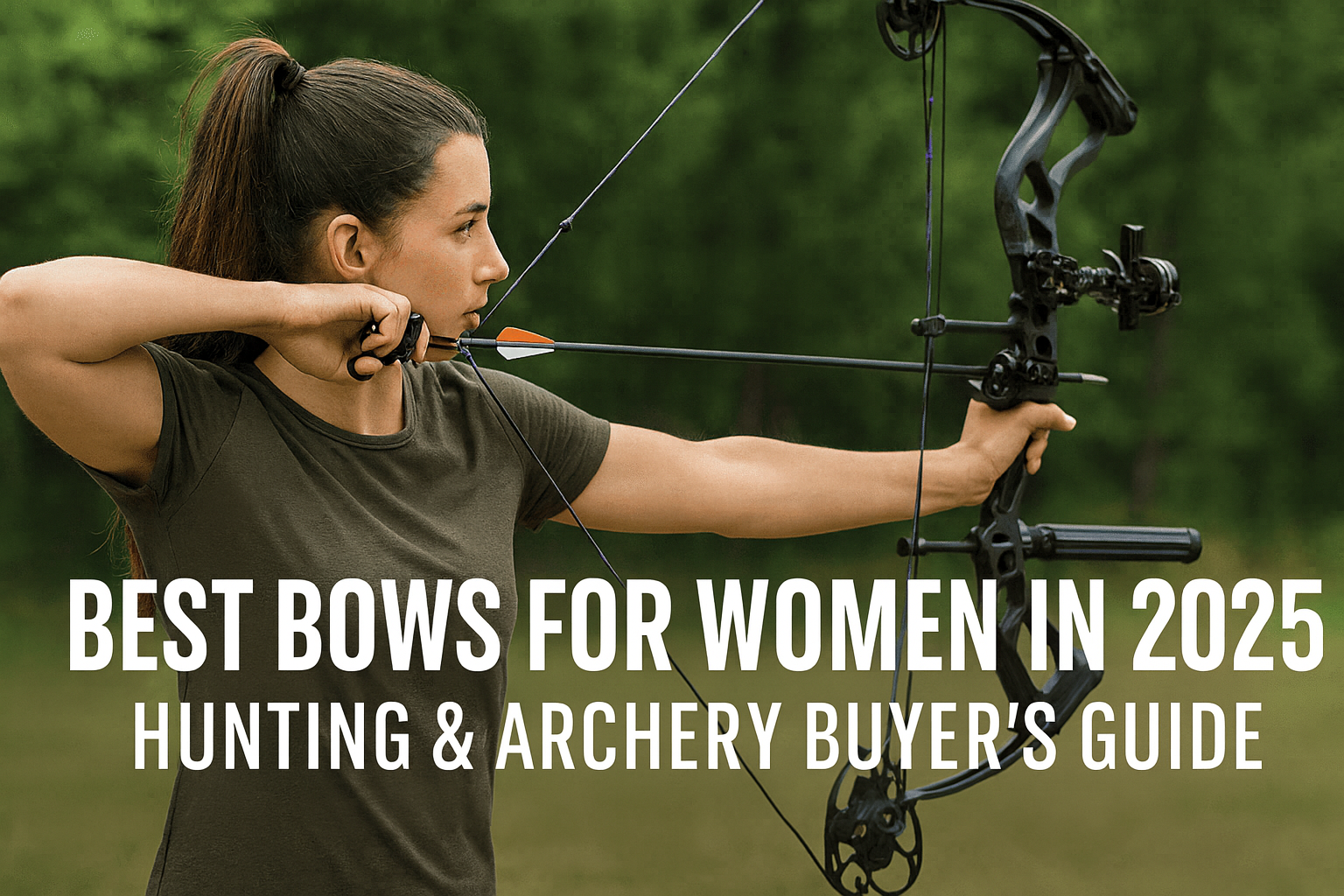
Archery has seen a massive rise in popularity among women in recent years. From recreational backyard shooting to competitive target archery and hunting, more women are discovering the thrill, skill, and satisfaction that bows provide. But here’s the challenge: not all bows are created equal, and women often need bows built around specific measurements such as draw weight, draw length, grip size, and overall comfort.
This guide walks through the bows we think are genuinely worth a look for women archers in 2026, why draw length and draw weight matter more than brand names, and how to avoid the most common fitting mistakes. Whether you’re picking your first bow or upgrading from a hand-me-down that never quite fit, the goal here is to help you choose gear that matches your body, not the other way around.
Table of contents
Quick Picks Table
Here’s the short version. Each bow below links to its own product page so you can check current stock and options before reading the full breakdown.
| Bow | Type | Draw Weight Range | Draw Length Range | Best For | Check Price |
|---|---|---|---|---|---|
| Bear Archery Pristine RTH | Compound (built for women) | 30-50 lbs | 24-28.5 in | Women who want a bow engineered around their frame from the start | Check Price |
| Bear Archery Royale RTH | Compound (beginner set) | 5-50 lbs | 12-27 in | Smaller-framed beginners and shared family bows | Check Price |
| Diamond Archery Edge XT | Compound (versatile) | 20-70 lbs | 19-31 in | Women who want one bow that grows from beginner to advanced | Check Price |
| Samick Sage Takedown Recurve | Recurve (traditional) | 25-60 lbs | up to 28 in | Traditional archery, target practice, budget starter bow | Check Price |
| Genesis Original Compound | Compound (ultra-light draw) | 10-20 lbs | 15-30 in | Absolute beginners building form before increasing draw weight | Check Price |
How We Chose
We looked for bows that cover the draw weight and draw length ranges most women actually fall into (roughly 24-28 inches of draw length and 25-50 pounds of draw weight for adults, lower for beginners still building shoulder and back strength). We also weighted adjustability heavily, since a bow that can grow with your strength and skill saves you from buying a second bow within a year. Every listing below was checked directly on Amazon at the time of writing to confirm the product page, specs, and availability.
1. Bear Archery Pristine RTH Compound Bow for Women
The Pristine is one of the few compound bows on the market built specifically around a shorter draw archer rather than adjusted down from a men’s frame. Bear Archery designed it with a 29 inch axle-to-axle length and a 6.5 inch brace height, which keeps the bow compact and forgiving for smaller shooters, and paired it with the EKO SD cam system for a smooth draw cycle at 80 or 85 percent let-off.
Best for: Women who want a hunting-ready bow that was designed for their draw length and frame rather than adapted from a unisex model.
Key specs (from the Amazon listing): Draw weight 30-50 lbs adjustable, draw length 24-28.5 in adjustable, axle-to-axle 29 in, brace height 6.5 in, speed up to 305 fps, comes Ready to Hunt with a Trophy Ridge rest, sight, quiver, and stabilizer, made in the USA.
Pros
- Draw length and draw weight ranges are built around a shorter-draw archer, not just scaled down.
- Ships fully accessorized, so there is no separate shopping trip for a rest, sight, or stabilizer.
- Compact 29 inch axle-to-axle length is easy to maneuver in a tree stand or ground blind.
- Built-in string stop and dampener keep the shot quiet, which matters for hunting.
Cons
- Draw weight tops out at 50 lbs, so archers who eventually want to shoot heavier will outgrow it.
- As a newer release it has a thin customer review history, so real-world feedback is still limited.
- Stock availability on Amazon has been tight, so it is worth checking current inventory before you commit.
Skip this if: you want the widest possible draw weight range in a single bow so you never have to upgrade, or you specifically want a longer track record of customer reviews before buying.
2. Bear Archery Royale RTH Compound Bow
The Royale is built to grow with a shooter over years, not months. Its draw length range starts at 12 inches and stretches to 27 inches, and draw weight adjusts from 5 lbs all the way to 50 lbs, which makes it one of the most forgiving starter bows for a woman who is brand new to archery or shopping for a bow the whole family can share.
Best for: Beginners who want serious room to grow, and households where a mother and daughter (or two smaller-framed shooters) might share one bow.
Key specs (from the Amazon listing): Draw weight 5-50 lbs adjustable, draw length 12-27 in adjustable, speed up to 290 fps, bow weighs 2.7 lbs on its own and 3.3 lbs with accessories, includes Trophy Ridge and Fletcher Archery accessories.
Pros
- Massive adjustability range means it can start a shooter at a very light draw weight and grow with them for years.
- At 2.7 lbs bare, it is one of the lightest Ready to Hunt compound bows available.
- Priced well below most Ready to Hunt packages while still including a full accessory set.
- Draw length range down to 12 inches works well for a shared bow between a mother and a younger daughter.
Cons
- 50 lbs maximum draw weight is enough for most hunting situations but leaves less headroom than the Edge XT.
- Included accessories are entry-level and some archers will want to upgrade the sight or rest later.
Skip this if: you already know you want to shoot above 50 lbs, or you would rather buy a bare bow and build your own accessory setup from the start.
3. Diamond Archery Edge XT
The Edge XT is Diamond Archery’s current version of the adjustable bow line that made the brand a go-to recommendation for new archers of every size. Draw length adjusts tool-free from 19 to 31 inches by removing the module screws, and draw weight covers 20 to 70 lbs, which gives it the widest range of any bow on this list. That range is exactly why it shows up so often as a recommendation for women who want a single bow to carry them from their first lesson through their first hunting season.
Best for: Women who want one bow that can start light and grow into serious hunting weight without switching bows.
Key specs (from the Amazon listing and Diamond Archery’s own comparison chart): Draw weight 20-70 lbs, draw length 19-31 in, axle-to-axle 31 in, brace height 6.75 in, speed up to 300 fps, mass weight 3.7 lbs, includes a 4-arrow quiver, 3-pin sight, 5 inch stabilizer, brush rest, and wrist strap with peep.
Pros
- Widest draw weight range on this list, so it genuinely can go from a first lesson to full hunting weight.
- Draw length adjustment is tool-free and does not require a bow press for most changes.
- Fully accessorized package saves a separate accessory purchase.
- Strong reputation and a long track record, since this line has been a staple beginner recommendation for years.
Cons
- 20 lbs minimum draw weight is higher than the Genesis or Royale, so it is less ideal for a very light starting point.
- A small number of reviewers have reported the plastic draw length module cracking under heavy use, so factory tuning and a check-up at a pro shop before your first hunt is worth the trip.
- At 3.7 lbs it is not the lightest bow here.
Skip this if: you want the absolute lightest possible starting draw weight, or you prefer a bow with a smaller, simpler accessory package.
4. Samick Sage Takedown Recurve Bow
If you’d rather learn traditional form without cams, let-off, or sights, the Samick Sage is the recurve most beginner archers land on first. It breaks down into three pieces (riser and two limbs) for easy transport and storage, and the limbs are interchangeable, so you can start light and buy a heavier set of limbs later without replacing the whole bow. Customer reviews on this bow repeatedly single it out as a favorite first bow for women and smaller-framed shooters specifically.
Best for: Traditional archery, target practice, and anyone who wants to learn proper form on a simple, mechanical-aid-free bow before considering a compound.
Key specs (from the Amazon listing): 62 in overall length, maximum recommended draw of 28 in, draw weight sold in 25, 30, 35, 40, 45, 50, 55, and 60 lb limb options, bow weighs 1.5 lbs, riser is maple wood with fiberglass-laminated limbs, available in right and left hand.
Pros
- Interchangeable limbs let you start at 25 lbs and move up in draw weight without buying a new riser.
- Extremely lightweight at 1.5 lbs, which makes it easy to carry and shoot for long practice sessions.
- Well-proven design with a long history and a large base of customer reviews to check before buying.
- Budget-friendly compared to every compound bow on this list.
Cons
- No let-off, sights, or mechanical aids, so it takes more practice to shoot accurately than a compound bow.
- Some reviewers have reported limb bolt alignment issues on individual units, so check the fit carefully when you assemble it.
- The stock Dacron string is a common upgrade, most archers replace it with a Fast Flight string after a season of use.
Skip this if: you want sights, a mechanical let-off, or the fastest possible learning curve for consistent accuracy.
5. Genesis Original Compound Bow
The Genesis Original is the bow used in school and youth archery programs across the country for a reason: it has no valleys or let-off, which means it can be drawn and held comfortably at any length within its range without swapping cams or modules. That single-cam, no-let-off design also makes it one of the lightest possible starting points for building proper shooting form before stepping up to a heavier bow.
Best for: Absolute beginners, women returning to archery after years away, or anyone who wants to build muscle memory and form at a very light draw weight first.
Key specs (from the Amazon listing): Draw weight 10-20 lbs adjustable, draw length 15-30 in adjustable, aluminum riser, single-cam design with no let-off, available in multiple colors and both draw hands.
Pros
- 10-20 lb draw weight is the lightest on this list, ideal for building form without straining shoulders or back.
- One bow fits a wide range of draw lengths (15-30 in) without changing parts.
- Extremely lightweight riser makes it easy to hold at full draw for repeated practice reps.
- Well-suited for group lessons, archery classes, or a first bow before committing to a hunting setup.
Cons
- 20 lb maximum draw weight is too light for hunting in most states, so this works best as a form-building or target bow.
- Does not come with a sight or rest in every listing configuration, so double-check what is included before you buy.
Skip this if: you already have solid form and want a bow with hunting-legal draw weight right out of the box.
Buying Guide: Fitting a Bow to You
The single biggest mistake we see is buying a bow before knowing your draw length. Everything else, draw weight, bow style, hand orientation, follows from that one number.
Draw Weight and Draw Length Fitting for Women
Get your draw length measured at a pro shop if you can. Most women fall somewhere between 24 and 27 inches, but body proportions vary enough that guessing from height alone is unreliable. A bow set too long forces you to lean back or collapse your shoulder at full draw, which wrecks accuracy and consistency long before it wrecks your confidence.
- Start your draw weight lower than you think you need. You can always increase it as your back and shoulder muscles adapt.
- For target practice and form-building, 10-25 lbs is a reasonable starting range.
- For hunting, check your state’s minimum legal draw weight before you buy, since most states require a minimum in the 35-40 lb range for ethical big game shots.
- Choose a bow with a wide adjustable range so you are not shopping for a second bow within a year.
Recurve vs Compound Bows
Recurve bows like the Samick Sage are simpler, lighter, and cheaper, but they demand more consistent form since there is no mechanical let-off to help you hold at full draw. Compound bows use a cam system that reduces the holding weight once you reach full draw, sometimes by 80 percent or more, which makes them easier to hold steady while aiming and generally easier to shoot accurately as a beginner. If you are drawn to traditional archery, target competition, or just want a simpler tool to learn fundamentals on, start with a recurve. If your priority is hunting or fast progress toward consistent groups, a compound is usually the more forgiving choice.
Left-Hand vs Right-Hand
Hand orientation for archery is based on your dominant eye, not your dominant hand. Do a quick eye dominance test (extend your arms, make a small triangle with your hands around a distant object, then close one eye at a time to see which eye keeps the object centered) before you order a bow, since most compound bows are sold as separate right-hand and left-hand models and switching later usually means buying a new bow.
Safety Notes
- Always wear an arm guard until you are confident your form keeps the bowstring clear of your forearm, string slap is one of the most common beginner injuries.
- Use a finger tab or a mechanical release aid rather than shooting bare-fingered, especially at higher draw weights.
- Have a new bow checked and tuned by a pro shop before your first real shooting session, factory setup is not always shooting-ready.
- Never dry-fire a bow (drawing and releasing without an arrow), it can damage the bow and cause injury.
- Start at a short, controlled range with supervision before moving to field conditions or a hunting setup.
- Inspect strings, cables, and limbs for wear or cracks before every session, and store your bow away from extreme heat or direct sunlight.
FAQ
Q: What draw weight should a woman start with when learning archery?
A: Most instructors recommend starting around 10-25 lbs for pure form-building, then increasing gradually as your back and shoulder muscles adapt. If you plan to hunt, you will eventually need to reach your state’s minimum legal draw weight, which is commonly in the 35-40 lb range, but there is no rush to get there in your first weeks of practice.
Q: How do I find my draw length without visiting a pro shop?
A: Measure your wingspan (fingertip to fingertip with arms fully extended) in inches, then divide by 2.5. That gives a rough estimate, but it is still worth confirming with a pro shop or an experienced archer once you can, since posture and shoulder mobility affect the real number.
Q: Is a recurve or a compound bow better for a beginner woman archer?
A: Neither is objectively better, it depends on your goal. A recurve like the Samick Sage teaches fundamental form since there is no mechanical let-off to lean on. A compound bow like the Diamond Edge XT or Bear Royale is generally easier to hold steady at full draw and tends to produce consistent accuracy faster, which is why many hunters prefer compounds.
Q: Can I use a men’s or unisex compound bow instead of a women’s-specific model?
A: Yes, as long as the draw length and draw weight ranges fit you. The Diamond Edge XT and Bear Royale are not marketed specifically to women but both adjust down to draw lengths and weights that work well for most women. A bow like the Bear Pristine, built around a shorter-draw archer from the start, simply removes some of the guesswork.
Q: How much draw weight do I need to hunt deer with a bow?
A: Requirements vary by state, so check your local regulations before you buy or hunt. Many states set a minimum around 35-40 lbs for ethical shot placement on deer-sized game, and several of the compound bows in this guide (the Bear Royale, Diamond Edge XT, and Bear Pristine) all adjust up into or past that range.
Q: Do I need to buy arrows, a sight, and a release separately?
A: It depends on the bow. Ready to Hunt packages like the Bear Pristine, Bear Royale, and Diamond Edge XT include a sight, rest, quiver, and stabilizer, but none include arrows, so you will need to buy arrows matched to your draw length and draw weight separately. The Samick Sage and Genesis Original are sold as bare bows or with only basic accessories, so budget for a rest, arrows, and (for the Samick Sage) a finger tab or glove.
Final Recommendation
If you want a bow that was actually designed around a shorter draw length rather than adjusted down from a men’s model, the Bear Archery Pristine is the most direct answer to “best bow for women” on this list. If you would rather have the widest possible adjustment range so one bow can carry you from your first lesson to full hunting weight, the Diamond Archery Edge XT and Bear Archery Royale both cover that ground well, with the Royale being the lighter and more budget-friendly of the two. And if you want to learn traditional form on a simple, dependable recurve before deciding whether a compound is worth the investment, the Samick Sage remains one of the most trusted starter bows in the sport.
Whatever you choose, get your draw length measured first, start at a manageable draw weight, and have the bow tuned by a pro shop before your first real session. The right fit matters far more than the brand name on the riser.
Related reading: youth archery gear guide and bow sight setup guide.