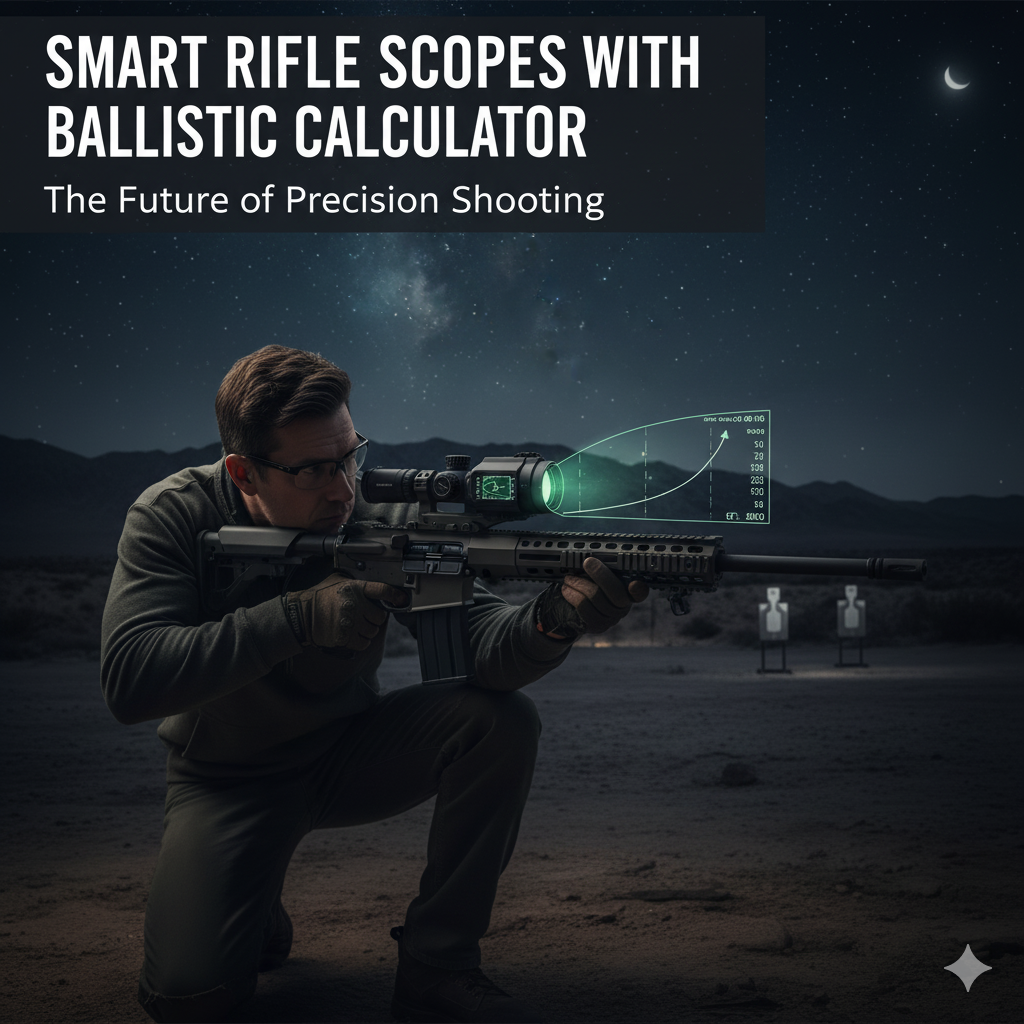
Smart rifle scopes with ballistic calculators can help a shooter estimate holdover, wind holds, and distance-based adjustments, but they do not make a rifle accurate by themselves. The calculator is only as good as the rifle data, ammunition data, weather input, zero, shooter skill, and judgment behind it.
For hunters and range shooters, the safe way to use this technology is simple: treat the scope as a decision aid, not a shortcut. Confirm your zero, verify drops on paper or steel at known distances, understand your reticle, and stay inside the distance where you can make repeatable hits under real conditions.
Table of contents
Quick Answer
A smart rifle scope with a ballistic calculator is useful when you already have a safe rifle setup, a confirmed zero, correct ammunition data, and enough practice to read wind and manage recoil. It can speed up a firing solution, but it cannot replace fundamentals, safe handling, ethical shot judgment, or live-fire verification.
If you are new to scoped rifles, learn the basics first: zeroing, parallax, reticle use, range estimation, and trigger control. Then use the smart features as support, not as the main reason to take a difficult shot.
What Smart Rifle Scopes Do
A smart rifle scope may combine a rangefinder, digital display, ballistic calculator, environmental sensors, Bluetooth app setup, or electronic reticle guidance. The feature set changes by brand and model, so read the manual before relying on any function in the field.
The basic job is to estimate where the bullet should land after gravity, distance, angle, weather, and wind are considered. Some systems suggest a hold point. Others give a dial value, reticle mark, or correction in MOA or MIL.
Range and angle data
Distance is the first input most shooters think about. Some smart scopes include ranging tools, while others need distance from a separate rangefinder. Uphill and downhill angles can also change the correction, especially when the shot is steep.
Drop and wind correction
The calculator may estimate bullet drop and wind drift from your ammunition profile. That estimate can be helpful, but wind is still hard to read. A gust at the shooter, the target, or halfway downrange can change the impact.
Digital reticle or app support
Some smart scopes use an app for rifle profiles and ballistic data. Others place information inside the optic. Either way, battery life, screen visibility, controls, and app reliability should be part of the buying decision.
Inputs That Decide the Answer
The answer from a ballistic calculator depends on the quality of the inputs. If the data is guessed, copied from a box without verification, or entered with the wrong units, the answer can be off.
- Zero distance: confirm the rifle is actually zeroed with the ammunition you will use.
- Muzzle velocity: published numbers may differ from your barrel and conditions.
- Bullet data: bullet weight, ballistic coefficient, and bullet type should match the load.
- Sight height: measure the height from bore centerline to scope centerline.
- Weather: temperature, pressure, humidity, and density altitude can affect the solution.
- Wind: wind speed and direction are estimates, and field wind is rarely uniform.
Ammunition data should be verified
Use the ammunition maker’s information as a starting point, then confirm the rifle on the range. Organizations such as SAAMI are useful for standards context, but your exact rifle and load still need live-fire confirmation.
Weather data is not a magic answer
Weather can change quickly, and wind between you and the target may be different from the reading at your position. Public weather sources such as NOAA weather information help with planning, but they do not replace field observation.
What Smart Scopes Cannot Do
A calculator cannot correct poor trigger control, unstable body position, bad ammunition data, loose mounts, scope tracking problems, or a rifle that is not zeroed. It also cannot decide whether a shot is ethical, legal, or safe.
This matters most for hunting. A far target, moving animal, wind, low light, brush, and stress can make a shot much harder than a clean range calculation suggests.
They cannot read all wind
Wind reading is one of the hardest parts of longer shots. A scope may accept a wind value, but the shooter still has to judge direction, speed, terrain effects, and changes downrange.
They cannot replace rifle fundamentals
Breathing, trigger press, recoil control, natural point of aim, and follow-through still matter. Smart features are helpful only when the shooter can make repeatable shots with a normal scope too.
They cannot override safety rules
Follow firearm safety rules first. The NSSF firearm safety rules are a good public reference, and Hunter Ed is useful for hunting safety education. No optic changes the need to know your target and what is beyond it.
Why Range Verification Matters
Before trusting any ballistic solution, shoot groups at known distances and compare impact to the scope’s suggested correction. Start close, then work farther only when the rifle, shooter, and data stay consistent.
Do not treat a phone profile or factory chart as final. Confirm the exact rifle, optic, mount, ammunition, and shooting position you plan to use.
Check zero first
A bad zero makes every correction worse. Confirm zero after mounting, travel, rough handling, ammunition changes, or any hard impact to the rifle or scope.
Track your real drops
Write down the correction that works at each distance. If the calculator and target results disagree, adjust the profile only after checking the setup, velocity, unit settings, and scope tracking.
Use proven long-range basics
For related fundamentals, see our guides on using a scope for long-range shooting, rifle scope parallax adjustment, and choosing the right reticle.
Using Them for Hunting
For hunting, the calculator should help confirm a shot you are already prepared to make. It should not push you into a distance you have not practiced or a situation where wind, animal movement, or background safety is uncertain.
Check state rules, season rules, and equipment restrictions before carrying electronic optics. Some hunting methods and locations may have rules about electronics, rangefinding, or assisted aiming.
Set a personal distance limit
Your limit should come from practice results, not marketing range. If you cannot make repeatable hits from field positions under similar conditions, stay closer or pass the shot.
Plan for battery and weather issues
Cold weather, rain, impact, dead batteries, and screen glare can affect electronic optics. Know how the scope behaves if power is low, and carry a backup plan that still keeps the rifle safe.
Buying Checklist
Before buying a smart rifle scope, compare normal optic quality first. Glass clarity, eye relief, tracking, durability, reticle usability, and mounting support still matter.
- Optical quality: check clarity, low-light performance, eye box, and reticle visibility.
- Ballistic profile setup: make sure the app or menu is easy enough to use without mistakes.
- Units: confirm MOA or MIL matches how you already shoot and think.
- Battery plan: check battery type, cold-weather behavior, and backup options.
- Mounting: use the right rings, torque, rail, and eye relief for the rifle.
- Warranty and support: electronics make service support more important.
- Legal use: check hunting regulations before relying on electronic aids in the field.
When a normal scope may be better
A standard scope may be the better pick if you want lighter weight, simpler controls, fewer battery concerns, or a lower price. If you are still choosing basic magnification and reticle style, start with our guide on choosing a scope for a .308 rifle.
FAQ
Are smart rifle scopes accurate?
They can give useful corrections when the data is correct and the rifle is verified at the range. They do not make up for poor zero, bad wind calls, weak fundamentals, or unverified ammunition data.
Do ballistic calculators replace practice?
No. Practice is still needed to confirm drops, read wind, manage recoil, and make safe decisions. The calculator supports practice; it does not replace it.
Can I hunt with a smart rifle scope?
It depends on your state, season, and equipment rules. Check your state wildlife agency before using electronic rangefinding or assisted aiming features while hunting.
What data should I enter first?
Start with confirmed zero distance, bullet weight, bullet type, ballistic coefficient, muzzle velocity, sight height, and the correct units. Then verify the result on the range.
Is a smart scope good for beginners?
It can be, but beginners should learn normal scope use first. A simpler optic may teach fundamentals with fewer menus, settings, and battery concerns.
Bottom Line
Smart rifle scopes with ballistic calculators can be useful tools, but they work best for shooters who already verify their rifle, ammunition, and data. Use the technology to support safe decisions, not to stretch past your skill, your rifle’s confirmed performance, or the rules where you hunt.