Improve Your Long Range Shooting: Expert Tips & Guide
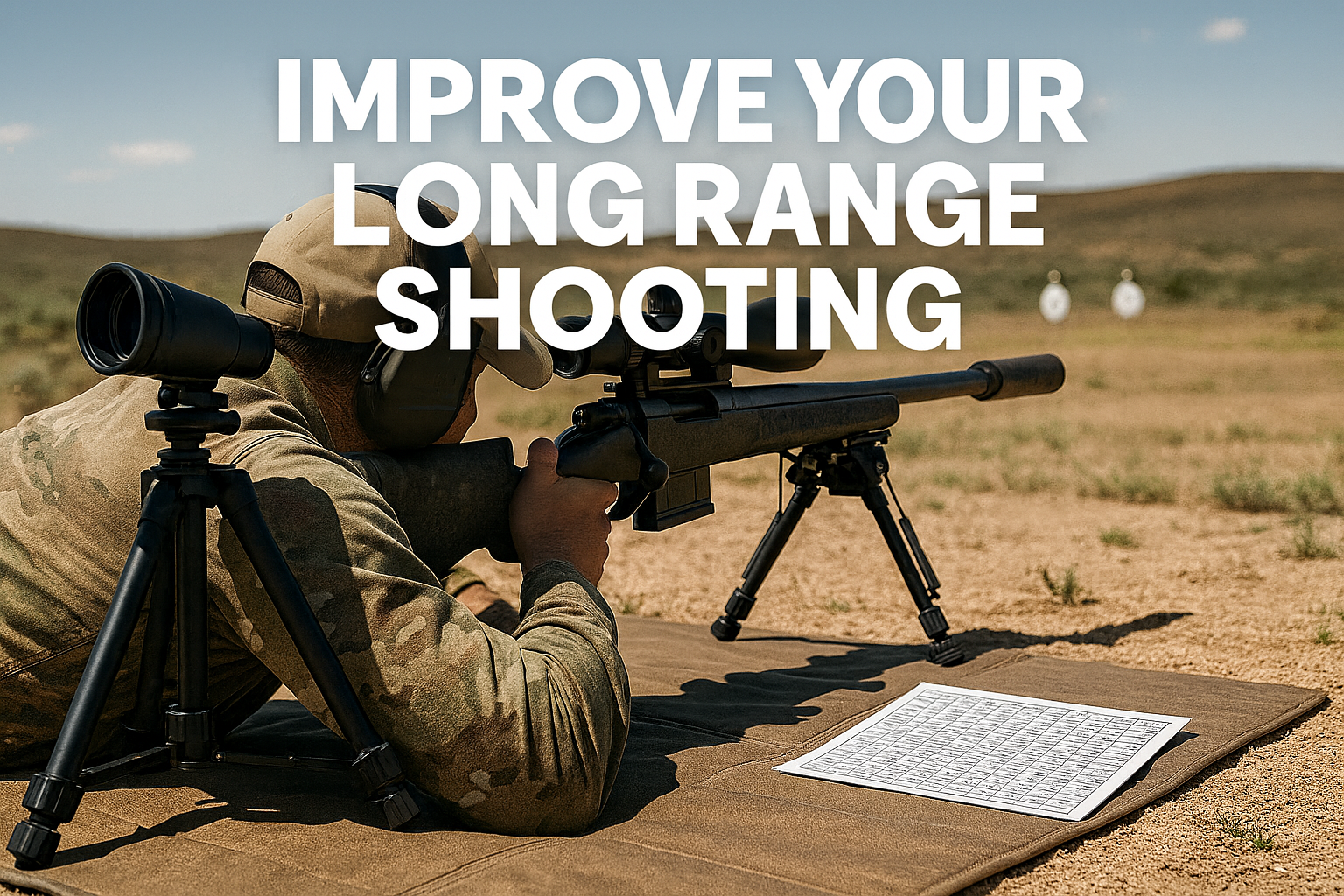
You improve long range shooting by tightening the fundamentals first: a stable position, consistent breathing, a clean trigger press, a steady natural point of aim, and honest reading of wind and distance. Equipment matters less than repeatable technique. The shooters who connect at distance are the ones who do the same simple things the same way on every shot, and who only take a shot when they are confident in it.
Table of contents
This guide stays on the safe, learnable parts of long range shooting. It does not give specific elevation or windage prescriptions, because every rifle, load, and condition is different, and following someone else’s numbers is how people miss or worse. Build your own confirmed data on a controlled range, follow the firearm safety rules from the National Shooting Sports Foundation, and treat every session as practice in discipline as much as accuracy.
Contents
What Counts as Long Range Shooting
Long range shooting generally means engaging targets far enough that bullet drop, wind drift, and your own stability become the limiting factors rather than the rifle’s mechanical accuracy. For many centerfire rifles that begins somewhere past 300 yards, though the exact point depends on the cartridge, the rifle, and the shooter. The label matters less than the principle: at distance, small errors at the trigger turn into large misses downrange.
That is why improvement at distance starts close in. A shooter who cannot hold a tight group at 100 yards will not suddenly tighten up at 500. Earn each step of distance by proving your consistency at the step before it.
Range Safety Comes First
No accuracy tip outranks safety. Long range shooting often happens on larger ranges where targets and impact areas are farther away and harder to see, which makes the basic rules even more important. Always treat every firearm as loaded, keep the muzzle pointed in a safe direction, keep your finger off the trigger until your sights are on target and you have decided to fire, and be certain of your target and what lies beyond it. The full set is laid out by the NSSF firearm safety rules.
- Confirm a safe, known backstop or berm behind every target. Distance increases the area you are responsible for.
- Follow the specific range’s rules, cease-fire commands, and downrange procedures without exception.
- Wear eye protection and hearing protection on every shot, including spotting from beside the firing line.
- Verify the firearm is clear before transporting, cleaning, or handing it to anyone.
Build a Stable Shooting Position
A stable position is the single largest physical contributor to long range accuracy. The goal is to support the rifle so it returns to the same point of aim with minimal muscular effort from you. The more your bones and gear hold the rifle, and the less your muscles strain to do it, the more repeatable each shot becomes.
Use a Solid Front Rest and Rear Support
A bipod, bench rest, sandbag, or stable improvised rest supports the front of the rifle. A rear bag or your supporting hand stabilizes the buttstock so you can make fine elevation adjustments without straining. The aim is a rifle that sits where you put it.
Find Your Natural Point of Aim
Natural point of aim is where your sights settle when your body is relaxed. Get into position, close your eyes, breathe, then open them. If the reticle has drifted off target, shift your whole body rather than muscling the rifle back. Forcing the rifle onto target with muscle introduces movement that shows up at distance.
Master the Fundamentals Before Distance
The fundamentals of marksmanship are sight alignment, breathing, trigger control, and follow-through. They are simple to describe and take real practice to make automatic. They matter more, not less, as distance grows.
Breathing
Your body moves slightly as you breathe, and that movement is visible through a scope at distance. Most shooters fire during the natural pause at the bottom of an exhale, when the body is briefly still. Do not hold your breath so long that you start to shake or strain.
Trigger Control
Press the trigger straight back with steady, increasing pressure so the shot almost surprises you. Jerking or slapping the trigger pushes the muzzle off target in the instant the bullet leaves. Dry practice with a verified unloaded firearm, following safe handling rules, is one of the best ways to refine a clean press.
Follow-Through
Stay on the rifle and keep your eye on the sight picture through the shot and for a moment after. Reacting before the bullet has cleared the barrel introduces movement. Good follow-through also lets you call your shot, meaning you know where the reticle was at the break.
Read Wind and Conditions
Wind is usually the hardest variable to manage at distance because it pushes the bullet sideways the entire way to the target and can differ between you and the target. Reading it is a skill built over many sessions, not a formula you apply once. The National Weather Service publishes useful background on how wind behaves and is measured.
- Watch indicators downrange: grass, flags, mirage, dust, and moving vegetation tell you direction and rough strength.
- Note that wind can vary along the bullet’s path, so the condition at your position is not always the whole story.
- Build your own feel by observing conditions, making a call, firing, and comparing the result. Honest record keeping teaches faster than guessing.
This guide does not give wind hold values, because they depend on your specific cartridge, velocity, range, and conditions. Learn to read wind and develop your own confirmed corrections on a safe range.
Know Your Rifle and Build Your Own Data
Accuracy at distance depends on knowing how your specific rifle and ammunition behave, which is something only you can confirm. Borrowed numbers from another shooter, a forum, or a different rifle and load are not your data. Use only ammunition that is correct and safe for your firearm, and verify safe cartridge and chamber combinations through the firearm manual and resources such as SAAMI.
- Confirm your zero at a known distance with the exact ammunition you intend to use, then verify it again on a later day.
- Keep a simple log of your confirmed results in different conditions so your data reflects reality, not theory.
- Maintain the rifle and check that the scope and mounts are secure, following the manufacturer’s torque and setup guidance.
Shoot Within Your Ability
Improving at long range is not the same as taking longer shots than you can make. The ethical and safe approach is to extend your maximum distance only as your confirmed, repeatable accuracy supports it. A shot you can make on a calm day at the range is not the same as a shot in wind, in a hurry, or on a live animal.
For hunters, this discipline is part of an ethical, humane approach to the field, and hunter education programs such as Hunter-Ed stress knowing and respecting your effective range. If you are not confident in a shot, the right answer is to pass on it. Confidence should come from proven practice, not optimism.
Common Mistakes That Cost Accuracy
- Chasing equipment instead of practicing fundamentals. Gear cannot fix an inconsistent position or a poor trigger press.
- Stretching distance faster than skill, which builds bad habits and unsafe shots.
- Using another shooter’s drop or wind numbers instead of confirming your own.
- Ignoring follow-through and reacting to recoil before the shot has cleared.
- Skipping the wind read and treating a calm-range zero as if it applies everywhere.
Frequently Asked Questions
What is the most important factor in long range accuracy?
Consistent fundamentals applied from a stable position. A repeatable position, steady breathing, and a clean trigger press matter more than any single piece of gear. Master those first, then refine wind reading and your own confirmed data.
How far is considered long range?
It varies by rifle and cartridge, but for many centerfire rifles long range begins past about 300 yards, where drop and wind become the dominant factors. The exact distance depends on your equipment and skill, so judge it by your own confirmed accuracy.
Can I use someone else’s scope settings or drop chart?
No. Settings depend on your specific rifle, ammunition, velocity, and conditions. Using another shooter’s numbers leads to misses and unsafe shots. Build and verify your own confirmed data on a controlled range.
How do I practice wind reading safely?
Observe downrange indicators like flags, grass, and mirage, make a call, fire on a safe range with a proper backstop, then compare the result and keep notes. Reading wind is a skill built over many sessions, not a formula.
Final Takeaway
Improving long range shooting comes down to doing simple things consistently: build a stable position, master the fundamentals, learn to read wind, and confirm your own data on a safe range. Extend your distance only as your proven accuracy allows, follow every range safety rule, and pass on any shot you are not confident in. Discipline is what separates a shooter who hits at distance from one who hopes to.