Ethics in Hunting: Fair Chase, Safety, and Respect
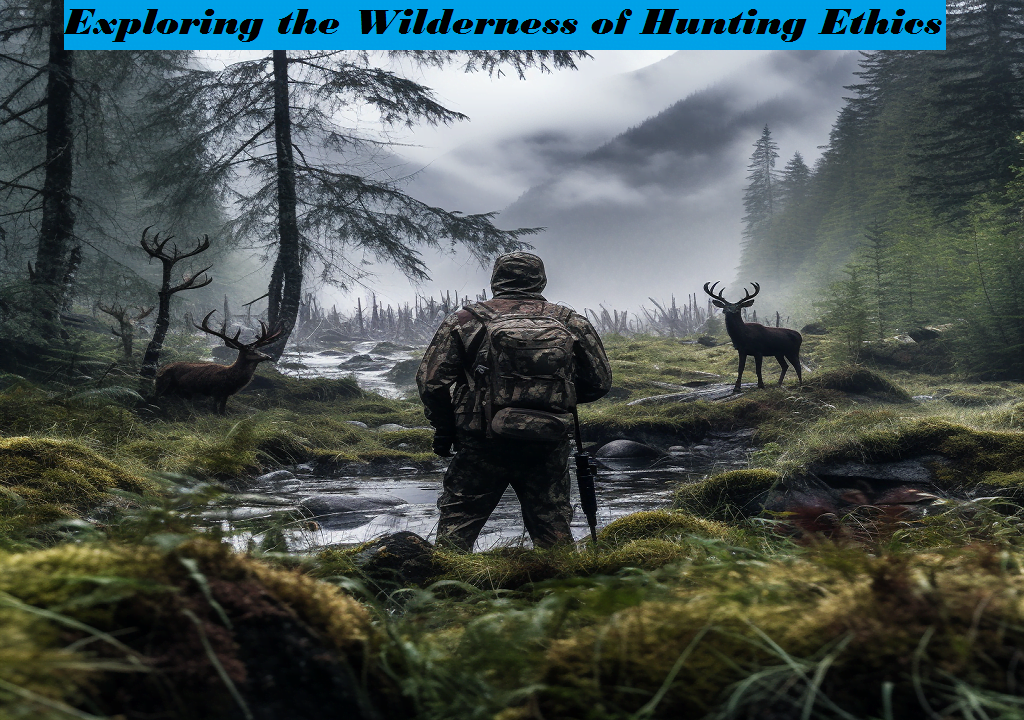
Ethics in hunting means making choices that are legal, fair to wildlife, safe for people, and respectful of the land. A hunter can follow the written law and still make a poor field decision, so ethical hunting asks a second question: is this the right thing to do in this situation?
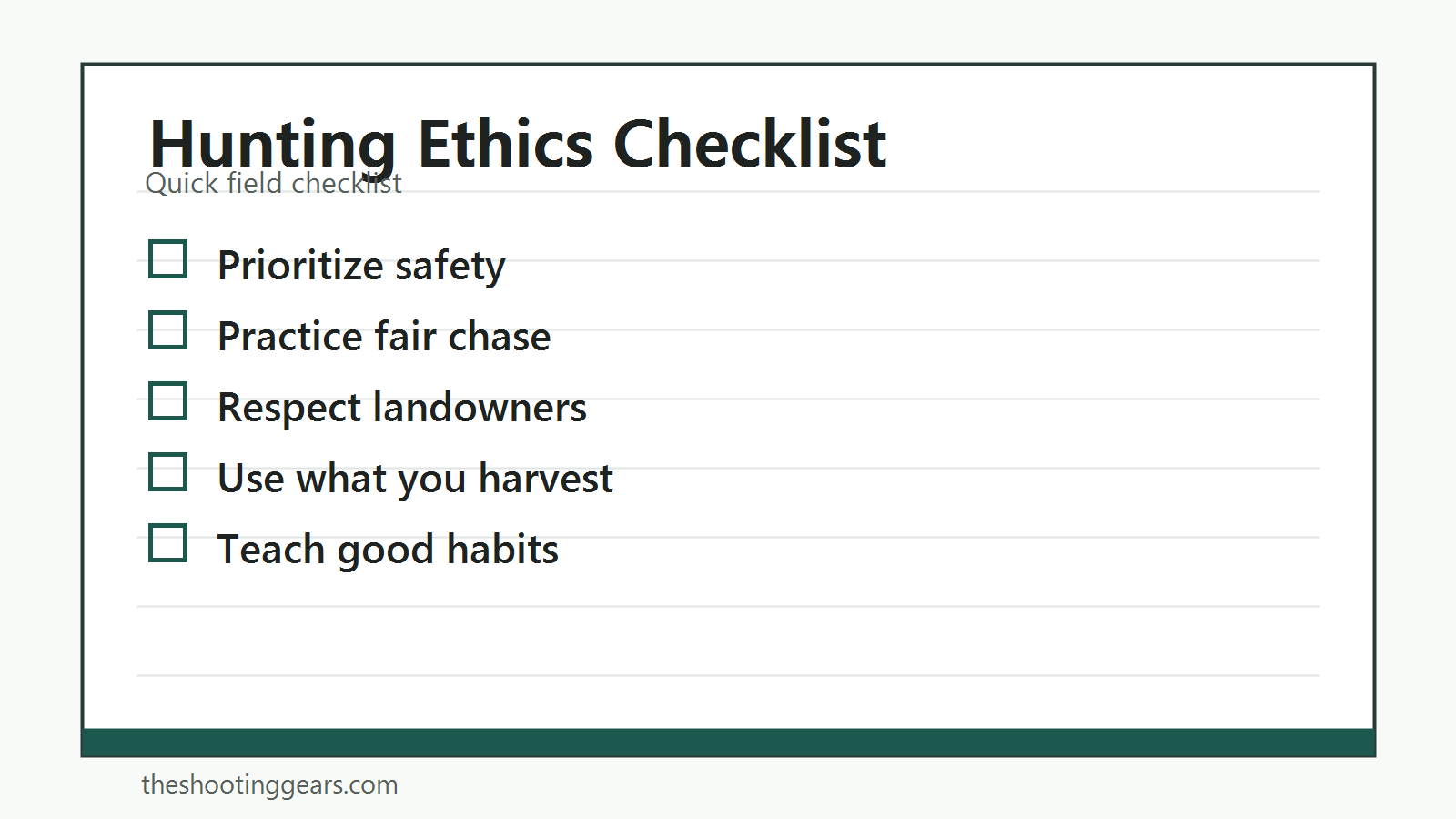
This guide gives hunters and new outdoor readers a practical way to think about fair chase, shot decisions, recovery effort, landowner respect, conservation, and public trust. Always follow current local regulations, season dates, licensing rules, and hunter-education requirements before going afield.
Table of Contents
Quick Answer
An ethical hunter follows the law, identifies the target clearly, takes only shots within personal skill and equipment limits, makes every reasonable recovery effort, respects private and public land, uses as much of the animal as possible, and supports wildlife conservation. Ethics are not only about what is allowed. They are about restraint when a legal choice is still not a good choice.
Fair Chase and the Animal’s Chance to Escape
Fair chase is one of the main ideas in North American hunting ethics. The Boone and Crockett Club fair chase statement frames ethical hunting around pursuing wild, free-ranging game in a way that does not give the hunter an improper advantage.
That idea matters because hunting is not supposed to be a guaranteed outcome. Terrain, weather, animal behavior, distance, light, and the hunter’s own skill all shape the decision. If technology, baiting, confinement, poor judgment, or pressure from other people removes the animal’s real chance to escape, many hunters would consider the choice unethical even where some parts of it may be legal.
- Do not take a shot just because an animal is visible.
- Do not use methods that violate local law or land rules.
- Do not let social media, group pressure, or antler size override judgment.
- Do not treat wounded recovery as optional.
Ethical Shot Decisions
The most important hunting decision often happens before the trigger is pulled or the arrow is released. A responsible hunter asks: can I identify the animal, is the shot legal, is the background safe, is the angle right, and can I make this shot cleanly?
A shot may be legal but still wrong for the moment. Wind, brush, steep angles, poor light, a moving animal, or a distance beyond your proven practice limit can all turn a possible shot into a pass. Passing is not failure. It is part of ethical hunting.
Know Your Personal Limit
Your real limit is not the best shot you made once at the range. It is the distance and position where you can place shots reliably under field conditions. If you cannot repeat it in practice, do not try to prove it on a live animal.
Confirm the Target and Beyond
Target identification includes species, sex when required, legal size or antler rules where they apply, and what sits behind the animal. A hunter should never shoot at sound, movement, color, or a shape that is not fully identified.
Recovery Effort After the Shot
Ethical hunting does not end at the shot. If an animal is hit, the hunter has a duty to make a careful recovery effort. That may mean waiting before tracking, marking the last known location, following blood sign patiently, asking for help, and using legal recovery tools where allowed.
The right recovery choice depends on the animal, hit location, weather, terrain, and local law. If you are inexperienced, learn tracking and recovery from a mentor, guide, or hunter-education course before the season. The Hunter-Ed material on responsible and ethical hunters is a useful baseline for new hunters.
Landowner Respect and Public Trust
Hunters are often judged by what non-hunters see: parking behavior, gates left open, trash, wounded animals, unsafe shots, road hunting, and online bragging. Ethical conduct protects access for everyone who hunts after you.
- Get clear permission before entering private land.
- Follow posted rules on public land and wildlife areas.
- Leave gates, fences, roads, and campsites as you found them.
- Pack out trash, spent shells, food wrappers, and target debris.
- Be careful with photos and captions after a harvest.
Respect also includes other outdoor users, and private access should start with clear communication; see our guide on how to ask for hunting permission before approaching a landowner. Hikers, birders, farmers, anglers, and nearby residents may share the same landscape. Safe, calm, and courteous behavior does more for hunting’s future than any argument online.
Hunting, Conservation, and Responsibility
Regulated hunting can support wildlife management through license funding, habitat work, conservation programs, and population goals. The U.S. Fish & Wildlife Service hunting program describes hunting as one of the wildlife-dependent recreation uses managed on many federal lands where it is compatible with conservation goals.
That does not make every hunt ethical by default. Conservation claims should be matched by responsible behavior: following seasons and bag limits, reporting harvest where required, avoiding waste, supporting habitat, and respecting non-game species. Ethical hunters do not use conservation language as a shield for careless choices.
Ethical Hunting Field Checklist
- License, tags, permits, and season dates confirmed.
- Legal weapon, ammunition, draw weight, or equipment confirmed for the hunt.
- Land access confirmed and boundaries understood.
- Target species and legal identification rules reviewed.
- Personal shot-distance limit set before the hunt starts.
- Recovery plan ready, including legal tracking options.
- Meat care plan ready for heat, distance, and field conditions.
- Photos and online posts handled with respect.
If any of those items are unclear, slow down and solve the problem before hunting. The best ethical decisions usually happen before pressure builds in the field.
FAQ
What does ethics in hunting mean?
Ethics in hunting means making responsible choices before, during, and after the hunt. It includes legal compliance, fair chase, safe shooting, recovery effort, respect for land, and care for harvested game.
Is fair chase the same as hunting law?
No. Hunting law sets the minimum legal standard. Fair chase is an ethical standard that can ask more from the hunter, especially when a legal method still feels unfair, unsafe, or disrespectful.
Is trophy hunting always unethical?
Hunters disagree on this topic. A more useful standard is whether the hunt is legal, fair chase, conservation-supported, respectful, and waste-free. Hunting only for attention or wasteful display damages public trust.
What should I do if I wound an animal?
Stop, mark where the animal was standing and where it went, follow safe recovery practices, and get qualified help if needed. Local rules may affect tracking methods, so learn those rules before the hunt.
How can a beginner learn ethical hunting?
Take hunter education, read the current regulations, hunt with a trusted mentor, practice realistic shot limits, and learn recovery and meat care before the season; our deer hunting tips for beginners can help organize those early habits. Ethics improve when preparation happens early.
Final Takeaway
Ethical hunting is built on restraint. Follow the law, give wildlife a fair chance, take only shots you can defend, recover what you hit, respect land and people, and leave the resource better than you found it.