Youth Archery Gear Recommendations: Safe Beginner Checklist
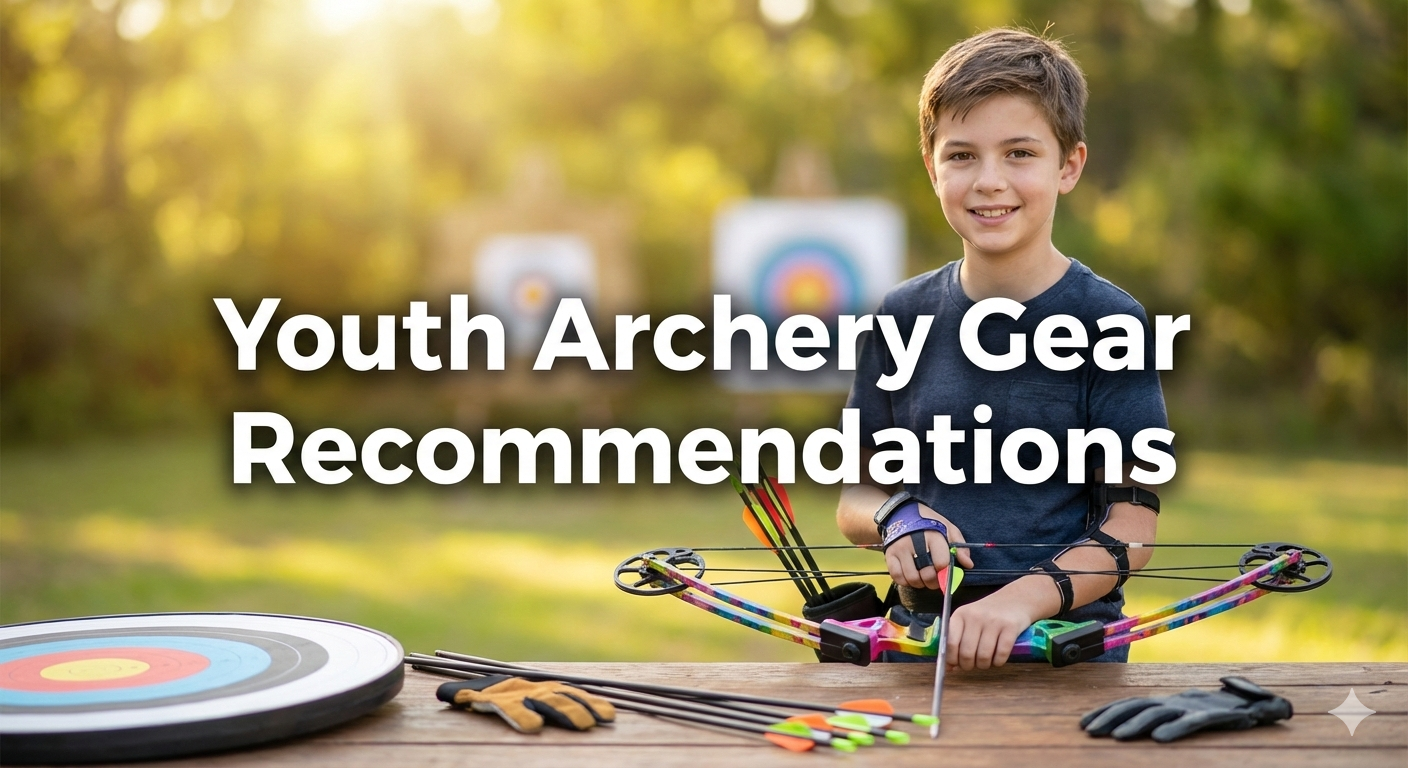
Youth archery gear should be chosen for fit, safety, and confidence first. The right beginner setup is not the most powerful bow or the longest accessory list; it is gear a young archer can draw comfortably, control safely, and use under adult supervision.
This guide is a parent-first checklist for youth bows, arrows, targets, protective gear, and practice setup. It is not a product roundup, and it does not replace coaching from a qualified archery instructor, club, school program, or local pro shop.
Table of Contents
Quick Answer
For a young beginner, start with a low-draw-weight bow that fits their draw length, arrows matched to that bow, a safe target and backstop, an arm guard, finger protection, and clear range rules. If the child struggles to draw, hold, or follow instructions safely, the setup is too advanced.
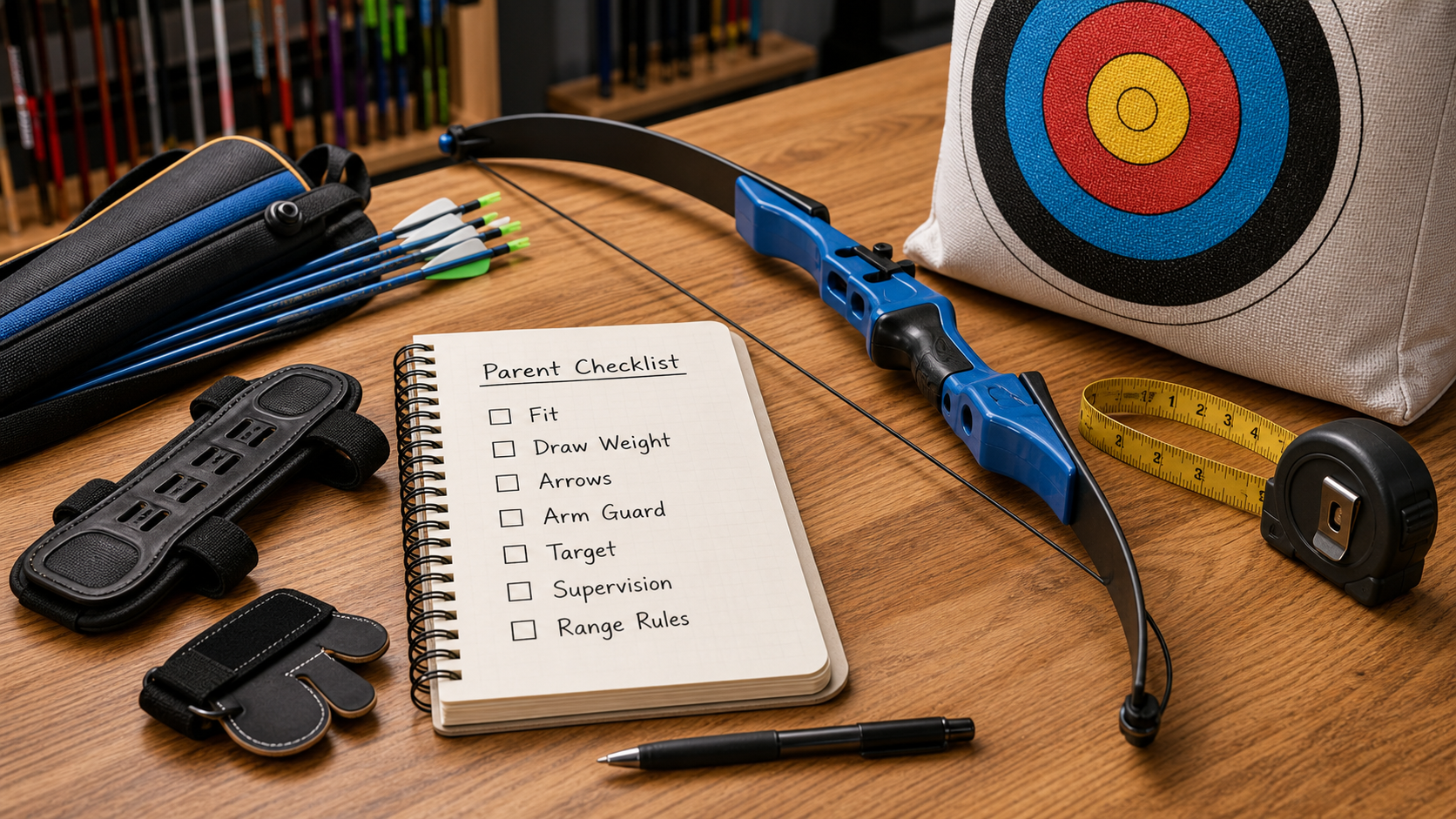
Youth Archery Parent Checklist
Before buying, answer these questions. They matter more than brand names.
- Fit: Can the child reach full draw without leaning, shaking, or overextending?
- Draw weight: Is the bow light enough to draw repeatedly with control?
- Arrows: Are the arrows the correct length and type for the bow and target?
- Target: Is the target rated for the bow and placed in front of a safe backstop?
- Protection: Does the archer have arm and finger protection?
- Supervision: Is an adult or instructor controlling the range?
- Rules: Does the child understand when to nock, shoot, retrieve, and stop?
Bow Fit Comes First
Bow fit is the foundation. A bow that is too heavy, too long, or too aggressive can teach poor form and create safety problems. Many kids do better with a simple recurve or youth compound set at a low draw weight than with a bow chosen for speed or adult-style features.
Recurve vs. Compound for Youth
A recurve bow can be excellent for learning basic form because it is simple and direct. A youth compound can help older kids or teens who need adjustability and a let-off feel. Neither is automatically better. The right choice is the one the young archer can control safely and practice with consistently.
Use a Pro Shop or Program When Possible
A local archery shop, club, school program, or instructor can help measure draw length, choose draw weight, and confirm arrow compatibility. Organizations such as USA Archery are useful starting points for learning about structured archery participation and coaching pathways.
Arrows and Compatibility
Arrows must match the bow, the archer, and the target. Do not guess based only on age. Arrow length, spine, point type, and target rating all matter. For beginners, the safest path is to buy arrows recommended by the bow manufacturer or fitted by a pro shop.
Use Practice Points for Youth Targets
Youth target practice should normally use field points and a proper target. Broadheads are not beginner practice tools and should not be mixed into youth gear unless a qualified adult is teaching a specific, legal, supervised hunting setup.
Targets and Practice Area
A safe target area is as important as the bow. Use a target rated for the bow’s draw weight and arrow type, then place it where missed arrows cannot create danger. A backstop, clear side area, and controlled shooting line are basic requirements.
Keep the range simple. One shooting direction, one clear command system, and one retrieval rule are easier for kids to follow. No one should walk forward until every bow is down and the adult in charge gives permission.
Safety Gear
Basic safety gear helps prevent small injuries and builds confidence. An arm guard protects the bow arm from string slap. A finger tab or glove protects the drawing fingers. A quiver keeps arrows organized and pointed safely when not in use.
Range Rules Are Gear Too
Rules are part of the setup. Teach the child to keep arrows unnocked until told, point only at the target, wait for commands, retrieve only together, and stop immediately when an adult calls stop. Hunter education resources such as Hunter Ed can also help families think about safety and responsibility around archery and hunting contexts.
Age-Based Guidance
Age ranges are only rough guidance. Strength, attention span, coordination, maturity, and coaching matter more than birthday.
Ages 4 to 7
Keep sessions short, close, and supervised. Very young archers need lightweight beginner gear, large targets, and simple commands. If attention fades, stop before safety fades.
Ages 8 to 12
This is often a good age for structured lessons, school programs, or club practice. Fit still matters. Avoid over-bowing just because the child is enthusiastic.
Teens
Teens may be ready for more adjustable bows and longer practice sessions, but they still need coaching, safe range habits, and gear that fits their current strength and purpose.
Common Buying Mistakes
The biggest mistake is buying too much bow. A bow that is too heavy makes practice frustrating and can encourage unsafe shortcuts. Other mistakes include mismatched arrows, targets that cannot stop the arrow, skipping arm protection, and practicing without a safe backstop.
Parents should also avoid buying gear only because it looks like adult hunting equipment. Youth archery should build form, confidence, and respect for range rules before power or hunting accessories enter the conversation.
For families still learning the sport, beginner education sites such as Archery 360 can help explain archery basics, range culture, and practice expectations before a child moves into specialized gear.
FAQ
What bow is best for a child beginner?
The best beginner bow is light enough to draw safely, sized to the archer, and simple enough to learn on. A coach or pro shop can help confirm fit.
Does my child need an arm guard?
Yes, an arm guard is a smart basic item. It helps prevent string slap and makes beginners more comfortable while learning form.
Can kids use compound bows?
Yes, if the bow fits and the draw weight is manageable. A youth compound should be set up by someone who understands draw length, draw weight, arrow match, and safety.
How do I make backyard archery safe?
Use a proper target, safe backstop, clear shooting line, adult supervision, and local rule compliance. If you cannot create a safe missed-arrow area, use a range or club instead.
Final Takeaway
Youth archery gear should make practice safer, easier, and more enjoyable. Start with fit, light draw weight, correct arrows, protective gear, a safe target setup, and adult supervision. When the basics are right, young archers can build skill without being pushed into gear they are not ready to control.