What Is Snipe Hunting? Real Bird Hunt vs the Prank
Snipe hunting can mean two very different things. Real snipe hunting is the legal pursuit of small migratory shorebirds such as Wilson’s snipe in wetland habitat. A “snipe hunt” can also mean a prank where someone is sent to catch an imaginary animal. This article explains both meanings, then focuses on the real hunting basics.
If you plan to hunt real snipe, do not rely on old rules or general advice. Seasons, licenses, bag limits, nontoxic shot rules, and public-land requirements can change. Always confirm current regulations for the state and property you will hunt.
Table of Contents
Quick Answer
Real snipe hunting is usually a wetland walk-up hunt for fast, zigzag-flying migratory birds. Hunters look for muddy edges, marshy pasture, wet meadows, and shallow water areas, then flush birds on foot with careful attention to rules, safe shooting lanes, and bird identification.
Real Snipe Hunting vs the Prank
The phrase “snipe hunt” is famous as a camp prank, but snipe are real birds. The joke usually involves sending a new camper or friend into the dark with a bag and an impossible task. That folklore meaning is separate from legal migratory bird hunting.
If you are researching the joke, the snipe hunt folklore entry gives useful background. If you are researching real hunting, focus on bird identification, habitat, hunting rules, and safe field practice.
What Is a Snipe?
In North America, hunters most often mean Wilson’s snipe. It is a small, camouflaged, long-billed shorebird that uses wet ground, marsh edges, and muddy feeding areas. Its flight can be quick and erratic, which is why snipe hunting has a reputation for being challenging.
For basic species background, see the Wilson’s snipe reference. When hunting, do not rely on a single photo. Learn shape, flight, habitat, behavior, and legal identification details before entering the field.
Where Snipe Live
Snipe are associated with wet, soft ground where they can probe for food. Productive places can include marsh edges, wet pastures, seep areas, ditches, rice-field edges, mud flats, and grassy wetland margins. They often hold tight until approached, then flush quickly.
The habitat is part of what makes the hunt different from upland walking. Footing may be slick, water depth can change quickly, and visibility can be limited by grass or reeds. Move slowly and plan your route so every possible shot has a safe direction.
Rules and Safety Checks
Snipe are migratory game birds, so hunting them is regulation-heavy compared with casual small-game assumptions. Check your state hunting guide for open dates, daily limits, possession limits, legal shooting hours, license/stamp requirements, public-land rules, and ammunition restrictions.
State pages are the source that matters in the field. For example, New York maintains a migratory game bird regulations page. Use the equivalent official page for your own state before hunting.
Bird Identification Comes First
Do not shoot at a small bird simply because it flushed from wet grass. Confirm species, legal season, safe direction, and what lies beyond the bird. If identification is uncertain, pass the shot and use the encounter as scouting information.
Beginners should spend time watching snipe habitat before hunting it. Notice how birds flush, how they hold in cover, and how wetland edges change with rain and water levels. That scouting helps you avoid guessing in the moment and makes the hunt more ethical.
It also helps to compare legal snipe with look-alike wetland birds before the season. A pocket guide, state wildlife booklet, or mentor can prevent mistakes that a short online description cannot cover. If your identification is only “small brown bird in a marsh,” you are not ready to shoot.
Snipe Hunting Gear Checklist
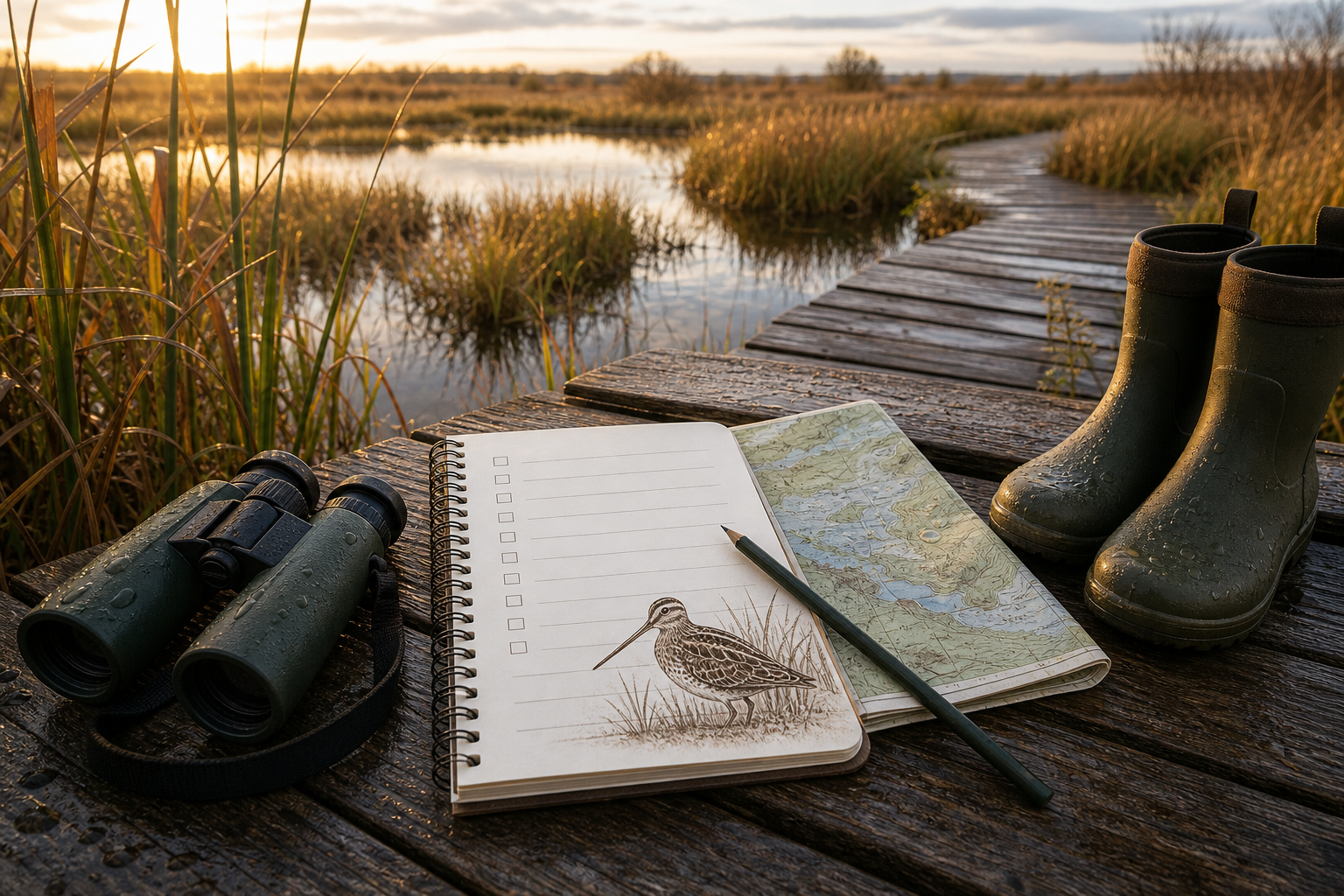
- Current license, stamps, and regulation notes for your state.
- Waterproof boots or waders suited to the depth and footing.
- Binoculars for checking wetland edges and other hunters.
- High-visibility clothing where required or wise for shared land.
- Eye and hearing protection.
- Small first-aid kit, water, and weather protection.
- Map or GPS app with property boundaries and safe exit routes.
Basic Snipe Hunting Method
Walk Wet Edges Slowly
A common method is to walk wet meadow edges, marsh margins, and muddy strips slowly enough that birds flush within view. Keep the muzzle or bow direction safe at all times, and avoid pushing toward houses, roads, livestock, or other hunters.
Use a Partner Safely
Two hunters can cover more ground, but only if they agree on lanes before moving. Walk in a predictable line, communicate turns, and never swing across another person. If the cover makes safe spacing unclear, slow down or hunt separately.
Expect Fast, Erratic Flushes
Snipe may flush suddenly and fly in a twisting pattern. That challenge is part of the appeal, but it is also why discipline matters. A rushed shot at a poorly identified bird or unsafe angle is not worth taking.
When in doubt, let the bird go and reset your position.
Common Mistakes
- Confusing the camp prank with real bird hunting rules.
- Assuming all wetland birds are legal snipe.
- Ignoring state-specific migratory bird regulations.
- Walking marsh edges without a safe exit route.
- Shooting at low angles without knowing what lies beyond the bird.
- Hunting wet ground without suitable boots, weather protection, or communication.
Frequently Asked Questions
Is snipe hunting real?
Yes. Snipe are real birds, and legal snipe hunting exists in many places. The phrase also has a prank meaning, so context matters.
Is snipe the same as woodcock?
No. Snipe and woodcock are different birds, even though both can be associated with wet or soft-ground habitat and long bills. Check species identification carefully before hunting.
Do I need special rules for snipe hunting?
Usually yes. Snipe are migratory game birds, so rules may include seasons, limits, stamps, ammunition restrictions, and shooting-hour requirements. Confirm your state rules before every season.
Where should beginners look for snipe?
Beginners should look for legal hunting areas with wet meadow edges, muddy margins, and marshy habitat, then scout carefully before hunting. A mentor who already knows migratory bird identification is very helpful.
Final Recommendation
Snipe hunting is real, but it is not a casual guessing game. Learn the bird, separate the folklore joke from the legal hunt, verify state rules, and focus on safe wetland movement and positive identification. If you are not certain about the bird, rule, or shot angle, do not shoot.