What Is a Misfire and How to Prevent It
When handling any firearm whether it’s a hunting rifle, shotgun, handgun, or even a crossbow—reliability is something every shooter expects. But every now and then, a pull of the trigger results in nothing. No bang. No movement. No shot leaving the barrel. This unexpected failure is known as a misfire, and understanding why it happens is an essential part of safe and responsible shooting.
A misfire isn’t just an annoyance; it can be a serious safety concern. Learning what causes misfires, how to handle them safely, and what steps to take to prevent them helps protect both the shooter and the equipment. Below, we break down what a misfire really is and what you can do to avoid it.
Table of Contents
What Is a Misfire?
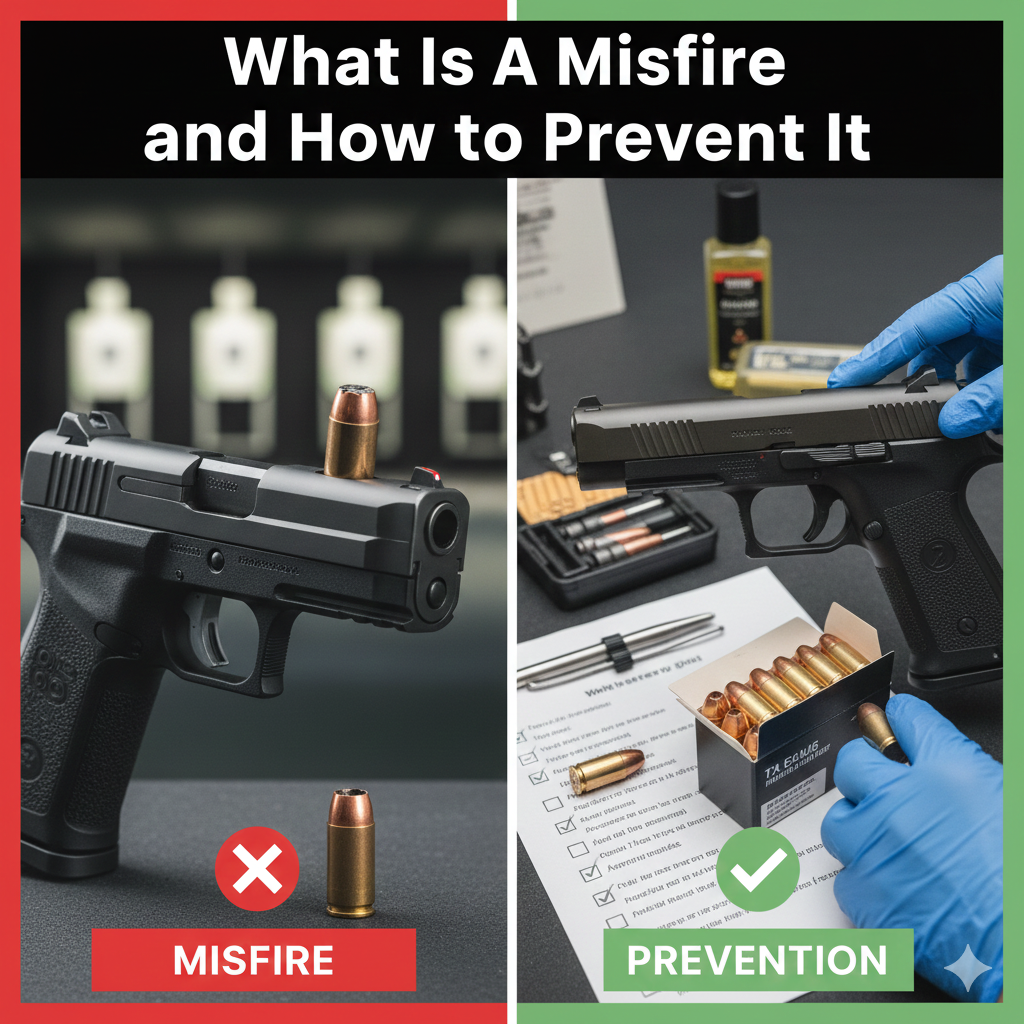
A misfire occurs when a shooter pulls the trigger, the firing pin strikes the primer, but the ammunition fails to ignite. Simply put, the trigger action happens as expected, but the round does not fire. This is different from a hang fire, where there is a delayed ignition, or a squib load, where the round fires incorrectly and may leave a bullet lodged inside the barrel.
In a misfire, the cartridge remains intact and unfired. While this may seem harmless, it presents a potential safety risk because you cannot immediately know whether the round is simply defective or if it will ignite seconds later. That is why proper misfire handling protocols are extremely important.
What Causes a Misfire?
Misfires can happen for a number of reasons, but most fall into three major categories: ammunition issues, firearm-related problems, or user errors.
One of the most common causes is bad ammunition. Old, poorly stored, or low-quality cartridges may have primers that fail to ignite. Moisture, corrosion, and extreme temperatures can all damage ammo over time. Manufacturing flaws can also lead to defective rounds where the primer is not properly seated or the powder charge is compromised.
Firearm problems can contribute as well. A weak or broken firing pin may not strike the primer with enough force. Dirt, carbon buildup, or lack of lubrication inside the firing mechanism can also prevent the firing pin from completing its full travel. Similarly, worn springs or faulty components can reduce the reliability of trigger and hammer systems.
Finally, user errors such as not fully chambering a round or failing to maintain a firearm regularly can increase the chances of a misfire. Even a shooter’s technique such as “riding the slide” on a semi-automatic—may stop the firearm from going fully into battery, resulting in an incomplete strike.
What Should You Do If You Experience a Misfire?
Safety must be the first priority anytime a misfire occurs. When you pull the trigger and nothing happens, the correct response is to keep the firearm pointed in a safe direction. Do not immediately open the chamber or attempt to eject the round. Some misfires may actually be hang fires, meaning the round could still ignite a moment later.
Standard safety guidelines recommend keeping the firearm pointed downrange for at least 30 seconds. For muzzleloaders or certain hunting firearms, shooters sometimes wait even longer. After the waiting period, carefully open the action and remove the defective cartridge. Inspect the firearm for obstructions or residue, and check the firing pin area for proper function.
Never attempt to fire a misfired round again, and never forcefully manipulate the firearm. Treat every unexpected failure as a serious event until you confirm the area is safe.
How to Prevent Misfires
While misfires can happen to even the best shooters, most can be prevented with proper habits and equipment care. Using high-quality, reputable ammunition dramatically reduces the chances of primer failure or powder issues. Storing ammo in cool, dry, stable environments also keeps moisture and corrosion from damaging the cartridges.
Regular firearm maintenance is another key factor. Cleaning the firing pin channel, inspecting springs, and lubricating moving parts ensures the firearm functions smoothly every time you pull the trigger. Hunters who expose their firearms to harsh conditions—rain, dust, cold, or mud—should make cleaning a routine step after every outing.
Correct shooting technique is equally important. Make sure rounds are properly chambered, the bolt or slide is locked into position, and the firearm cycles fully. Following the manufacturer’s recommendations for ammo type and firearm setup also prevents avoidable malfunctions.
Finally, storing both firearms and ammunition responsibly helps avoid damage that leads to misfires. Keeping guns in good condition and avoiding excessively old or degraded ammunition are simple steps that have a major impact on long-term reliability.
Final Thoughts
A misfire is one of the most common malfunctions shooters encounter, but it doesn’t have to be dangerous if handled correctly. Understanding what causes misfires and how to respond gives you the confidence to stay safe and maintain control in every shooting situation. With high-quality ammunition, proper firearm maintenance, and solid shooting habits, the chances of a misfire decrease dramatically.