West Virginia Mountain Buck Hunting: 10 Terrain and Safety Checks

West Virginia mountain buck hunting is not about chasing a legend. It is about reading Appalachian terrain, checking current West Virginia DNR rules, hunting safely, identifying legal deer, and making a careful recovery plan before the shot. Big mountain bucks are earned through scouting, patience, access planning, and respect for the land.
This guide replaces the old story-style article with a practical support guide for whitetail hunters. Always verify current seasons, license rules, public-land conditions, antler rules, game-check requirements, CWD guidance, and local access before hunting.
Table of Contents
Quick Answer: How Do You Hunt Mountain Bucks in West Virginia?
Hunt West Virginia mountain bucks by starting with current DNR rules, then scouting benches, saddles, oak flats, cuts, creek crossings, and thick bedding cover. Use wind and quiet access, hunt fresh sign instead of old stories, and pass shots where the deer, background, distance, or recovery plan is uncertain.
Best practical approach
Pick a small area and learn it well. Mountain terrain rewards hunters who understand travel routes, food changes, pressure, and wind shifts more than hunters who simply walk farther.
What to avoid
Avoid chasing rumors of a giant buck without a legal plan, fresh sign, safe access, and a way to recover deer from steep terrain. A hard drag can become a safety problem after dark.
Check WV Rules First
The West Virginia DNR hunting guide is the starting point for licenses, seasons, regulations, game check, public hunting lands, firearms, archery, and hunter education. Read the current rules before every season because dates, weapon rules, county rules, and disease guidance can change.
License and season
Confirm your license, season dates, legal weapon, county, bag limits, tagging, and game-check requirements. Do not rely on last year’s camp note or a friend’s memory.
Public and private access
West Virginia has public hunting lands, but each area may have its own access points, terrain, and restrictions. Private land requires permission. Know boundaries before the hunt begins.
CWD and meat handling
Check current CWD testing, carcass transport, and deer-handling guidance where you hunt. The WV DNR wildlife disease page is a useful place to start. Disease-area rules can affect how a deer is moved, checked, or processed.
Hunters should also review hunter education requirements before buying licenses or taking new hunters into the field. The WV DNR hunter education page explains the state’s education program and should be checked for current requirements.
Read Mountain Terrain
Mountain bucks use terrain to save energy and avoid pressure. Instead of looking only for the thickest cover, study how ridges, benches, saddles, points, creek bottoms, and old logging roads connect.
Benches
A bench is a flatter shelf on a slope. Deer may use benches to travel below ridgelines without exposing themselves on the top. Look for tracks, rubs, droppings, and crossings where benches pinch down.
Saddles
Saddles can funnel deer between drainages. They are useful during rut movement and pressure shifts, but they can also attract hunters. Approach quietly and keep the wind in mind.
Oak flats and cuts
Acorns, greenbrier, browse, and regrowth can pull deer into certain pockets. Food changes by year and weather, so scout current sign instead of assuming last season’s hot spot is still active.
In a strong acorn year, deer may spread out across ridges and benches. In a poor mast year, they may concentrate around remaining food, cuts, fields, or protected browse. That means the best scouting note is not just where deer were seen, but what they were feeding on and whether that food is still available.
Find Fresh Deer Sign
Fresh sign matters more than dramatic scenery. Look for tracks with sharp edges, fresh droppings, recent rubs, open scrapes during the right season, clipped browse, and beds with hair or warm leaves.
Tracks and trails
A single track can be interesting, but repeated use is better. Look for trails that connect bedding cover, food, water, and terrain crossings.
Rubs and scrapes
Rubs and scrapes can show buck activity, but they do not guarantee daylight movement. Pair them with trail direction, wind, pressure, and nearby cover.
Beds and escape cover
Bucks often choose cover where they can see, smell, and leave safely. Thick points, laurel, blowdowns, and steep benches can all create secure bedding.
Use Wind and Access
Mountain wind can be tricky. Thermals may move uphill as the day warms and downhill as it cools, while ridges and drainages can swirl wind in pockets. Test the wind often and avoid walking through the exact area you expect deer to use.
Morning access
Morning routes should avoid feeding areas and obvious deer trails when possible. A shorter route that stays quiet can beat a longer route that spreads scent across the setup.
Evening exit
Plan how to leave after dark without walking through the best food source or bedding edge. If the exit ruins the spot every time, the setup needs adjustment.
Bad wind decisions
If the wind is wrong for a spot, choose another one. Pushing into a good area on the wrong wind can educate deer quickly.
Understand Rut Movement
The rut can increase buck movement, but it does not erase terrain, weather, pressure, or safety. Hunt the sign and conditions in front of you instead of expecting every buck to travel the same way.
Doe areas
During the rut, buck movement often connects doe bedding and feeding areas. Find the terrain routes between those places rather than sitting randomly in open woods.
Cruising routes
Benches, saddles, and downwind edges can become useful during cruising. Keep watch in layers because mountain deer can appear above, below, or behind the expected trail.
Pressure shifts
Gun season pressure can move deer into cover or away from easy access. Watch how other hunters enter the area and look for overlooked pockets that stay safe and legal.
Plan Public-Land Pressure
The WV DNR hunting page links to public hunting lands and maps. Use those tools before the season to find parking, boundaries, steep terrain, closed areas, and possible pressure points.
Start from access
Mark parking lots, roads, trails, gates, and easy creek crossings. Deer may react to where people enter, so access planning is part of scouting.
Look for overlooked cover
Not every good spot is far from the road. Some deer use steep, ugly, or awkward cover that hunters walk past because it is not comfortable.
Pressure can also make deer use small pockets during daylight: a laurel point above a trail, a bench behind a parking area, a blowdown edge near a hollow, or a sidehill crossing that is hard to see from the main path. Mark those places during scouting and save them for the right wind instead of checking them repeatedly.
Respect other hunters
Give people space, avoid cutting through active setups, and keep safe shooting lanes. Public land works better when hunters act predictably and respectfully.
Safety and Shot Checks
Mountain terrain makes safety more demanding. The NSSF firearm safety rules stress muzzle control and knowing your target and what is beyond it. Steep slopes, roads, homes, livestock, and other hunters all matter before any shot.
Identify the deer
Confirm the animal, sex, legal status, distance, angle, and background. Do not shoot at sound, movement, or a partial shape in brush.
Use a safe background
Never shoot toward a skyline, road, building, or unknown hollow. Mountain shots can carry farther than they look, especially across open slopes.
Know your exit
Carry a headlamp, navigation, layers, and a plan for steep recovery. A safe shot still needs a safe way out.
Cold rain and wind can turn a short sit into a safety issue. Pack enough insulation to wait, but do not let heavy clothing interfere with safe firearm or bow handling.
If you hunt from a stand or platform, use fall-protection gear according to the stand maker’s instructions. Mountain hunts can also involve wet leaves, loose rock, and steep sidehills, so choose routes you can travel safely with gear and, if successful, with extra weight.
Recovery and Game Check
Recovery planning starts before the shot. Mark where the deer stood, where it was last seen, and the safest route to follow. West Virginia hunters should also follow current DNR game-check requirements after harvest.
Mark the scene
Use a tree, rock, GPS point, or flagging where legal. Mountain cover can make a short distance look different after dark.
Take a few seconds to note slope direction, creek noise, nearby openings, and the deer’s travel line. Those details help when leaves, shadows, or rain make sign harder to follow.
Handle meat carefully
Cool meat promptly, keep it clean, and follow WV DNR guidance for handling deer meat, CWD testing, and carcass movement where applicable.
Ask for help when needed
Steep recoveries can be hard and risky. If the deer is down in a difficult hollow, slow down, communicate, and bring help instead of rushing.
Common Mountain Buck Mistakes
Hunting memories instead of sign
A big buck story can be useful, but current sign matters more. Food, pressure, logging, weather, and acorn crops can change deer movement.
Ignoring thermals
Thermals can carry scent into bedding cover even when the forecast wind looks good. Test conditions in the actual hollow or ridge you hunt.
Going too far without a recovery plan
A remote setup is not automatically better. If recovery would be unsafe or impossible in the time available, choose a more realistic plan.
West Virginia Mountain Buck Checklist
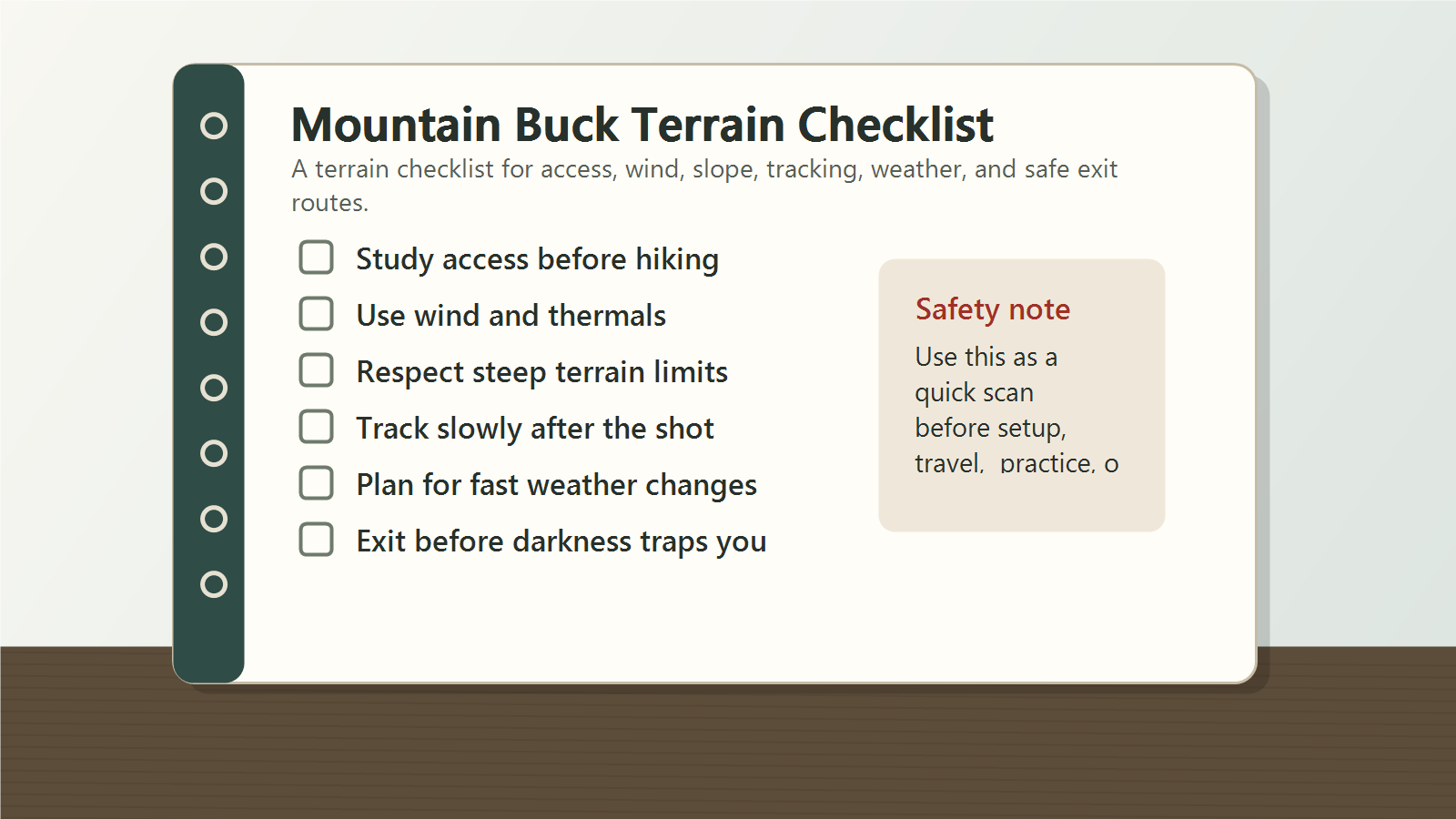
- Current WV DNR license, season, weapon, county, and game-check rules verified
- Public-land map, boundaries, parking, and access checked
- Private-land permission confirmed when needed
- Fresh sign found near food, bedding, or terrain funnels
- Wind, thermals, and exit route planned
- Safe background and legal deer identification confirmed before any shot
- Headlamp, navigation, layers, and recovery tools packed
- CWD and carcass transport guidance checked for the hunt area
FAQ
What is a West Virginia mountain buck?
It is usually a nickname for a mature whitetail buck living in Appalachian mountain habitat. It is not a separate deer species.
Where should I look for mountain bucks?
Start with legal access, then scout benches, saddles, oak flats, cuts, creek crossings, and thick bedding cover with fresh sign.
Are West Virginia deer rules the same every year?
No. Hunters should check current WV DNR rules every season, including county rules, season dates, weapon rules, game check, and disease guidance.
Do mountain deer always move during the rut?
The rut can increase movement, but weather, pressure, terrain, and food still matter. Hunt fresh sign and safe setups rather than assuming movement will happen on command.
What is the biggest safety issue in mountain deer hunting?
Safe shot direction and recovery planning are major issues. Know your target, background, distance, and exit route before committing to a shot.
Final Takeaway
West Virginia mountain buck hunting is a terrain, safety, and patience game. Check current WV DNR rules, scout fresh sign, understand benches and saddles, manage wind and access, respect other hunters, and choose only shots you can identify, place, and recover responsibly.
The best plan is usually plain: legal access, current sign, safe wind, a realistic recovery route, and enough daylight to make good decisions.
Keep the plan simple.