How to Improve Your Archery Shooting: Form, Drills, and Tips
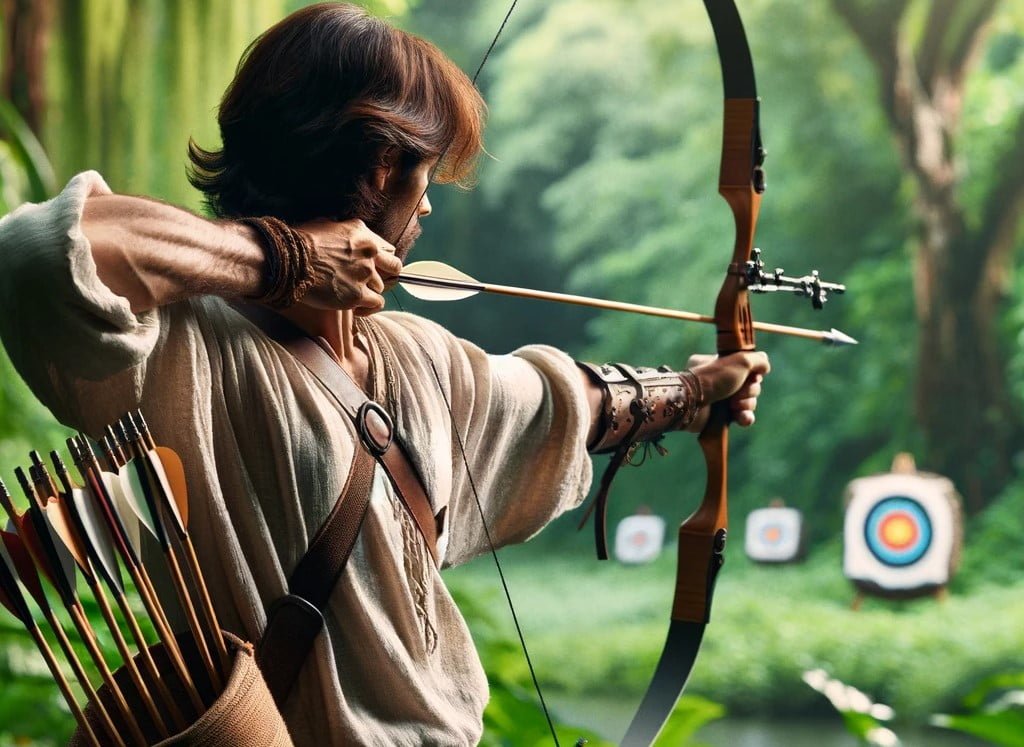
Better archery shooting comes from repeatable form, a consistent shot sequence, focused practice, and equipment that fits you. For most target and recreational archers, the fastest gains are not from buying new gear. They come from a stable stance, a relaxed grip, a fixed anchor point, a smooth release, and steady follow-through repeated the same way every shot.
This guide walks through form fundamentals, simple practice drills, and the common mistakes that quietly open up groups. Always shoot at a proper range or safe target area with a reliable backstop, keep the area downrange clear, and follow your bow manufacturer’s guidance.
Table of Contents
Start With Repeatable Archery Form
Repeatable form is the foundation of accuracy because a bow rewards doing the same thing the same way every time. Before adjusting equipment, work on the parts of the shot you control with your body: how you stand, how you hold the bow, where you anchor, and how you finish the shot.
A useful way to think about practice is that you are training a pattern, not chasing a single good shot. Slow, deliberate repetition of correct form usually beats high-volume shooting with sloppy technique. If your form breaks down when you get tired, stop or shorten the session rather than training bad habits.
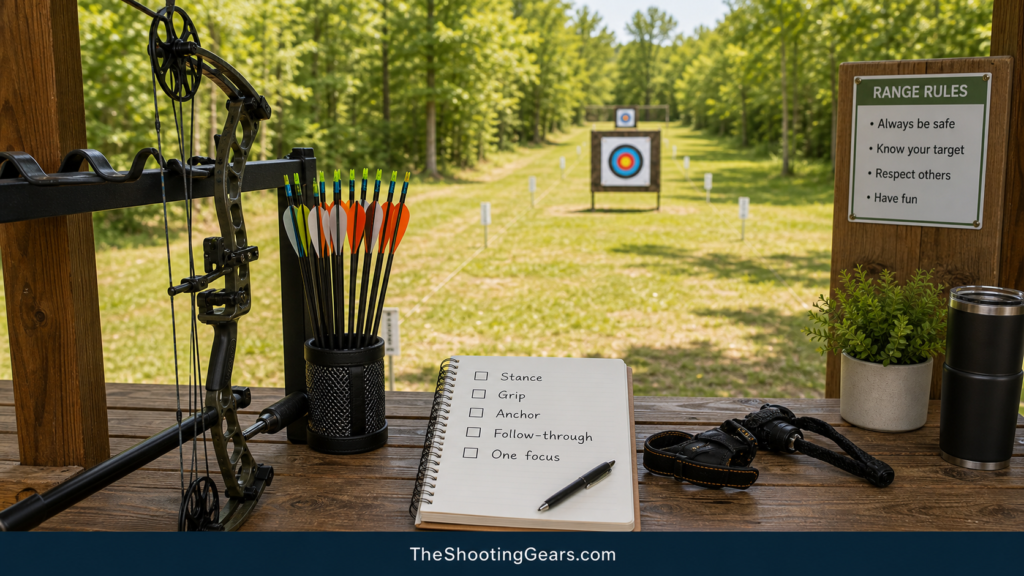
For safety basics, USA Archery’s archery safety guidance is a useful non-commercial reference. For broader sport context, World Archery is the international governing body for the sport.
Build a Consistent Shot Sequence
A consistent shot sequence is a fixed order of steps you run on every shot so your body learns one repeatable pattern. The exact details vary by archer, bow type, release style, and any coaching you receive in person, so treat the points below as general practice guidance rather than a one-size-fits-all prescription.
Stance
A stable stance gives every other part of the shot something steady to build on. A common starting point is feet about shoulder-width apart, weight balanced, and your body square or slightly open to the target. Keep the stance the same from shot to shot so your aim reference does not drift.
Grip
A relaxed, consistent grip reduces the side-to-side torque that can push arrows off line. Let the bow settle into the same place in your hand each time instead of squeezing it tightly. If your knuckles tense or your hand twists at release, reset before the next arrow.
Anchor Point
A fixed anchor point is one of the strongest contributors to vertical consistency. Your draw hand should return to the same reference spot every shot, based on your equipment and shooting style. A floating anchor is a common reason arrows land high or low even when the sight picture feels similar.
Follow-Through
Follow-through is what you do in the moment after release. Keep aiming and stay in position until the arrow lands instead of dropping the bow arm or peeking early. A steady, relaxed finish is a good sign that the rest of the sequence held together.
Practice Drills That Improve Accuracy
The most effective practice is deliberate and structured, not just more arrows. A few simple drills can sharpen form without turning the session into a score chase.
- Blank-bale or close-target practice: shoot at a large close target while focusing on form instead of score.
- Shot-count limits: end the session before fatigue degrades your sequence.
- One-arrow focus: treat each arrow as its own complete shot instead of rushing through a quiver.
- Consistency checks: note whether misses cluster in one direction, which often points to a repeatable form issue.
Keep every drill inside safe range practice: a clear shooting line, a proper backstop or target butt, no one downrange, and arrows pulled only when the range is clear.
Equipment Checks That Affect Groups
Equipment that fits you and is in good condition supports good form rather than fighting it. You do not need the most expensive gear to shoot well, but a few checks help your groups stay consistent.
- Draw length and draw weight that suit your strength, size, and shooting style.
- Arrows matched to your setup, because mismatched arrows can group poorly even with good form.
- Nocks, rest, serving, and string checked for visible wear or damage before shooting.
- Sight or aiming reference set the same way each session if you use one.
For setup specifics, tuning, draw weight, draw length, and arrow compatibility, follow your bow and arrow manufacturer’s documentation or work with a qualified pro shop in person.
Common Archery Shooting Mistakes
Most accuracy problems trace back to a small number of repeatable mistakes. Fixing one at a time usually produces clearer progress than changing everything in one session.
- Changing stance or foot position between shots.
- Gripping the bow too tightly and torquing it at release.
- Anchoring in a slightly different spot each time.
- Dropping the bow arm or peeking before the arrow lands.
- Practicing while tired and training inconsistent form.
- Blaming equipment before checking form fundamentals.
- Trying to fix several variables at once.
Frequently Asked Questions
How can I improve my archery accuracy fast?
The fastest gains usually come from consistency, not new gear. Lock in a repeatable stance, fixed anchor point, relaxed grip, and steady follow-through, then practice that same sequence deliberately.
How much should I practice archery to get better?
Quality matters more than quantity. Short focused sessions with full attention on form often beat long sessions where fatigue degrades technique. Consistent practice over time builds accuracy more reliably than occasional high-volume sessions.
Does better equipment make you a better archer?
Equipment that fits you and is in good condition supports good shooting, but it does not replace consistent form. A bow with suitable draw length and draw weight, plus arrows matched to the setup, helps your practice pay off.
Why are my arrows grouping inconsistently?
Inconsistent groups often come from something changing shot to shot, such as stance, grip pressure, anchor point, or follow-through. Equipment wear or a mismatched setup can also contribute, so inspect gear if your form looks consistent.
Is archery practice safe to do alone?
Archery should only be practiced at a proper range or safe target area with a reliable backstop and a clear downrange area. If you are new, instruction from a qualified coach, club, or range can help you build safer habits.