High Power Air Rifle for Hunting: Legal and Ethical Guide
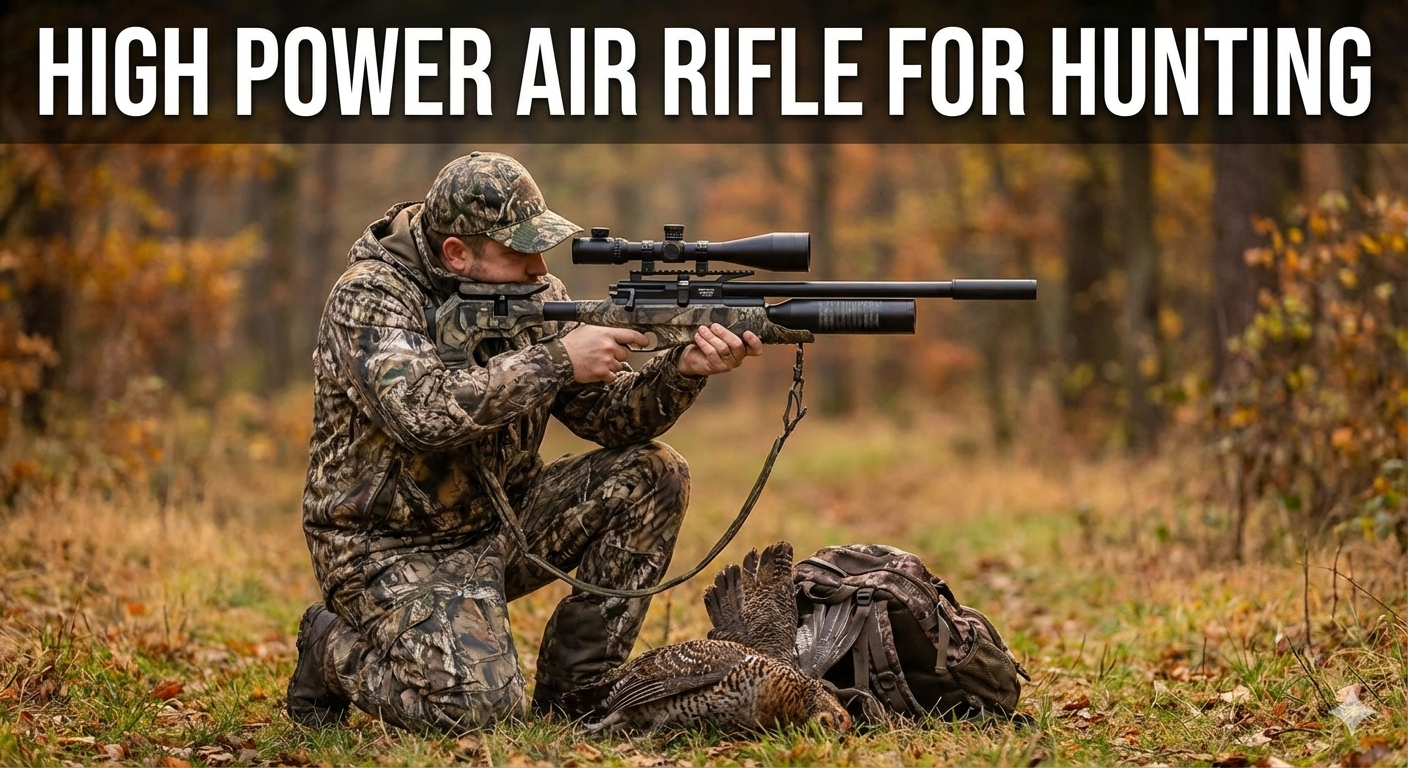
A high-power air rifle can be useful for hunting only when it is legal for the species, powerful enough for the animal, accurate in your hands, and used inside a verified ethical range. Power by itself does not make an air rifle a good hunting tool. Pellet or slug choice, shot placement, range limits, local laws, and safe backstop awareness matter just as much.
Table of Contents
Quick Answer
Choose a high-power air rifle for hunting only after confirming that air guns are legal for your target species and location. For small game and pests, accuracy and appropriate projectile choice matter more than chasing the highest velocity number. For larger game, rules and ethical requirements become much stricter, and many hunters are better served by traditional legal hunting tools.
Best Use Case
High-power air rifles make the most sense for legal small-game, pest, and close-range hunting where the shooter can place precise shots and recover the animal quickly.
Worst Use Case
They are a poor choice when the hunter is guessing at legal rules, stretching range, using untested ammunition, or relying on marketing velocity instead of verified field accuracy.
Legal Checks First
Air-rifle hunting rules vary widely. Some states allow air guns for certain small game, predators, or big game. Others restrict caliber, projectile, energy, season, land type, or species. Always verify current rules with your state wildlife agency before buying or hunting.
Use Official Sources
Use your state wildlife agency as the legal authority. General education resources such as Hunter-Ed and the International Hunter Education Association are useful for safety and hunter education, but they do not replace current state regulations.
Check Species and Land Type
A legal air rifle for one species may be illegal for another. Public land, wildlife refuges, and local ordinances may also add restrictions. Check the exact hunt, not just a general air-gun summary.
Power, Energy, and Species Fit
Air rifles are often marketed by velocity, but velocity alone can be misleading. A lightweight pellet at high speed may not deliver the same practical performance as a heavier projectile that is accurate and stable. Look at the whole system: caliber, projectile weight, energy, accuracy, and legal species requirements.
Small Game
For squirrels, rabbits, and similar small game where legal, precision is critical. The rifle must group well at the distances you actually hunt, and the projectile must be appropriate for clean harvests.
Larger Animals
For larger animals, air-rifle legality and ethical suitability become much more demanding. Do not assume an air rifle is appropriate because it is labeled high power. Confirm state rules, minimum requirements, and your real accuracy before considering the hunt.
Accuracy Matters More Than Advertised Power
A powerful air rifle that does not group reliably is not a hunting rifle. Before hunting, test groups from realistic field positions, not only from a perfect bench. Your ethical range is the distance where you can repeat clean hits under real conditions.
Test the Exact Projectile
Air rifles can be picky. One pellet or slug may group well, while another sprays. Test several legal projectiles and choose the one that groups consistently and performs appropriately for the species.
Know Your Drop
Airgun projectiles can have noticeable drop. Confirm point of impact at different distances and avoid guessing holdover on game.
Pellets, Slugs, and Terminal Performance
Projectile choice affects accuracy, penetration, expansion, and range. Pellets often work well at moderate ranges in many air rifles. Slugs can perform better in some high-power PCP rifles, but only if the barrel stabilizes them and the setup remains accurate.
Do Not Hunt With Untested Ammo
Do not take a new pellet or slug into the field without range verification. Confirm grouping, zero, and point of impact before using it on animals.
PCP vs Spring-Piston Air Rifles
Pre-charged pneumatic air rifles usually dominate the high-power hunting category because they can deliver higher energy with smoother shot behavior. Spring-piston rifles can be useful for small game, but they often require more technique and may be more hold-sensitive.
PCP Considerations
PCP rifles require an air source, pressure management, seals, and maintenance. They can be accurate and powerful, but the support gear matters.
Spring-Piston Considerations
Spring-piston rifles are simpler in some ways, but they can be harder to shoot well. Follow-through and consistent hold are especially important.
Optics, Rangefinding, and Backstops
Use a scope that focuses at airgun distances and holds zero on your specific rifle. A rangefinder helps because small errors in distance can matter. Always identify a safe backstop; air rifles are serious projectile tools and can injure people, pets, livestock, and property.
Safety Fundamentals
Even with air rifles, treat every shot with firearm-level seriousness: safe direction, trigger discipline, target identification, and backstop awareness. The NSSF firearm safety rules are useful safety fundamentals for responsible handling.
Range Verification
Before hunting, create a simple range card from real shots, not from the box or a forum post. Confirm zero, then check point of impact at the distances you may actually use. Include the projectile name, weight, fill pressure, scope setting, and weather notes if they affect your setup. If the group opens up or the drop becomes hard to judge, that distance is outside your practical hunting limit.
Practice From Field Positions
Bench groups are useful for testing the rifle, but hunting shots often happen from sitting, kneeling, sticks, a blind rail, or a pack. Confirm accuracy from the position you expect to use. If you cannot repeat the shot from that position, shorten the range or pass.
Maintenance and Field Reliability
High-power air rifles rely on seals, pressure systems, barrels, and consistent projectiles. Keep the rifle clean according to the manual, protect optics, check air pressure, and verify zero after travel or hard knocks.
Before Each Hunt
Confirm pressure, zero, projectile supply, magazine function, safe transport, and local rules before leaving. A missing fill adapter or low pressure can end the hunt before it starts.
Pre-Hunt Checklist
- Verify air-rifle legality for the species, season, and location.
- Confirm caliber, projectile, and energy requirements if your state lists them.
- Test the exact pellet or slug at real hunting distances.
- Set a personal ethical range from field positions.
- Check scope focus, zero, air pressure, and spare gear.
- Confirm safe backstop and recovery plan before taking a shot.
FAQ
Are high-power air rifles legal for hunting?
Sometimes, but rules vary by state, species, season, and land type. Check the current state wildlife agency rules before hunting.
What is more important: FPS or accuracy?
Accuracy is more important for ethical hunting. Velocity can matter, but only when paired with the right projectile, legal setup, and reliable shot placement.
Can an air rifle be used for big game?
Some states allow certain air rifles for certain big-game hunts, but requirements are strict and location-specific. Verify current rules and be honest about your skill and the rifle’s limits.
Do air rifles need a safe backstop?
Yes. High-power air rifles can be dangerous. Always identify the target, what is beyond it, and whether the shot has a safe backstop.
Final Takeaway
A high-power air rifle can be a responsible hunting tool only when it is legal, accurate, powerful enough for the species, and used inside a proven ethical range. Start with current regulations, verify your rifle at the range, and never let marketing power claims replace shot discipline.