Hawke Vantage IR 3-9×40 Riflescope
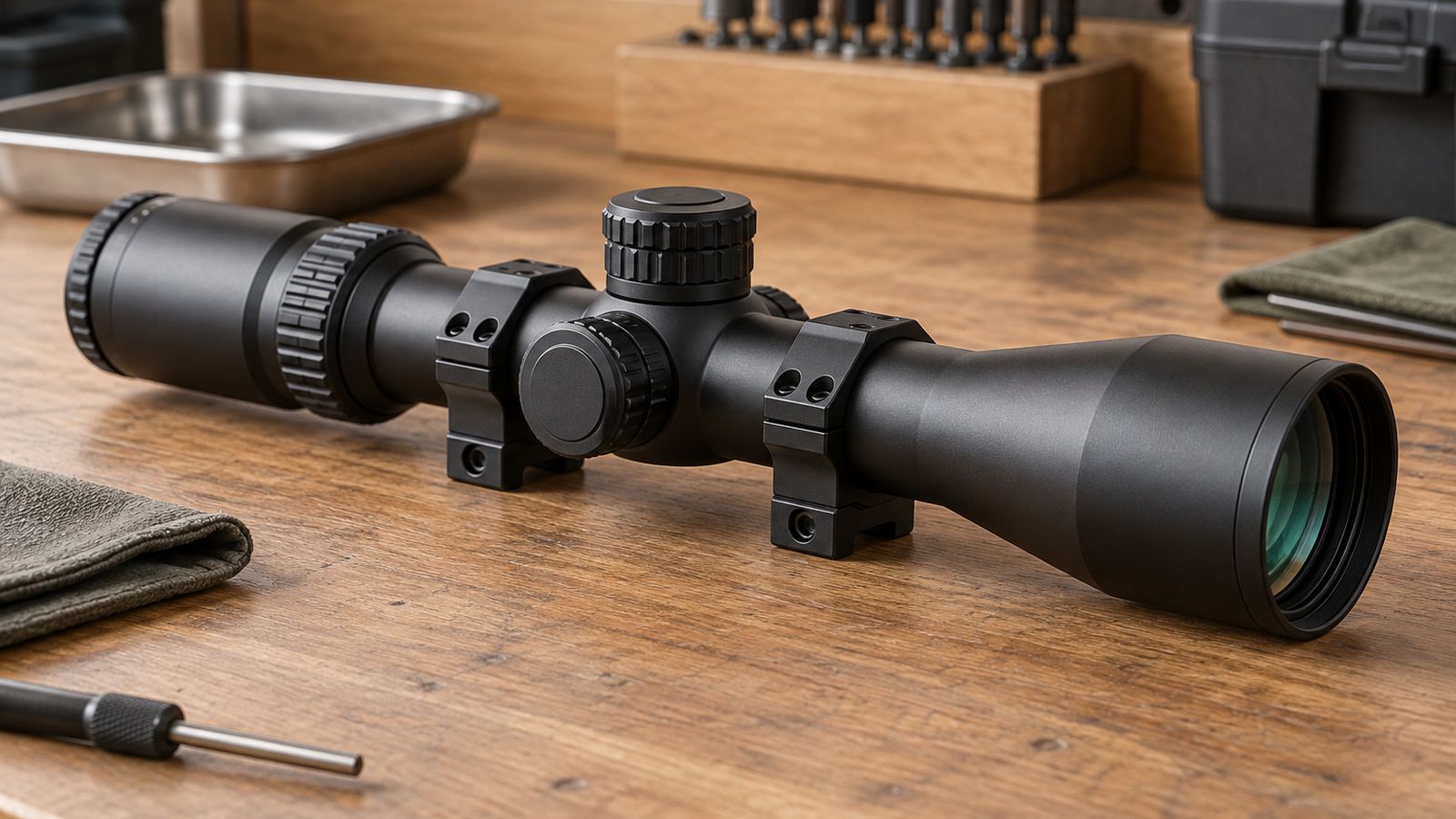
Chasing a scope that works on both a rimfire plinker and a deer rifle usually ends in compromise, which is exactly why the Hawke Vantage IR 3-9×40 Riflescope keeps showing up in buyer shortlists. Our editorial team dug into Hawke's published specs, model 14225 documentation, and several hundred verified buyer reports to figure out whether the adjustable-objective version earns its spot.
Short answer: it's worth it if you want AO parallax control, an illuminated Mil Dot reticle, and a no-fault lifetime warranty at a mid-range price. Skip it if you're shooting past 400 yards or need exposed tactical turrets for dialing. Here's the full breakdown.

What it is
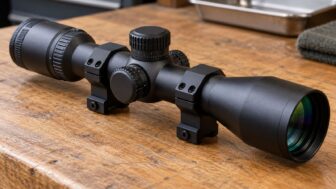
A riflescope is a telescopic sight that magnifies the target and overlays an aiming reticle on the same focal plane as the image. The Hawke Vantage IR 3-9×40 AO sits in the mid-tier hunting class: a 1-inch mono-tube, 3x to 9x variable magnification, a 40mm objective, and an adjustable objective (AO) ring for parallax.
It competes directly with the Vortex Crossfire II 3-9×40, the Leupold VX-Freedom 3-9×40, and the Bushnell Banner 2. What separates the Vantage IR from most of that group is the combination of AO parallax down to 10 yards plus a dual-colour illuminated Mil Dot, features usually reserved for higher price tiers.
Setup & first impressions
Aggregate buyer feedback lands on the same three points again and again: the finish is a proper matte anodised black with no orange-peel texture, the zoom ring takes deliberate effort to move, and the box includes flip-up lens caps plus a lens cloth.
That high-torque zoom ring is polarising. Hawke's own product documentation describes it as intentionally stiff so it won't drift under recoil, and verified buyers confirm it needs a firm grip, especially with cold hands or gloves. Several reviewers report it loosens noticeably after 50 to 100 cycles.
The AO ring at the front is the other first-touch detail. It's knurled, marked from roughly 10 yards to infinity, and reviewers consistently note the numbers on it are indicative rather than precise, so you focus by image sharpness, not by the printed number.
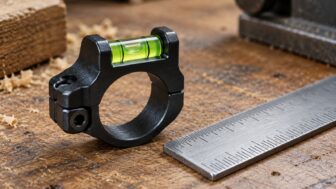
Mounting is standard 1-inch rings. Because the tube measures 12.4 inches long with a 40mm bell, buyers on short-action bolt guns report medium-height rings clear the barrel fine, while airgun shooters on 11mm dovetails often go high to clear the AO bell. A bubble level and a torque driver set to the ring maker's spec (usually 15 to 18 in-lb) are worth adding.
| Model number | Hawke Vantage IR 14225 |
| Magnification / objective | 3-9x variable, 40mm objective |
| Tube diameter | 1 inch (25.4mm) mono-tube |
| Reticle | Mil Dot, red/green illuminated, second focal plane |
| Parallax | Adjustable objective, 10 yards to infinity |
| Turret adjustment | 1/4 MOA per click, capped low-profile |
| Eye relief | Approx. 3.5 in (89mm) |
| Field of view @ 100 yd | Approx. 35 ft at 3x, 11.7 ft at 9x |
| Exit pupil | 13.3mm at 3x, 4.4mm at 9x |
| Length / weight | 12.4 in (315mm) / approx. 15.9 oz (451 g) |
| Sealing | Nitrogen purged, waterproof and fogproof |
| Illumination power | CR2032 coin cell, 5 brightness levels per colour |
Daily-use experience
Optical performance
A 4.4mm exit pupil at 9x means this scope still gathers usable light in the last 20 minutes of legal shooting time. That number matters more than "fully multi-coated" marketing language, because the human pupil dilates to roughly 5 to 7mm in low light.
Buyer reports across rimfire and centerfire builds agree the image is sharp and neutral from 3x to about 7x, with a slight softening at the very edge at 9x. That's normal behaviour for a 1-inch tube at this tier.
Chromatic aberration shows up as a faint purple fringe on high-contrast targets, like a dark branch against bright sky. Compared to a Leupold VX-Freedom, users describe the Hawke as similar in brightness with slightly more edge distortion, and clearly better than budget-tier Simmons or Tasco glass in the same size class.
The AO parallax ring
Parallax error is the apparent shift of the reticle against the target when your eye moves off the optical axis, and at 9x on a 25-yard rimfire target it can cost you a quarter-inch. The AO ring is the reason this specific model gets recommended for .22 LR and air rifle work.
Focusing from 10 yards to infinity means backyard pest control at 15 yards and a 200-yard field zero both come into sharp focus. Fixed-parallax hunting scopes are typically factory-set at 100 or 150 yards and simply can't do this.
The trade-off buyers mention: the printed yardage marks drift out of alignment with true distance, sometimes by 10 to 15 yards. Practically, you set focus by eye and ignore the numbers.
Reticle and illumination
The Mil Dot reticle here is a second focal plane design, meaning the dot spacing is only true at one magnification. On the Vantage IR that reference setting is 9x, so holdovers you work out on the range only hold if you shoot at max zoom.
Illumination runs red or green across 5 brightness levels each, powered by a single CR2032. Verified buyers hunting whitetail at first light consistently report level 1 or 2 red is right for dawn, and anything above level 3 blooms and blurs the dot.
Common complaint worth knowing: there's no off position between colour steps on some units, so you cycle through brightness to shut it down. Several owners also note the illumination is too dim to see against bright snow at midday, which is expected for a coin-cell reticle rather than a defect.
Build quality and recoil durability
Hawke built its reputation on airgun optics, and spring-piston air rifles produce a violent two-way recoil that destroys scopes not built for it. That heritage shows in aggregate feedback: owners running the Vantage IR on .30-06.308 Winchester, and springer air rifles report zero holding through hundreds of rounds.
The nitrogen-purged mono-tube is a single machined piece rather than two halves joined, which is the main structural reason these hold zero under repeated shock. Capped low-profile turrets also stop the elevation drum snagging on a truck seat or brush.
Where owners do report problems, it's usually turret tracking on a small number of units, with clicks that feel mushy or return-to-zero that drifts a click or two. Hawke's no-fault lifetime warranty is the safety net, and you can verify the terms on the official Hawke Optics site.
✓ Pros
- AO parallax focuses from 10 yards to infinity, so the same scope works on a 15-yard air rifle and a 200-yard deer rifle
- 4.4mm exit pupil at 9x keeps the image usable through the last 20 minutes of legal light
- Single-piece nitrogen-purged mono-tube handles springer air rifle double recoil that kills lesser scopes
- Red/green illumination with 5 levels each lets you match brightness to dawn, dusk, or a shaded treeline
- No-fault lifetime warranty from Hawke means a damaged scope gets replaced, not argued over
✗ Cons
- Zoom ring is genuinely stiff out of the box, awkward to twist with gloves until it breaks in
- AO yardage markings can be off by 10 to 15 yards, so you focus by image, not by the printed scale
- Mil Dot spacing is only accurate at 9x because it’s second focal plane, limiting holdover math at lower zoom
- Capped turrets are made for set-and-forget hunting, not for dialing elevation shot to shot
Who should buy it
Buy it if you…
You're the shooter with a .22 LR for squirrels, a PCP air rifle for barn pests, and a .243 or .308 for deer season, and you're tired of scopes that only suit one of them. The 10-yard parallax floor plus 3-9x range covers all three without a compromise.
You also benefit if you hunt the first and last hour of legal light. Illumination at level 1 or 2 gives you a visible aiming point against a dark hide when a plain black crosshair disappears. Add a set of quality 1-inch rings and you're done.
Skip it if you…
You're building a precision rig where dialing is the whole point. Capped turrets mean unscrewing a cap for every correction, which is slow and defeats the purpose of a dial-first workflow. Look at exposed-turret optics instead.
Skip it too if you shoot beyond 400 yards regularly. At 9x on a second focal plane reticle, target identification and Mil Dot ranging both get thin past that mark. And if you want a reticle that subtends correctly at every magnification, you need a first focal plane scope, which this isn't.
Better alternatives
- Vortex Diamondback Tactical 4-12×40 FFP: first focal plane with exposed turrets, the right pick if you dial rather than hold over.
- Leupold VX-Freedom 3-9×40: slightly brighter glass and lighter weight, though it drops the AO parallax and illumination the Hawke gives you.
Frequently Asked Questions (FAQ)
Does the Hawke Vantage IR work on a spring-piston air rifle?
Yes. Hawke's optics line was built around airgun use, and spring-piston rifles create a sharp forward-and-back recoil pulse that shears the internals of scopes rated only for centerfire. Verified owners running the Vantage IR on springers such as the Weihrauch HW95 and Gamo Magnum consistently report zero retention over long sessions.
Just use high rings so the 40mm objective bell clears the barrel on 11mm dovetail rails.
Do I need the AO version, or is fixed parallax fine?
If everything you shoot lives past 100 yards, fixed parallax is fine. If you shoot rimfire or air rifles inside 60 yards, AO matters a lot, because a fixed-parallax scope set at 100 yards leaves close targets slightly blurred and introduces reticle shift when your head moves. Adjustable objective removes that error and sharpens the image at the same time.
For mixed use, AO is the safer buy.
What battery does the illuminated reticle use?
A single CR2032 3V lithium coin cell, housed in the side illumination dial. It's the same cell used in car key fobs, so replacements are cheap and available anywhere. Buyers report the reticle still works normally with a dead battery, since illumination is an overlay on an etched black Mil Dot rather than the reticle itself.
Keep a spare in your pack anyway.
Is the warranty actually usable?
Hawke offers a no-fault lifetime warranty in the US market, which means the company repairs or replaces the scope regardless of how the damage happened, no receipt scavenger hunt required. Owners who've filed claims describe it as straightforward, though turnaround takes weeks rather than days. Register the product on Hawke's site after purchase to speed things up.
That coverage is a large part of why this scope competes well against pricier options.
Will 1/4 MOA clicks be precise enough for zeroing?
Yes. One 1/4 MOA click moves point of impact about 0.26 inches at 100 yards, or roughly 0.065 inches at 25 yards. That's finer than most hunting rifles can group, so the click value isn't your limiting factor.
If your groups aren't tightening, check ring torque and your ammunition consistency first. The National Shooting Sports Foundation and most state hunter-education programs recommend confirming zero from a stable rest before every season.
Final verdict
4.5 out of 5 stars. As of 2026, the Hawke Vantage IR 3-9×40 AO remains one of the few mid-priced scopes that packs adjustable objective parallax, dual-colour illumination, and a lifetime no-fault warranty into a single 1-inch tube.
The people who win here are multi-gun shooters and dawn-to-dusk hunters: anyone who wants a rimfire-capable, airgun-tough optic that still handles a 200-yard deer shot without apology. If your shooting is all long-range dialing, spend your money on an exposed-turret FFP scope instead.
Everything else is minor. The stiff zoom ring loosens, the AO numbers are a rough guide, and neither changes the fact that this scope holds zero and gives you clean, usable glass in the light where it counts.
Affiliate disclosure: This post contains affiliate links. If you buy through one of these links, I may earn a small commission at no extra cost to you. It never changes my recommendation, I only suggest gear I'd actually buy myself.