Garmin Xero C1 Pro Chronograph
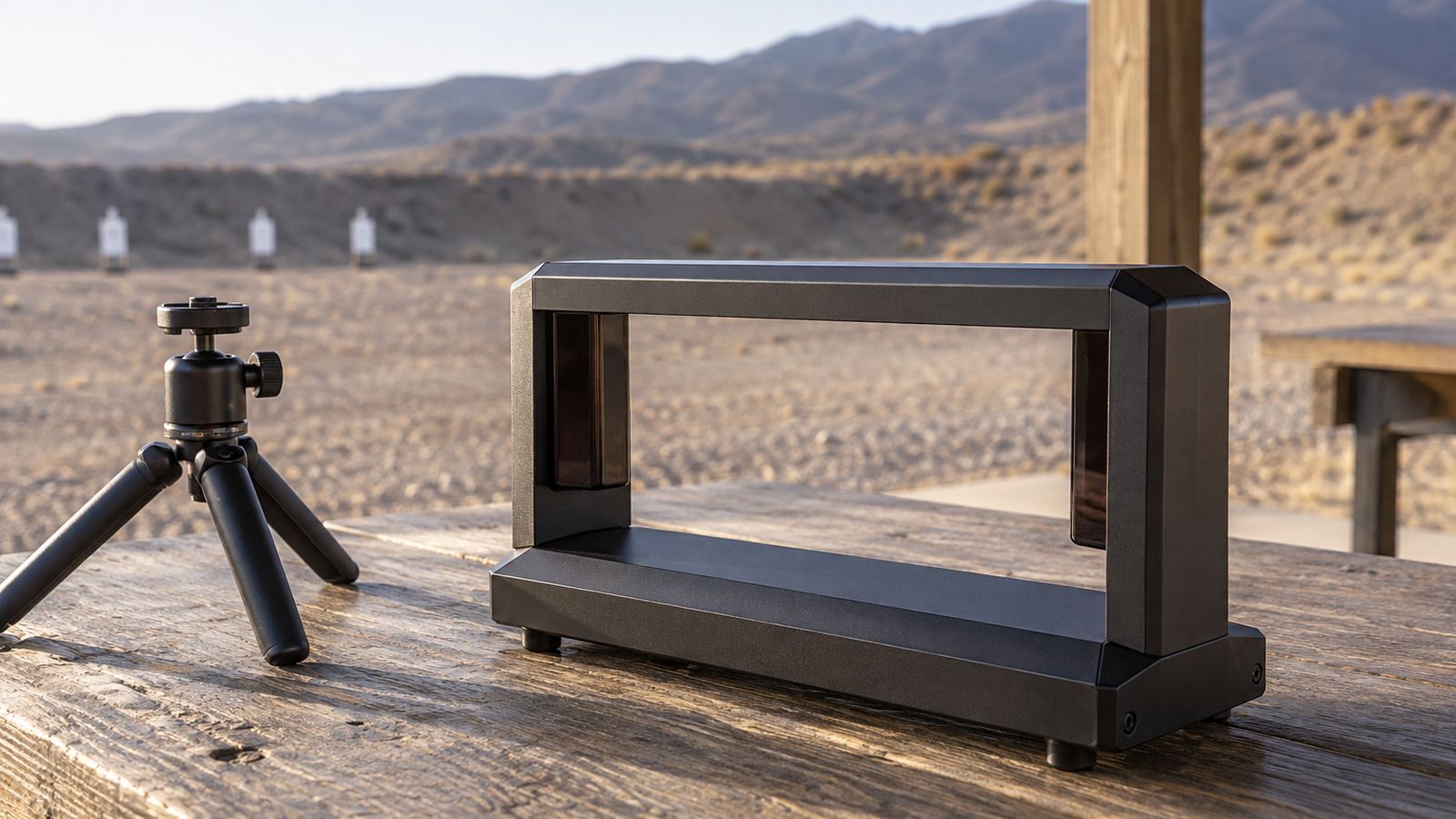
Chronograph shopping used to mean sunshades, tripods, and praying the sky cooperated, which is exactly why the Garmin Xero® C1 Pro shows up in almost every load-development conversation now. Our editorial team dug into manufacturer specifications, Garmin's own documentation, and hundreds of verified buyer reports to figure out whether a palm-sized Doppler radar unit really replaces a full-size chronograph setup.
Short answer: it's worth it if you shoot regularly, chase single-digit standard deviation, or share a bench with other shooters. Skip it if you fire a box of factory ammo twice a year and just want a rough muzzle velocity number. Here's the full breakdown.

1. Garmin Xero® C1 Pro
We compared the C1 Pro against manufacturer datasheets for every major chronograph still sold in 2026, then read through aggregate buyer feedback to see where the marketing and the range reality diverge. The pattern was unusually consistent: shooters who owned optical chronographs first describe the switch as the single biggest workflow upgrade on their bench. The complaints that do exist cluster around price and app quirks, not measurement performance.
What it is
A ballistics chronograph is a device that measures the speed of a projectile as it leaves the muzzle, usually reported in feet per second (fps). The Garmin Xero C1 Pro is a compact Doppler radar chronograph, meaning it bounces a radio signal off the bullet and reads the frequency shift rather than watching a shadow cross two optical sensors.
That distinction matters. Traditional optical units like the Competition Electronics ProChrono and Caldwell Chronograph need consistent lighting and a downrange tripod. Barrel-mounted systems like MagnetoSpeed change your point of impact.
LabRadar pioneered consumer Doppler, and Garmin shrank the same idea into something that fits in a jacket pocket.
Setup and first impressions
Verified buyer feedback is remarkably uniform on one point: first-time setup takes under two minutes, including pairing to a phone. You set the device beside your firearm, 5 to 15 inches to the side of the muzzle and roughly level with it, pick your projectile type, and start firing. There's no aiming, no downrange walk, no sunshade assembly.
Out of the box, Garmin includes a soft carrying case, a compact tabletop tripod with a standard 1/4-20 thread, and a USB-C charging cable. Reviewers repeatedly describe the housing as denser than expected for 3.5 oz (99 g), with a rubberized shell and physical buttons that stay usable through winter gloves.
The monochrome display draws the most mixed commentary. It's readable in direct sun (a genuine advantage over glossy phone screens on a bright bench), but several buyers note the small font requires a lean-in at arm's length. Per Garmin's documentation, the unit is rated IPX7, meaning submersion in 1 meter of water for 30 minutes without damage, which covers any realistic rain-on-the-bench scenario.
| Measurement type | Doppler radar (no optical sensors, no sunshades) |
| Velocity range | 100 to 5,000 fps |
| Weight | 3.5 oz / 99 g |
| Battery | Rechargeable lithium-ion, up to 6 hours continuous use, USB-C |
| Onboard storage | Up to 100 shot sessions |
| Placement | 5 to 15 in. to the side of the muzzle, level with the bore |
| Supported projectiles | Rifle, pistol, shotgun, airgun, arrows, crossbow bolts |
| Water rating | IPX7 (1 m submersion, 30 minutes) |
| Connectivity | Bluetooth to the free Garmin ShotView app (iOS and Android) |
| Mounting | 1/4-20 thread, included mini tripod |
Daily-use experience
Shot capture and accuracy
Aggregate user reports put shot-capture rates in the 98 to 100 percent range across typical centerfire rifle strings, which is the number that actually separates chronographs in the field. Missed shots are the classic frustration with optical units, where a passing cloud can void half a 20-round ladder test.
Garmin specifies accuracy within 0.1 percent of true velocity, and handloaders cross-checking the C1 Pro against LabRadar units consistently report agreement inside a few fps. Where buyers do report trouble is subsonic .22 LR and light airgun pellets near the lower end of the 100 fps floor, plus occasional double-counting when a neighboring shooter fires at the exact moment you do. Repositioning slightly farther from the adjacent bench resolves it in most reported cases.
Setup speed on a busy range
This is where the C1 Pro earns its reputation. Traditional optical chronographs need a downrange tripod, which means waiting for a cold-range call before you can place or move anything. The C1 Pro sits on your own bench, so you can set up, reposition, and pack out entirely within your firing lane.
Shooters running pistol drills describe leaving it on the bench between strings and simply switching sessions. Because it reads arrows and bolts too, archery users report using the same unit to verify a new string or a fresh set of vanes without buying a second device. That cross-discipline flexibility is a real cost offset if you shoot more than one way.
Battery and charging
Garmin rates the internal lithium-ion cell at up to 6 hours of continuous use, charged over USB-C. In practice, buyer feedback suggests a full range day of intermittent shooting rarely drains it, since the unit sleeps between strings rather than radiating constantly.
The trade-off is honest and worth knowing: there's no user-replaceable battery. A LabRadar-style AA setup lets you swap cells at hour seven, while the C1 Pro asks you to bring a power bank. For a two-day precision match, plan on topping it up overnight.
Verified owners running multi-day matches routinely mention carrying a small 10,000 mAh bank in the range bag as standard practice.
The ShotView app and data workflow
The device stores up to 100 sessions on its own, then syncs over Bluetooth to Garmin's free ShotView app for iOS and Android. On-device you get average velocity, extreme spread, standard deviation, min and max, and power factor for competition shooters chasing a specific PF floor.
Standard deviation matters because it predicts vertical dispersion at distance more reliably than group size at 100 yards. In the app you can tag sessions by load, powder charge, and firearm, then export to CSV for your own spreadsheet. Buyer criticism here is real: some describe the app as functional but plain, with occasional sync hiccups on older Android builds.
Garmin has pushed firmware updates through 2025 and 2026, and owners report the reliability curve improving. Full documentation lives on Garmin's official site.
✓ Pros
- Doppler radar needs no sunlight, so it works indoors, in covered bays, and at dusk when optical chronographs quit
- 3.5 oz and pocket-sized, which means it lives in your range bag permanently instead of getting left home
- Sets up beside your own bench, so you never wait for a cold range to place or retrieve it
- Reads 100 to 5,000 fps across rifle, pistol, shotgun, airgun, arrows and bolts, covering multiple disciplines with one purchase
- On-device SD, extreme spread, and power factor mean you can judge a load before you leave the line
✗ Cons
- Sealed battery with no field-swappable cells, so a multi-day match needs a power bank in the bag
- Premium pricing sits well above optical chronographs that deliver adequate numbers for casual shooters
- ShotView app is functional but basic, with sync complaints appearing in a minority of Android buyer reports
- Adjacent shooters firing simultaneously can trigger occasional false reads until you reposition the unit
Who should buy it
Buy it if you…
You handload, and you care about the difference between an SD of 14 and an SD of 7. If you're running powder charge ladders in 0.3 grain increments, the C1 Pro pays for itself in components you no longer waste on inconclusive tests.
It also fits anyone shooting where light is unreliable: indoor pistol bays, covered ranges, early mornings before the sun clears the berm. Competition shooters verifying a power factor floor before a match get their answer on the bench in under a minute, no laptop needed.
Skip it if you…
You shoot factory ammunition, hunt one weekend a season, and mostly want to confirm a box label says roughly what it delivers. An optical chronograph on a sunny afternoon gets you within a handful of fps for a fraction of the outlay.
Skip it too if you were expecting a full ballistic solver. The C1 Pro measures velocity and computes statistics, but it doesn't calculate drop and wind holds on its own. You'll still want a separate ballistic app or a rangefinder with an integrated solver for that.
Better alternatives
- LabRadar LX: the other serious Doppler option, with a slightly different form factor and downrange velocity readings at multiple distances for shooters who want more than muzzle numbers.
- MagnetoSpeed Sporter: a barrel-mounted budget alternative that captures nearly every shot without light dependence, though it can shift your point of impact and won't work with certain barrel profiles.
Frequently Asked Questions (FAQ)
Does the Garmin Xero C1 Pro work with airguns and archery?
Yes. The C1 Pro supports rifle, pistol, shotgun, airgun, arrows, and crossbow bolts, with a measurement window of 100 to 5,000 fps. You select the projectile type on the device before you start a session so the radar knows what signature to expect.
Buyer feedback on arrows and bolts is strongly positive. The weakest edge case reported is very slow, very light airgun pellets sitting near the bottom of the velocity floor.
Do I need my phone to use it?
No. The C1 Pro is fully standalone and stores up to 100 sessions in onboard memory, displaying average velocity, extreme spread, standard deviation, min, max, and power factor right on the screen. The ShotView app is optional and adds session tagging, load notes, charts, and CSV export.
Plenty of owners report going months without opening the app, then syncing everything in one batch when they sit down to review load data.
Will it read shots from the bench next to me?
Occasionally, yes, and this is the most common false-reading complaint in buyer reports. Because Doppler radar has a detection cone rather than a narrow beam, a shooter firing simultaneously at an adjacent bench can register a spurious velocity. The fix reported most often is simple placement: keep the unit close to your own muzzle within the 5 to 15 inch window and angled away from the neighboring lane.
Outlier readings can also be deleted from the session afterward.
How accurate is it compared with a LabRadar?
Garmin specifies accuracy within 0.1 percent of true velocity. Shooters who own both units and run side-by-side comparisons consistently report agreement within a few fps across typical centerfire rifle loads, which is inside the noise floor of most ammunition anyway. For practical load development, the difference between the two is not the deciding factor.
Setup speed, size, and bench-side placement are where the C1 Pro pulls ahead in aggregate user feedback.
What warranty does Garmin provide?
Garmin covers the Xero C1 Pro under its standard consumer limited warranty for defects in materials and workmanship, registered through your Garmin account. Owner reports on service consistently describe responsive support and straightforward replacement handling for genuine defects. Firmware updates have shipped regularly since launch and install over Bluetooth through ShotView.
Check the current warranty terms on Garmin's official site before purchase, since coverage periods vary by region and by where the unit was bought.
Final verdict
4.6 out of 5 stars.
The Garmin Xero C1 Pro isn't the cheapest way to measure a bullet's speed, and it doesn't pretend to be. What it does is remove every excuse for not chronographing: no sunshades, no downrange trips, no waiting for a cold range, no dependence on the weather.
Handloaders chasing single-digit standard deviation and competition shooters verifying power factor get the most out of it, and cross-discipline shooters who also run a bow effectively get two instruments in one 3.5 oz package. Casual factory-ammo shooters will find the value harder to justify against a simple optical unit.
The honest caveats are the sealed battery, the plain app, and the price tier. None of those undo the core strength: this thing captures nearly every shot, every time, and it lives in your bag permanently because it weighs nothing.
Affiliate disclosure: This post contains affiliate links. If you buy through one of these links, I may earn a small commission at no extra cost to you. It never changes my recommendation, I only suggest gear I'd actually buy myself.