Table of Contents
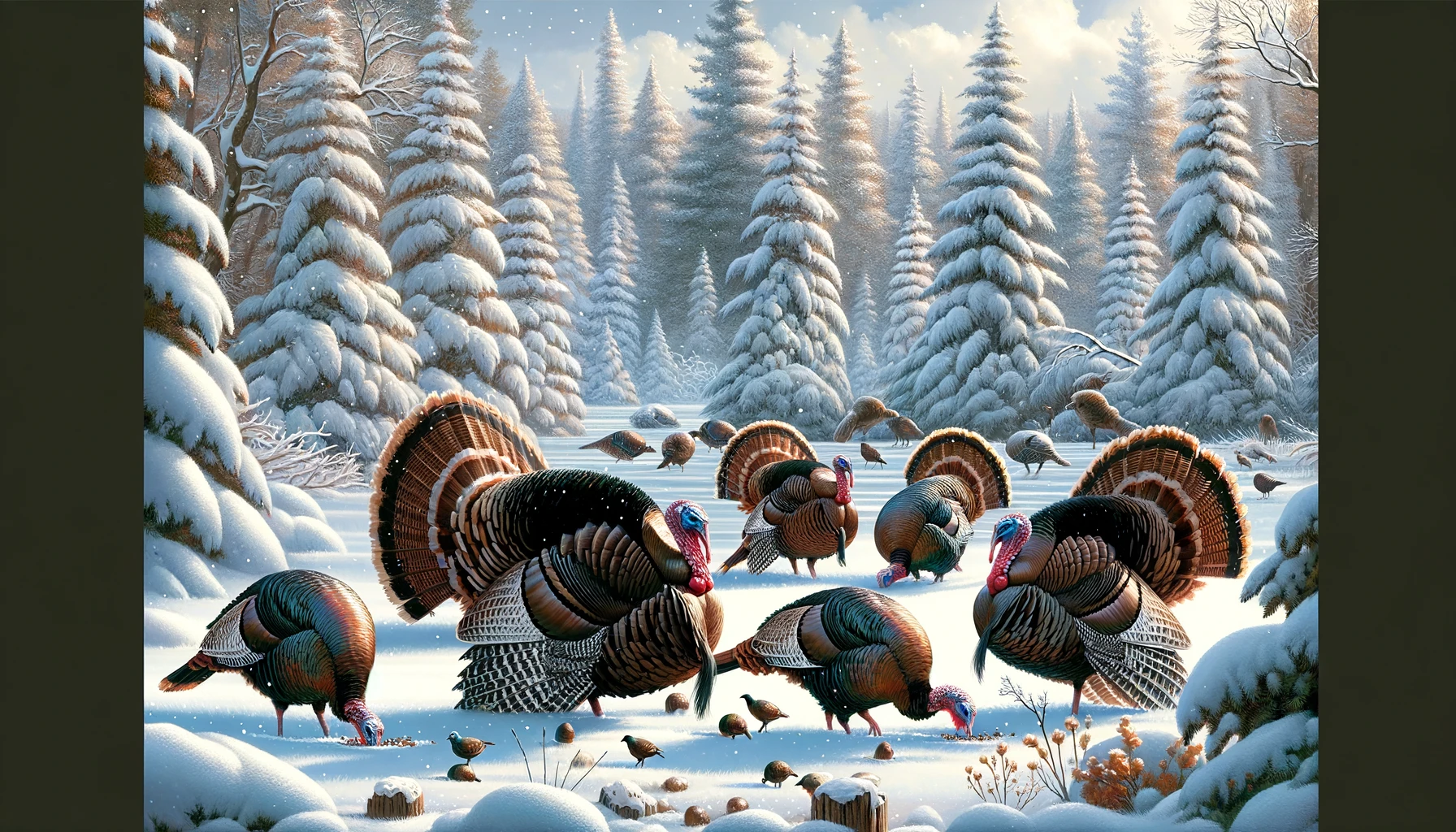
As winter cloaks the landscape in snow and ice, the natural world slows down, and its inhabitants adapt to survive the harsh conditions. Wild turkeys, resilient and adaptive birds that they are, have their own set of strategies to withstand winter’s grip. This article explores the effects of cold weather on wild turkeys, highlighting their behaviors, adaptations, and the challenges they face during the colder months.
Wild turkeys are opportunistic feeders, and their winter diet shifts to available resources, primarily consisting of hard mast like acorns and beechnuts, seeds, and leftover agricultural crops. They may travel further and form larger flocks to locate these scarce food sources, expending more energy in the process.
Roosting, the act of resting or sleeping in trees, is a critical survival behavior for wild turkeys, especially in winter. Trees provide some protection from ground-level predators and severe weather. Turkeys prefer coniferous trees during winter for the additional shelter they provide against wind and snow.
To conserve energy during cold months, wild turkeys limit their movements. Shorter days and inclement weather mean less time for feeding, so turkeys often roost longer, fly less, and stay closer to their food sources and shelter.
With snow covering the ground, turkeys are more visible to predators. Although adult turkeys have few natural predators, they must remain vigilant against coyotes, foxes, and large birds of prey.
Heavy snowfall can bury food sources, while ice storms can encase trees and make roosting difficult. In extreme conditions, turkeys may be forced to stay on the ground, increasing their vulnerability.
While turkeys are hardy birds capable of withstanding cold temperatures, prolonged periods of extreme cold can lead to stress, particularly for younger birds or those in poor health. This can impact their immune system and overall survival rates.
Human activity can both positively and negatively impact wild turkeys in winter. Conservation efforts, such as habitat management and supplemental feeding programs, can help support turkey populations. However, habitat destruction and disturbances can exacerbate the challenges turkeys face.
Wild turkeys are a testament to the resilience of wildlife, employing a range of strategies to survive winter’s challenges. Understanding these behaviors not only fosters a greater appreciation for these birds but also underscores the importance of conservation efforts to ensure their continued survival in the face of changing climates and habitats.
No, wild turkeys do not hibernate. They remain active throughout the year, adjusting their behaviors to adapt to winter conditions.
Turkeys fluff up their feathers to trap warm air close to their bodies, reducing heat loss. Roosting in trees also helps them avoid the colder temperatures found at ground level.
Yes, wild turkeys can survive heavy snowfall by using stored fat reserves, foraging for food more aggressively, and seeking shelter in dense forests or coniferous trees.
People can help by supporting wildlife habitat conservation efforts, participating in responsible feeding programs where appropriate, and minimizing disturbances in known turkey habitats.
While individual turkeys may face increased risks in winter, overall populations are generally resilient. However, severe winters combined with habitat loss and other stressors can impact local populations.
The adaptability of wild turkeys to winter conditions showcases the remarkable resilience of these birds and highlights the importance of supportive conservation practices to ensure their well-being and survival through the coldest months.
When it comes to modern bowhunting, speed remains one of the most talked-about specifications among…
3D archery has become one of the fastest-growing disciplines in the archery world. Unlike traditional…
Target archery is a sport where precision matters more than power. Even the slightest movement…
Bow strings are one of the most important components of any bow. Whether you shoot…
Getting started with a compound bow can be exciting. Compound bows offer impressive accuracy, speed,…
When people think about snipers, they often imagine extremely powerful scopes capable of zooming targets…
This website uses cookies.

