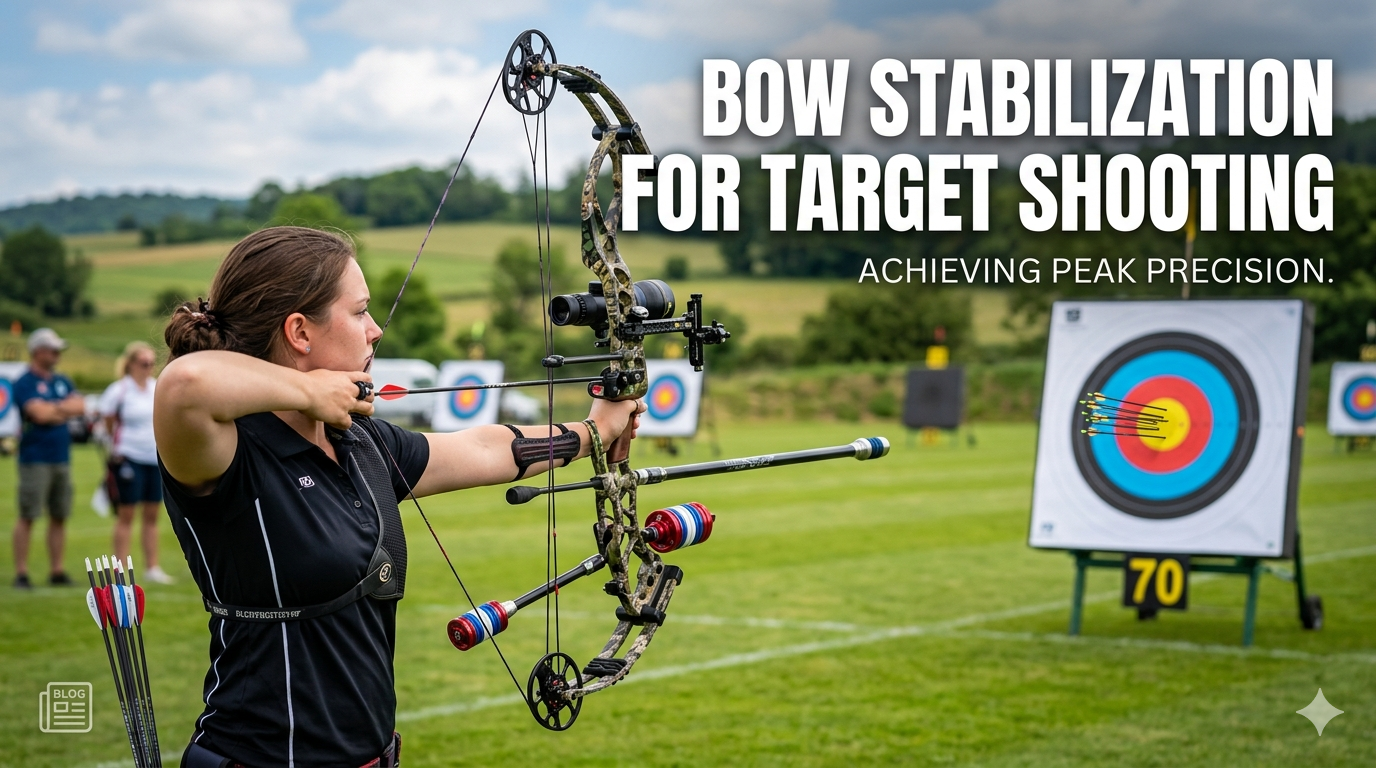
Target archery is a sport where precision matters more than power. Even the slightest movement during the aiming process can cause arrows to miss the center of the target. While many archers focus on improving their shooting form, choosing better arrows, or upgrading their sights, one piece of equipment often makes a significant difference in shooting performance: the bow stabilizer.
Bow stabilization is one of the most effective ways to increase accuracy, reduce vibration, and improve shot consistency. Whether you are a beginner learning proper form or a competitive target archer seeking tighter groupings, understanding how stabilization works can help you shoot better scores and gain confidence on the range.
This guide covers everything you need to know about bow stabilization for target shooting, including how stabilizers work, the different types available, setup recommendations, and tips for optimizing your equipment.
Bow stabilization refers to the use of stabilizers and balancing accessories attached to a bow to reduce unwanted movement and improve control during aiming and shooting.
A stabilizer is typically a rod made from carbon fiber, aluminum, or composite materials that extends from the bow. Weight is added to the end of the rod to create balance and increase the bow’s moment of inertia.
The primary goal is simple:
Without proper stabilization, even experienced archers may struggle to hold the sight pin steadily on target.
Target shooting requires extreme precision. Most misses occur not because of poor equipment but because the bow moves during the aiming process.
Stabilizers help by:
Table of Contents
The added weight creates resistance to sudden movements.
This means:
Instead of the bow reacting to every muscle twitch, it becomes more stable and predictable.
A stable bow naturally encourages proper follow-through.
Good follow-through allows:
Torque occurs when the bow twists during the shot.
Even slight torque can send arrows off target.
Proper stabilization helps minimize rotational movement, resulting in tighter groups.
After release, the bow generates vibration and noise.
Quality stabilizers absorb energy and reduce:
Many beginners assume stabilizers simply add weight. While weight is important, stabilization is actually based on physics.
The farther a weight is placed from the bow’s center, the more resistance it creates against movement.
This principle increases the bow’s moment of inertia.
Benefits include:
Think of holding a short hammer versus a long hammer.
The longer object is harder to rotate quickly.
A stabilizer applies the same concept to your bow.
Target archers often use multiple stabilizers working together as a complete system.
The front stabilizer is the most common stabilizer used on target bows.
It extends forward from the bow and provides:
Typical lengths include:
Competitive target archers frequently choose longer stabilizers for maximum stability.
Side stabilizers attach to the side of the bow using a mounting bracket called a V-bar.
These stabilizers help counterbalance:
Benefits include:
Many tournament archers consider side stabilizers essential.
Rear stabilizers extend backward from the bow.
Their purpose is to:
Rear stabilizers are especially popular among competitive compound shooters.
A V-bar system connects side stabilizers to the bow.
It allows archers to adjust:
Proper V-bar adjustment can dramatically improve balance.
One of the most common questions among archers is:
“How long should my stabilizer be?”
The answer depends on experience level and shooting goals.
Recommended length:
Advantages:
Recommended length:
Advantages:
Recommended length:
Advantages:
Long stabilizers are commonly seen in national and international competitions.
Weight is just as important as length.
Too little weight:
Too much weight:
The ideal setup provides stability while remaining comfortable during extended practice sessions.
Start light and gradually increase weight.
Observe:
Adjust until you find the best balance.
A well-balanced bow should naturally settle on target.
The center of gravity affects:
Target archers often spend significant time adjusting:
Even small changes can affect shooting performance.
A properly balanced bow should:
Compound bows benefit greatly from advanced stabilization systems.
Common target compound setups include:
Length:
Weight:
Length:
Weight:
Benefits include:
Many professional compound archers continuously adjust stabilization throughout the season.
Olympic recurve archers often use some of the most sophisticated stabilization systems.
Typical setup includes:
Length:
Mounted through a V-bar system.
An additional rod extending the stabilization system forward.
Benefits:
The majority of elite recurve archers use a full stabilization system.
Many archers assume heavier equals better.
Excessive weight often causes:
Balance is more important than total weight.
Adding a stabilizer without checking balance can create new problems.
Always test:
A stabilizer setup that works for one archer may not work for another.
Factors include:
Customize your system based on personal performance.
Small adjustments are easier to evaluate.
Change only one variable at a time:
Track results carefully.
A structured testing process helps identify the most effective configuration.
Shoot multiple groups at a consistent distance.
Record:
Adjust one component.
Examples:
Shoot another set of groups.
Compare results objectively.
The best setup is the one that consistently produces tighter groups.
When correctly configured, stabilization can provide:
For competitive target shooters, these improvements often translate directly into higher scores.
Absolutely.
While beginners should first focus on proper shooting form, a basic stabilizer can provide immediate benefits.
Advantages include:
Many new archers notice increased consistency after adding a simple stabilizer.
Bow stabilization is one of the most effective upgrades for target archers seeking improved accuracy and consistency. By increasing balance, reducing vibration, minimizing torque, and enhancing aiming control, stabilizers help archers achieve more predictable shot execution.
Whether you shoot a compound bow, Olympic recurve, or recreational target bow, investing time in understanding stabilization can significantly improve your performance. The ideal setup is not necessarily the heaviest or longest system available—it is the one that provides the best balance, comfort, and control for your individual shooting style.
Experiment carefully, make adjustments gradually, and focus on repeatable results. With the right stabilization system, you’ll enjoy steadier aiming, tighter groups, and greater confidence every time you step onto the shooting line.
Bow strings are one of the most important components of any bow. Whether you shoot…
Getting started with a compound bow can be exciting. Compound bows offer impressive accuracy, speed,…
When people think about snipers, they often imagine extremely powerful scopes capable of zooming targets…
The .308 Winchester is one of the most respected rifle cartridges ever created. Whether you’re…
When it comes to hunting rifles, few debates are as common or as important as…
Small game hunting is one of the most rewarding yet technically demanding forms of hunting.…
This website uses cookies.
