Bow Maintenance Tips Before Hunting Season
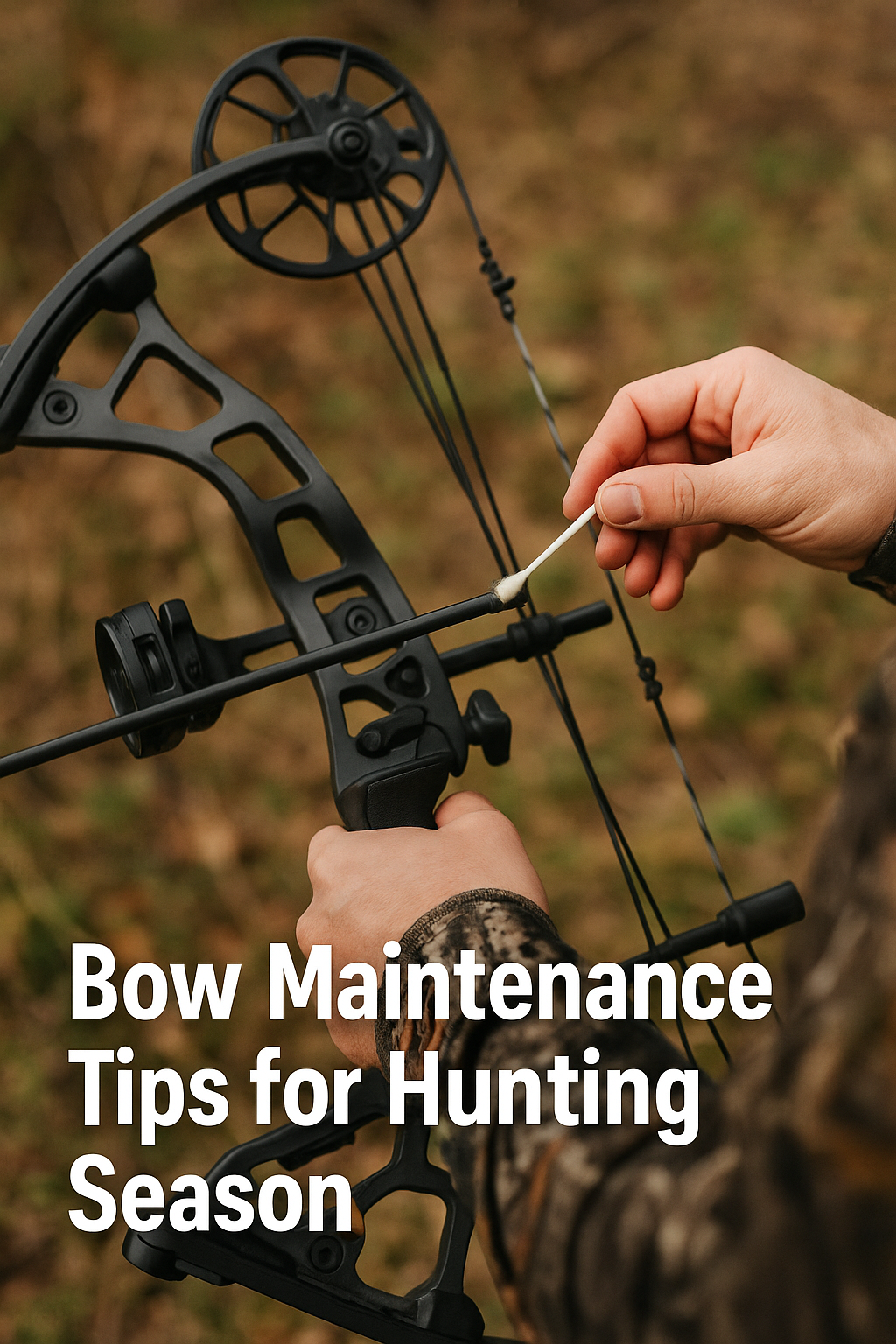
Pre-season bow maintenance is mostly inspection, clean storage, and knowing when to stop. Before hunting season, read the owner manual for your exact bow, check the string, cables, serving, limbs, cams, arrows, nocks, points, rest, sight, and quiver mounts, then confirm the bow shoots normally at a safe range. Anything damaged, unusual, or beyond basic care belongs with a qualified bow technician.
This guide is not a repair manual or a safety clearance. Compound bows store serious energy, and different models have different service limits. Treat the manual and a qualified pro shop as the final authority for your setup.
Table of Contents
- Quick Answer: What To Check Before Hunting Season
- Start With The Owner Manual and Safety Inspection
- Inspect Arrows, Nocks, Points, and Broadhead Storage
- Basic Cleaning and Storage Habits
- What To Test At A Safe Range
- When To Stop Shooting and Visit a Pro Shop
- Pre-Season Bow Maintenance Checklist
- Common Bow Maintenance Mistakes
- Related Bow Setup Guides
- Frequently Asked Questions
Quick Answer: What To Check Before Hunting Season
Before hunting season, check the bow in this order: manual, string and cables, serving, limbs, cams, rest, sight, quiver mounts, arrows, nocks, points, broadhead storage, cleaning, dry storage, and safe range confirmation. Stop shooting if you see fraying, broken strands, serving separation, limb damage, cam damage, unusual noise, or any issue you do not understand.
Keep the work simple. Visual inspection, clean handling, safe storage, and range confirmation are reasonable owner tasks. Press work, string or cable replacement, timing, limb adjustment, module work, peep work, and D-loop service should be handled by a pro shop.
Start With The Owner Manual and Safety Inspection
Start with the owner manual for your exact bow model. The manual tells you what the manufacturer considers normal, what checks are allowed, and which warning signs mean the bow should not be used. If you do not have a current manual, manufacturer manual pages such as Hoyt’s manuals page are a good reminder to find the correct document before doing anything more than a visual check.
Strings, Cables, Serving, and Limbs
Look closely at the string and cables. Watch for broken strands, heavy fraying, flattened areas, unusual separation, or serving that has shifted or opened up. Then inspect the limbs for cracks, splinters, chips, or delamination. Manufacturer safety pages such as Hoyt’s compound bow safety and warnings explain why damaged parts are a stop-use issue, not something to test for “one more shot.”
Cams, Modules, Rest, Sight, and Quiver
Check that cams, modules, and tracks look normal, with no visible bending, chips, or loose hardware. Look over the rest, sight, stabilizer mount, and quiver connection so nothing is obviously loose or shifted from your last setup. If a cam, module, cable path, or limb bolt looks questionable, stop and get service help. Manufacturer support pages such as Mathews support point owners toward model-specific assistance rather than guesswork.
Inspect Arrows, Nocks, Points, and Broadhead Storage
Check every arrow before the season. Look for cracked shafts, damaged fletching, loose inserts, damaged nocks, and points that are not seated correctly. If your arrow manufacturer recommends a specific inspection method, follow that method. If an arrow looks or sounds suspicious during inspection, remove it from use rather than trying to “test” it at full draw.
Broadheads should be stored covered, organized, and away from loose gear. This article does not cover broadhead tuning or shot setup; it only covers safe storage and inspection habits. Replacement arrows, nocks, inserts, and broadheads should match your bow setup and manufacturer guidance.
Basic Cleaning and Storage Habits
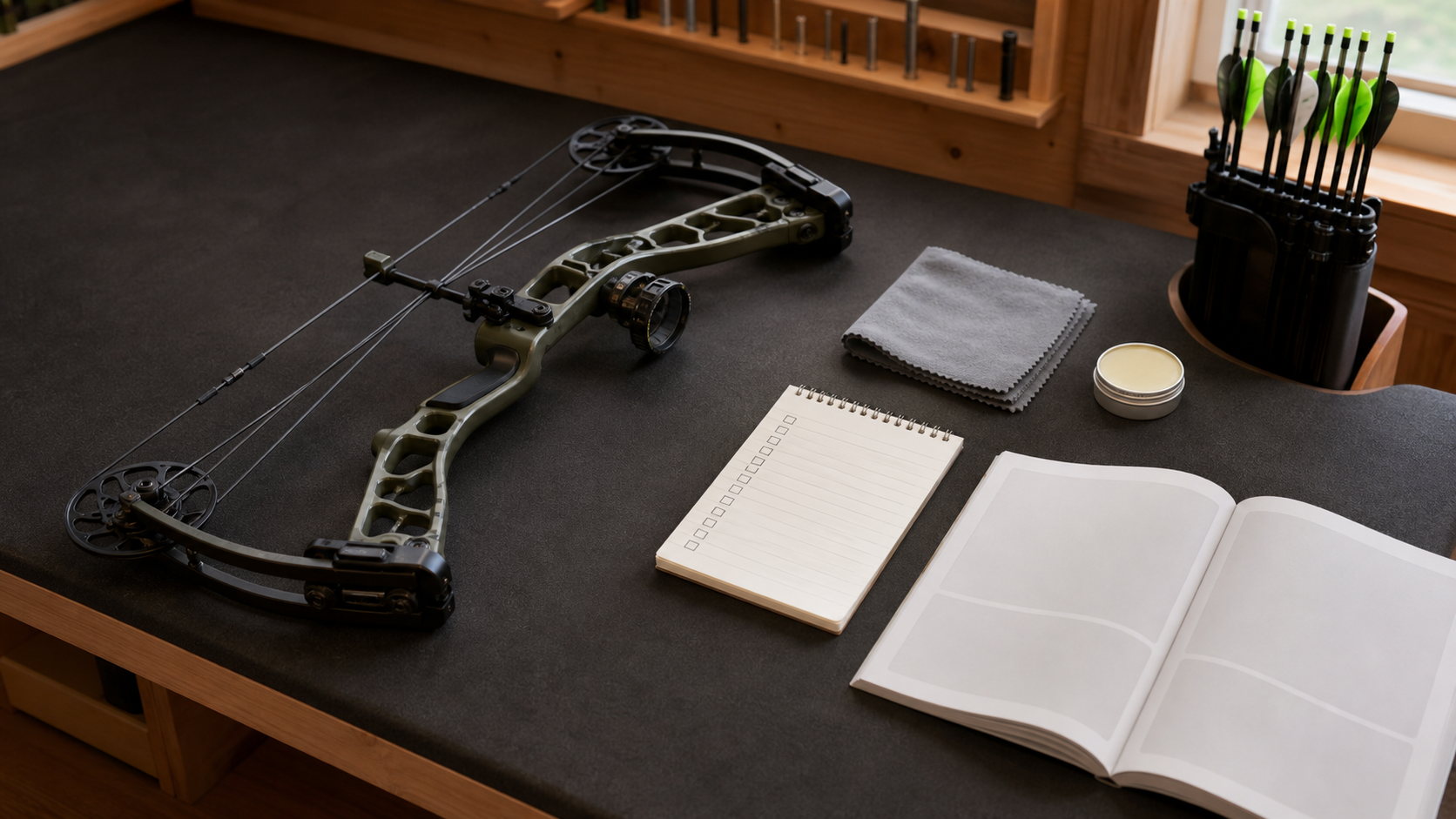
Basic bow care is simple: wipe away dirt and moisture, keep the bow dry, and store it in a stable place where it will not be knocked over, crushed, or exposed to harsh chemicals. A soft cloth is usually enough for normal surface cleaning. Avoid solvents, oils, sprays, or abrasive cleaning unless your owner manual specifically allows them.
String wax is another manual-led item. If your manual gives waxing guidance, follow it exactly. If the string is damaged, serving is separating, or you are unsure whether wax is appropriate, do not use wax as a fix. Get the bow inspected.
What To Test At A Safe Range
After the visual inspection, confirm the bow at a safe range with a proper target, backstop, and normal shooting routine. Watch for unusual sound, vibration, feel, arrow flight changes, or shifted accessories. Never dry fire a bow. USA Archery’s safety resources are a useful high-level reference for safe practice habits.
The range check is not a license to ignore warning signs. If anything seems different from normal, stop shooting and investigate with a qualified technician. A bow that feels “mostly fine” can still have a serious problem.
When To Stop Shooting and Visit a Pro Shop
Visit a pro shop if you see fraying, broken strands, serving separation, limb damage, cam damage, unusual noise, derailment, dry-fire history, a hard drop, or anything that makes you uncertain. A qualified technician should handle string and cable service, press work, timing, limb adjustments, module changes, peep work, D-loop service, and any repair that changes the bow’s setup.
When in doubt, choose the slower and safer path. Manufacturers such as BowTech direct owners toward customer service or authorized support for issues that should not be solved by guesswork.
Pre-Season Bow Maintenance Checklist
| Check | What To Look For | Safe Action |
|---|---|---|
| Owner manual | Exact model guidance and warnings | Follow the manual before any maintenance decision |
| String and cables | Fraying, broken strands, serving separation | Stop and use a pro shop if damaged |
| Limbs and cams | Cracks, chips, bent parts, loose hardware | Do not shoot if anything looks abnormal |
| Arrows and nocks | Cracks, loose inserts, damaged nocks or fletching | Remove questionable arrows from use |
| Accessories | Shifted rest, sight, quiver, or stabilizer | Confirm secure mounting without forcing adjustments |
| Range confirmation | Unusual sound, feel, vibration, or arrow flight | Stop if the bow does not feel normal |
Common Bow Maintenance Mistakes
The biggest mistake is treating maintenance as repair. A quick inspection does not prove a bow is safe, and a small warning sign can matter. Other common mistakes include skipping the owner manual, dry firing during checks, shooting a questionable arrow, using wax to hide string damage, ignoring serving separation, or attempting press work at home.
Another mistake is waiting until the night before the hunt. Do the inspection early enough that you have time for a pro-shop visit, replacement arrows, or range confirmation without rushing.
Related Bow Setup Guides
- How often should bow strings be replaced?
- Beginner’s guide to bow tuning
- How to choose arrow spine for your bow
- Safety rules of archery
- Compound bow mistakes beginners make
Frequently Asked Questions
What bow maintenance should I do before hunting season?
Read the owner manual, inspect the string, cables, serving, limbs, cams, accessories, arrows, nocks, and points, then confirm normal shooting at a safe range. Send anything damaged, advanced, or uncertain to a pro shop.
How often should I replace my bowstring?
There is no universal replacement interval that fits every bow and archer. Use your manual, usage level, visible condition, and a technician’s inspection. Fraying, broken strands, or serving separation are reasons to stop and get professional help.
Can I wax or service my own bowstring?
You can follow your manual if it gives clear string-waxing instructions. Do not treat wax as a repair. String replacement, cable replacement, twisting, timing, and press work should be handled by a qualified technician.
When should I take my bow to a pro shop?
Take it to a pro shop if you see string, cable, serving, limb, or cam damage; if the bow has been dry fired, derailed, dropped, or struck; if it sounds or feels unusual; or if you are unsure whether it is safe to shoot.