Bolt Action vs Semi-Auto Hunting Rifles: A Complete In-Depth Guide
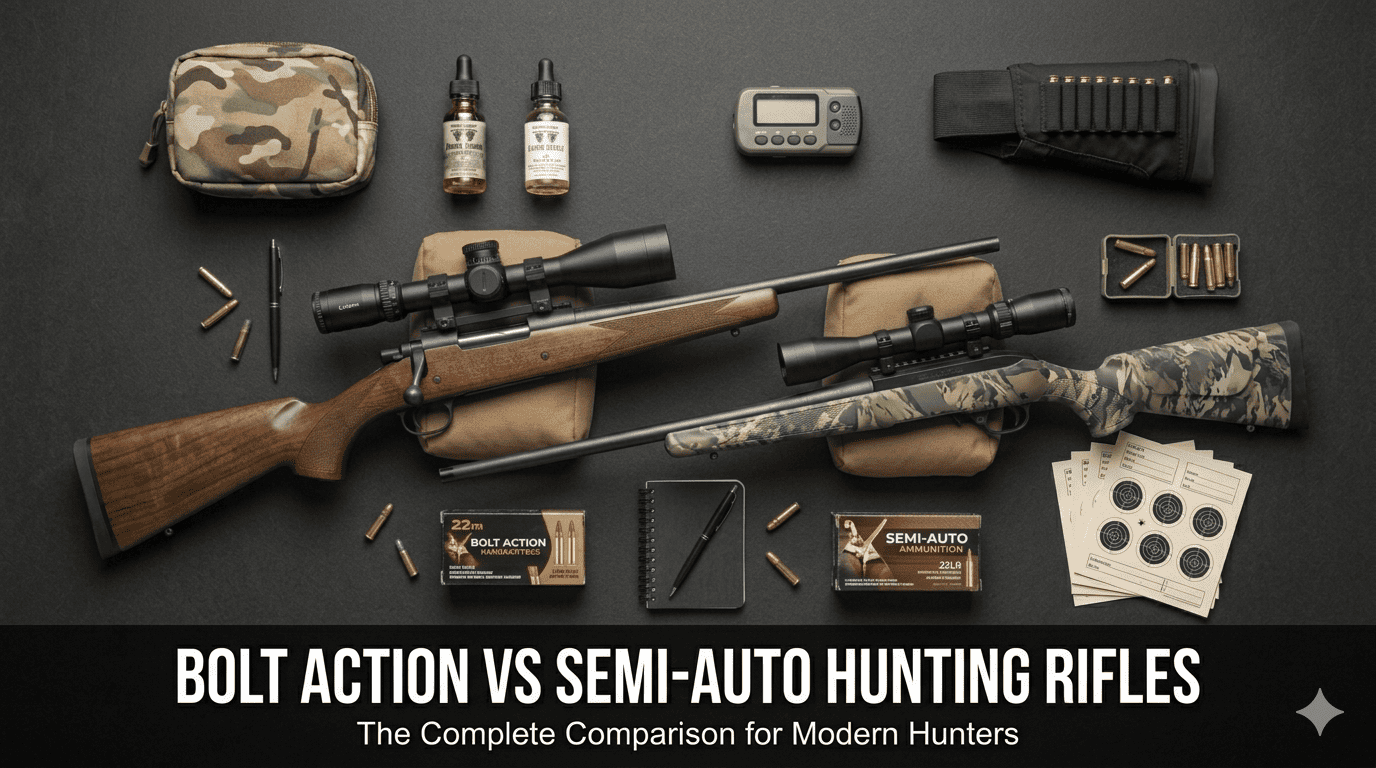
When it comes to hunting rifles, few debates are as common or as important as the choice between bolt action and semi-automatic rifles. Whether you’re a beginner trying to buy your first hunting rifle or an experienced hunter looking to upgrade, understanding the real differences between these two systems can significantly impact your success in the field.
This isn’t just about preference it’s about accuracy, reliability, speed, maintenance, and even hunting style. In this detailed guide, we’ll break down everything you need to know about bolt action vs semi-auto hunting rifles so you can confidently choose the right one.
Table of Contents
- Understanding the Basics: How Each Rifle Works
- Accuracy: The Biggest Deciding Factor for Hunters
- Speed and Follow-Up Shots: Where Semi-Auto Excels
- Reliability in Harsh Conditions
- Maintenance and Ease of Use
- Weight, Handling, and Portability
- Magazine Capacity and Practical Use
- Cost Considerations
- Real-World Hunting Applications
- Final Verdict: Which One Should You Choose?
Understanding the Basics: How Each Rifle Works
To truly understand the difference between bolt action and semi-automatic rifles, you first need to understand how each system operates.
A bolt action rifle is built around a simple but highly effective manual mechanism. After firing a shot, the shooter must physically lift and pull back the bolt handle to eject the spent casing. Then, by pushing the bolt forward and locking it down, a new round is chambered. This process repeats for every shot. While this might seem slow compared to modern firearms, it provides unmatched control and consistency.
On the other hand, a semi-automatic rifle automates this entire process. When you pull the trigger, the rifle uses either gas pressure or recoil energy generated by the fired round to eject the spent casing and load a new cartridge into the chamber. This means you can fire consecutive shots quickly without manually cycling the action. All you need to do is pull the trigger again.
This fundamental mechanical difference shapes everything else from performance to reliability to real-world hunting use.
Accuracy: The Biggest Deciding Factor for Hunters
Accuracy is often the most critical factor for hunters, and this is where bolt action rifles traditionally shine.
Bolt action rifles are known for their exceptional accuracy because they have fewer moving parts during the moment of firing. When you pull the trigger, the system is completely locked in place. This stability allows for better consistency shot after shot, especially at long distances. That’s why bolt action rifles are commonly used in precision shooting and long-range hunting scenarios such as deer or elk hunting.
Semi-automatic rifles, while still accurate, tend to have slightly more internal movement due to their cycling mechanism. This movement can introduce minor inconsistencies, especially at longer ranges. However, it’s important to note that modern semi-autos have improved significantly, and many high-quality models can deliver impressive accuracy just not usually at the same level as a good bolt action rifle.
For hunters who prioritize making a single, precise shot especially at longer distances the bolt action rifle remains the preferred choice.
Speed and Follow-Up Shots: Where Semi-Auto Excels
While bolt action rifles dominate in accuracy, semi-automatic rifles take the lead when it comes to speed.
In real hunting scenarios, not every shot goes perfectly. Sometimes animals move, shots miss, or a follow-up shot is necessary for an ethical kill. With a bolt action rifle, you must manually cycle the bolt before firing again. Even with practice, this introduces a delay.
Semi-automatic rifles eliminate this delay almost entirely. The next round is chambered instantly after each shot, allowing for rapid follow-up shots. This can be incredibly useful when hunting fast-moving animals like wild boar or predators, where speed can make a big difference.
This advantage is also important for hunters in dense environments where visibility is limited and quick reactions are necessary.
Reliability in Harsh Conditions
Reliability is where bolt action rifles truly prove their worth, especially in challenging environments.
Because of their simple design, bolt action rifles are incredibly dependable. They can function in mud, rain, snow, and dust with minimal risk of malfunction. The lack of complex moving parts means fewer things can go wrong.
Semi-automatic rifles, while generally reliable, are more sensitive to environmental conditions and ammunition quality. Dirt or debris can interfere with the gas system, and certain types of ammunition may not cycle properly. This doesn’t mean semi-autos are unreliable—it just means they require more attention and care.
For hunters venturing into rugged terrains or extreme weather conditions, a bolt action rifle offers peace of mind that the firearm will work when it matters most.
Maintenance and Ease of Use
Maintenance is another area where these two rifle types differ significantly.
Bolt action rifles are straightforward to clean and maintain. With fewer moving parts and no gas system, the cleaning process is simple and less time-consuming. This makes them ideal for beginners or hunters who prefer low-maintenance equipment.
Semi-automatic rifles, in contrast, require more detailed cleaning. The gas system, bolt carrier group, and other internal components need regular attention to ensure smooth operation. Neglecting maintenance can lead to performance issues over time.
While experienced users may not mind this extra effort, beginners often find bolt action rifles easier to manage.
Weight, Handling, and Portability
When you’re out in the field for hours or even days every ounce matters.
Bolt action rifles are typically lighter and more streamlined. Their simpler construction makes them easier to carry, especially during long hunts or mountain treks. This can reduce fatigue and improve overall hunting efficiency.
Semi-automatic rifles tend to be heavier due to their additional components. While the weight difference may not seem significant at first, it becomes noticeable during extended use.
For hunters who prioritize mobility and endurance, bolt action rifles often have the advantage.
Magazine Capacity and Practical Use
Magazine capacity is another important factor, particularly depending on your hunting style.
Bolt action rifles usually come with lower capacity magazines, often holding between three to five rounds. This is generally sufficient for most traditional hunting scenarios, where precision matters more than volume.
Semi-automatic rifles typically offer higher magazine capacities. This allows hunters to take multiple shots without reloading, which can be beneficial in certain situations, such as hunting groups of animals or dealing with fast-moving targets.
However, it’s important to consider local hunting laws, as some regions impose restrictions on magazine capacity or the use of semi-automatic rifles altogether.
Cost Considerations
Budget is always a factor when choosing a hunting rifle.
Bolt action rifles are generally more affordable. Their simpler design makes them less expensive to manufacture, and there are many high-quality options available at reasonable prices. This makes them an excellent choice for beginners or budget-conscious hunters.
Semi-automatic rifles tend to be more expensive, both in terms of initial purchase and long-term maintenance. The added complexity of the design contributes to the higher cost.
For those looking for value and performance without overspending, bolt action rifles often provide the best balance.
Real-World Hunting Applications
The best rifle for you ultimately depends on how and where you hunt.
If your focus is on long-range shooting in open environments, such as hunting deer or elk across large fields or mountains, a bolt action rifle is typically the better choice. Its accuracy and reliability make it ideal for these conditions.
On the other hand, if you hunt in dense forests or pursue fast-moving animals, a semi-automatic rifle can offer a significant advantage. The ability to take quick follow-up shots can improve your chances of success in dynamic situations.
Your experience level also plays a role. Beginners often benefit from the simplicity of bolt action rifles, while more experienced hunters may appreciate the versatility of semi-autos.
Final Verdict: Which One Should You Choose?
There is no universal answer to whether a bolt action or semi-automatic rifle is better it all depends on your specific needs and hunting style.
Bolt action rifles stand out for their accuracy, reliability, simplicity, and affordability. They are ideal for hunters who value precision and consistency, especially in long-range scenarios.
Semi-automatic rifles, on the other hand, excel in speed and versatility. They are well-suited for situations where quick follow-up shots are necessary and can be a powerful tool in the hands of an experienced hunter.
In the end, the best choice is the one that aligns with your hunting goals, environment, and personal preferences.