Trijicon ACOG vs VCOG: Fixed Power vs Variable Power Optics
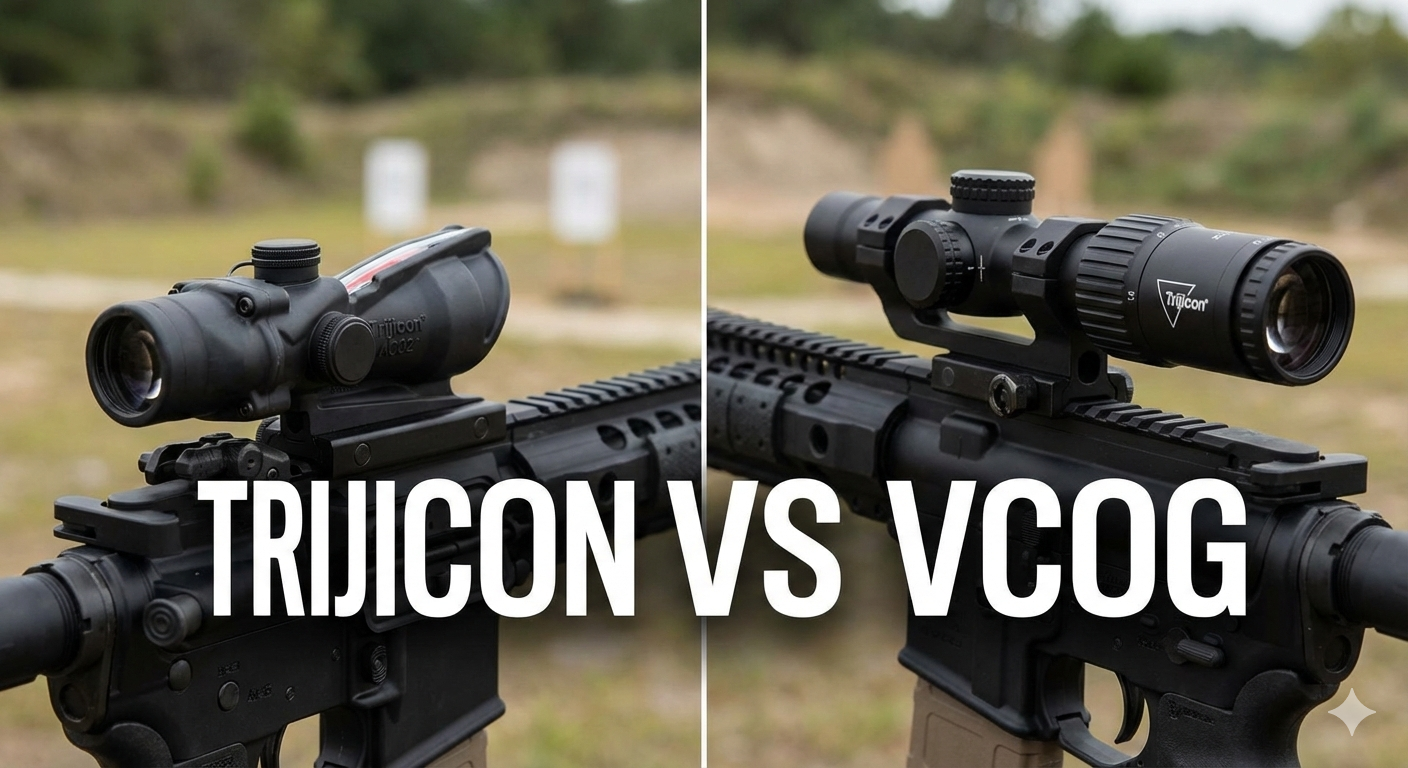
Trijicon ACOG and VCOG optics solve different problems. The ACOG is built around a fixed-magnification prism-scope idea, while the VCOG is built around variable magnification in a rugged rifle-scope format.
If you want a simpler optic with fewer settings to manage, the ACOG style may fit better. If you want one optic that can move from close work to higher magnification, the VCOG style is the more flexible route.
Table of Contents
Quick Answer
Choose an ACOG-style setup if you want fixed magnification, a compact form, and fewer adjustments to think about. Choose a VCOG-style setup if you want variable magnification, more flexibility across distances, and are comfortable managing the power ring, eye box, and scope setup.
Neither one is automatically better. The better optic is the one that matches the rifle, distance, target type, lighting, mounting setup, and the shooter’s practice routine.
What the ACOG Is
The ACOG name refers to Trijicon’s Advanced Combat Optical Gunsight line. In practical terms, most shoppers think of it as a fixed-power prism optic with a compact body and a reticle system designed for fast reference at known ranges.
Trijicon’s current ACOG product family is listed on the official Trijicon ACOG page. For background on the ACOG concept and history, see the Advanced Combat Optical Gunsight overview.
What the VCOG Is
The VCOG name refers to Trijicon’s Variable Combat Optical Gunsight line. The key difference is variable magnification. Instead of one fixed power, the shooter can change magnification based on distance, target size, and field conditions.
Trijicon’s current VCOG product family is listed on the official Trijicon VCOG page. For general rifle-scope background, see the telescopic sight overview.
ACOG vs VCOG: Main Differences
| Factor | ACOG-style setup | VCOG-style setup |
|---|---|---|
| Magnification | Fixed power | Variable power |
| Handling | Simpler once zeroed | More flexible but more to manage |
| Close-distance use | Depends on model, reticle, and shooter training | Can be turned down for wider view |
| Longer-distance use | Limited by fixed power and reticle setup | Can turn up magnification when conditions allow |
| Main tradeoff | Less flexible across distances | Larger, heavier, and more complex |
When the ACOG Makes More Sense
An ACOG-style optic can make sense when the shooter wants a fixed-power sighting system with fewer controls. It can also fit rifles where compact size, simple operation, and a known zero matter more than changing magnification throughout the day.
The tradeoff is flexibility. If you need to move from close targets to smaller targets farther away, fixed magnification can feel limiting. The shooter has to learn the reticle, the sight picture, and the practical distance window for that setup.
When the VCOG Makes More Sense
A VCOG-style optic can make sense when you want one optic to cover a wider distance range. Turning the magnification down can help with a wider view, while turning it up can help when the target is smaller or farther away.
The tradeoff is size and setup complexity. Variable-power optics usually require more attention to eye relief, mounting position, magnification setting, reticle use, and sometimes illumination or turret setup. That is not bad, but it does mean the shooter needs time behind the optic.
Before You Buy Either One
Before choosing either optic family, think through the full rifle setup. Mount height, eye relief, cheek weld, reticle choice, ammunition, zero distance, and safe range confirmation all matter. The optic cannot fix a poor mount or a shooter who has not confirmed the system at the range.
- Match the optic to your expected distances, not only the spec sheet.
- Check weight and balance on the actual rifle.
- Confirm eye relief and mounting height before final setup.
- Learn the reticle before relying on hold marks.
- Confirm zero and holds at a safe range.
- Follow firearm safety rules every time the rifle is handled.
For safe handling basics, review the NSSF firearm safety rules. For a general optics concept that helps explain prism-style systems, see the optical prism overview.
FAQ
Is the Trijicon ACOG better than the VCOG?
Not for every shooter. The ACOG is simpler because it is fixed power, while the VCOG is more flexible because it has variable magnification. The better choice depends on the rifle and use case.
Is the VCOG an LPVO?
Many VCOG models fit the low-power variable optic idea because they offer variable magnification starting at low power. Check the exact model specs before comparing it with other optics.
Why choose a fixed-power optic?
A fixed-power optic can be simpler to run because there is no magnification ring to manage. The tradeoff is less flexibility across distance changes.
Why choose a variable-power optic?
A variable-power optic can adapt to more distances and target sizes. The tradeoff is more weight, more setup detail, and more controls to learn.
Should I buy based only on ACOG vs VCOG?
No. Compare exact models, reticles, mounting needs, weight, eye relief, and your verified range use before deciding.