5 Best Hunting GPS Under $200
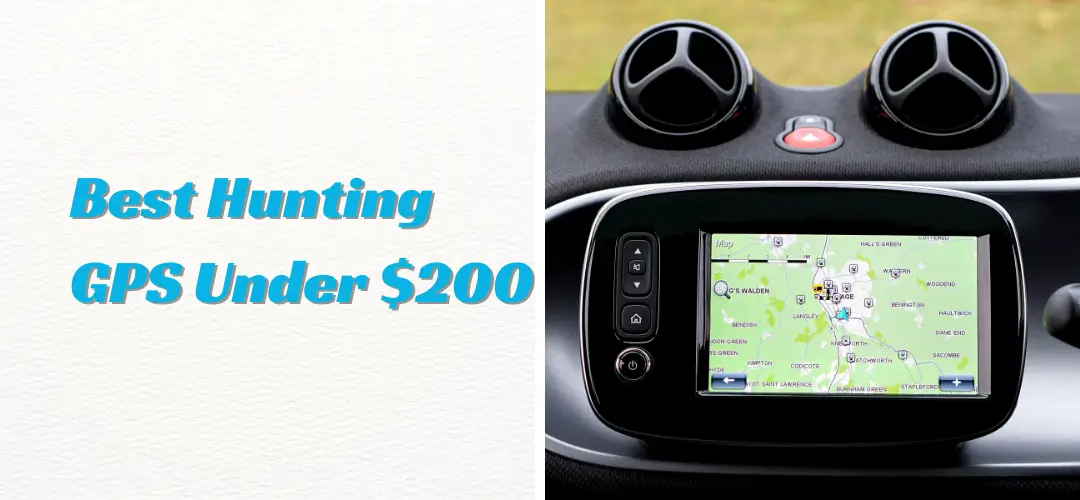
A hunting GPS under $200 should do one job well: help you mark locations, follow a route, and get back out when phone service is weak. The best pick for most hunters is a simple handheld or wrist GPS with clear controls, reliable satellite lock, enough battery life for a full day, and a screen you can read outside.
This guide keeps the focus on practical field use. A low-cost GPS does not need every premium mapping feature, but it should be dependable enough for stand locations, trailheads, blood-trail notes, camp waypoints, and route checks.
Table of contents
Quick Picks
| Pick | Best for | Why it stands out | Check price |
|---|---|---|---|
| Garmin eTrex 22x | Most hunters | Handheld GPS with color mapping, GPS/GLONASS support, and expandable storage. | Amazon |
| Magellan eXplorist 350H | Hunters who want a larger screen | Hunter-focused handheld with a sunlight-viewable display and onboard map storage. | Amazon |
| Bushnell BackTrack Hunt | Simple return navigation | Compact option for marking locations and finding your way back without extra complexity. | Amazon |
| Garmin Foretrex 601 | Hands-free navigation | Wrist-mounted GPS with multi-satellite support and long battery modes. | Amazon |
| Bad Elf 2200 GPS Pro | External GPS for phones/tablets | Bluetooth GPS receiver that can share location data with compatible devices. | Amazon |
Comparison Table
| Model | Device style | Strongest use | Watch before buying |
|---|---|---|---|
| Garmin eTrex 22x | Handheld GPS | General hunting navigation and map use | Small screen compared with phone-style mapping |
| Magellan eXplorist 350H | Hunter handheld GPS | Dedicated hunting waypoint use | Availability and support can vary by listing |
| Bushnell BackTrack Hunt | Compact return GPS | Marking truck, stand, camp, or trail points | Not a full mapping replacement |
| Garmin Foretrex 601 | Wrist GPS | Hands-free navigation and long outings | Interface is more utility-focused than map-focused |
| Bad Elf 2200 GPS Pro | Bluetooth GPS receiver | Adding GPS data to compatible devices | Requires a paired phone/tablet workflow |
Why a Hunting GPS Matters
A good hunting GPS is not just a convenience item. It helps you mark stand locations, trail cameras, entry routes, blood-trail points, creek crossings, and the exact place you parked. That matters most when weather changes, daylight fades, or every ridge starts to look the same.
Phone mapping apps are useful, but a separate GPS can still earn its place in a pack. Dedicated units usually have physical buttons, stronger outdoor durability, replaceable or long-running batteries depending on model, and less dependence on cell service. For basic GPS concepts and satellite navigation background, GPS.gov is a helpful authority source.
Best Hunting GPS Under $200 Reviews
1. Garmin eTrex 22x

The Garmin eTrex 22x is the easiest recommendation here for hunters who want a true handheld GPS rather than a phone accessory. It has a compact body, a color display, preloaded TopoActive mapping, GPS and GLONASS support, and storage for additional maps. That makes it a practical fit for hunters who want trail routes, waypoints, and basic map context in one dedicated unit.
In the field, the main appeal is simplicity. You can mark the truck, save a stand location, follow a track, and keep the device in a pack pocket without treating it like a fragile phone. The 2.2-inch screen is not huge, but it is enough for waypoint checks and map reference when you are moving through timber or checking a route back to the trail.
Best for: hunters who want the safest all-around handheld pick under this budget range.
- Pros: dedicated handheld design, color mapping, GPS/GLONASS support, expandable storage.
- Cons: compact screen, not as smooth as a phone app for map browsing.
- Skip if: you mainly want a large touchscreen map or satellite messaging.
2. Magellan eXplorist 350H

The Magellan eXplorist 350H is aimed more directly at hunters than a general hiking GPS. Its larger sunlight-viewable screen is the big reason to consider it, especially if you want to read location details without squinting at a very small display. It is built around handheld navigation, waypoint storage, and outdoor map use.
This kind of device makes sense if your hunting routine includes marking access points, food plots, game sign, and stand locations across multiple properties. It is less about flashy features and more about keeping your location notes in one dedicated unit that does not rely on a cell signal.
Best for: hunters who want a larger handheld display and hunting-focused waypoint use.
- Pros: larger screen for the category, hunter-oriented design, map and waypoint storage.
- Cons: availability and listing details can vary, so verify the exact model before buying.
- Skip if: you want the most current Garmin ecosystem or modern app pairing.
3. Bushnell BackTrack Hunt

The Bushnell BackTrack Hunt is for hunters who want a simple location tool rather than a full mapping unit. It is useful for marking the truck, camp, blind, treestand, or a turn in the trail, then pointing you back toward that saved location. That can be enough for small properties, short scouting walks, or backup navigation.
Because it is compact, it is easier to keep clipped to a pack or jacket than a larger handheld GPS. The tradeoff is that you should not expect it to replace a detailed map app or a full-featured GPS unit. Treat it as a simple return-navigation device and it makes more sense.
Best for: hunters who want a simple “get me back” style GPS.
- Pros: compact, simple, rechargeable design, easy to pack.
- Cons: limited mapping depth compared with full handheld units.
- Skip if: you need detailed topo maps, route planning, or a larger display.
4. Garmin Foretrex 601

The Garmin Foretrex 601 is different from the handheld picks because it rides on your wrist. That is useful when you want navigation available without digging through a pack, especially while dragging gear, climbing into a stand, checking a compass bearing, or moving in wet weather.
It supports multiple satellite systems and has a practical, utility-style interface. It is not the pick for hunters who want a rich color map experience. It is the pick for someone who values hands-free waypoint checks, long battery modes, and a rugged navigation tool that stays attached to the body.
Best for: hunters who want wrist-mounted navigation and quick bearing checks.
- Pros: hands-free format, long battery modes, GPS/GLONASS/Galileo support, rugged build.
- Cons: not a large map-viewing device.
- Skip if: you prefer a traditional handheld GPS with a larger color map.
5. Bad Elf 2200 GPS Pro

The Bad Elf 2200 GPS Pro is not a normal handheld hunting GPS. It is a Bluetooth GPS receiver that can feed location data to compatible phones, tablets, or apps. That makes it useful for hunters who already like a mapping app workflow but want a separate GPS receiver for stronger or more flexible positioning.
This pick is best for organized users. You need to think about device pairing, app compatibility, battery management, and offline maps before you leave home. If that workflow fits you, the Bad Elf can be a useful bridge between dedicated GPS hardware and phone/tablet mapping.
Best for: hunters who already use a phone or tablet mapping setup and want an external GPS receiver.
- Pros: Bluetooth GPS sharing, can work with multiple compatible devices, useful for app-based navigation.
- Cons: depends on a paired-device workflow and is less simple than a standalone handheld.
- Skip if: you want one self-contained device with built-in maps.
Hunting GPS Buying Guide
Before buying a hunting GPS, decide whether you need a full mapping unit, a simple return pointer, a wrist GPS, or an external receiver for a phone/tablet. Those are different tools. The wrong style can feel frustrating even if the product itself is good.
Battery life matters more than it looks on a product page. Cold weather, screen brightness, and constant tracking can shorten real field runtime. Carry spare batteries or a power bank when your route depends on electronics. Also keep a paper map, compass, or known exit route as a backup; GPS is helpful, but it should not be your only safety layer.
- Screen: choose a display you can read in daylight with gloves or cold hands.
- Satellite support: multi-system support can help in timber, valleys, and uneven terrain.
- Maps: check whether the unit has topo maps, expandable memory, or app-based offline maps.
- Controls: physical buttons are easier with gloves and rain than many touchscreens.
- Marking speed: a good hunting GPS should make it easy to save waypoints quickly.
FAQ
Is a hunting GPS better than a phone app?
For many hunters, the best answer is both. A phone app is excellent for maps and scouting, while a dedicated GPS can be tougher, simpler, and less dependent on cell service. Download offline maps before the hunt either way.
What GPS features matter most for deer hunting?
Waypoint marking, track recording, battery life, screen readability, and simple controls matter more than fancy features. Mark your truck, stand, trail camera, blood trail, and property access points.
Can I use a GPS without cell service?
Yes, GPS positioning does not require cell service, but maps, apps, and updates may require downloaded data. For phone-based navigation, download offline maps before leaving coverage.
Should I buy a cheap GPS or spend more?
Under $200 is fine for basic navigation. Spend more if you need premium mapping, satellite communication, larger screens, or advanced hunt-app features.
What should I do before trusting a new GPS on a hunt?
Test it near home first. Save waypoints, follow a track, change batteries or charge it, and confirm you understand the return-navigation screen before using it in unfamiliar country.
Final Verdict
The Garmin eTrex 22x is the best all-around hunting GPS under $200 for most readers because it gives you a real handheld GPS experience with mapping, waypoint storage, and outdoor-focused controls. If you want a larger hunting-specific handheld, check the Magellan eXplorist 350H. If you only need simple return navigation, the Bushnell BackTrack Hunt is easier to carry. For hands-free use, the Garmin Foretrex 601 makes the most sense, while the Bad Elf 2200 GPS Pro is better for hunters who already depend on a phone or tablet mapping workflow.