Arrow Rest Guide: Rest Types, Fit, and Setup Basics for Archers
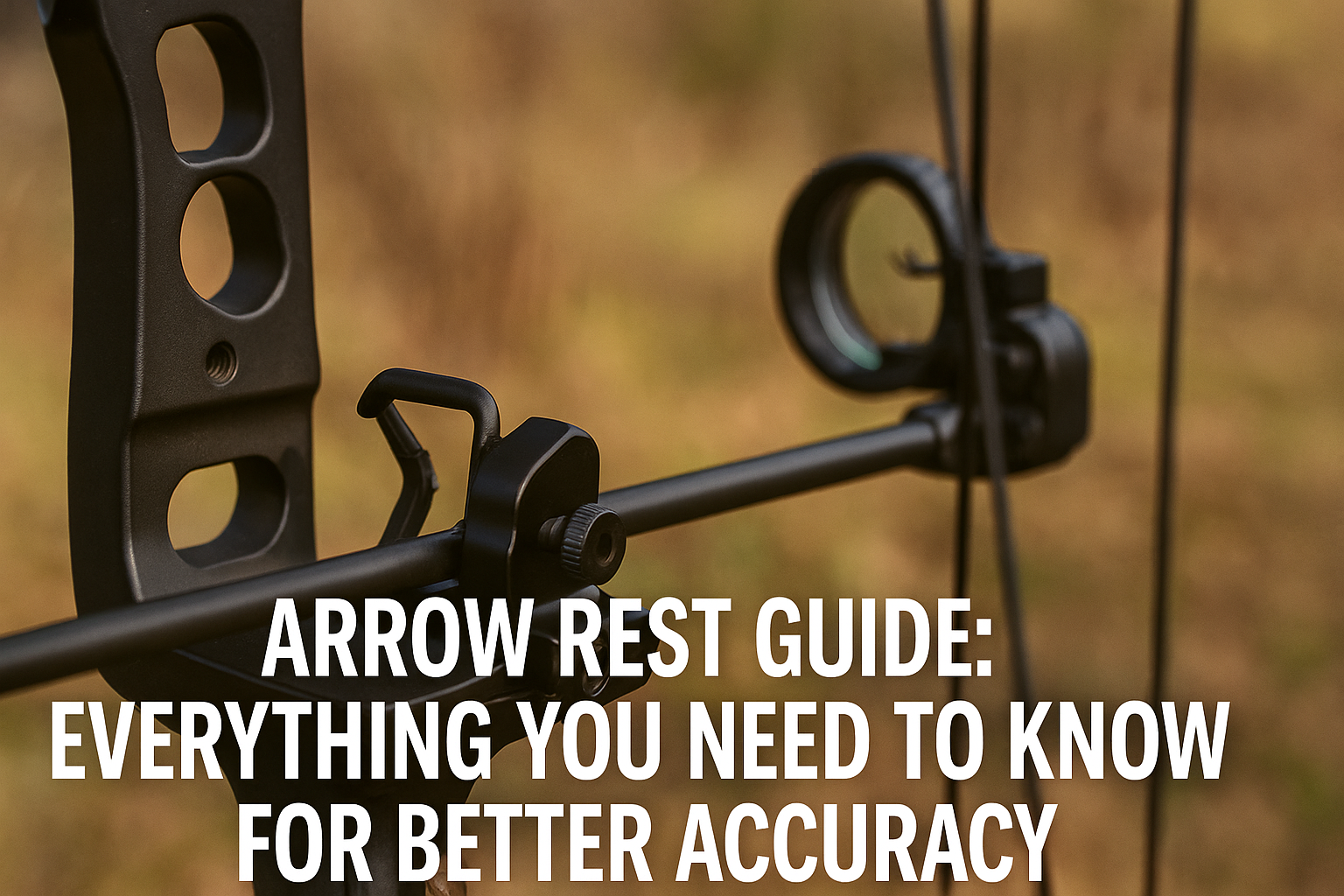
An arrow rest is the part of the bow that supports the arrow until release. The main rest types are drop-away rests, containment or full-capture rests, and prong or blade-style rests. The right choice depends on your bow, arrow setup, shooting style, and how much retention, clearance, and tuning complexity you want.
A better rest can support cleaner arrow flight, but it does not guarantee accuracy by itself. Fit, arrow spine, nocking point, form, and tuning all work together. Use this guide to understand the rest types, then confirm final setup with your bow and rest manufacturer instructions or a qualified pro shop.
Table of Contents
What An Arrow Rest Does
An arrow rest holds the arrow in position on the bow and supports it through the shot. A well-matched rest helps the arrow launch consistently. A poorly matched or mistuned rest can create fletching contact, erratic flight, and frustrating groups.
The rest is only one part of the setup. Your arrow spine, point weight, nocking point, draw length, release, and form also matter. For broader shooting form work, see our guide on improving archery shooting.
Common Types Of Arrow Rests
Arrow rests fall into a few practical categories. The descriptions below are general, so confirm exact behavior and compatibility for your specific bow and rest.
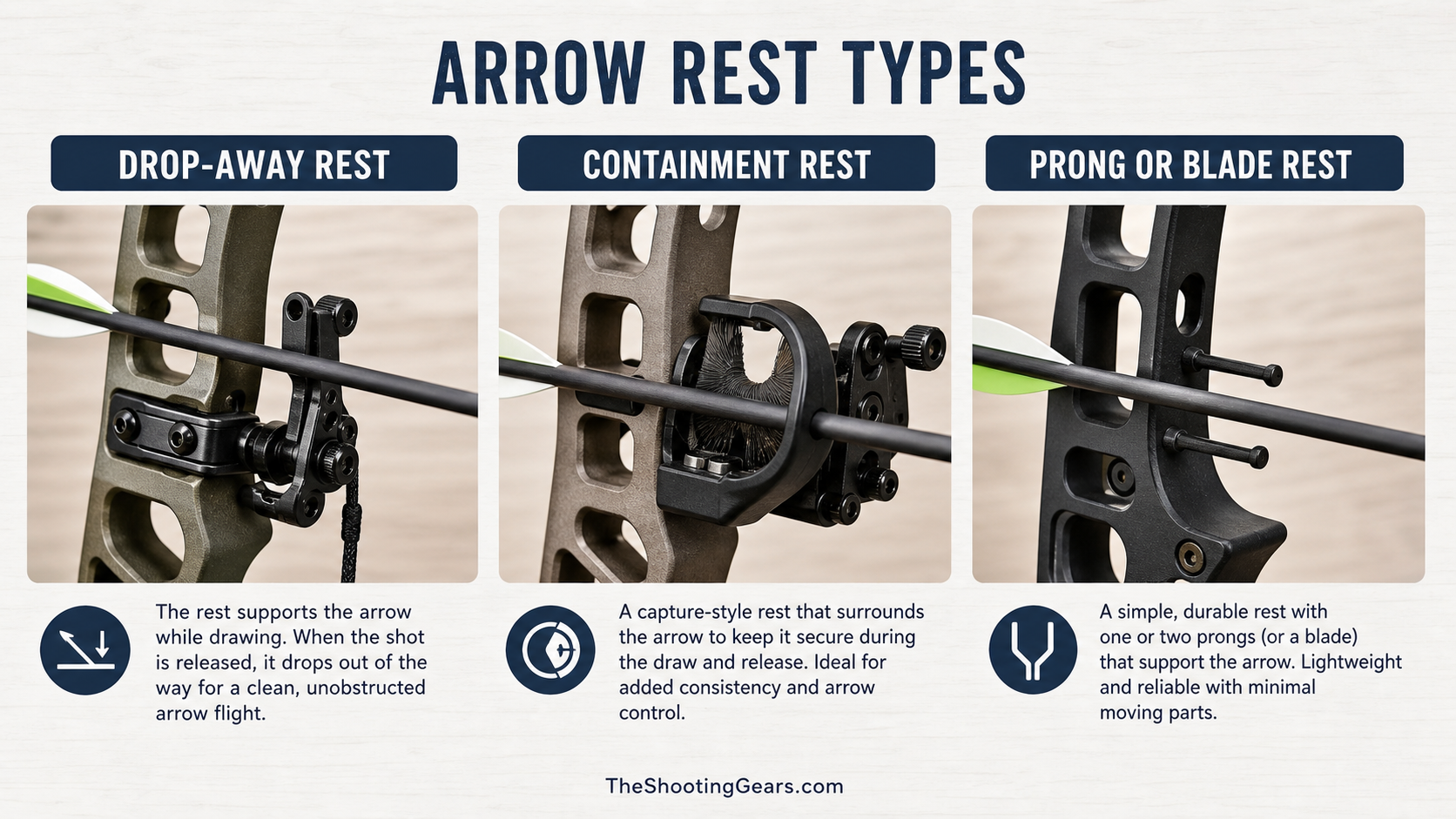
Drop-away rests
A drop-away rest supports the arrow during the draw and drops out of the way during the shot. The goal is to reduce contact between the rest and the arrow or fletching. Drop-away rests are common on compound bows, but they need correct setup and timing.
Containment and full-capture rests
Containment rests surround or partly surround the arrow so it stays in place while you move, draw, or hold at an angle. That retention can be useful for hunting, field use, and new archers. The tradeoff is that some designs create more arrow or vane contact than a well-set drop-away rest.
Prong, blade, and shoot-through rests
Prong and blade-style rests support the arrow on small contact points and are often associated with target setups. They can be precise, but they also require careful matching to arrow diameter, spine, point weight, and shooting style.
Traditional shelf rests
Many traditional bows use the shelf or a simple stick-on rest rather than a compound-style rest. Do not assume compound rest advice applies to recurves or longbows. Follow the bow maker’s setup guidance.
How To Choose By Use Case
Choose by how you shoot, not by the most expensive or most complicated design.
- Hunting and field use: arrow retention matters because you may move, change angles, or draw from uneven positions.
- Target archery: repeatability, clearance, and fine adjustment usually matter more than maximum retention.
- 3D archery: balance retention, clearance, and class rules. Our 3D archery setup guide explains the broader setup context.
- Beginners: simplicity and reliability usually beat complicated tuning until form is more stable.
Compatibility And Fit
Before choosing a rest, confirm it fits your bow and your arrows. Check the riser’s mounting interface, arrow diameter, vane clearance, and whether the rest type matches your shooting discipline. If your rest has timing or activation parts, make sure the bow can support that setup correctly.
Manufacturer support pages and manuals are the safest place for model-specific information. For example, Bear Archery’s product manuals and Mathews customer support are better references for setup limits than a generic article.
Setup And Tuning Cautions
Arrow rest setup is connected to the rest of the bow. Centershot, nocking point, arrow spine, fletching clearance, and drop-away timing can all interact. That is why beginners should treat tuning instructions as equipment-specific, not universal.
Use the rest maker’s instructions, the bow manual, and a pro shop or coach when you are unsure. For safe learning context, USA Archery’s safety guidance is also worth reviewing before working with new equipment.
Maintenance Checks
- Check mounting screws for looseness.
- Inspect moving parts on drop-away rests.
- Look for worn bristles, blades, pads, or launcher arms.
- Check for fletching contact or unusual arrow marks.
- Recheck tune after changing arrow spine, point weight, vanes, or draw settings.
If you are also working on overall bow balance, see our bow stabilization guide.
Frequently Asked Questions
What type of arrow rest is best for beginners?
Many beginners do well with a simple containment or full-capture rest because it helps keep the arrow in place. The best choice still depends on the bow, arrow setup, and shooting style.
What is the difference between a drop-away rest and a containment rest?
A drop-away rest moves out of the arrow’s path during the shot to reduce contact. A containment rest holds the arrow more securely during movement. Drop-away rests emphasize clearance; containment rests emphasize retention.
Do I need a pro shop to set up an arrow rest?
Not always, but a pro shop is smart if you are unsure about centershot, vane clearance, drop-away timing, or compound bow setup. Small rest changes can affect the whole tune.
Will a better arrow rest make me more accurate?
A well-matched and well-tuned rest can support more consistent arrow flight, but it does not guarantee accuracy. Form, arrows, bow fit, and practice still matter.
How do I know if a rest is compatible with my bow?
Check the rest and bow manufacturer information for mounting style, bow type, arrow compatibility, and setup instructions. If anything is unclear, ask the manufacturer or a local pro shop before buying.
Final Takeaway
The right arrow rest is the one that fits your bow, supports your arrows, and matches how you shoot. Drop-away rests prioritize clearance, containment rests prioritize arrow retention, and prong or blade-style rests can support precise target setups. Treat the rest as part of a complete bow system, not a standalone accuracy fix.