Best Gun Cases for Travel: Rules, Features, and Packing Checklist
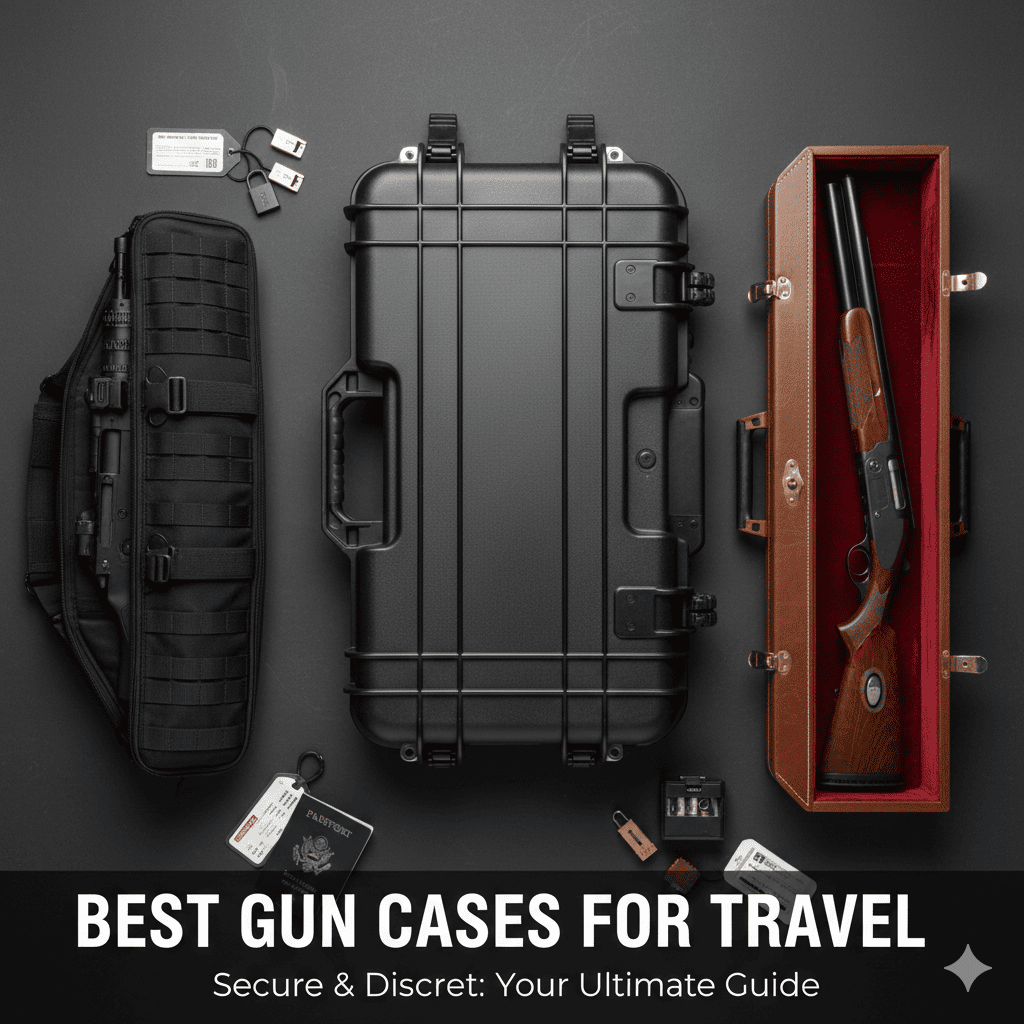
A good travel gun case is the difference between arriving with a firearm that still holds zero and arriving with a repair bill. Airlines and TSA screeners expect an unloaded firearm inside a locked, hard-sided container, and the case you choose affects how quickly you get through the checked-baggage counter, how well an optic survives baggage handling, and how confident you can be that the lid will not flex open in transit.
This guide compares real hard-sided travel cases across rifle, pistol, and multi-gun categories, then walks through the airline and TSA rules worth checking before every trip. Requirements can change and vary by airline and route, so treat the rules section as a starting checklist, not a final answer, and check current TSA and airline requirements before you travel.
Table of contents
- Quick Picks Table
- How We Chose
- 1. Pelican V770 Vault Single Scoped Rifle Case
- 2. Nanuk 995 Long Professional Firearm Case
- 3. Plano All-Weather Gun Case
- 4. Pelican Vault V100 Hard Case
- 5. Plano Protector Series Single Pistol Case
- 6. Pelican Vault Multi-Pistol Custom Cut Foam Case
- Buying Guide: Rules and Features
- Safety Notes
- FAQ
Quick Picks Table
Every case below is a current, live Amazon listing. Use this table to jump straight to the case that matches your firearm and travel style, then check the pros, cons, and specs in the full section below it.
| Case | Best for | Case type | Lock points | Check Price |
|---|---|---|---|---|
| Pelican V770 Vault Single Scoped Rifle Case | Scoped rifles that need extra height clearance | Hard, single long gun | Multiple padlock points | Check Price |
| Nanuk 995 Long Professional Firearm Case | Wheeled travel with two long guns | Hard, wheeled, long gun | Built-in TSA-recognized locks plus lockable eyelets | Check Price |
| Plano All-Weather Gun Case | Budget-minded rifle or shotgun travel | Hard, single long gun | Padlock tabs | Check Price |
| Pelican Vault V100 Hard Case | Compact single pistol travel | Hard, pistol | Padlock-compatible latches | Check Price |
| Plano Protector Series Single Pistol Case | Lowest-cost lockable pistol case | Hard, pistol | Padlock tabs | Check Price |
| Pelican Vault Multi-Pistol Custom Cut Foam Case | Traveling with several handguns at once | Hard, multi-pistol | TSA compliant lock points | Check Price |
How We Chose
We started from live Amazon listings for hard-sided, lockable travel gun cases, not community wish lists or guesses. Each case below is currently listed for sale, sized for a specific rifle, pistol, or multi-gun use case, and includes lockable latch points that fit checked-bag airline expectations. We compared exterior dimensions, foam type, lock points, and wheel or handle design side by side, then wrote pros and cons based on what the manufacturer listing and current customer reviews actually say, not marketing copy alone.
1. Pelican V770 Vault Single Scoped Rifle Case
Best for: A single scoped rifle that needs extra internal height so the optic never presses against foam under load.
Key specs (from Amazon product listing): 52.5 inch by 14 inch by 7.5 inch exterior, high-impact polymer shell, four layers of protective foam, toggle latches with multiple padlock points, crushproof, dustproof, and weather resistant rating.
Pros
- Extra interior height clears most scoped rifles without foam pressing on the optic.
- Four foam layers let you customize fit for the rifle plus a bipod or sling.
- Multiple padlock points reduce lid flex on a long case.
Cons
- Long profile is heavy and awkward for one person to carry solo through an airport.
- Foam ships uncut, so you need to trace and cut the center layer yourself.
- No wheels, which matters on long terminal walks.
Skip this if: you want a wheeled case for easier airport travel, or you are only traveling with a compact rifle that does not need the extra scope clearance.
2. Nanuk 995 Long Professional Firearm Case
Best for: Travelers checking two long guns together who want wheels instead of carrying the case by hand.
Key specs (from Amazon product listing): 55.1 inch by 17.3 inch by 6.6 inch exterior, IP67 rated waterproof and dustproof shell, PowerClaw latching system, built-in TSA-recognized locks on two latches plus additional lockable eyelets, polyurethane wheels with a spring-loaded pull handle.
Pros
- Wheels and a pull handle make the long case far easier to move through terminals.
- Built-in locks on the latches add security beyond a single external padlock.
- IP67 sealing holds up well in rain, dust, and rough vehicle travel.
Cons
- One of the largest and heaviest cases in this guide, even before you pack it.
- Foam is not pre-cubed for pluck-style fitting, so cutting takes more effort.
- Some buyers report the wheels feel stiff until the case is loaded.
Skip this if: checked-bag weight limits are tight on your route, since a loaded case this size can push toward airline overweight fees.
3. Plano All-Weather Gun Case
Best for: Buyers who want a hard-sided, lockable case for a rifle or shotgun without premium-brand pricing.
Key specs (from Amazon product listing): Available in 36 inch, 42 inch, and 52 inch rifle and shotgun styles, pluck-to-fit foam interior, watertight and dust-proof shell, padlock tabs, listed by the manufacturer as airline ready.
Pros
- Pluck-to-fit foam is faster to prep than solid foam you have to cut with a knife.
- Three length options make it easier to match the case to a specific firearm.
- Priced well below premium hard-case brands while still locking and sealing properly.
Cons
- Shell plastic is thinner than premium rotomolded cases, so it flexes more under heavy stacking.
- Padlock tabs need your own locks, none are included.
- Pluck foam can tear if you remove too much on the first fitting attempt.
Skip this if: you check the case often on commercial flights with rough baggage handling and want maximum shell rigidity.
4. Pelican Vault V100 Hard Case
Best for: A single pistol traveling in its own compact, lockable hard case.
Key specs (from Amazon product listing): Compact hard-shell case sized for a pistol, gear, or camera equipment, available in multiple colors, padlock-compatible latches, large customer review base with a high average rating.
Pros
- Compact size is easy to pack inside a larger checked bag if your airline allows it.
- Padlock-ready latches keep the case closed without relying on a zipper or soft strap.
- Multiple color options make it easy to identify quickly at baggage claim.
Cons
- Interior foam is general purpose, not pistol specific, so you still need to cut it to fit.
- Too small for a second handgun or extra magazines alongside the pistol.
- Latches are lighter duty than the larger Pelican Protector line.
Skip this if: you are traveling with more than one handgun, since a multi-pistol case will fit better and stay more organized.
5. Plano Protector Series Single Pistol Case
Best for: Buyers who want the lowest-cost lockable hard case for a single pistol.
Key specs (from Amazon product listing): Small hard plastic pistol case, foam padding interior, padlock tabs on the latch, large customer review base with a strong average rating.
Pros
- One of the most affordable hard-sided, lockable pistol cases available.
- Padlock tabs let you use your own lock for checked travel.
- Foam padding is soft enough to protect finish without extra cutting in many cases.
Cons
- Latches and hinges feel noticeably lighter duty than premium hard cases.
- Interior room is tight for a pistol with an attached optic or a large magazine.
- Shell offers less crush protection than a rotomolded case if it gets stacked under heavy luggage.
Skip this if: you need a case rated for rough handling on connecting flights or want a sealed, weatherproof shell.
6. Pelican Vault Multi-Pistol Custom Cut Foam Case
Best for: Travelers checking several handguns and magazines together in one locked case.
Key specs (from Amazon product listing): Hard-shell multi-pistol case with custom cut foam sized for multiple pistols and magazines, weather-resistant shell, listed by the manufacturer as TSA compliant, available in several color and layout options.
Pros
- Custom-cut foam keeps each pistol and its magazines separated and secure.
- One locked case for several handguns is simpler to manage at check-in than several small cases.
- Weather-resistant shell holds up well for both air travel and range-day storage.
Cons
- Costs more than buying a single compact pistol case.
- Bulkier and heavier than a single-pistol case if you are only traveling with one handgun.
- Fixed foam layout is less flexible if your pistol collection changes often.
Skip this if: you are traveling with only one pistol, since a single-pistol case will be lighter and easier to pack.
Buying Guide: Rules and Features
A case is only half the safety picture. The rules around how you pack, lock, and declare a firearm for air travel matter just as much as the hardware you buy. Use this section as a checklist, then verify the specifics with TSA and your airline before you leave for the airport.
TSA Declaration Rules Overview
TSA guidance generally calls for firearms to travel unloaded, inside a locked, hard-sided container, declared to the airline at check-in. A screener may ask you to open the case for inspection, then you lock it again before it goes into the belly of the aircraft. Because specific requirements can be updated, check current TSA and airline requirements before you travel rather than relying on what worked on a past trip.
Checked-Bag Airline Policies
Airlines can add rules beyond the baseline TSA process. Some require firearms be checked at a staffed counter instead of a self-service kiosk, some set specific ammunition quantity limits, and some restrict which lock styles are acceptable. Check your airline’s firearm travel page a few days before departure and again the morning of your flight, since policies do change.
Hard Case vs Soft Case for Air Travel
For flying, a locked hard-sided case is the standard expectation for the outer container holding the firearm. A soft case can work for local range trips or short drives, but it will not meet most airline requirements for the outer case on a commercial flight, and it offers far less crush protection if the case gets stacked under other luggage.
Locking Requirements
Use locks only you control the keys or combinations for, placed on every available lock point. A case with a single lock in the middle can still flex open at the ends under pressure, so cases with multiple padlock points or built-in latch locks, like several of the picks above, give a more consistent seal.
Safety Notes
Every firearm should be unloaded and visually and physically checked clear before it goes into a travel case, ideally verified a second time by another person. The case should be locked with locks only you control, not shared or master-keyed locks. The firearm should be declared to the airline at check-in rather than packed silently. Unloaded, locked, and declared are the foundation of safe and compliant firearm travel, and no case feature replaces any of the three.
FAQ
Q: Do airlines require a hard-sided case for checked firearms?
A: Most U.S. airlines expect a locked, hard-sided container for a checked firearm. Confirm your specific airline’s current policy before you travel, since requirements can vary and change.
Q: Can I use a TSA-recognized luggage lock on a gun case?
A: Many travelers use TSA-recognized combination locks on gun cases, but the firearm compartment itself still needs a lock only you control, not one that can be opened by a master key. Check current TSA guidance for firearm cases specifically before your trip.
Q: Do I need to declare a firearm at check-in?
A: Yes, current U.S. air travel guidance calls for verbally declaring an unloaded firearm to the airline agent at check-in. Confirm the exact process with your airline before departure since counter procedures vary.
Q: Can ammunition travel in the same case as the firearm?
A: Rules on ammunition packaging and whether it can share a case with the firearm vary by airline. Check your airline’s current ammunition policy and FAA guidance before packing.
Q: How many locks does a travel gun case need?
A: Use enough locks to secure every available lock point on the case. A long case with only one central lock can still flex open at the ends, so multiple lock points give more consistent security.
Q: Is a wheeled gun case worth the extra size and weight?
A: Wheels help most on long airport walks or when checking two or more long guns in one case. For a single compact pistol or short rifle, a smaller non-wheeled case is often easier to manage.
Q: What size gun case should I buy for a scoped rifle?
A: Measure the rifle exactly as it will travel, including the scope height, and choose a case with enough interior clearance that foam does not press on the optic when the lid closes.
Final Recommendation
For most travelers flying with a single scoped rifle, the Pelican V770 Vault Single Scoped Rifle Case gives the interior clearance and lock points that matter most. If you are checking two long guns or want wheels for long terminal walks, the Nanuk 995 is the stronger match. Budget-focused buyers can get a compliant hard case in the Plano All-Weather Gun Case or the Plano Protector Series Single Pistol Case, and anyone traveling with several handguns should look at the Pelican Vault Multi-Pistol Custom Cut Foam Case instead of packing multiple small cases. Whichever case you choose, the process matters as much as the hardware: unloaded, locked, and declared, with current TSA and airline requirements checked before you head to the airport.