Bowhunting for Predators: Legal Checks, Setup, and Safer Shot Choices
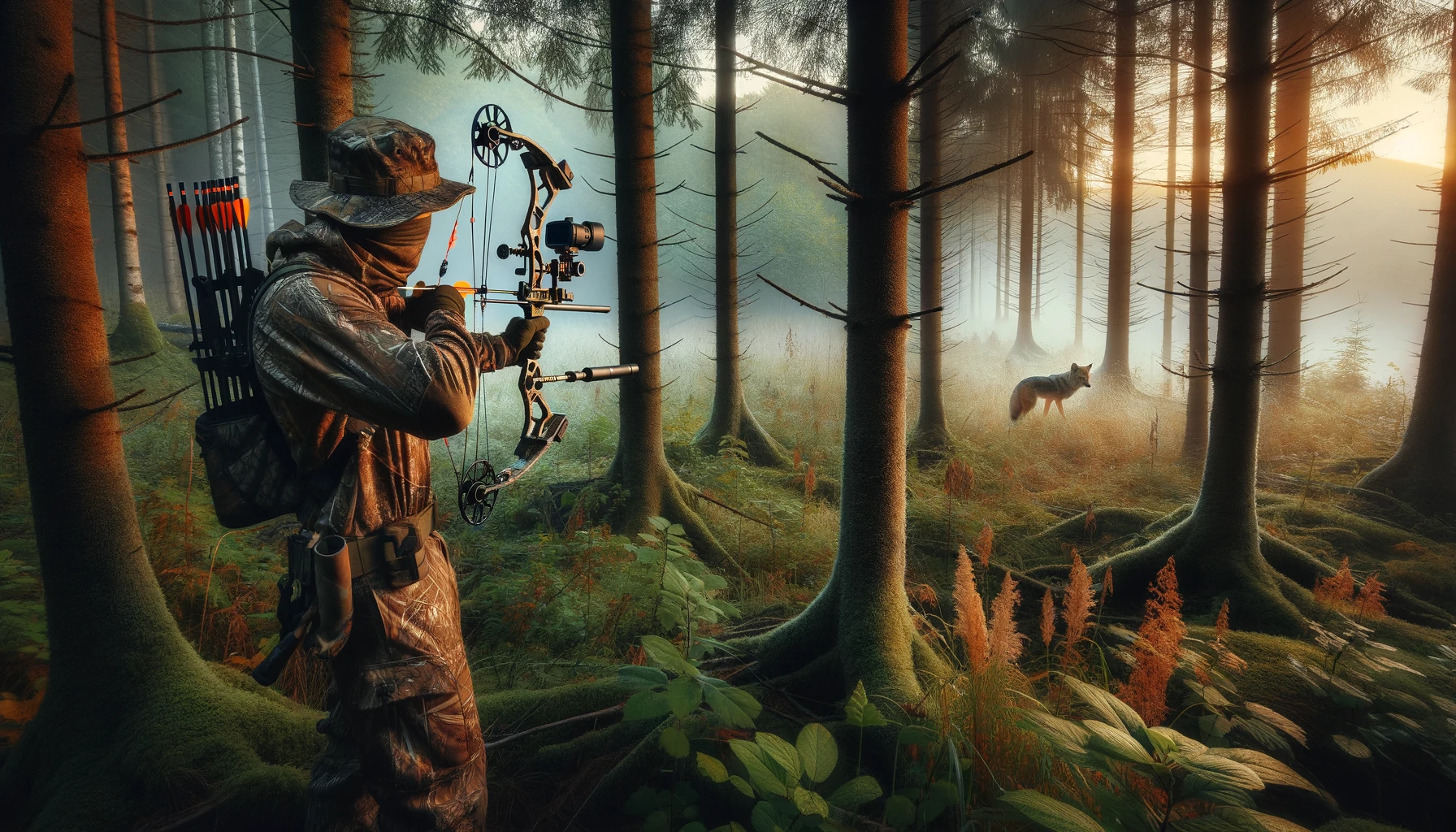
Bowhunting predators is close-range hunting. Before you think about calls, camouflage, or broadheads, confirm that your state allows the species, season, method of take, electronic calls, lights, bait, and tagging or reporting rules. Coyotes, foxes, bobcats, and other predators are managed differently from state to state, and the safest plan is the one built around current local regulations.
Table of contents
Quick Answer
For predator bowhunting, start with the law, then build a short-range setup around quiet entry, wind control, realistic calling, and shots you can place cleanly. A compound bow is the easiest choice for most hunters because it gives you let-off at full draw, but a recurve or longbow can work if you already shoot it well at hunting distance.
- Best starting setup: a bow you can shoot accurately under pressure, matched arrows, sharp fixed or mechanical broadheads allowed by local law, rangefinder, and a quiet release or tab.
- Best stand range: close enough that you can hit the vital area on a small target every time from a hunting position, not just from a perfect backyard stance.
- Biggest safety check: know what is beyond the animal and avoid shots at skylined, moving, or partly hidden predators.
- Biggest legal check: verify season, species, call type, night-hunting rules, light rules, license requirements, and reporting rules with your state wildlife agency.
Legal Checks Before You Hunt Predators With a Bow
Predator rules change by state and sometimes by county, public-land unit, season, or time of day. Do not assume that a coyote rule applies to fox, bobcat, cougar, or bear. Also check whether archery equipment is legal for that species and whether electronic calls, decoys, night vision, thermal devices, artificial light, bait, dogs, or motorized access are restricted.
Use the official state wildlife-agency regulation page as the final authority before every hunt. Broad national advice can help you plan, but it cannot replace the current rulebook for your exact location.
A Practical Pre-Hunt Rule Check
- Confirm the species is open to hunt on the date and property you plan to use.
- Check license, tag, harvest reporting, and carcass rules.
- Confirm legal shooting hours and any night-hunting restrictions.
- Check whether electronic calls, decoys, bait, lights, dogs, or suppressing devices are allowed.
- Review public-land weapon restrictions, access hours, and required permits.
Bow, Arrow, and Broadhead Setup
Your bow setup should be boring in the best way: tuned, quiet, legal, and already proven from field positions. Predator targets are smaller than deer, and they rarely stand still for long. A setup that works on a foam block at the range may not be enough if you cannot draw smoothly from a seated position or hold steady while an animal looks toward the call.
Compound Bow
A compound bow is the most forgiving option for many predator hunters. Let-off helps when a coyote hangs up or a bobcat pauses behind brush, and modern sights make it easier to hold a precise aiming point. Keep the draw weight high enough for clean penetration but low enough that you can draw without sky-lifting, shaking, or making obvious movement.
Recurve or Longbow
Traditional bows can work, but they narrow the margin for error. Use them only if you already shoot them well from kneeling, sitting, and awkward angles. Keep your shot distance conservative and practice on small 3D targets, not only broadside deer-sized targets.
Arrows and Broadheads
Use arrows that match your bow’s spine, draw weight, and broadhead weight. Predator hunting does not reward guesswork. Broadheads should be sharp, legal in your area, and tested for point-of-impact before the hunt. If broadheads hit differently from field points, fix the tune or adjust the sight before you go.
Scouting Predator Sign
Good predator stands usually come from sign, not from random calling. Look for travel routes, scat, tracks, trails along fence lines, brush edges, creek bottoms, livestock edges where legal access is allowed, and places where prey animals naturally move. Fresh sign near cover is more useful than old sign in a place where you cannot approach quietly.
What to Look For
- Tracks in mud, sand, snow, or soft road edges.
- Scat on trails, road crossings, or territorial points.
- Prey activity near brush, field corners, or water.
- Natural funnels that let you set up with wind and cover.
- Fresh vocal activity, trail-camera photos, or repeated sightings.
Calling and Stand Setup
Calling predators with a bow is harder than calling them with a rifle because you need the animal inside archery range and you need time to draw. Place the call or decoy so the animal’s attention is away from your body. If your local rules allow electronic calls, put the speaker slightly upwind or crosswind from your position so an approaching predator does not have to look straight at you to find the sound.
Stand Setup Checklist
- Enter quietly and avoid walking through the area where you expect the animal to appear.
- Set up with cover behind you, not only in front of you.
- Range likely shooting lanes before calling starts.
- Keep the call or decoy visible enough to hold attention away from your draw.
- Decide your no-shot zones before the animal arrives.
Wind, Cover, and Movement
Predators use their nose, eyes, and ears together. You do not have to be invisible, but you do need to remove obvious mistakes. Keep the wind from carrying your scent into the approach lane, break up your outline, and draw only when the animal’s eyes are blocked, turned away, or focused on the call.
Wind Plan
A crosswind is often easier to hunt than a wind straight in your face because many predators try to swing downwind of the sound. Set your shooting lane where that downwind check is likely to happen, but do not force a shot if the animal is moving fast or starting to catch your scent.
Movement Plan
Predator bowhunting rewards slow hands. Clip your release early, clear clothing from the string path, and keep your bow positioned so you can draw with minimal motion. If the animal spots the draw, let it go. A rushed shot at a tense predator is how wounded animals happen.
Shot Selection and Ethical Range
Ethical range is personal, but it must be honest. Use the farthest distance where you can repeatedly place broadheads into the vital area from hunting positions, with normal field clothing, after light movement or hard breathing. For many hunters, that is much shorter than their best target-range group.
Better Shot Angles
- Broadside: the simplest angle when the animal is calm and unobstructed.
- Slightly quartering away: often useful if you understand the exit path and can avoid heavy bone.
- Stopped or slow-standing animal: safer than a walking, trotting, or alert animal.
Shots to Pass
- Head-on or sharply quartering-to angles.
- Animals behind brush, grass, branches, or fence wire.
- Skylined animals or any shot without a safe backstop.
- Shots beyond your practiced broadhead range.
- Moving animals that you cannot stop cleanly.
If you need more background on bow types before choosing a setup, read our guide to types of hunting bows.
Tracking and Handling After the Shot
Watch the animal after the shot and mark the last place you saw it. Listen for movement, crashes, or silence. Give the animal time unless you clearly see it go down and stay down. When you begin tracking, start at the impact site, look for blood, hair, tracks, and direction of travel, and avoid trampling the trail.
Use gloves when handling predators. Some species can carry parasites or diseases, and carcass rules vary by state. If the animal must be tagged, reported, checked, or transported a certain way, follow that rule before leaving the field.
Common Predator Bowhunting Mistakes
- Calling too soon after a noisy entry: give the stand time to settle if you bumped brush, snapped branches, or crossed open ground.
- Setting the call too close: if the animal locks onto your exact location, drawing becomes harder.
- Ignoring the downwind side: many predators try to verify a sound with scent before committing.
- Practicing only from perfect posture: field shots happen from seats, knees, slopes, brush edges, and uneven footing.
- Using vague legal advice: predator rules can be specific, especially for bobcats, night hunting, public land, and electronic equipment.
FAQ
Can you bowhunt coyotes?
Often yes, but the details depend on your state and hunting location. Check license rules, season dates, shooting hours, public-land rules, electronic-call rules, and whether artificial lights or night equipment are allowed.
What bow is best for predator hunting?
A compound bow is usually the easiest starting point because it helps you hold at full draw. A recurve or longbow is fine for a skilled traditional archer who keeps shots close and practices from hunting positions.
How close do predators need to be for a bow shot?
They need to be inside your proven broadhead range, not your best target-range distance. Use the distance where you can repeatedly hit the vital area from seated, kneeling, and field positions.
Are electronic calls legal for predator bowhunting?
Sometimes, but not everywhere and not always for every species. Confirm the current rule with your state wildlife agency before using an electronic caller.
Should you use a decoy when bowhunting predators?
A decoy can help hold attention away from your draw, but it can also make the setup more visible. Use one only where legal and place it so the animal does not stare directly at your hiding spot.
Sources
- Bowhunter-ed – bowhunting safety, equipment, and shot-selection education.
- USA Archery Safety Resources – archery safety and range-practice guidance.
- eRegulations – state hunting regulation portals for checking current local rules.
- CDC Rabies Prevention – safety background for contact with wild mammals.
Related reading: youth archery gear guide and bow sight setup guide.
Related reading: bowhunting whitetails in thick cover.