How to Grouse Hunt: 10 Safety, Habitat, and Season Checks
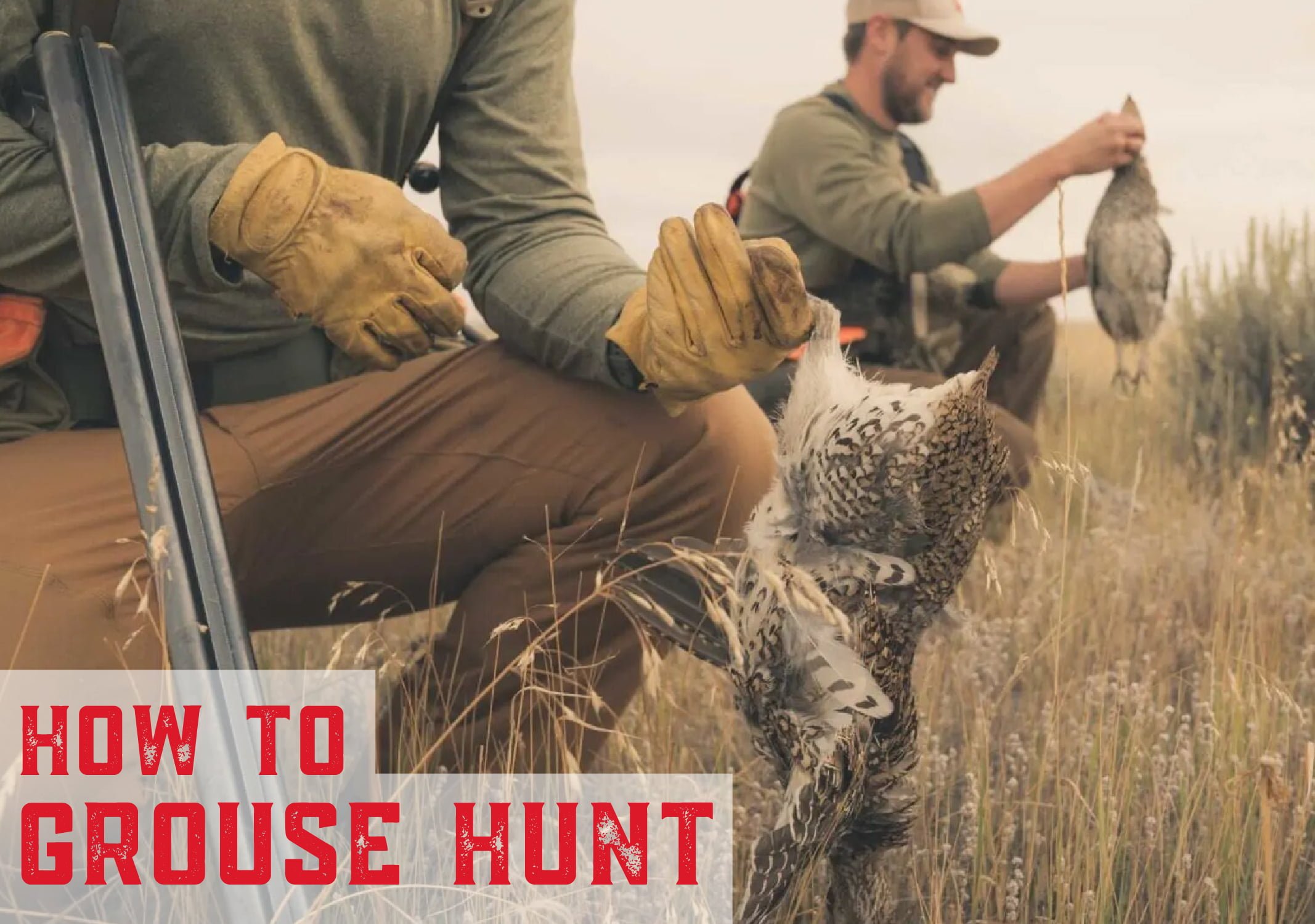
To grouse hunt well, start by checking your state season, license, daily limit, legal shooting hours, public-land rules, and blaze-orange requirements. Then hunt slowly through young forest, edges, logging roads, aspen cuts, alder cover, and berry or bud food sources while keeping every shot inside a safe zone of fire.
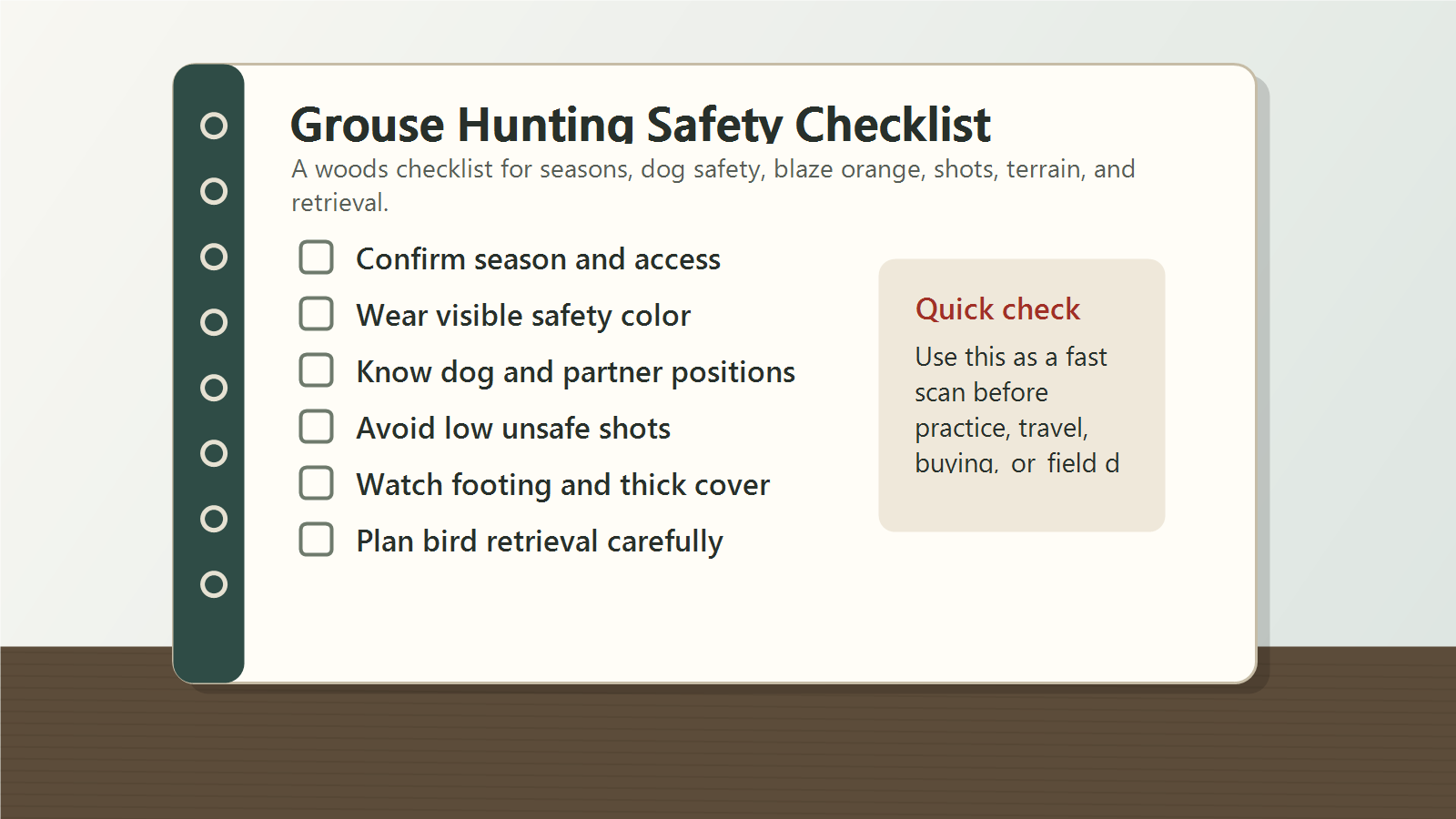
Grouse hunting looks simple from the outside: walk cover, flush birds, shoot moving targets, and recover them cleanly. In real woods, the work is more careful. Birds flush fast, trees block vision, dogs and partners may be nearby, and rules change by state. This guide keeps the focus on safe, legal, practical hunting instead of shortcuts.
Table of Contents
- Quick Answer: How Do You Grouse Hunt?
- Check Rules Before You Hunt
- Know the Grouse You Are Hunting
- Find Productive Grouse Cover
- Pack Simple Upland Gear
- Use a Safe Shotgun Setup
- Walk Cover the Right Way
- Hunt Safely With Dogs or Partners
- Make Ethical Shot Decisions
- Recover and Handle Birds Carefully
- Avoid Common Beginner Mistakes
- Grouse Hunt Checklist
- FAQ
- Final Takeaway
Quick Answer: How Do You Grouse Hunt?
Grouse hunting means walking likely cover until a bird flushes, then taking only safe, legal shots at identified birds within range. Good beginner grouse hunting depends on three habits: know the rules, move slowly enough to read cover, and pass any shot where the bird, background, dog, partner, or property line is unclear.
The beginner order of operations
Before the hunt, confirm the season and license. At the truck, load only where legal and safe. In cover, walk slowly, pause often, and keep the muzzle controlled. After a flush, identify the bird and background before mounting the shotgun. If the shot window is messy, let the bird go.
What makes grouse different
Grouse often hold in thick cover and flush suddenly. Unlike an open-field target, a grouse may disappear behind trunks in a second. That is why safe shot selection matters more than fast shooting.
Check Rules Before You Hunt
Grouse seasons, limits, legal methods, public-land access, hunter-orange rules, and dog restrictions can vary by state and property. Treat this article as field guidance, not legal advice. Your state wildlife agency and the current regulation booklet are the final sources.
Confirm the season and species
Do not assume every grouse species is open where you hunt. Some areas have ruffed grouse, spruce grouse, sharp-tailed grouse, or other upland birds with different rules. Check the species name, open dates, daily bag limit, possession limit, and shooting hours before leaving home.
Check license and public-land access
Most hunters need a valid hunting license and may need extra stamps, permits, hunter education proof, or public-land passes depending on state and age. On private land, get clear permission before you walk cover.
Review blaze-orange requirements
Blaze-orange rules can change by state, season, firearm type, and public land. Even where it is not required, orange clothing can help partners and nearby hunters see you in thick cover.
Know the Grouse You Are Hunting
Bird identification is part of ethical upland hunting. The Cornell Lab of Ornithology ruffed grouse guide describes ruffed grouse as forest birds with mottled gray or reddish coloring, a crest, a broad dark tail band, and the well-known spring drumming display.
Ruffed grouse clues
Ruffed grouse often blend into leaves, saplings, logs, and shadow. You may hear a sudden wing burst before you see the bird. In winter, they can use snow cover, buds, and dense conifers; in fall, look around young forest, edges, and food sources.
Do not shoot at sound or movement
A flush sound is not enough. Identify the bird, the direction of travel, and the background before you shoot. If leaves, brush, a dog, another hunter, a trail, a building, or a road are in the line, pass the bird.
Learn similar birds in your area
Some states have multiple upland species in overlapping habitat. Study local identification notes before the season so you know which birds are open, which are protected, and which are easy to confuse during a quick flush.
Find Productive Grouse Cover
Grouse habitat changes by region, weather, food, pressure, and season. The best scouting mindset is to look for cover that gives birds food, concealment, and escape routes without forcing you into unsafe shooting angles.
Young forest and edges
Young forest can hold birds because it offers dense stems, buds, berries, and quick cover. Walk the edges of cuts, old logging roads, creek bottoms, alder runs, aspen stands, and transitions between thick cover and more open walking lanes.
Food signs
Watch for berries, green browse, buds, clover, gravel, and dusting spots. Cornell notes that ruffed grouse can be encountered by walking slowly through suitable forest and may use forested roads, especially where food and cover are close.
Fresh sign matters
Tracks, droppings, feathers, dust bowls, and recent flushes can help you decide whether to slow down or move to another cover. One flush does not prove a whole area is loaded, but it does tell you the cover can hold birds.
Pack Simple Upland Gear
A good grouse kit is light, visible, and practical. Heavy gear makes you walk poorly and ignore cover. Pack what helps you stay safe, legal, hydrated, and ready to recover birds.
Clothing and visibility
Wear boots with grip, brush-resistant pants, weather-appropriate layers, and enough blaze orange for the rules and terrain. Eye protection can help in brush as well as during shooting.
Navigation and communication
Carry a map, offline phone map, compass, or GPS, plus a plan for weak service. Tell someone where you are hunting and when you expect to return. Thick cover can make short distances feel confusing.
Bird handling items
Pack game bags, a small knife, gloves, water, and a way to cool birds after the hunt. Follow tagging, evidence-of-sex, transport, and possession rules where they apply.
Use a Safe Shotgun Setup
Grouse hunting does not require complicated gear. A shotgun that fits you, functions reliably, and patterns well with legal ammunition is more useful than an unfamiliar setup carried for looks.
Pattern before the season
Pattern your shotgun with the load and choke you plan to carry. Our guide on patterning a shotgun for hunting explains why seeing actual pellet distribution is better than guessing from a box label.
Use legal shot and sensible range
Use ammunition that is legal for your area and suitable for upland birds. Some public lands or regions restrict lead shot. Keep shots inside a range where your pattern and skill can make a clean hit.
Keep firearm safety simple
The NSSF firearm safety rules stress safe muzzle direction, unloaded firearms when not in use, correct ammunition, and knowing your target and what is beyond it. Those points are especially important in thick upland cover.
Walk Cover the Right Way
New grouse hunters often walk too fast. Grouse may let you pass, move quietly, or flush behind you. A slower pace gives your eyes time to read cover and your feet time to stay quiet.
Pause often
Pausing can make a nervous bird flush. Stop near cover edges, bends in old roads, small openings, and places where thick stems meet food. Keep your muzzle pointed in a safe direction while you wait.
Hunt into the wind when possible
Wind affects sound, scent, and dog work. If you hunt with a dog, working into or across the wind can help the dog catch scent. If you hunt without a dog, wind can hide small sounds and make birds harder to hear.
Work cover in loops
Instead of walking one straight line, loop through the best cover and return along a different edge. Birds that run or flush short may use the same escape routes, so pay attention to where you see them go.
Hunt Safely With Dogs or Partners
Dogs and partners can make grouse hunting more effective, but they also raise the safety standard. Everyone should know the plan before the first shell is loaded.
Set a zone of fire
When hunting with others, agree on safe shooting lanes before entering cover. Never swing through another hunter, a road, a building, livestock, or a dog. If the bird crosses into another hunter’s lane, pass it.
Protect the dog
Know where the dog is before you shoot. In thick cover, a low bird, running bird, or bird crossing near the dog should be left alone. Carry water, check paws, and watch for heat, ice, cuts, and fatigue.
Use clear commands
Partners should use simple commands for loading, unloading, crossing obstacles, entering vehicles, and stopping the hunt. Confusion around fences, logs, roads, and creek crossings is where many preventable mistakes begin.
Make Ethical Shot Decisions
An ethical grouse shot is close enough, clear enough, and safe enough. It is not every bird that flushes. Many grouse should fly away because the angle, background, brush, distance, or dog position is not right.
Pass low birds
Low birds can put dogs, partners, roads, buildings, or unseen people at risk. A safe upland shot usually has a clear sky or safe backstop behind the bird, not brush and uncertainty.
Do not shoot through thick brush
Brush can hide what is beyond the bird and can also break up the pattern. If you cannot see the bird and the background clearly, do not shoot.
Know your personal range
Your effective grouse range depends on shotgun fit, pattern, choke, load, target angle, practice, and cover. If you have not patterned the gun or practiced crossing shots, keep your shots closer and cleaner.
Recover and Handle Birds Carefully
Recovery is part of the shot decision. Do not take shots where a bird is likely to fall into unsafe, inaccessible, or unknown property. Mark the fall and move carefully.
Mark the fall
Pick a tree, stump, rock, or opening where the bird went down. Walk directly to that mark before searching wider. In thick cover, a few yards of error can make recovery much harder.
Follow possession and transport rules
Some places have rules for tagging, transport, or keeping a wing, head, or other identification evidence attached. Check your current regulation booklet before cleaning birds in the field.
Cool birds promptly
Heat can spoil meat. Keep birds clean, dry, and cool after recovery. Do not leave birds in a warm vehicle while you keep hunting another cover.
Avoid Common Beginner Mistakes
Most beginner grouse mistakes come from moving too fast, skipping the rules, taking poor shots, or packing gear that does not help in thick cover.
Mistake: hunting without a plan
Pick a cover, check access, mark boundaries, and decide where you will walk before loading the shotgun. A plan helps prevent property mistakes and unsafe road or trail shots.
Mistake: chasing every flush
Running after birds can lead to poor muzzle control and rushed decisions. Mark the direction, slow down, and work the next piece of cover with control.
Mistake: ignoring weather
Wind, rain, heat, snow, and dry leaves change how birds hold and how safely you can walk. Adjust your route, clothing, dog plan, and water supply to the day you actually have.
Grouse Hunt Checklist
- Current license, season dates, bag limit, possession limit, and shooting hours checked.
- Public or private land access confirmed.
- Blaze-orange, firearm transport, and ammunition rules checked.
- Shotgun patterned with the load and choke you plan to use.
- Eye protection, ear protection, water, map, compass or GPS, and first-aid basics packed.
- Dog water, lead, bell or GPS collar, and paw check plan ready if hunting with a dog.
- Partner zones of fire agreed before entering cover.
- Game bags, gloves, knife, and cooling plan packed.
- Emergency contact knows where you are hunting.
FAQ
What is the best time of day to hunt grouse?
Many hunters focus on morning and late afternoon movement, but cover, weather, pressure, food, and season matter more than a fixed clock rule. Hunt when legal shooting hours allow, then slow down in likely food and edge cover.
Can you grouse hunt without a dog?
Yes. Walk slowly, pause often, and focus on cover edges, young forest, old roads, and food sources. A good dog can help find and recover birds, but safe solo walking can still produce flushes.
What shotgun should a beginner use for grouse?
Use a legal shotgun that fits you, functions reliably, and patterns well with your chosen load. Fit, safety, and pattern testing matter more than picking a specific gauge from a generic list.
Where should beginners look for grouse?
Start with young forest, aspen or alder cover, old logging roads, creek edges, berry patches, and transitions where food and cover meet. Always confirm public access or private permission first.
What is the safest grouse hunting rule?
Never shoot unless you have identified the bird, know your background, know where partners and dogs are, and can keep the muzzle under control. A missed opportunity is always better than an unsafe shot.
Final Takeaway
Grouse hunting rewards patience more than speed. Check the rules, learn the bird, walk good cover slowly, keep every shot safe, and recover birds carefully. If a flush does not give you a clean and legal shot, let it go and keep hunting the next cover with a clear head.
Related reading: hunting license requirements and hunting safety tips.