Best Polarized Sunglasses for the Money: UV and Glare Guide
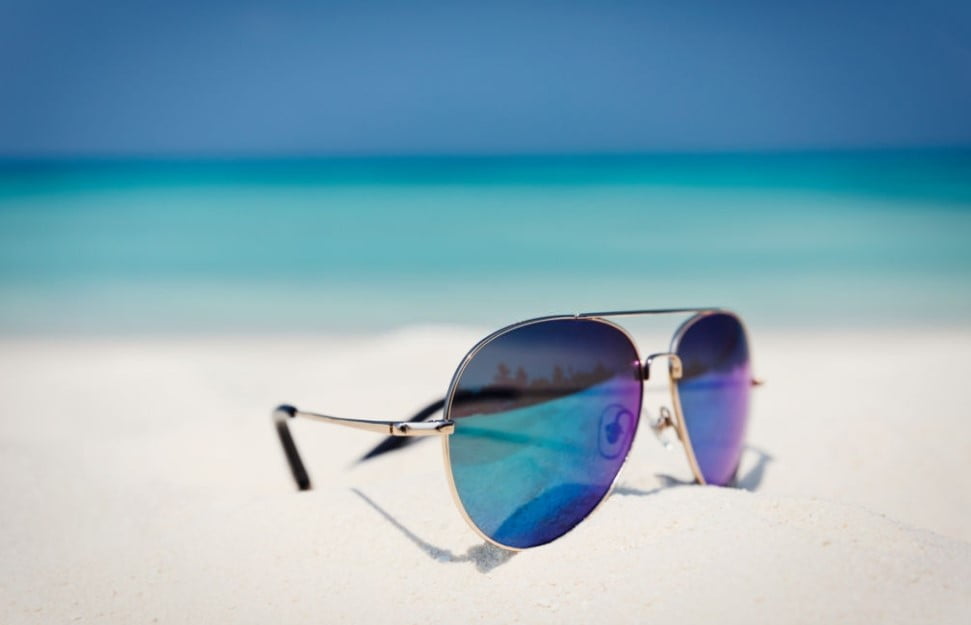
If you spend a lot of time in sunny environments or near water, polarized sunglasses are a must-have. The glare and harmful UV rays of the sun can cause eye strain, cataracts, retinal dysfunction, and even temporary blindness. With the best polarized sunglasses for the money, you can protect your eyes and enjoy your activities under the sun.
They also distort colors and views of the objects. To keep your eyes safe from these serious problems, you need to shield them using the best polarized sunglasses for the money. Because these can block reflected glares from flat surfaces and provide UV protection to your eyes.
But you may be in trouble to use these sunglasses in some dangerous conditions like downhill skiing or driving in winter weather. Some experts say that polarized sunglasses may reduce your ability to differentiate between snow and ice.
Besides, these sunglasses aren’t just for those who love fishing, boating, or going to the beach, but anyone who is bothered by glare can get benefited from these best-polarized sunglasses. Even they will also be helpful for some light-sensitive people, including those who have had eye surgery.
Choose protection gear by fit, comfort, durability, and the protection rating that matches your use. OSHA explains why proper eye and face protection matters around impact hazards.
Table of Contents
- Quick Picks Table
- Review of Best Polarized Sunglasses for the Money
- J+S Premium Military Style Aviator Sunglasses
- TOREGE Polarized Sports Sunglasses
- Bnus Italy made classic sunglasses
- Flying Fisherman San Jose Polarized Sunglasses
- REKS Polarized Unbreakable SEAFARER Sunglasses
- Wood Sunglasses made from Maple
- Under Armour Core 2.0 Sunglasses
- ATTCL Men’s Fashion Polarized Sports Sunglasses
- Julbo Vermont Classic Sunglasses
- Bolle Anaconda Sunglasses
- Buying Guide of the Best Polarized Sunglasses
- Material
- Sunglass Types
- Lens Coating
- UV Protection
- Frequently Asked Questions
Quick Picks Table
Product Best for Details Price
J+S Premium Military Style Aviator Sunglasses Best for value comparison Read review Check Amazon
TOREGE Polarized Sports Sunglasses Best for value comparison Read review Check Amazon
Bnus Italy made classic sunglasses Best for value comparison Read review Check Amazon
Flying Fisherman San Jose Polarized Sunglasses Best for value comparison Read review Check Amazon
REKS Polarized Unbreakable SEAFARER Sunglasses Best for value comparison Read review Check Amazon
ATTCL Men’s Fashion Polarized Sports Sunglasses Best for value comparison Read review Check Amazon
Julbo Vermont Classic Sunglasses Best for value comparison Read review Check Amazon
Bolle Anaconda Sunglasses Best for value comparison Read review Check Amazon
How We Judge Value in Polarized Eyewear
"Best for the money" is not the same as "cheapest." A $25 pair that scratches in a week and pinches behind the ears is more expensive, in practice, than a $70 pair you wear for three seasons. When we compare budget and mid-priced polarized sunglasses, we weigh five things in this order:
- Genuine polarization, verified. A surprising number of bargain shades are simply dark tinted lenses with a "polarized" sticker. Any pair worth buying survives the LCD screen test described further down this guide.
- UV400 protection independent of tint. Darkness and UV blocking are two separate properties. A dark, non-UV lens is worse than no sunglasses at all, because your pupil dilates behind it and lets more ultraviolet reach the retina.
- Optical honesty. Look for straight lines that stay straight when you sweep your head side to side. Cheap injection-molded lenses show waviness at the edges, which is what causes that low-grade headache after an hour of wear.
- Frame retention. Rubberized nose pads and temple tips matter more than brand names once you start sweating. This is the single biggest difference between casual shades and true sport frames.
- Coating durability. Hydrophobic and anti-scratch coatings are what separate a lens that still looks good in year two from one that hazes over after a season of shirt-tail wiping.
A common mistake is buying for style first and discovering the frame is too narrow for your face, so the temples pinch and the lenses sit close enough to fog. Measure the temple-to-temple width of a pair you already own and use that as your baseline before ordering online.
At-a-Glance Comparison: Frames, Lenses, and Best Use
| Model | Frame material | Lens highlights | Best suited to |
|---|---|---|---|
| J+S Aviator | Metal alloy, spring hinges | UV400 polarized, 58mm and 62mm sizes | Everyday wear and driving |
| TOREGE TR02 | 7C (7.0 base) sport frame | 99% UVA/UVB, UV400 coating | Cycling, motorcycling, hiking |
| Bnus Italy Made | Italian polyamide composite | Corning glass UV400, anti-oil coating | Optical clarity purists |
| Flying Fisherman San Jose | Gunmetal copper/silver | Triacetate polarized, AcuTint tuning | Fishing and on-water use |
| REKS Seafarer | BPA-free flexible polymer | Polycarbonate, hydrophobic + AR + anti-scratch | Helmets, rough handling |
| 4est Maple Wood | Maple and bamboo (floats) | UV400 polarized, anti-reflective | Beach, boating, casual style |
| Under Armour Core 2.0 | Wrap plastic, steel hinges | ArmourSight polarized gray storm | Running, cycling, ball sports |
| ATTCL Sports | Aluminum-magnesium | Mirrored HD polarized UV400 | Driving and road glare |
| Julbo Vermont Classic | Mountaineering frame, side shields | Spectron 4, 95% glare reduction | Altitude, snow, glacier travel |
| Bolle Anaconda | Lightweight matte frame | HD Polarized TNS, 12% VLT | Bright-sun driving and water |
A side-by-side look at how the ten picks differ in frame build, lens technology, and intended environment.
Read the table by environment rather than by price. Water and snow demand the strongest polarization and side coverage; road driving benefits from a mirrored or mid-VLT gray lens; woodland and trail use often favors a lighter copper or amber tint so shadow detail does not disappear.
Review of Best Polarized Sunglasses for the Money
1. J+S Premium Military Style Aviator Sunglasses
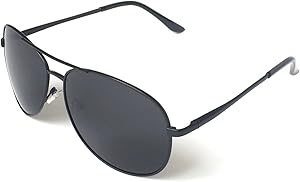 The J+S premium military style classic aviator sunglasses are fashionable to the users. Many people look much smarter with these sunglasses. These sunglasses feature a polarized lens with specialized multi-layers that can block up to 100% of horizontal reflections to protect your eyes from various diseases and problems.
The classic teardrop aviator shape in a metal alloy frame, offered in 58mm and 62mm lens widths.
The medium 58mm lens is suitable for the average male or female, whereas the large 62mm one is for large males or females for an oversized fit. Again, they are UV400 rated sunglasses that can prevent harmful ultraviolet rays and keep your eyes free from long term damage.
When it comes to spending time in the sun, polarized sunglasses are a popular choice to protect your eyes from harmful UV rays and glare. The best polarized sunglasses for the money offer durability and flexibility to ensure comfortable use. These sunglasses feature spring-loaded hinges made with a metallic alloy frame and adjustable silicone nose pads. They are lightweight and scratch-resistant, making them ideal for various outdoor activities like driving, skiing, traveling, hiking, fishing, boating, and more.
With different color options available, you can choose the one that suits you best. Also, these polarized sunglasses come with a case and cleaning cloth for convenient storage and maintenance. Their user-friendly and ergonomic design makes them a perfect all-rounder for anyone looking for affordable yet high-quality polarized sunglasses.
If you want to enhance your visual clarity in a sunny environment, these polarized sunglasses are a must-have. So, invest in a reliable and affordable pair to ensure your eyes are protected while enjoying your favorite outdoor activities.
Pros
Lightweight
Affordable
Scratch-resistant
Polarized lenses
Include case and cloth
Cons
- Clearing the lenses may take some time
Sizing tip: if you normally wear a 140mm-wide frame or narrower, take the 58mm. The 62mm sits wide enough that the lens edge can catch on cheekbones when you smile, which is the most common complaint about oversized aviators.
2. TOREGE Polarized Sports Sunglasses
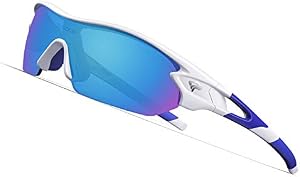 The original TOREGE Polarized Sports Sunglasses (5-lens kit) have been discontinued, so we’ve updated this pick to another current TOREGE model, the TR02, which uses TOREGE’s 7C (7.0 base) frame design to hug the curve of your face for a comfortable, all-day fit.
A high-base-curve sport wrap designed to seal out wind and side light during cycling and riding.
These polarized lenses block 99% of harmful UVA and UVB rays with a 99% UV400 protection coating, restoring true color and cutting reflected glare and scattered light to keep the scenery clear and soft.
TOREGE builds them for motorcycle riding, cycling, driving, fishing, mountain climbing, hiking, and boating, and each pair ships with a hard zippered glasses case, a cleaning cloth, a polarized test card, an adjusting strap, and a manual.
Pros
Polarized lenses block 99% of UVA/UVB rays
7C frame design hugs the face for all-day comfort
Comes with hard zippered case, cleaning cloth, and test card
Suited for cycling, driving, fishing, and other outdoor activities
Cons
- Single lens color option, not the interchangeable 5-lens kit of the original pick
Note: The original TOREGE Polarized Sports Sunglasses (5-lens kit) has been discontinued. We’ve replaced this pick with TOREGE’s current TR02 model, the same brand’s in-stock polarized sport sunglasses.
Losing the interchangeable lens kit is less of a downgrade than it sounds. Swapping lenses in the field is how most people scratch them, and a single well-chosen polarized tint covers the bright-light hours when you actually need protection. If you regularly ride into dusk, keep a cheap clear or yellow non-polarized pair in the bag rather than expecting one lens to do both jobs.
3. Bnus Italy made classic sunglasses
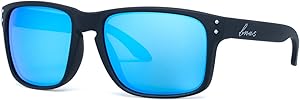 The Bnus Italy made classic sunglasses are not only for elite athletes but also for everyone who wants to enjoy the sunshine. These sunglasses come with an Italian made polyamide composite frame.
Glass lenses in a lightweight polyamide frame — the clarity option in this lineup.
They also offer a polarized sea-water corrosion-resistant lens that can eliminate glare, reveal the real colors around you, and reduce fatigue of your eyes. Even, they ensure better clarity of vision with 75% of red, yellow, and green color contrast. The lens width of these sunglasses is just 56 millimeters.
Besides, they also have UV400 corning glass lens with uncompromised clarity to prevent harmful ultraviolet rays. The lens is 0.8mm that has multiple color tuning for any environmental situation.
This pair of natural sunglasses also provide natural visual experience by absorbing 85% of sunlight and blue rays. They have an anti-oil coating to ignore blurred views in any situation.
Pros
Never-scratch mirror resistant
Polyamide composite frame
HD Polarized lens
Anti-oil easy to clean coating
UV400 tested
Cons
- Temples may be tight for wider heads
Glass earns its keep in two ways: it resists scratching far better than any coated plastic, and it holds optical clarity over years of cleaning. The trade-off is honest and worth stating — glass is heavier on the nose and it can shatter on a hard impact. For casual wear, boat decks, and driving, that trade is usually worth it. For climbing, ball sports, or anywhere a lens might take a direct hit, choose polycarbonate instead.
4. Flying Fisherman San Jose Polarized Sunglasses
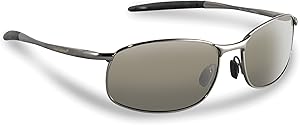 The Flying Fisherman San Jose Polarized Sunglasses are scratch-resistant and pretty lightweight to wear on sunny days. These sunglasses provide the outdoor enthusiasts high-quality, premium triacetate polarized lenses to improve visibility in any activity.
Gunmetal frame with rubber nose and temple pads, built for wet hands and salt spray.
AcuTint Lens Coloring System adds color contrast without distorting natural colors. These sunglasses also provide you 100% protection from harmful UVA and UVB rays to eliminate glares, allow you to see beneath the water surface, enhance clarity, and reduce eye strain.
Besides, the sunglasses also have sturdy enough gunmetal frames made of copper and silver with spring-loaded hinges to prevent stretching and ensure durability. You also won’t need to worry about dropping them as they have soft rubber nose pads and temple pads to make sure a comfortable fit and prevent slipping.
Even they are suitable for both on and off the water to do some outdoor activities, sports or hobbies like fishing, racing, skiing, etc. After all, this pair of sunglasses is for both men and women. So, anyone can maximize his outdoor experiences with these sunglasses.
Pros
Durable frames
Scratch-resistant
Clarifying optics
Perfect for the outdoor enthusiast
Suitable for both on and off the water
Cons
- Nose pads may leave indentations
The ability to see into water rather than off it is the whole reason anglers pay for polarization. Position matters as much as the lens: standing higher and looking down at a steeper angle cuts far more surface reflection than squinting across a flat plane. Anglers who fish salt water most weekends often graduate to a pricier fishing-first brand with glass lenses, but the San Jose delivers most of the benefit for a fraction of the outlay.
5. REKS Polarized Unbreakable SEAFARER Sunglasses
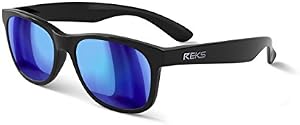 The original REKS SLING-BLADE has been discontinued, so we’ve updated this pick to REKS’ current Polarized Unbreakable SEAFARER, built on the same "Unbreakable" platform with a lightweight, BPA-free polymer frame that flexes to fit even under a helmet and always springs back to shape.
A flexible polymer frame that bends and returns to shape instead of snapping.
The lenses carry the same multicoat treatment as the original: a hydrophobic coating that sheds water, an anti-reflective coating that keeps glare out, and an anti-scratch coating that extends the life of the lens.
REKS polarizes these lenses to eliminate 99% of glare from water, snow, roads, and sand, and the polycarbonate lens is up to 10x more shatter-resistant than glass or plastic, with no delamination over time.
Pros
Same "Unbreakable" BPA-free polymer frame platform as the original
Hydrophobic, anti-reflective, and anti-scratch multicoated lenses
Polarized to eliminate 99% of glare
Flexes to fit comfortably even under a helmet
Cons
- Frame styling differs slightly from the discontinued SLING-BLADE
Note: The original REKS Unbreakable SLING-BLADE has been discontinued. We’ve replaced this pick with REKS’ current Polarized Unbreakable SEAFARER, the same brand’s in-stock unbreakable-frame sunglasses.
Worth noting: "unbreakable" refers to the frame. The polycarbonate lens is highly impact-resistant, but a flexible-frame sunglass is still not the same thing as certified safety eyewear. If your day includes a chainsaw, a bench grinder, or a shooting bench, wear an ANSI Z87.1-marked lens instead and save these for the drive home.
6. Wood Sunglasses made from Maple
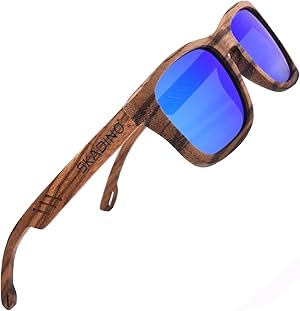
Real maple and bamboo construction — light enough that the frames float if they go overboard.
The 4est Shades Sunglasses are the great products that provide durability to the users. The sunglasses are excellent to give you a sporty and country club vibe. They are the combination of quality and style with 100% polarized shades.
These handicraft sunglasses are handmade from natural resources such as real maple wood and bamboo that are much better than plastics. If you buy a pair of these, the 4est Shades promise to plant 2 trees against your purchase.
Again, they also have a UV400 polarized lens that provides you all-day protection from harmful light and glare. So, you’re going to love the look and clarity through this anti-reflective lens.
The lens width is 51 millimeters for small sunglasses and 55 millimeters for regular ones to give you options for an optimum fit. These real wood sunglasses also have stainless steel double spring hinges to ensure a perfect fit.
Besides, these wooden sunglasses not only look great but also float on the water. Each pair of these sunglasses comes with a personalized bamboo travel case, cloth pouch, and microfiber cloth to keep your shades protected. If you are fond of polarized sunglasses, these will be one of the best choices for you.
Pros
Perfect and casual
100% polarized lenses included
Made of real maple wood
Protect from UV rays
Come with double spring hinges
Cons
- They might be too big
Wood frames come with two practical caveats nobody mentions in the marketing copy. First, no two pairs fit identically, because grain and thickness vary slightly between units — this is a feature of handmade eyewear, not a defect. Second, wood does not tolerate being left on a hot dashboard; prolonged heat can dry the finish and loosen the lens seat. Store them in the supplied case and they will outlast most plastic frames.
7. Under Armour Core 2.0 Sunglasses
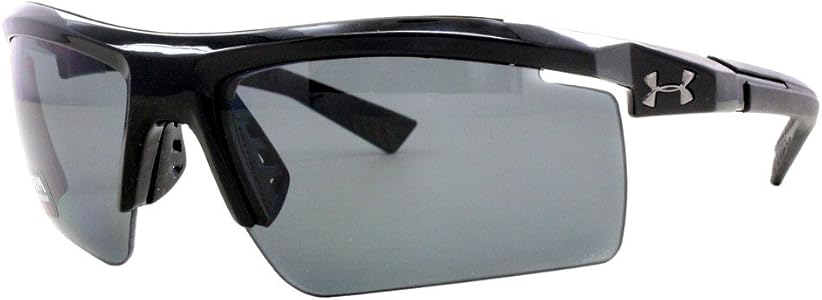
A wrap-around sport frame with three-point grip and airflow venting for high-output activity.
The Under Armour Men’s Core 2.0 sunglasses, with a soft case, provide a stylish sporty look to the sunglass lovers. These sunglasses are attractive and comfortable to wear for looking more fashionable.
They are one of the best to use on or near the water, or anywhere you encounter reflective distractions. They mainly feature durable wrap-around plastic frames and unbreakable steel hinges, which provide full coverage to your head anatomy and create the maximum durability of the sunglasses.
Also, these sunglasses are equipped with ArmourSight lens technology to provide much better clarity. The gray storm lenses are polarized, but the others have non-polarized lenses for different purposes.
Besides, the polarized lenses cut glare for clearer vision, and they’re coated to prevent salty water, grease, mud, and pretty much everything else. They also block 100% of UVA, UVB, and UVC rays and reduce eye fatigue without color distortion.
You can even use the polarized one for sports like golf, cycling, or basketball. Again, the sunglasses have multi-position silicone nose pads and three-point grips. You will also find them helpful for a comfortable, customized fit. Airflow technology delivers added airflow when you are on a bike or running.
Pros
Ultra-polarized
Scratch-resistant hard coating
Salt-water resistant
Variable nose pad positions
Frames provide full coverage of your head
Cons
- A sturdy case is not available
Pay close attention to the colorway when ordering: only the gray storm lens in this family is polarized, and the listing photos of the non-polarized versions look nearly identical. A common mistake is assuming that every lens under a sport brand's umbrella is polarized. Check the lens description line, not the frame name.
8. ATTCL Men’s Fashion Polarized Sports Sunglasses
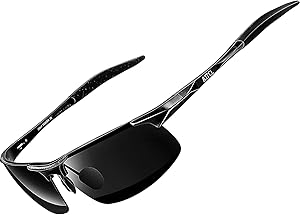 ATTCL consistently provides the highest quality and fashionable sunglasses nowadays. It also produces a lot of multiple polarized sunglasses for men.
Mirrored lenses in a metal alloy frame, aimed squarely at road glare and daily driving.
These sunglasses come with a sturdy frame construction of aluminum-magnesium metal to provide you the maximum comfort when you wear a pair of these on your eyes.
The frame is also unbreakable and light, so you can hardly feel them on your face. Besides, these sunglasses have mirrored HD polarized lenses that provide you 100% UV400 protection coating to block harmful UVA & UVB rays.
They also reduce glare reflected off of roads, water, snow, and other horizontal surfaces. They can restore actual color, improve night vision, and protect eyes from strain as well. So, you can see it much better.
Again, the sunglasses are best for multiple activities like cycling, driving, running, racing, skiing, etc. If you want to have a pair of these sunglasses, ATTCL Men’s Fashion Driving Polarized Sports Sunglasses will provide you the sunglasses, one glasses cloth, a polarized test card, and glasses bag.
Remember that, never use sea-water, tissue, or rough cloth to clean the lens. Just Absorb the water with glasses cloth immediately after sunglasses get wet.
Pros
100 percent UV protection lens
Hydrophobic coating
Protect your eyes from harmful rays
Unbreakable frame
Very lightweight
Cons
- Some users may find them much sturdier
The cleaning warning above is not boilerplate — it is the single most useful line in this review. Mirror coatings sit on the outer surface of the lens, which makes them the most vulnerable layer on any pair of sunglasses. Dry-wiping grit across a mirror finish leaves fine arcs of scratching that catch light forever after. Rinse first, then blot.
9. Julbo Vermont Classic Sunglasses
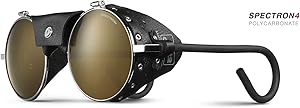 Julbo has continuously produced stylish technical gears for both men and women. The Julbo Vermont Classic sunglasses are one of them that feature traditional unbreakable mountaineering frame so you can do your adventurous activities safely.
Removable leather side shields block reflected light from snowfields at altitude.
The frame is also lightweight and scratch-resistant to keep the sunglasses looking fresh for a long time. Again, these traditional curved sunglasses also have flexible temple ends for gripping around the ears so that they won’t fall off your face.
Besides, the sunglasses have the Spectron 4 lenses, which reduce 95% of visible glare. They also filter harmful sunlight and enhance your visual experiences. Their anti-reflective coating can prevent your eyes from fatigue, and leather side shields ensure maximum comfort on your face.
Again, the sunglasses will provide you 100% UVA, UVB, and UVC protection. Overall, these versatile sunglasses are suitable for all types of sports activities.
Pros
Lightweight and scratch-resistant
Reduce 95% of visible glare
100% UV protection
Better for a mountain hike
Flexible temple ends for grip around the ears
Cons
- The dark lenses are not suitable for driving in darker environments
Spectron 4 is a category 4 lens, the darkest class made. That is exactly what you want above the treeline, on snow, or on open water at midday — and exactly what you must not wear on the road. Category 4 lenses are not approved for driving under European standards, and the same logic applies anywhere: they cut too much light for tunnels, shaded canyons, and dusk. Treat glacier glasses as specialist equipment, not an all-rounder.
10. Bolle Anaconda Sunglasses
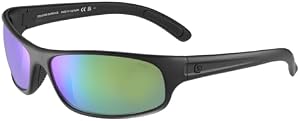 The original Bolle Sport Recoil has been discontinued, so we’ve closed out this list with another current Bolle model, the Anaconda, which pairs a matte black frame with jade green accents for a modern, sporty look.
Bolle's TNS gray-base polarized lens, rated at 12% visible light transmission.
Bolle equips the Anaconda with HD Polarized TNS lenses on a gray base that preserves natural color perception while cutting glare, with 12% visible light transmission for clarity in bright conditions.
The polarized lenses boost contrast and cut glare for driving, water, and other bright outdoor settings, and the frame is built from lightweight, durable materials for comfortable extended wear.
Pros
Genuine Bolle HD Polarized TNS lenses
12% VLT for clarity in bright conditions
Lightweight, durable frame for all-day wear
Reduces glare for driving and water activities
Cons
- Different frame style (rectangular) than the discontinued Sport Recoil’s wrap-around design
Note: The original Bolle Sport Recoil has been discontinued. We’ve replaced this pick with Bolle’s current Anaconda model, the same brand’s in-stock polarized sunglasses.
At 12% VLT the Anaconda sits in the middle of category 3 — dark enough for a summer afternoon on the water, still usable when a cloud bank rolls through. If you only own one polarized pair, this is the transmission range to target. Move darker only when snow or open ocean is your normal environment.
Which Pair Should You Buy? Picks by Use Case
- Driving every day: ATTCL or Bolle Anaconda. A gray or mirrored gray lens keeps traffic-light colors honest while killing windshield and asphalt glare.
- Fishing and boating: Flying Fisherman San Jose. Copper-toned polarized triacetate is the classic sight-fishing lens, and the rubber nose pads stay put with wet skin.
- Cycling, running, motorcycling: TOREGE TR02 or Under Armour Core 2.0. High base curve, vented frame, secure grip.
- Rough handling or helmet use: REKS Seafarer. The frame flexes instead of snapping when it gets sat on.
- Altitude, snow, and glacier travel: Julbo Vermont Classic. Side shields and a category 4 lens, full stop.
- Best optical quality per dollar: Bnus. Glass lenses simply resolve detail better than plastic.
- Style-first daily wear: J+S Aviator or the maple wood shades.
Ready to stop squinting? Match your main activity to the pick above, then use the "Check Latest Price on Amazon" link in that review — you will see current pricing, real lens-color options, and buyer photos before you commit a cent.
How Polarization Actually Works
Sunlight leaving the sun is unpolarized — its waves vibrate in every orientation. When that light bounces off a flat, non-metallic surface such as water, wet asphalt, snow, a car hood, or a windshield, the reflected portion becomes strongly horizontally polarized. That horizontal component is what your brain registers as blinding glare.
A polarized lens contains a stretched polymer film whose long molecular chains are aligned in one direction. Those chains absorb light waves oscillating parallel to them and let the perpendicular waves through — effectively a microscopic set of vertical slats. Because the film is oriented to block horizontal waves, glare is cut dramatically while useful image-forming light passes.
Three practical consequences follow from that physics, and they explain nearly every quirk owners notice:
- Glare reduction depends on angle. Polarization is most effective near Brewster's angle, roughly 53 degrees from vertical for water. That is why glare seems to vanish when you look down at a lake from a boat deck but returns when you look across it at a low angle.
- Tilting your head weakens the effect. Lean sideways 45 degrees and the film's alignment no longer matches the glare's alignment, so the reflection reappears. Fly anglers notice this constantly.
- Some screens go dark. LCD displays emit polarized light of their own. Depending on orientation, a phone, GPS, dashboard cluster, or ATM screen can turn black behind a polarized lens.
Polarization and UV protection are entirely separate features stacked into the same lens. Polarization handles comfort and contrast; a UV-blocking layer handles the invisible radiation that damages the cornea and lens over decades. The National Eye Institute is a solid, non-commercial place to read about how ultraviolet exposure contributes to cataract and other long-term eye conditions.
Buying Guide of the Best Polarized Sunglasses
When it comes to outdoor activities, polarized sunglasses are a smart choice. They effectively reduce the harmful effects of UV rays on your eyes, whether you’re driving, hiking, or shooting. If you’re looking for the best polarized sunglasses for the money, there are several factors you should consider before making a purchase. This guide will help you compare options and choose the perfect pair for your needs.
Material
The material you choose for the lenses in your sunglasses will affect how they look, feel, and cost. The most common and renowned sunglass materials are-
Glass: The glass lenses in these sunglasses provide outstanding optical clarity as well as impact toughness. However, it is heavier and expensive than other materials.
Polyurethane: The material polyurethane is lighter and more durable than traditional materials. Polyurethane has proven itself as a superior choice. These are the best sunglasses you can find!
Polycarbonate: It is a relatively inexpensive plastic with good optical clarity and impact resistance but scratches easily.
Acrylic: It is a cheaper alternative to polycarbonate. It is less durable and transparent than polycarbonate or glass.
Frame material deserves the same attention as lens material, because it decides whether a pair survives its first bad day:
- Nylon and TR-90 composites dominate the sport category. They are light, they flex in cold weather instead of shattering, and they hold rubber components well.
- Acetate looks and feels premium on casual frames but softens in heat — the reason a dashboard is the worst place to store sunglasses.
- Metal alloys (aluminum-magnesium, monel, stainless) give a slim classic profile and hold adjustment well, but they conduct heat and cold against the skin and can corrode in salt air unless coated.
- Wood and bamboo are light and unique, with the fit-variation caveat noted earlier.
Also check the hinge. Spring hinges forgive a wider face and reduce the slow outward stretch that ruins fit; barrel hinges are easier for an optician to tighten with a screwdriver. Either is fine — a glued or riveted hinge that cannot be adjusted is not.
Sunglass Types
Polarized sunglasses usually come in 3 different forms. Such as-
Casual sunglasses: Casual sunglasses are a more practical option for everyday use or simply recreational activities.
Sport sunglasses: Sport sunglasses are intended for use while jogging, hiking, or biking. The materials used in high-end frame and lens material are more impact-resistant and flexible than casual sunglasses. Sport sunglasses usually have sticky nose pads, and temple ends help keep the frames in place when you sweat.
Glacier glasses: Glacier glasses are specialist sunglasses designed to protect your eyes from the intense light prevalent at higher elevations. They frequently include wrap-around extensions to prevent light from entering the frame from the sides.
Two more categories are worth knowing about before you buy:
- Fit-over (OTG) sunglasses slip over prescription eyeglasses. They are bulky and rarely flattering, but they are the cheapest way to get polarization if you already wear corrective lenses and do not want a second prescription.
- Safety-rated shooting and work glasses carry an ANSI Z87.1 or Z87+ marking stamped on the lens or temple. This is an impact standard, not a UV or glare standard, and it exists independently of polarization. The American National Standards Institute coordinates the standards that define those markings, and any lens you plan to wear at a range or job site should show one.
Choose the category by the worst conditions you will realistically face, not the average ones. A sport frame worn casually is only slightly overkill; a casual frame worn on a windy ridge is a lost pair of sunglasses.
Lens Coating
The more expensive the sunglasses, the more layers of coatings they are likely to have. An anti-scratch coating to promote durability, a hydrophobic coating to repel water, and an anti-fog coating for humid environments or high-energy activities are examples.
Besides, a reflective layer placed on the exterior surfaces of some sunglass lenses is referred to as mirrored or flash coating. They eliminate glare by reflecting a large portion of the light that strikes the lens surface. Because mirrored coatings make objects appear darker than they are, lighter colors are frequently applied to counteract.
One coating that gets overlooked is the backside anti-reflective (AR) layer. Without it, sunlight coming from behind you bounces off the inner lens surface and straight into your eye — the faint ghost image and hotspot people notice when the sun is low and over the shoulder. Backside AR is the single upgrade that most improves comfort on a wrap-around frame, because the curved inner surface reflects more of that stray light.
A quick ranking of coating value for the money:
- Anti-scratch (hard coat) — non-negotiable on any plastic lens.
- Backside AR — biggest real-world comfort gain.
- Hydrophobic/oleophobic — makes cleaning safer, which indirectly saves the lens.
- Mirror/flash — cosmetic plus a modest cut in transmission; the most fragile layer.
- Anti-fog — only worth paying for if you stop and start in humid conditions.
UV Protection
Sunglasses are essential for people exposed to various ultraviolet (UV) light, particularly during outdoor activities. Suppose you work outdoors or in a bright environment and constantly come into contact with UV light. In that case, polarized sunglasses will protect your eyes from UV radiation present in sunlight which can cause a range of disorders, including cataracts, macular degeneration, and eye growth.
Decode the label before you decode the marketing. UV400 means the lens blocks wavelengths up to 400 nanometers, which covers both UVA and UVB — this is the number to look for. "100% UV protection" means the same thing when it is truthful. Vague phrasing like "UV protective," "blocks harmful rays," or "sun-blocking tint" with no figure attached is a warning sign.
Three points people routinely get wrong:
- Dark does not equal protective. Tint density and UV blocking are unrelated. A very dark lens with no UV filter is genuinely dangerous because your pupils open wider behind it.
- UV exposure is cumulative and highest around reflective surfaces. Snow, sand, concrete, and water bounce ultraviolet back up under the lens, which is why side coverage and a snug fit matter as much as the lens itself.
- Cloud cover does not stop UV. A significant share still reaches the ground on overcast days, so the "I only need shades in full sun" habit leaves gaps.
If you already own a pair with no rating printed on it, most optical shops will run it through a UV meter in under a minute at no charge. That is the fastest way to settle the question.
Lens Tint Color and VLT: Matching the Lens to the Light
Visible Light Transmission (VLT) is the percentage of light a lens lets through. Lower number, darker lens. Standards group lenses into categories, and knowing your category prevents the two classic mistakes — buying something too dark to drive in, or too light for open water.
| Category | Approx. VLT | Typical conditions | Notes |
|---|---|---|---|
| 0 | 80–100% | Indoor, night, overcast | Clear or very light tint |
| 1 | 43–80% | Low light, dawn/dusk, forest | Common in yellow/rose |
| 2 | 18–43% | Variable sun, partly cloudy | Good all-round hiking lens |
| 3 | 8–18% | Bright sun, water, beach | Where most sunglasses sit |
| 4 | 3–8% | Glaciers, high altitude, snowfield | Not for road driving |
Tint color changes what you see, not how much you see:
- Gray: the most neutral. Colors stay true, which is why it is the default for driving and general bright-sun use.
- Brown / amber: boosts contrast by knocking down blue light. Excellent for variable light, trails, and picking a target out of a green background.
- Copper / rose: the sight-fishing and shooting favorite. Makes browns and greens separate sharply.
- Green: a middle path — moderate contrast with less color shift than brown.
- Yellow: low-light contrast enhancer for overcast or dusk; usually offered non-polarized.
In practice, a gray or copper category 3 polarized lens covers 90% of what most people do outdoors. Buy that first, then add a specialist tint only if a specific activity demands it.
Fit, Coverage, and Base Curve
Fit is where cheap sunglasses most often fail, and it is the easiest thing to check before you order.
- Base curve describes how strongly the lens wraps. A 6- to 8-base wrap seals out wind and side light for cycling and shooting; a flat 4-base suits classic frames and causes less peripheral distortion.
- Temple length and grip. Rubber temple tips should touch behind the ear without pinching. If the frame slides down when you nod forward, it will slide down all day.
- Eyelash clearance. Lashes brushing the lens is a top cause of smearing and constant cleaning. Adjustable nose pads solve it.
- Vertical coverage. Look at your reflection: if you can see daylight above or below the lens, UV is reaching your eye from that direction.
A five-second in-store test: put the frame on, tip your head forward 45 degrees, and shake gently. If it moves more than a few millimeters, it is the wrong frame for anything active.
Impact Ratings vs Everyday Sunglasses
Regular sunglasses are cosmetic and optical products. Safety eyewear is protective equipment, tested to withstand a high-mass drop and a high-velocity projectile impact, and marked accordingly. The two categories overlap in appearance but not in performance.
If your outdoor time includes range sessions, trimming brush, or riding, buy a lens with an impact marking on it. Plenty of manufacturers now offer polarized lenses that also carry an impact rating — you no longer have to choose between glare control and eye protection. When you are stocking up on gear for a first range visit, certified eye and ear protection should be the first two items on the list, ahead of anything optional.
Price Tiers: What Your Money Actually Buys
| Budget | What you get | What you give up |
|---|---|---|
| Under $30 | Real polarization if you check the test card, UV400, basic hard coat, plastic frame | Optical precision, coating life, replaceable parts |
| $30–$80 | Better frame materials, rubber grip points, backside AR, decent optical flatness | Glass lenses, warranty depth, prescription options |
| $80–$180 | Polished polycarbonate or glass, contrast-tuned tints, adjustable nose bridges, replacement parts | Little — this is the value sweet spot |
| $180+ | Premium glass, lifetime service, custom prescriptions, refined tint science | Diminishing returns unless you wear them daily on water |
The honest verdict: the jump from $25 to $80 is enormous. The jump from $80 to $250 is real but subtle, and it mostly shows up in optical clarity over long sessions and in whether the brand will replace a lens for you. If you lose sunglasses regularly, staying in the lower two tiers is the rational choice.
How to Test Whether Lenses Are Really Polarized
Do this before the return window closes:
- The LCD test. Hold the glasses in front of a phone or laptop screen showing a white background, then rotate them 90 degrees. Genuine polarized lenses darken dramatically or go nearly black at one orientation. A tinted-only lens stays the same.
- The two-pair test. Hold two polarized lenses against each other and rotate one. Where the filters cross, light should be blocked almost completely.
- The reflection test. Look at a car hood or a puddle in bright sun, then tilt your head sideways. Glare that disappears when upright and returns when tilted is proof of polarization.
- The test card. Many kits include a card with a hidden image only visible through a polarized lens. It works, though it is easily faked with printed instructions; prefer test 1.
If a "polarized" pair fails the LCD test, return it. Whatever else it is, it is not doing the job you paid for.
Polarized Sunglasses for Shooting, Hunting, and Optics
This is where polarized eyewear earns opinions rather than universal praise, and it is worth being precise about the trade-offs.
Where polarization helps. Glassing water, glare off dry grass, mirage shimmer on an open flat, and the punishing reflection off snow or sand all get noticeably easier behind a polarized lens. A copper or amber tint also separates a tan hide from a green background, which is why it is popular with anyone spending long hours judging animals in mixed light — a decision that gets a lot harder in some of the varied landscapes hunters work through over a single season.
Where it complicates things. Polarized lenses interact with coated optics and illuminated aiming systems in ways that surprise first-time users:
- Some red dot and holographic sights dim noticeably or show a color shift through a polarized lens, and a few LED emitters combine with the filter to produce an odd flare. Test your combination before opening day rather than at the moment of truth. This is separate from the starburst or smearing effect that comes from uncorrected vision — if the dot looks like a comet regardless of eyewear, how corrective needs affect a dot is the more likely explanation.
- Rifle scopes and spotting scopes already control glare with multicoated lenses. Adding polarization in front can slightly reduce transmission and, in rare cases, produce uneven brightness across the field of view. Most shooters simply push the glasses up when they get behind glass. If you are still choosing between builds, the practical differences between duty-style and field optics matter far more than eyewear does.
- Digital displays on rangefinders, thermal units, and trail-camera screens can black out at certain head angles.
A workable system. Many experienced hunters carry a polarized pair for travel, glassing with the naked eye, and boat or open-country work, plus an impact-rated non-polarized pair for actual shooting. It sounds fussy until the first time a dot sight washes out. Two lightweight pairs cost less than a lost opportunity, and they barely register when you are keeping the load light on a long walk in.
If you spend serious time behind a tripod-mounted optic, a dedicated instrument does more for your glassing than any lens in front of your face — the reasons a long-range viewing setup beats squinting through binoculars are worth understanding before you upgrade eyewear again.
When Polarized Lenses Are the Wrong Choice
Polarization is not universally beneficial, and honest advice includes the exceptions:
- Downhill skiing and mountaineering on mixed snow and ice. Polarization removes the glint that distinguishes a patch of glare ice from soft snow. Many skiers prefer a non-polarized, high-contrast tint for exactly this reason.
- Aviation. Aircraft windscreens, canopy laminates, and instrument displays are frequently polarized or stress-birefringent, producing rainbow patterns and dark bands. Pilots are routinely advised against polarized lenses.
- Reading LCD instruments. Boat electronics, dashboard clusters, phone screens, and ATM displays can dim or disappear.
- Golf greens, in some players' opinion. Polarization can flatten the subtle sheen that reveals the direction of the grain.
- Any job requiring you to spot glare deliberately — for example checking a finish for flatness, inspecting glass, or looking for wet spots on a surface.
- Cracked or stressed automotive glass. Polarized lenses reveal stress patterns in tempered glass that some drivers find distracting.
None of these make polarized sunglasses a bad purchase. They just mean that the one-pair-for-everything approach has real limits.
Care, Cleaning, and Making an Affordable Pair Last
Ninety percent of "cheap sunglasses scratch too fast" complaints trace back to cleaning technique rather than lens quality.
The right routine:
- Rinse with cool running water first. This floats off grit, which is what actually scratches.
- Add a drop of plain dish soap on your fingertips, work it gently over both surfaces, rinse again.
- Blot dry with a clean microfiber cloth — do not scrub.
- Store in a hard case, never lens-down on a table or hanging from a shirt collar.
What to avoid: paper towels and tissues (wood fiber is abrasive), shirt hems (dust reservoir), ammonia or window cleaner (strips coatings), acetone, alcohol wipes on mirrored lenses, hot water, and dishwashers. Salt water should be rinsed off the same day; dried salt crystals are miniature abrasives.
Frame upkeep: wash microfiber cloths regularly without fabric softener, tighten hinge screws twice a year with a jeweler's driver, and keep glasses out of a parked car in summer — heat is what warps frames and delaminates polarized film. If you ever see a fine crosshatch or "spiderweb" pattern developing inside the lens, that is delamination of the polarizing film, and it is a replace-not-repair situation.
When to replace: if the coating has hazed, the lens has visible scratches in your line of sight, or the frame no longer holds adjustment, the pair is finished. Squinting through a compromised lens defeats the purpose of buying it.
What's Changed by 2026
Two shifts are worth knowing about if you last shopped for sunglasses years ago:
- Model churn is faster than ever. Three of the ten picks in this guide already had to be updated because their original versions were discontinued. Treat any specific model recommendation — here or anywhere — as a snapshot, and evaluate the current listing against the criteria in this guide rather than the model name.
- Genuine polarization has trickled down. Real polarized film with UV400 protection is now common well under $40, which was not true a decade ago. The differentiator at budget prices is no longer whether the lens is polarized, but how good the optics and coatings are behind it. That is why the LCD test and the fit checks above matter more than the price tag.
Frequently Asked Questions
Q: What are polarized sunglasses?
A: Polarized sunglasses are sunglasses that have a special filter that blocks out glare from reflecting surfaces, such as water or snow.
Q: How do polarized sunglasses work?
A: Polarized sunglasses work by blocking out horizontal light waves that cause glare, while allowing vertical light waves to pass through.
Q: Can polarized sunglasses be worn while driving?
A: Yes, polarized sunglasses can be worn while driving, as they can reduce glare from reflective surfaces such as roads and other vehicles.
Q: Are polarized sunglasses more expensive than regular sunglasses?
A: Polarized sunglasses can be more expensive than regular sunglasses, as they require additional materials and technology to produce.
Q: Can polarized sunglasses be used for fishing?
A: Yes, polarized sunglasses are often used for fishing, as they can reduce glare from the water and allow for better visibility of fish and other aquatic life.
Q: Are polarized sunglasses suitable for all outdoor activities?
A: While polarized sunglasses are suitable for many outdoor activities, they may not be ideal for certain activities such as downhill skiing, as they can affect depth perception.
Q: How do I clean my polarized sunglasses?
A: To clean your polarized sunglasses, use a microfiber cloth and mild soap and water. You should steer clear of using any harsh chemicals or rough materials that might cause scratches on the lenses while cleaning your polarized sunglasses.
Q: Can I get prescription polarized sunglasses?
A: Yes, many eyewear brands offer prescription polarized sunglasses for those who need corrective lenses.
Q: Does polarized automatically mean UV protection?
A: No. They are two separate lens properties. Polarization controls glare; UV blocking is a filter that stops radiation you cannot see. Always confirm the lens is marked UV400 or "100% UV protection" in addition to being polarized.
Q: How can I tell if a pair is genuinely polarized?
A: Hold them in front of a bright LCD screen and rotate them 90 degrees. Real polarized lenses go dark or nearly black at one orientation. If nothing changes, the lens is only tinted.
Q: Do darker lenses protect my eyes better?
A: Not necessarily, and a dark lens without UV filtering is worse than none at all, because your pupils dilate behind it and admit more ultraviolet light. Choose UV400 first, then pick the tint density that suits your conditions.
Q: Why do my phone and car dashboard screens go black?
A: LCD displays emit polarized light. When the screen's polarization is perpendicular to your lens, the two filters cross and cancel. Tilting your head or rotating the device usually restores the image.
Q: Do polarized sunglasses work with red dot sights or rifle scopes?
A: Sometimes, but not always. Certain illuminated reticles dim or shift color through a polarized lens, and coated optics may show slight brightness variation. Test your specific eyewear and sight combination in daylight before relying on it in the field.
Q: What is VLT, and what number should I look for?
A: Visible Light Transmission is the percentage of light the lens passes. Around 8–18% (category 3) suits most bright-sun use. Only go darker, into category 4, for snowfields and high altitude — and never wear category 4 for driving.
Q: Which lens tint is best for fishing versus driving?
A: Copper, amber, or rose tints boost contrast and help you see structure and fish beneath the surface. Neutral gray keeps colors accurate and is the better choice on the road, where you need to read traffic lights and brake lamps correctly.
Q: Can I wear polarized sunglasses after eye surgery or if I am light sensitive?
A: Many people find them very helpful, since reduced glare eases photophobia. Follow the specific guidance from your eye care professional about tint density and how soon to resume wearing sunglasses after a procedure.
Q: How long should a pair of polarized sunglasses last?
A: With a hard case and correct cleaning, several years. Replace them when the coating hazes, scratches sit in your line of sight, or a crosshatched pattern appears inside the lens, which indicates the polarizing film has delaminated.
Q: Are mirrored lenses the same as polarized?
A: No. A mirror coating reflects some light away from the outer lens surface and reduces transmission; polarization is an internal filter that targets glare specifically. A lens can be one, the other, both, or neither.
Q: Are polarized lenses safe for kids?
A: Yes, and children benefit particularly because their lenses transmit more UV than adults'. Prioritize UV400 protection, impact-resistant polycarbonate, and a wrap or strap that actually stays on.
Final Thoughts
We already know polarized sunglasses are essential to keep our eyes safe from several diseases. They can enhance the light-filtering capabilities of our eyes and protect against the Sun’s damaging UV rays.
They can also improve our visual experience by reducing glares from the water and roads so that we can see views much more clearly. The reflected glares are the reasons for bad headaches that can ruin our whole day.
So, to get rid of glare and UV rays and protect your eyes in sunny weather, you can choose any of these best polarized sunglasses for the money that should be with your other essentials.
If you take only three things from this guide: confirm UV400, verify polarization with the screen test, and buy the fit that stays on your face during your actual activity. Everything else — brand, mirror finish, frame styling — is preference. And once your eyes are covered, the same "buy for the conditions you actually face" logic applies to the rest of your kit, whether that is assembling a checklist before a trip or working out which scope suits your rifle.
You May Also Like to Read
The Best Scope Covers
The Best Rifle Scope Under 300
The Best Compound Bow Sights
The Best Compact Binoculars for Birding
The Best Spotting Scope for Birding
The Best Bifocal Safety Glasses
The Best Night Vision Scope for the Money