1911 Parts Diagram: Main Pistol Components and What They Do
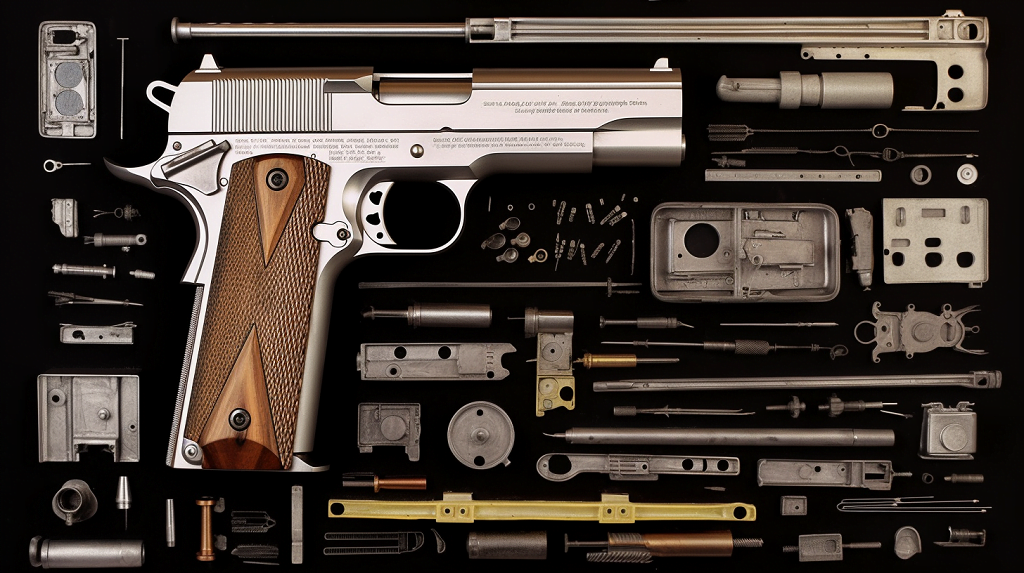
A 1911 parts diagram helps shooters identify the pistol’s main assemblies and understand what each part does at a high level. That knowledge is useful for safe handling, maintenance conversations, manual reading, and explaining a problem to a qualified gunsmith.
This guide is for parts identification only. It is not a fitting, trigger-work, polishing, or modification tutorial. The 1911 design has many small fitted parts, and unsafe work can affect reliability, safeties, and legal use.
Table of Contents
Safety First Before Inspecting a 1911
Before looking at any pistol parts, unload the firearm, remove the magazine, check the chamber, move ammunition away from the workspace, and keep the muzzle pointed in a safe direction. Keep your finger away from the trigger during handling and inspection.
The NSSF firearm safety rules and Hunter Ed firearms safety rules are worth reviewing before cleaning, inspecting, or discussing parts. Mechanical knowledge should make handling more careful, not casual.
Slide Assembly
The slide is the upper moving assembly of the pistol. During firing, it moves rearward and forward as the pistol cycles. It houses or supports several parts that affect feeding, extraction, ejection, sighting, and firing-pin operation.
Slide
The slide contains the breech face, extractor channel, firing-pin parts, and sight cuts. It also locks with the barrel during part of the firing cycle. Damage, cracks, or unusual wear on the slide should be inspected by a qualified professional.
Extractor
The extractor holds the case rim and helps pull the fired case from the chamber. Extractor tension and fit matter on many 1911 pistols. If cases fail to extract or eject reliably, avoid guessing through part changes and get a proper diagnosis.
Firing Pin and Firing Pin Stop
The firing pin transfers impact to the cartridge primer. The firing pin stop helps retain firing-pin parts and affects how the slide and hammer interact. These are safety-related parts and should be maintained according to the manual.
Barrel and Recoil System
Barrel
The barrel contains the chamber and guides the bullet. On many traditional 1911 designs, the barrel links and locks with the slide during operation. Barrel fit can affect safety, reliability, and accuracy, so fitting work should be done by someone qualified.
Barrel Bushing
The barrel bushing supports the muzzle end of the barrel on many 1911 pistols. Some models use different systems, such as bull barrels or bushingless designs. Always identify your exact model before assuming parts match.
Recoil Spring and Guide Rod
The recoil spring and guide rod help control slide movement and return the slide forward. Spring weight should match the pistol, ammunition, and manufacturer guidance. Too much or too little spring can cause function problems.
Frame, Grip, and Controls
The frame is the lower assembly of the pistol. It supports the slide, grip panels, magazine well, trigger, safeties, and several small pins and springs. On a 1911, small frame parts can be closely fitted, so force is a bad repair strategy.
Frame
The frame provides the main structure for the pistol and includes the rails that guide the slide. On many pistols, the frame is the serialized firearm. Legal rules can vary by jurisdiction, so use official sources such as the ATF firearms information pages for federal topics and check current state law.
Grip Safety and Thumb Safety
Many 1911 pistols use both a grip safety and a thumb safety. These parts are meant to help prevent firing unless the pistol is properly gripped and the safety is disengaged. A safety that feels loose, fails to engage, or does not block the trigger as designed needs professional inspection.
Slide Stop and Magazine Release
The slide stop can hold the slide open and is involved in fieldstripping on many models. The magazine release retains and releases the magazine. Both parts should move cleanly without binding or unusual looseness.
Fire-Control and Safety Parts
Fire-control parts are safety-sensitive. On a 1911, this area may include the trigger, bow, sear, disconnector, hammer, mainspring parts, pins, and related springs. Small changes can affect the way the pistol fires or prevents firing.
- Trigger: the part the shooter presses, connected to a bow-style system on many 1911 pistols.
- Sear: helps hold and release the hammer.
- Disconnector: helps prevent firing when the pistol is not properly in battery.
- Hammer: strikes the firing-pin system when released.
- Mainspring housing: contains spring parts that power the hammer system.
Do not file, stone, polish, or bend fire-control parts unless you are properly trained. If the trigger feels unsafe, too light, inconsistent, or follows the slide, stop using the pistol.
Magazine and Sights
Magazine
The magazine feeds cartridges into the pistol. Feed lips, spring condition, follower design, and cleanliness can all affect reliability. Magazine capacity laws vary by location, so check current rules where you live, travel, or shoot.
Sights
Sights help align the pistol with the target. A 1911 may use fixed sights, adjustable sights, night sights, fiber-optic sights, or optic-ready systems depending on the model. Sight changes should be fitted without damaging the slide.
For general background on the platform’s history and design, see the overview of the M1911 pistol. For model-specific maintenance, the owner’s manual is the better source.
Maintenance Boundaries
Most owners can learn safe unloading, basic cleaning, lubrication, and owner-level inspection from the manual. Internal fitting, trigger work, safety fitting, extractor tuning, barrel fitting, and feed-ramp changes are different. Those jobs can affect function and should be handled by a qualified gunsmith.
If your goal is basic maintenance, keep the task simple: unload safely, clean according to the manual, lubricate the recommended areas, and stop if something looks damaged or unfamiliar. If you also maintain long guns, our guide to gun cleaning solvents and oils explains product types and chemical-safety basics.
FAQ
What are the main parts of a 1911 pistol?
The main areas are the slide assembly, barrel and recoil system, frame, grip and controls, fire-control parts, magazine, and sights.
Is the 1911 a single-action pistol?
Traditional 1911 pistols are single-action designs, meaning the trigger releases a cocked hammer. Variants exist, so check the manual for the exact pistol.
Can I replace 1911 parts myself?
Some simple owner-level parts may be manageable with the manual, but many 1911 parts require fitting. Use a qualified gunsmith for safety parts, trigger parts, barrel fit, or reliability problems.
Why are 1911 parts sometimes not drop-in?
The 1911 design often depends on close fitting between parts. A part that looks correct may still need fitting to work safely and reliably.
What should I do if a 1911 safety does not work correctly?
Stop using the pistol, unload it safely if you can, store it securely, and have it inspected by a qualified gunsmith or the manufacturer.
Related reading: basic gun safety rules and gun storage laws guide.