Tactical Scope for Hunting Reviews
Selecting the right tactical scope for hunting is one of the most important decisions a hunter can make. A rifle may provide the power and precision needed to take an ethical shot, but without a reliable optic, even the best firearm cannot reach its full potential. Tactical scopes are designed to enhance visibility, improve shot placement, and deliver consistent performance across different terrains and weather conditions. For hunters who value precision, durability, and adaptability, understanding how tactical scopes work and what features truly matter is essential before making an investment.
Table of Contents
- What Makes a Tactical Scope Different from a Standard Hunting Scope
- The Importance of Magnification and Optical Clarity in Hunting Situations
- Understanding Reticles and Their Role in Shot Placement
- Turret Precision and Real-World Accuracy
- Durability and Weather Resistance in Harsh Hunting Environments
- Matching Tactical Scope Features to Different Hunting Styles
- Price Considerations and Long-Term Value
- Common Mistakes Hunters Should Avoid
- Proper Care and Maintenance for Tactical Scopes
- Final Thoughts on Choosing the Best Tactical Scope for Hunting
What Makes a Tactical Scope Different from a Standard Hunting Scope
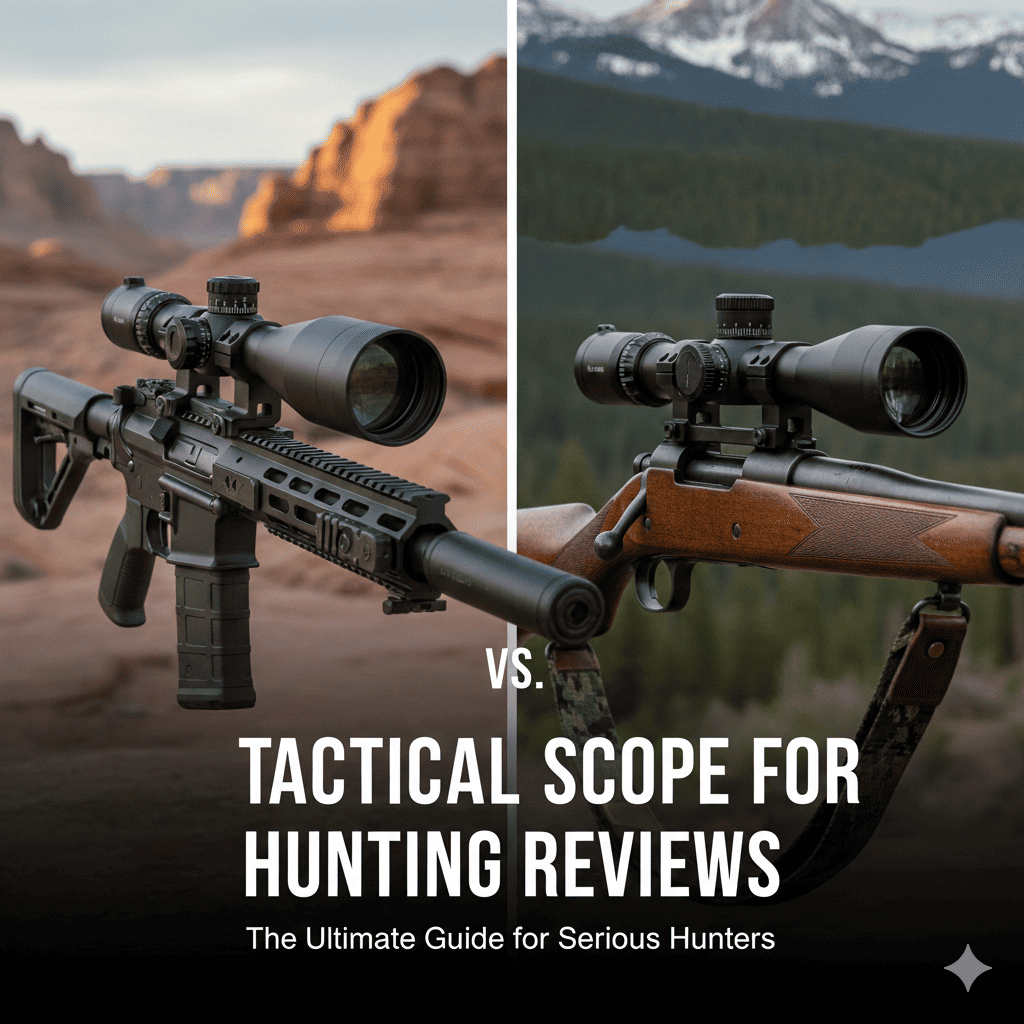
Traditional hunting scopes are usually built for simplicity and lightweight handling. They often feature basic magnification ranges, simple reticles, and capped adjustment turrets that are rarely changed once the rifle is zeroed. Tactical scopes, in contrast, are engineered for precision shooting and real-time adjustments. They commonly include exposed turrets for dialing elevation and windage, advanced reticle systems for distance estimation, and rugged construction that can withstand recoil, moisture, dust, and extreme temperatures.
Although tactical scopes originated in military and law-enforcement environments, modern hunters increasingly rely on them, particularly when shooting at medium to long distances. Their ability to provide repeatable accuracy and flexible adjustments makes them valuable in open landscapes, mountainous regions, and wide agricultural fields where game animals may appear hundreds of yards away.
The Importance of Magnification and Optical Clarity in Hunting Situations
Magnification is often the first specification hunters notice when reviewing tactical scopes, yet it is only one part of overall optical performance. A well-designed scope balances magnification with clarity, brightness, and field of view. Lower magnification ranges are extremely useful in dense woodland environments because they allow faster target acquisition and a broader visual perspective. When animals move quickly through brush or appear suddenly at close range, excessive magnification can actually slow reaction time and reduce awareness of surroundings.
Higher magnification becomes valuable in open terrain where long-distance shots are possible. In these environments, the ability to clearly distinguish fine details such as shoulder placement or antler position is critical for ethical harvesting. However, clarity depends heavily on lens quality and coatings, not just magnification numbers. Premium glass with advanced coatings transmits more light, reduces glare, and preserves image sharpness during early morning and late evening hours when animals are most active. This low-light performance often separates average scopes from truly reliable hunting optics.
Understanding Reticles and Their Role in Shot Placement
Reticles serve as the aiming reference inside the scope, but modern tactical reticles provide far more functionality than simple crosshairs. Many include measurement markings that help estimate distance, compensate for bullet drop, and correct for wind drift. These systems allow hunters to make precise adjustments without guessing or relying solely on turret dialing.
Illuminated reticles add another layer of usability, especially in dim lighting. A subtle glow behind the reticle can prevent it from blending into dark backgrounds such as tree lines or shaded valleys. The key is adjustable brightness, because illumination that is too strong can create glare and obscure the target. A well-balanced illuminated reticle improves confidence during the critical low-light windows when successful hunts often occur.
Turret Precision and Real-World Accuracy
One defining characteristic of a tactical scope is the presence of exposed adjustment turrets. These turrets allow hunters to dial exact elevation and windage corrections based on distance, ammunition type, and environmental conditions. For long-range shooting, this precision is essential. Even small inconsistencies in turret tracking can cause significant misses at extended distances.
High-quality tactical scopes are engineered so that each click of the turret corresponds precisely to a predictable shift in point of impact. Many also include zero-stop mechanisms that let the shooter instantly return to the original zero after making adjustments. This feature becomes particularly useful during hunts where distances change quickly and there is little time to re-confirm settings.
Durability and Weather Resistance in Harsh Hunting Environments
Hunting rarely takes place in comfortable or predictable conditions. Rain, fog, freezing temperatures, and rough terrain all place stress on optical equipment. Tactical scopes are built with durability in mind, often using aircraft-grade aluminum housings and sealed internal components. Nitrogen or argon purging prevents internal fogging, ensuring a clear sight picture even during sudden temperature changes.
Shock resistance is equally important because repeated recoil from powerful hunting calibers can damage poorly constructed optics. A dependable tactical scope maintains zero after transport, recoil, and environmental exposure, allowing hunters to trust their equipment when the moment of truth arrives.
Matching Tactical Scope Features to Different Hunting Styles
Not every hunter requires extreme magnification or complex reticle systems. Woodland hunters typically benefit from compact scopes with lower magnification ranges that prioritize speed and field of view. These optics allow quick alignment on moving animals and reduce the chance of losing sight of the target in dense vegetation.
Hunters operating in mixed terrain often prefer mid-range magnification scopes that provide flexibility for both moderate and somewhat longer distances. This balance makes them suitable for common game such as deer or wild hogs, where shot opportunities vary depending on landscape and movement patterns.
Long-range hunters, particularly those in mountainous or open prairie environments, depend heavily on high-magnification tactical scopes with advanced adjustment systems. Ethical long-distance shooting requires not only quality optics but also strong ballistic knowledge and consistent practice. When used responsibly, these scopes enable precise shot placement even at challenging ranges.
Price Considerations and Long-Term Value
Budget plays a major role in scope selection, yet the cheapest option is rarely the most economical in the long run. Entry-level tactical scopes may function adequately in daylight conditions but often struggle with clarity, durability, and adjustment consistency. Mid-range scopes typically provide the best balance between cost and performance, offering dependable glass quality and mechanical reliability suitable for most hunters.
Premium tactical optics command higher prices because of superior materials, precision engineering, and advanced lens technology. For serious hunters who spend significant time in the field or pursue long-range accuracy, the long-term reliability of a premium scope can justify the investment. A dependable optic may last for many years, often outliving the rifle it is mounted on.
Common Mistakes Hunters Should Avoid
Many hunters focus too heavily on maximum magnification while ignoring usability in real hunting scenarios. Excessive magnification can narrow the field of view and make it difficult to locate animals quickly. Others overlook the importance of mounting systems, even though unstable or low-quality mounts can cause shifting zero and poor accuracy.
Weight is another frequently ignored factor. A heavy scope may feel manageable during sight-in sessions but becomes burdensome during long hikes or extended hunts. Balance between performance and portability is essential for comfort and endurance in the field.
Proper Care and Maintenance for Tactical Scopes
Maintaining a tactical scope is relatively simple but extremely important. Lenses should be cleaned gently with appropriate microfiber materials to prevent scratches. Protective covers help shield the glass from dust and moisture during transport. Hunters should also confirm zero periodically, especially after long travel or repeated recoil exposure.
Storing the rifle and optic in a dry, stable environment further protects internal components and ensures consistent performance season after season. With proper care, a quality tactical scope can remain reliable for many years of hunting use.
Final Thoughts on Choosing the Best Tactical Scope for Hunting
A tactical scope is more than an accessory; it is a critical tool that directly influences accuracy, confidence, and ethical shot placement. The ideal choice depends on hunting terrain, expected shooting distance, lighting conditions, and personal shooting style rather than simple specifications alone. Clear optics, reliable adjustments, rugged construction, and practical magnification should guide the decision-making process.
Hunters who invest time in understanding these elements are far more likely to select a scope that truly enhances their performance in the field. With the right tactical optic in place, every shot becomes more controlled, every target more visible, and every hunting experience more successful and responsible.