The History of Guns in America: Timeline, Technology, Laws, and Safety
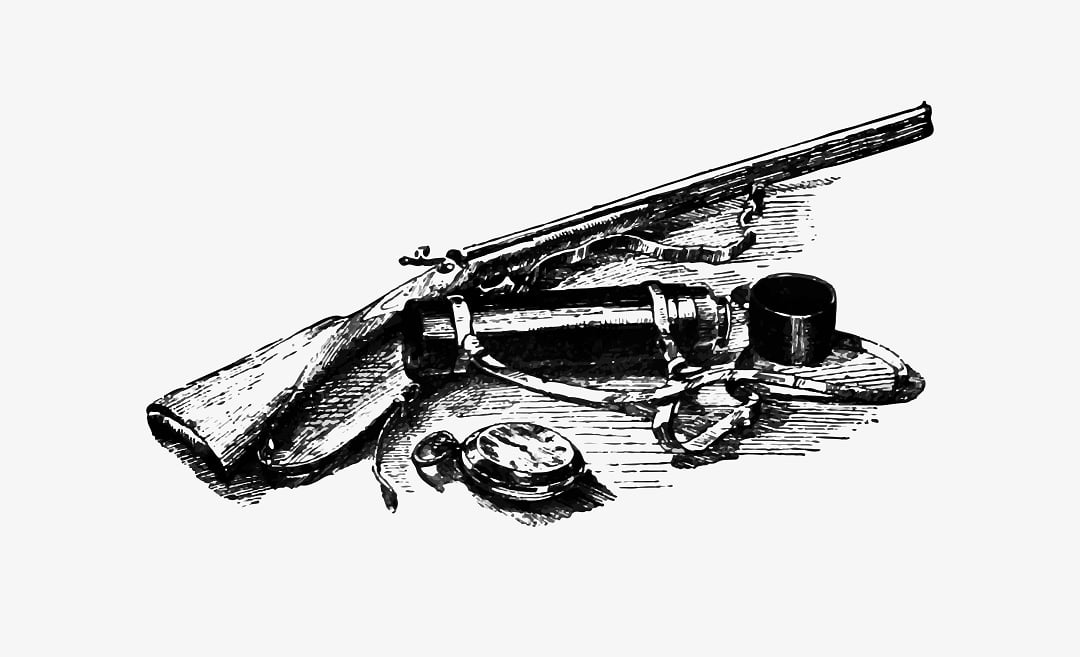
The history of guns in America is not one simple story. Firearms have been tied to hunting, frontier survival, military service, manufacturing, sport shooting, law enforcement, self-defense, collecting, and political debate. To understand that history clearly, it helps to separate technology, law, culture, and responsible use instead of treating every era as the same argument.
This overview walks through the major periods: colonial firearms, the American Revolution, early federal armories, westward expansion, the Civil War, industrial mass production, the 20th century, modern sporting arms, and today’s safety and legal landscape. It is written as a historical guide, not legal advice and not a political position.
Table of contents
History of Guns in America: Quick Timeline
American firearm history moved from hand-built flintlocks to standardized military arms, then to lever actions, revolvers, bolt actions, semi-automatic designs, and modern modular platforms. Each step changed how firearms were made, carried, regulated, and used.
| Period | What changed | Why it mattered |
|---|---|---|
| 1600s to mid-1700s | Colonial muskets, fowling pieces, and long rifles | Firearms supported hunting, defense, militia duty, and trade |
| 1770s to 1780s | Revolutionary War arms and militia use | Firearms became part of independence-era military history |
| 1790s to mid-1800s | Federal armories and interchangeable-parts experiments | Gunmaking helped shape American manufacturing |
| 1800s | Percussion ignition, revolvers, lever actions, and rifled muskets | Firearms became faster, more reliable, and more standardized |
| 1900s | Bolt actions, semi-automatic pistols, shotguns, and sporting rifles | Military, hunting, sport, and civilian markets all expanded |
| 2000s | Modern sporting rifles, optics, safety training, and complex laws | Ownership became more diverse, regulated, and equipment-specific |
The Main Theme
The main theme is change. Firearms changed from handmade tools into industrial products, then into specialized equipment for hunting, sport shooting, defense, collecting, and law enforcement. At the same time, laws and safety expectations became more detailed.
Colonial-Era Firearms
Early European colonists brought firearms to North America for hunting, defense, trade, and militia service. The most common long guns were smoothbore muskets and fowling pieces. Rifles also appeared, especially long rifles associated with Pennsylvania and other frontier gunmaking traditions. These arms were slower to load than later firearms, but they were important tools in daily life and local defense.
Colonial gun ownership was not uniform. A farmer, trapper, militia member, merchant, enslaver, Indigenous trader, and town resident could all encounter firearms in different ways. That is why a serious history should avoid saying guns had only one role. They were practical tools, trade goods, military equipment, symbols of authority, and sources of conflict.
Muskets, Fowling Pieces, and Long Rifles
A smoothbore musket was useful for military volley fire and could be loaded with round ball or shot. A fowling piece was often used for birds and small game. A long rifle could offer better accuracy at distance but was slower to reload. Those differences still echo in modern firearm choices: the right tool depends on the job.
Guns and the American Revolution
Firearms were central to the American Revolution, but the war was not won by one famous gun alone. Militia and Continental Army forces used a mix of privately owned arms, imported arms, captured arms, and military muskets. British forces commonly used Brown Bess pattern muskets, while American forces used a wide mix of muskets and rifles depending on supply and unit role.
Rifles had advantages for aimed fire, but muskets were faster to load and better suited to mass infantry tactics of the period. The lesson is that military usefulness depends on tactics, training, supply, and terrain, not just mechanical accuracy.
The Second Amendment Context
The Bill of Rights was ratified after independence, and the Second Amendment became part of the constitutional framework around arms and militia language. For historical context, the National Archives Bill of Rights transcript is the best place to read the amendment itself instead of relying on paraphrases. The National Constitution Center Second Amendment page is also useful for a neutral text-and-context starting point.
Federal Armories and American Manufacturing
One of the most important parts of American firearm history is manufacturing. The federal armory system helped push standardization, machine work, inspection, and parts consistency. The Springfield Armory in Massachusetts became especially important as a center of military arms production and manufacturing development.
The National Park Service preserves Springfield Armory National Historic Site and describes its role in U.S. military firearm production and industrial history. That matters because firearm history is also labor history, factory history, engineering history, and supply-chain history. Firearms did not just influence wars and hunting; they also influenced how American factories learned to make complex products at scale.
Why Interchangeable Parts Mattered
Interchangeable parts were important because they made repair, inspection, and mass production easier. Firearms were among the products that pushed American manufacturing toward repeatable gauges, machine tools, and repeatable parts. That same industrial mindset later influenced many non-firearm industries.
Frontier, Hunting, and Westward Expansion
Firearms were part of frontier life, but the “Wild West” version is often simplified by movies and television. Guns were used for hunting, ranch work, military campaigns, law enforcement, personal defense, sport, and crime. Revolvers and lever-action rifles became iconic because they were practical repeaters in an era when faster follow-up shots were a major advantage.
That period also included violence, displacement, broken treaties, and conflict with Native nations. A responsible history should not treat firearms only as adventure props. They were part of settlement, survival, policing, warfare, and expansion, with very different consequences depending on who held power and who was being pushed aside.
Hunting Culture Became More Specialized
As markets, conservation laws, and hunting seasons developed, hunting firearms also became more specialized. Modern hunters choose rifles, shotguns, muzzleloaders, or handguns based on species, season, state law, terrain, and ethical shot distance. Our guide to ethical hunting practices explains why legal equipment is only the first step.
Civil War Firearms and Industrial Change
The Civil War accelerated firearm production and highlighted the importance of rifled barrels, percussion ignition, and industrial supply. Rifled muskets increased effective range compared with earlier smoothbore muskets, while revolvers, carbines, and early repeaters showed where firearm technology was heading.
Supply mattered as much as invention. Armories, private contractors, railroads, ammunition production, and repair systems all shaped battlefield reality. A firearm that could not be produced, supplied, and maintained at scale was less useful than a simpler arm that could be issued widely.
From Handmade Craft to Industrial Systems
By the late 1800s, American firearm production had moved far beyond the local gunsmith model. Skilled gunmakers still mattered, but factories, standardized models, catalog sales, and national brands became much more important. That shift set the stage for the modern firearm industry.
Guns in the 20th Century
The 20th century brought bolt-action sporting rifles, pump and semi-automatic shotguns, semi-automatic pistols, military surplus firearms, rimfire training rifles, target rifles, and later modular sporting platforms. Firearms became tied to hunting seasons, shooting competitions, military service, police work, self-defense, collecting, and recreation.
Technology also changed the supporting equipment. Scopes improved. Ammunition became more consistent. Hearing protection, eye protection, safes, locks, and formal training became more common parts of responsible ownership. If you want a practical modern angle, start with our shooting range safety rules guide before focusing on equipment.
Sporting Use and Collecting
Not every firearm story is about war or politics. Many firearms are collected for mechanical design, historical association, craftsmanship, or family history. Others are used in trap, skeet, sporting clays, smallbore competition, high-power rifle, cowboy action shooting, hunting, and informal range practice.
Modern Firearms, Laws, and Safety Culture
Modern American firearm ownership is shaped by federal law, state law, local rules, training, storage practices, sporting use, hunting regulations, and personal responsibility. A rifle or handgun may be legal in one state and heavily restricted in another. Hunting rules can differ by species, season, county, public land unit, and firearm type.
For neutral historical research, useful outside starting points include the Springfield Armory National Historic Site, the Smithsonian National Museum of American History collections, the Library of Congress, and the National Archives. For safety-first ownership, review resources such as Project ChildSafe’s gun safety guidance and formal hunter education materials.
A Responsible Modern Lens
The best modern lens is simple: know the law, store firearms securely, train before use, use the right equipment for the task, and treat history with care. Firearms have shaped America, but that history includes invention, recreation, defense, tragedy, industry, conservation, law, and debate. A serious reader should be willing to hold more than one truth at once.
FAQ
When did guns first appear in America?
European colonists brought firearms to North America in the early colonial period. Indigenous peoples also encountered firearms through trade, diplomacy, warfare, and colonial expansion, with effects that varied by region and era.
What guns were used in the American Revolution?
Revolutionary War forces used a mix of muskets, rifles, imported arms, captured arms, and privately owned firearms. Smoothbore muskets were common, while rifles were useful in specific roles where aimed fire mattered.
Why was Springfield Armory important?
Springfield Armory was important because it became a major federal center for military firearm production and manufacturing development. Its history connects firearms with American industrialization, repeatable production, and military supply.
Did the Wild West really revolve around gunfights?
No. Gunfights existed, but popular culture exaggerates them. Firearms were also tools for hunting, ranch work, law enforcement, military campaigns, and personal defense. The real history is broader and more complicated than movie scenes.
How did guns affect American manufacturing?
Firearm production helped advance standardization, machine tools, inspection systems, and interchangeable parts. Those manufacturing lessons influenced broader American industry.
Is firearm history the same as gun politics?
No. Firearm history includes politics, but it also includes technology, hunting, sport, military service, manufacturing, law, safety, collecting, and culture. A useful history separates those threads instead of flattening everything into one debate.
Final Thoughts
The history of guns in America is layered. Firearms helped shape wars, hunting traditions, factories, sport shooting, public safety debates, and constitutional law. They also carry responsibility. The most useful way to study the subject is with good sources, careful language, and a willingness to separate fact from myth. That makes the history more accurate and the modern conversation more honest.