High-Tech Hunting Gear: Useful Tools, Legal Checks, and Fair-Chase Limits
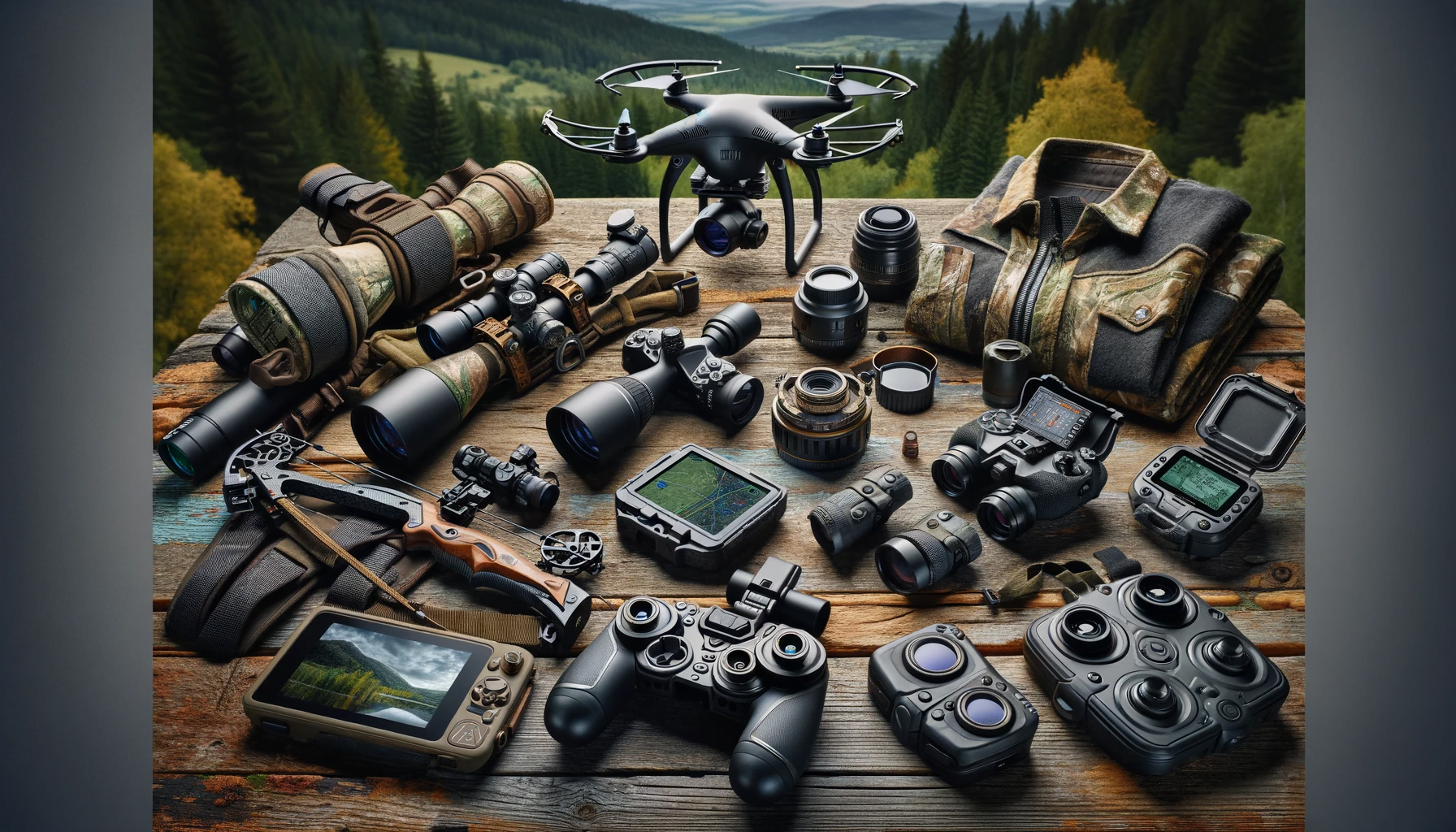
High-tech hunting gear can help with navigation, safety, communication, weather awareness, and range confirmation, but it does not replace fieldcraft or current hunting regulations. Before buying or carrying electronics into the field, check your state rules, land rules, battery plan, privacy issues, and fair-chase limits.
Table of contents
Quick Answer: Which High-Tech Hunting Gear Is Worth Considering?
The most useful high-tech hunting gear usually supports safety and decision-making: GPS or mapping tools, a charged phone, satellite messenger where cell service is poor, quality optics, a legal rangefinder, headlamp, weather app, and backup power. More controversial tools, such as drones, live-cell trail cameras, thermal devices, and electronic calls, must be checked against current hunting rules before use.
Best starting point
Start with safety gear before advanced gadgets. A simple navigation plan, communication plan, light source, and weather plan often matter more than expensive electronics.
What to avoid
Avoid any tool that violates state law, public-land rules, weapon-season rules, fair-chase standards, or privacy expectations. If you are unsure, ask the wildlife agency before the hunt.
Check Legal and Fair-Chase Rules First
Technology rules vary by state, species, season, weapon, and land type. A device that is legal for scouting may be illegal during a hunt, near a hunt, or for recovering game.
Read current regulations
Do not rely on old forum advice or generic AI answers for hunting regulations. Use your state wildlife agency’s current rulebook for drones, electronic calls, night vision, thermal optics, trail cameras, baiting, rangefinders, and motorized access.
Keep fair chase in mind
The Boone and Crockett Club fair chase statement is a useful ethics reference. Legal does not always mean wise, and technology should not remove the animal’s reasonable chance to avoid the hunter.
Use hunter education as the baseline
Technology should sit on top of basic hunter education, not replace it. The International Hunter Education Association is a good starting point for safety and education resources.
Separate safety tools from hunting aids
A satellite messenger for emergency contact is different from using real-time electronics to locate or pressure game. Think about what the tool does, when it is used, and whether it affects the chase.
Navigation and Communication Gear
Navigation and communication technology can be the most defensible upgrade because it helps prevent lost-hunter situations and improves group coordination.
GPS and offline maps
Offline maps help when cell service drops. Mark truck location, access points, boundaries, trails, water, steep terrain, and recovery routes before the hunt.
Satellite messengers
A satellite messenger can be valuable for remote hunts where cell service is unreliable. Learn the SOS process before the trip and keep emergency contacts updated.
Two-way radios
Radios can help groups coordinate safely, but they may be regulated on some hunts or lands. Check whether communication rules limit how radios can be used while actively hunting.
Optics, Rangefinders, and Low-Light Tools
Optics and rangefinders can improve identification and distance judgment, but they must be used within the legal shooting period and weapon rules.
Rangefinders
A rangefinder helps confirm distance before a shot. It does not fix poor shot angle, unstable position, bad wind, or lack of practice.
Binoculars and spotting scopes
Good glass helps identify animals without pointing a weapon at them. That is both safer and more professional in the field.
Night vision and thermal devices
Night vision and thermal tools are heavily regulated in many hunting contexts. They may be legal for scouting, predator control, or certain species in one place and illegal for big game in another.
Trail Cameras and Scouting Tech
Trail cameras can help with patterning wildlife and understanding property use, but rules are changing in some places, especially for real-time cellular cameras.
Cell cameras
Cellular trail cameras send real-time or near-real-time information. Some states restrict or ban real-time use for taking game. Check rules before relying on them.
Privacy and access
Do not place cameras where they invade privacy, violate property rules, or interfere with other hunters. Public land can have additional restrictions.
Use cameras as learning tools
Use cameras to learn travel patterns, timing, and habitat use. Avoid using them as a shortcut that replaces scouting, wind planning, or ethical shot selection.
Drones, E-Bikes, and Other Restricted Tech
Drones and motorized access tools are high-risk from a legal and ethical standpoint. They need extra caution.
Drones
The FAA has rules for drone operation, and wildlife agencies may have separate rules for hunting-related use. Start with the FAA’s recreational drone guidance, then check state hunting rules before any scouting or recovery use.
E-bikes and motorized access
E-bike rules vary by public land, trail, and agency. A bike that is legal on one route may be illegal on another. Check land-manager rules before using one to access a hunting area.
Electronic calls and decoys
Electronic calls may be legal for some species and illegal for others. Confirm species-specific rules before carrying one into the field.
Power, Weather, and Backup Planning
Technology fails when batteries die, screens crack, maps do not load, or weather turns. Plan for failure before you need the device.
Battery management
Carry a power bank, spare batteries, and charging cables for critical devices. Keep batteries warm in cold weather and test everything before leaving home.
Weather awareness
Weather apps can help, but they should not replace common sense. Watch wind, temperature, storms, creek crossings, snow, and daylight.
Analog backup
Carry a compass, paper map where practical, written contact plan, and a simple route note. If electronics fail, you still need a way out.
Keep firearm safety separate from device trust
Electronics can give distance, weather, or mapping data, but they do not change firearm safety basics. The NSSF safety resources are a useful reminder to keep safe handling habits in place.
Buying Checklist
Before spending money, sort gear by actual need, rule risk, and reliability.
Ask what problem it solves
If a device does not improve safety, navigation, identification, legal compliance, or repeatable practice, it may not deserve space in your pack.
Check water and impact resistance
Hunting gear gets wet, cold, dusty, and bumped. Look for realistic field durability, not just a feature list.
Practice before the season
Do not learn a new app, optic, rangefinder, radio, or satellite messenger during the hunt. Practice at home and on low-stakes scouting trips.
When to Skip the Tech
Skip a device when it adds confusion, drains attention, creates legal uncertainty, or makes you less aware of the wind, terrain, and animal behavior in front of you. Good hunting gear should simplify decisions, not turn the hunt into screen management.
Skip it if you cannot explain the rule
If you cannot clearly explain why a device is legal for your exact hunt, do not use it until you verify the rule with the wildlife agency or land manager.
Skip it if it breaks your process
If a gadget makes you rush shots, ignore sign, overtrust data, or push into unsafe terrain, leave it at home and return to basic field skills.
Related Guides
For optics decisions, read our rangefinding optics guide. For safety planning, see first-time hunting guide. For practical field habits, review hunting techniques.
FAQ
Is high-tech hunting gear necessary?
No. Some technology can help with safety and planning, but woodsmanship, legal knowledge, practice, and judgment still matter more.
Can I use a drone for hunting?
Maybe not. Drone hunting rules vary by state and use case, and FAA rules also apply. Check both aviation rules and hunting regulations before flying.
Are thermal optics legal for hunting?
It depends on species, state, season, and land type. Thermal gear may be allowed for some predator or invasive species hunts and prohibited for others.
Do cell trail cameras violate fair chase?
They can, depending on how and when they are used. Some states restrict real-time camera use for hunting. Check rules and consider the ethics, not just convenience.
What should I buy first?
Start with safety and navigation: a reliable light, offline map, communication method, weather plan, and backup power. Then consider optics and species-specific gear.