Compound Bow Mistakes Beginners Make (And How to Avoid Them)
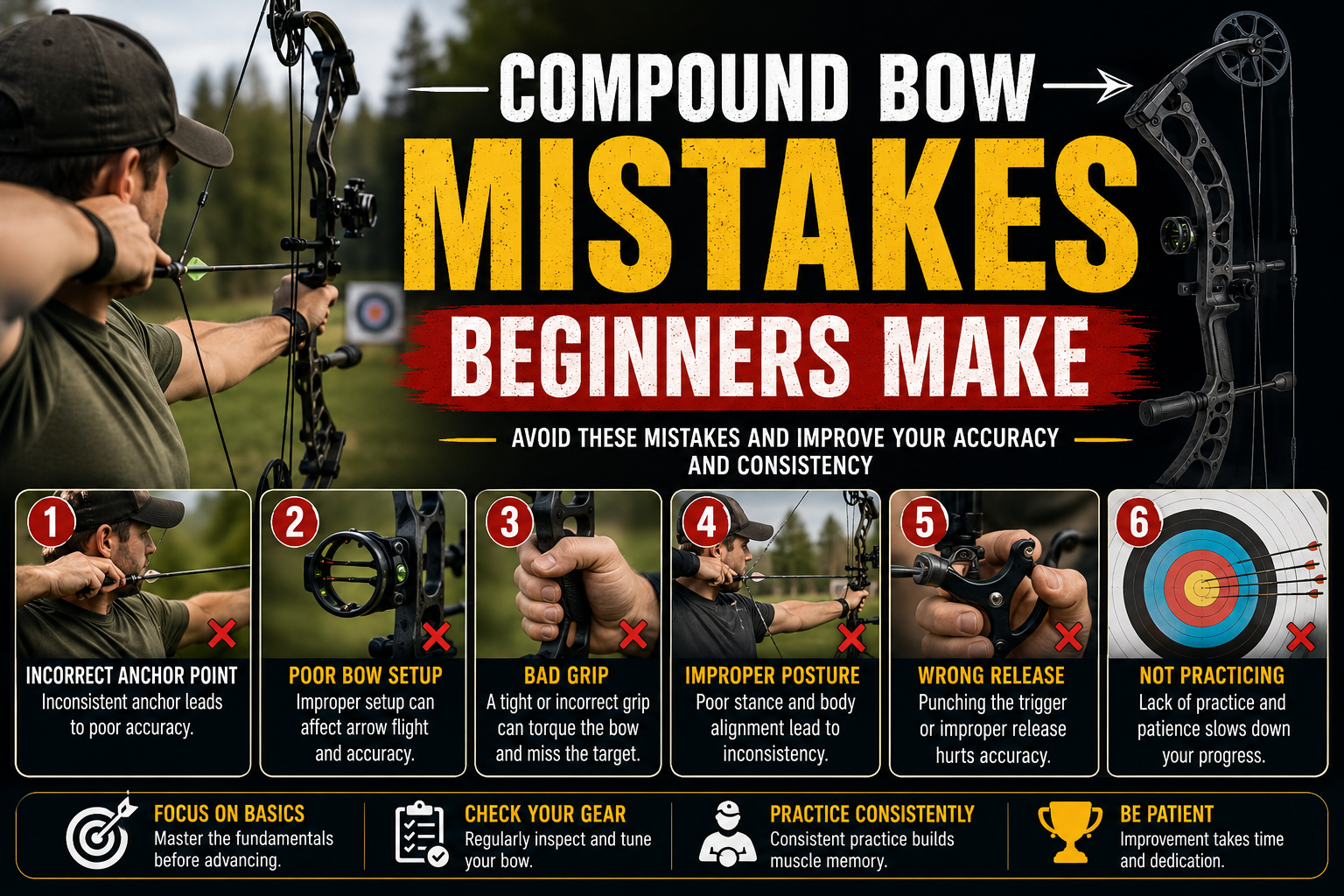
Getting started with a compound bow can be exciting. Compound bows offer impressive accuracy, speed, and power, making them popular among hunters and target archers alike. However, many beginners unknowingly develop bad habits or make mistakes that can slow their progress, reduce accuracy, and even create safety risks.
The good news is that most beginner mistakes are easy to fix once you understand what they are. Learning proper technique from the beginning will help you shoot more accurately, build confidence faster, and enjoy archery much more.
In this guide, we’ll cover the most common compound bow mistakes beginners make and explain how to avoid them.
Table of Contents
- 1. Choosing the Wrong Draw Weight
- 2. Incorrect Draw Length Setup
- 3. Gripping the Bow Too Tightly
- 4. Ignoring Proper Shooting Form
- 5. Inconsistent Anchor Point
- 6. Punching the Trigger
- 7. Neglecting Bow Maintenance
- 8. Using the Wrong Arrows
- 9. Skipping Practice at Short Distances
- 10. Ignoring Follow-Through
- 11. Not Using a Peep Sight Correctly
- 12. Practicing Without a Purpose
- 13. Comparing Yourself to Experienced Archers
- 14. Overlooking Safety Rules
- 15. Buying Too Many Accessories Too Soon
- Final Thoughts
1. Choosing the Wrong Draw Weight
One of the biggest mistakes new archers make is selecting a bow with too much draw weight.
Many beginners assume that higher draw weight means better performance. While heavier draw weights can generate more arrow speed and kinetic energy, they also require more strength and proper form to handle effectively.
Problems Caused by Excessive Draw Weight
- Poor shooting form
- Difficulty reaching full draw
- Increased fatigue
- Inconsistent anchor points
- Reduced accuracy
- Higher risk of injury
How to Avoid It
Start with a comfortable draw weight that allows you to draw the bow smoothly and hold it at full draw without shaking. Most beginners can benefit from adjustable compound bows that allow gradual increases as strength and technique improve.
Remember: Accuracy is far more important than raw power.
2. Incorrect Draw Length Setup
Even the best compound bow won’t perform properly if the draw length is incorrect.
Draw length refers to the distance from the bow grip to the string at full draw. Many beginners shoot with a draw length that is either too long or too short.
Signs Your Draw Length Is Too Long
- Overextended bow arm
- Leaning backward at full draw
- Difficulty maintaining anchor point
- String contact with face is inconsistent
Signs Your Draw Length Is Too Short
- Compressed shooting posture
- Lack of stability
- Reduced power and efficiency
How to Avoid It
Visit a professional archery shop or use proper measurements to determine your ideal draw length. A correctly fitted bow improves comfort, consistency, and accuracy.
3. Gripping the Bow Too Tightly
Many beginners instinctively squeeze the bow grip during the shot.
This is known as “death gripping” the bow and is one of the most common causes of inconsistent arrow placement.
Why It Hurts Accuracy
A tight grip introduces torque into the bow, causing arrows to drift left or right.
Proper Bow Grip
- Keep your hand relaxed
- Let the bow rest naturally in the web between your thumb and index finger
- Avoid squeezing during the shot
- Use a wrist sling if needed
A relaxed grip promotes consistent arrow flight and tighter groupings.
4. Ignoring Proper Shooting Form
New archers often focus entirely on hitting the target while neglecting form.
Good shooting form creates repeatability, which is essential for accuracy.
Key Elements of Proper Form
- Balanced stance
- Relaxed shoulders
- Straight bow arm
- Consistent anchor point
- Controlled release
- Proper follow-through
How to Improve
Practice form before worrying about distance or scoring. Many experienced archers spend years refining their shooting mechanics.
5. Inconsistent Anchor Point
Your anchor point is the position where your release hand consistently touches your face at full draw.
Beginners frequently anchor in different locations from shot to shot.
Why It Matters
Even small anchor point changes can dramatically affect arrow impact.
Common Anchor References
- Corner of the mouth
- Jawbone
- Nose touching the string
- Peep sight alignment
Solution
Develop a repeatable anchor point and use the same facial references every time you shoot.
6. Punching the Trigger
Target panic often begins when beginners start punching the release trigger instead of executing a controlled shot.
What Happens
Instead of allowing the release to activate smoothly, the archer anticipates the shot and jerks the trigger.
This often results in:
- Flinching
- Inconsistent accuracy
- Poor shot execution
Better Approach
Use steady back tension and apply gradual pressure to the release trigger until the shot breaks naturally.
A surprise release generally produces more accurate results.
7. Neglecting Bow Maintenance
Many beginners assume compound bows require little maintenance.
While modern bows are durable, they still need regular inspection.
Important Maintenance Tasks
- Check strings and cables
- Inspect screws and accessories
- Examine cams for wear
- Wax bowstrings regularly
- Replace worn components when needed
Benefits
Proper maintenance improves performance, reliability, and safety.
8. Using the Wrong Arrows
Not all arrows are compatible with every compound bow.
Using improperly matched arrows can negatively affect accuracy and safety.
Common Arrow Mistakes
- Wrong spine rating
- Incorrect arrow length
- Improper arrow weight
- Poor broadhead compatibility
Solution
Match arrow specifications to your bow’s draw weight, draw length, and intended use.
Consult arrow manufacturer charts when selecting arrows.
9. Skipping Practice at Short Distances
Many beginners immediately start shooting at long ranges.
This often creates frustration because form issues become more noticeable as distance increases.
Better Strategy
Start at:
- 10 yards
- 15 yards
- 20 yards
Focus on building consistent groups before increasing distance.
Mastering fundamentals at close range accelerates long-term improvement.
10. Ignoring Follow-Through
Some archers think the shot ends when the arrow leaves the bow.
In reality, follow-through remains an important part of the shooting process.
Common Mistakes
- Dropping the bow immediately
- Moving the head after release
- Looking up too quickly
Proper Follow-Through
Maintain your stance and sight picture until the arrow reaches the target.
This promotes consistency and better shot execution.
11. Not Using a Peep Sight Correctly
A peep sight helps create consistent alignment between your eye and bow sight.
Beginners often fail to center the sight housing within the peep properly.
Consequences
- Inconsistent aiming
- Reduced accuracy
- Poor grouping
Solution
Ensure your peep sight aligns naturally when you reach your anchor point.
Every shot should present the same sight picture.
12. Practicing Without a Purpose
Simply shooting hundreds of arrows doesn’t guarantee improvement.
Many beginners spend practice sessions repeating the same mistakes.
Effective Practice Goals
Focus on one skill at a time:
- Grip
- Anchor point
- Release execution
- Sight alignment
- Follow-through
Purpose-driven practice produces faster improvement than mindless repetition.
13. Comparing Yourself to Experienced Archers
Social media and professional archery videos can create unrealistic expectations.
Many beginners become discouraged when they don’t achieve immediate success.
Reality Check
Even elite archers spent years developing their skills.
Improvement in archery is gradual and cumulative.
Better Mindset
Compare yourself to your previous performance rather than other archers.
Celebrate small improvements and remain patient.
14. Overlooking Safety Rules
Safety should always be the top priority in archery.
Common Safety Mistakes
- Dry firing a bow
- Shooting damaged arrows
- Standing in unsafe areas
- Failing to inspect equipment
Essential Safety Habits
- Always point the bow in a safe direction
- Never dry fire
- Inspect equipment before shooting
- Use proper backstops
- Follow range rules
A safe archer becomes a better archer.
15. Buying Too Many Accessories Too Soon
New archers often believe expensive accessories will instantly improve performance.
While quality equipment matters, skill development matters more.
Common Beginner Purchases
- Premium sights
- Stabilizers
- Advanced releases
- Specialized optics
Better Approach
Master the basics first.
Upgrade equipment gradually as your experience grows and your needs become clearer.
Final Thoughts
Every archer starts as a beginner, and mistakes are a natural part of the learning process. The key is recognizing these common compound bow mistakes early and correcting them before they become habits.
Focus on proper form, use equipment that fits you correctly, practice consistently, and prioritize safety. By avoiding these common beginner errors, you’ll develop better shooting skills, enjoy archery more, and progress much faster.
Remember, success with a compound bow isn’t about shooting the most powerful setup or buying the most expensive gear. It’s about building solid fundamentals that create consistent and accurate shots every time you step onto the range or head into the field.