5 Best Thermal Binoculars
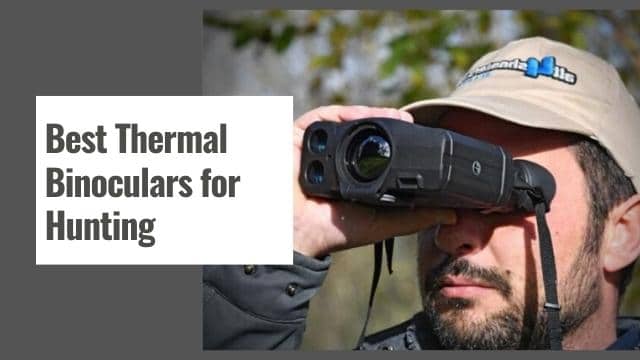
Thermal binoculars let you spot heat signatures through darkness, brush, and fog in ways ordinary optics simply cannot. Instead of one eye squinting through a monocular, you get a natural two-eye view that is easier on the eyes during long scanning sessions on a field edge, a property line, or a ridge at last light.
We looked at the thermal binoculars currently sold openly to general consumers on Amazon, checked real sensor specs, magnification ranges, rangefinder accuracy, and battery life against manufacturer data, and confirmed each listing was in stock with a working product page before adding it here. A few well known thermal binocular lines carry an ITAR export-control notice that requires the buyer to certify U.S. person status before checkout. We left those out of this guide and focused on models that are available as a straightforward Amazon purchase.
This is a genuinely specialized, higher-cost category. Even the entry point here is a serious investment, and the top picks move into professional territory. Read the buying guide section before you commit so the sensor resolution, detection range, and battery life you pick actually match how you plan to use the device.
Table of contents
Quick Picks Table
| Model | Thermal sensor | Best for | Link |
|---|---|---|---|
| AGM ObservIR LRF 25-256 | 256×192, 12um | Entry point into true dual-spectrum thermal | Check price |
| ATN Binox 6 Dual (256×192) | 256×192, 12um | One device that covers day, night, thermal, and twilight | Check price |
| AGM Voyage Fusion 50-384 | 384×288, 12um | Longer detection range with fusion imaging | Check price |
| Pulsar Merger LRF XT50 | 1280×1024, 12um | Top-tier pure thermal image quality and field of view | Check price |
| Pulsar Merger Duo NXP50 | 640×480, 17um | Dual thermal and digital night vision in one body | Check price |
How We Chose
We started from the full current lineup of thermal binoculars sold on Amazon.com and narrowed it down using a few hard filters. First, the listing had to be a true binocular form factor with two eyepieces, not a monocular or a riflescope, and not a plain digital night vision device with no thermal sensor at all. Second, the listing had to show current in-stock availability with a working Buy Now or Add to Cart flow for a general U.S. consumer, no special dealer account or law enforcement only gating.
Third, we excluded any model whose Amazon listing carried an ITAR export-control disclaimer requiring the buyer to certify U.S. person status before purchase. Several older thermal binocular lines still carry that notice, and while the listings technically allow checkout, we felt a buying guide should stick to models sold under the more standard EAR export notice that most consumer thermal optics use, which only restricts shipping the unit outside the country after purchase.
Finally, we cross-checked sensor resolution, detection range, magnification, and battery life against the manufacturer specification tables shown on each product page rather than relying on marketing taglines alone. That is why you will see specific numbers for each pick below instead of vague claims.
1. AGM Global Vision ObservIR LRF 25-256
Best for: Buyers who want their first genuine dual-spectrum thermal binocular without stepping straight into the top price tier.
Key specs (from AGM Global Vision product listing): 256×192 resolution 12um VOx uncooled thermal sensor, F/1.0 25mm thermal lens, 3840×2160 CMOS digital day/night channel, built-in 1,000m laser rangefinder, 1,200m heat detection range, 1920×1080 OLED display, GPS and digital compass, up to 8 hours of continuous battery life.
Pros
- Switches between a true thermal channel and a sharp 4K digital day channel on the same device
- Built-in laser rangefinder is accurate to a useful working distance for field estimation
- OLED display stays readable in low light without washing out
- Sold and shipped by an authorized AGM dealer with a standard 30-day return window
Cons
- 256×192 sensor resolution is the entry tier of the ObservIR line, so fine detail at extended range is limited compared with the 384×288 and 640×512 versions
- Some cold-weather users report the lens fogging and slower mode switching in freezing conditions
- Still a serious purchase even at the lower end of this lineup
Skip this if: You need long identification range past a few hundred meters, or you plan to use the unit primarily in sub-freezing conditions where a higher sensitivity sensor performs more consistently.
2. ATN Binox 6 Dual Multispectral Binoculars (256×192 sensor)
Best for: Hunters and property owners who want one binocular that covers day, night, thermal, and twilight modes without carrying separate devices.
Key specs (from ATN product listing): 256×192 12um VOx thermal sensor with 20mK NETD, 4K UHD day/night CMOS sensor, four integrated viewing modes, built-in 1,000 yard laser rangefinder with plus or minus 1m accuracy, SharpIR AI image enhancement, six thermal color palettes, 64GB onboard storage, WiFi streaming to the Connect 6 app.
Pros
- Dual View mode overlays the thermal and daylight image together instead of forcing you to switch back and forth
- Hot Point Tracking automatically flags the warmest object in the field of view
- Sold and fulfilled directly by Amazon, which simplifies returns
- Lightweight magnesium body holds up well for long observation sessions
Cons
- The 256×192 sensor is the base tier in the Binox 6 Dual family; the 384×288 and 640×512 versions cost meaningfully more for better detail at range
- Menu system takes a learning curve given how many modes are packed into one device
- Rechargeable 18650 batteries need to be managed and swapped for long field days
Skip this if: You only need pure thermal performance and will not use the day, night, or twilight modes, since a dedicated thermal-only binocular gives you more sensor budget for the money.
3. AGM Global Vision Voyage Fusion 50-384
Best for: Users who need longer detection range and navigation tools built into the same unit for property monitoring or backcountry use.
Key specs (from AGM Global Vision product listing): 384×288 12um thermal detector with sub-20mK sensitivity, 2560×1440 CMOS digital day/night sensor, fusion imaging mode, 1,000m laser rangefinder, up to 2,600m detection range on a 6 foot object, built-in GPS and digital compass, 64GB storage with WiFi hotspot, IP67 waterproofing, up to 8 hours of battery life.
Pros
- Fusion mode blends thermal and digital data instead of forcing a single channel choice
- Detection range and sensor sensitivity are a clear step up from entry-level dual-spectrum models
- GPS and compass are genuinely useful for marking locations on large properties
- Sold by an authorized AGM dealer with a standard return window
Cons
- A meaningful price jump from the entry-level picks in this guide
- At 2.5 pounds it is noticeably heavier than compact monoculars, which matters on long carries
- The larger 75-640 sensor variant costs nearly double this model, so buyers need to decide up front how much sensor they actually need
Skip this if: Your budget is closer to entry level, or you do not need the GPS, compass, and extended detection range this tier adds over the base ObservIR model.
4. Pulsar Merger LRF XT50
Best for: Serious users who want the sharpest pure-thermal image quality in binocular form and are willing to pay for it.
Key specs (from Pulsar product listing): 1280×1024 12um HD thermal sensor, F50/1.0 lens, 2 to 16x magnification, 17.5 degree field of view, laser rangefinder accurate to 1,640 yards, up to 2,500 yard detection range, digital image stabilization, eight color palettes, 64GB onboard recording, IPX7 waterproof rating, Stream Vision 2 app support.
Pros
- Sensor resolution and field of view are noticeably ahead of the entry and mid-tier picks in this guide
- Image stabilization keeps the picture steady at higher zoom, which matters at long range
- Wide 17.5 degree field of view makes scanning large areas easier
- Reviewers consistently point to this as one of the sharpest thermal images available in binocular form
Cons
- This is a premium purchase, and the price puts it out of reach for casual buyers
- Carries a standard export control notice restricting the unit from being shipped outside the United States after purchase
- At roughly 2 pounds with batteries, it is heavier than compact monoculars over long carries
- Some users report the automatic non-uniformity correction cycle briefly freezes the image every so often
Skip this if: You need a digital day/night channel in addition to thermal, since this model is pure thermal only. The Merger Duo below or the AGM and ATN dual-spectrum picks above cover that need instead.
5. Pulsar Merger Duo NXP50
Best for: Buyers who want thermal detection and a separate digital night vision channel in one classic binocular body, without needing a built-in rangefinder.
Key specs (from Pulsar product listing): 640×480 17um thermal microbolometer sensor with sub-25mK NETD, F50/1.0 germanium thermal lens, 1920×1200 digital night channel resolution, Picture-in-Picture combined viewing mode, detection range over 1,900 yards, two independent battery packs for up to 7 hours of runtime, HD AMOLED display, Stream Vision 2 app support, IPX7 waterproof rating.
Pros
- Genuinely separate thermal and digital night vision channels rather than a single blended sensor
- Picture-in-Picture mode lets you keep the thermal view active while checking the digital channel for detail
- Classic binocular exterior design feels closer to a familiar pair of glass binoculars than some of the more angular competitors
- Dual battery design means you can hot swap one pack without powering the unit down
Cons
- No built-in laser rangefinder, unlike the Merger LRF XT50 above
- One of the more expensive picks in this guide
- Carries the same standard export control notice as other Pulsar thermal products, restricting shipment outside the United States
Skip this if: A built-in rangefinder is a must-have feature for your use case, since this model relies on separate rangefinding equipment.
Buying Guide
Sensor resolution and pixel pitch
Thermal sensor resolution is usually listed as a pixel count such as 256×192, 384×288, or 640×512. A higher pixel count captures more detail across the same field of view, which helps you tell a coyote from a fence post at distance. Pixel pitch, measured in microns, affects sensitivity, and a smaller pitch generally paired with a modern sensor design can pick up finer temperature differences. Neither number alone tells the whole story, so look at both together along with the lens focal length.
Refresh rate
Refresh rate, typically 25Hz, 30Hz, or 50Hz, controls how smoothly the image updates as you or the target moves. A 50Hz sensor renders motion more fluidly and makes it easier to track an animal moving through brush. A 25Hz sensor can feel choppier when panning quickly, though it is usually still workable for slower scanning work.
Detection range versus identification range
Manufacturer detection range numbers describe the distance at which the device can register that a heat source exists, based on a standard reference target such as a 6 foot tall object. That is very different from identification range, the closer distance at which you can actually tell what the object is. Treat long headline detection numbers as a starting point, not a promise that you will be able to identify a specific animal or person at that distance.
Battery life and power management
Thermal sensors, displays, WiFi radios, and rangefinders all draw power continuously, so real-world battery life tends to run shorter than a device with no active imaging. Look at whether the unit uses removable or rechargeable packs, whether you can swap a spare in the field, and how cold weather affects runtime, since battery performance drops in freezing temperatures.
Rangefinders, fusion modes, and extra features
A built-in laser rangefinder is genuinely useful for judging distance in the field, and fusion or Picture-in-Picture modes that blend thermal with a digital day or night channel can help you both detect and identify a target without switching devices. GPS, digital compass, WiFi streaming, and video recording are nice extras, but they should not outweigh sensor quality, detection performance, and display comfort when you are comparing models.
Export control notices
Most thermal optics sold on Amazon carry an export control notice under the Export Administration Regulations, which simply restricts shipping the device outside the United States after purchase and does not affect a standard domestic sale. A smaller number of older thermal binocular listings carry a stricter International Traffic in Arms Regulations notice that requires the buyer to certify U.S. person status before checkout. Read the listing’s legal disclaimer section before buying so you understand which category applies.
Frequently Asked Questions
Q: Are thermal binoculars legal to buy and own?
A: Yes, the models in this guide are sold openly to general U.S. consumers on Amazon. Legality of using thermal optics for specific activities such as hunting varies by state, species, and season, so always check your local regulations before using thermal gear in the field.
Q: What is the difference between a thermal binocular and a thermal monocular?
A: A binocular uses both eyes and a shared or dual optical path, which many users find more comfortable during long scanning sessions. A monocular uses one eyepiece, tends to be lighter and less expensive, and is often easier to carry for quick checks.
Q: Do I need a laser rangefinder built into the device?
A: A built-in rangefinder saves you from carrying separate equipment and is useful for judging distance to game, obstacles, or property boundaries. If you already own a standalone rangefinder or do not need precise distance data, a model without one, like the Merger Duo NXP50, can save weight and complexity.
Q: What does the ITAR notice on some listings actually mean for a buyer?
A: It means the specific model is classified as a defense article under International Traffic in Arms Regulations, and the seller requires you to confirm U.S. person status before completing checkout. We chose to leave those specific listings out of this guide and focused on models sold under the more common export control notice instead.
Q: Why is there such a large price range between the picks in this guide?
A: Sensor resolution, lens quality, detection range, and added features like rangefinders, GPS, and fusion imaging all add cost. An entry-level dual-spectrum model and a flagship pure-thermal model can differ enormously in sensor pixel count and image clarity, and the price reflects that gap.
Q: Can thermal binoculars see through walls or heavy brush?
A: No. Thermal devices detect heat radiating from surfaces they can actually see. Walls, dense brush, glass, and heavy rain or fog can block or distort the image just like they would with any other optic.
Q: Does a higher magnification number matter more than sensor resolution?
A: Sensor resolution and detector sensitivity usually matter more. Zooming in on a low-resolution thermal image just makes a blurry picture bigger. Prioritize sensor quality first, then compare magnification ranges between models you are already considering.
Q: How does cold weather affect these devices?
A: Battery runtime typically drops in freezing conditions, and some users report slower mode switching or lens fogging in very cold, humid environments. If you plan to use thermal binoculars primarily in winter conditions, check the manufacturer’s stated operating temperature range before buying.
Final Recommendation
If this is your first thermal binocular and you want to keep the entry cost as low as this category allows, start with the AGM ObservIR LRF 25-256 or the ATN Binox 6 Dual at the 256×192 tier. Both give you a real dual-spectrum thermal experience without stepping into flagship pricing. If you need more detection range and are willing to spend more, the AGM Voyage Fusion 50-384 adds GPS, a compass, and a noticeably stronger sensor.
For buyers who want the sharpest possible pure-thermal image and do not mind paying a premium, the Pulsar Merger LRF XT50 leads this lineup on resolution and field of view. If you specifically want separate thermal and digital night vision channels in one classic binocular body rather than a rangefinder, the Pulsar Merger Duo NXP50 fits that need. Match your pick to how you actually plan to use it: sensor resolution and real-world detection range should drive your decision more than any single headline feature.