Tactical Scope for Hunting: Reticle, Turret, and Magnification Guide
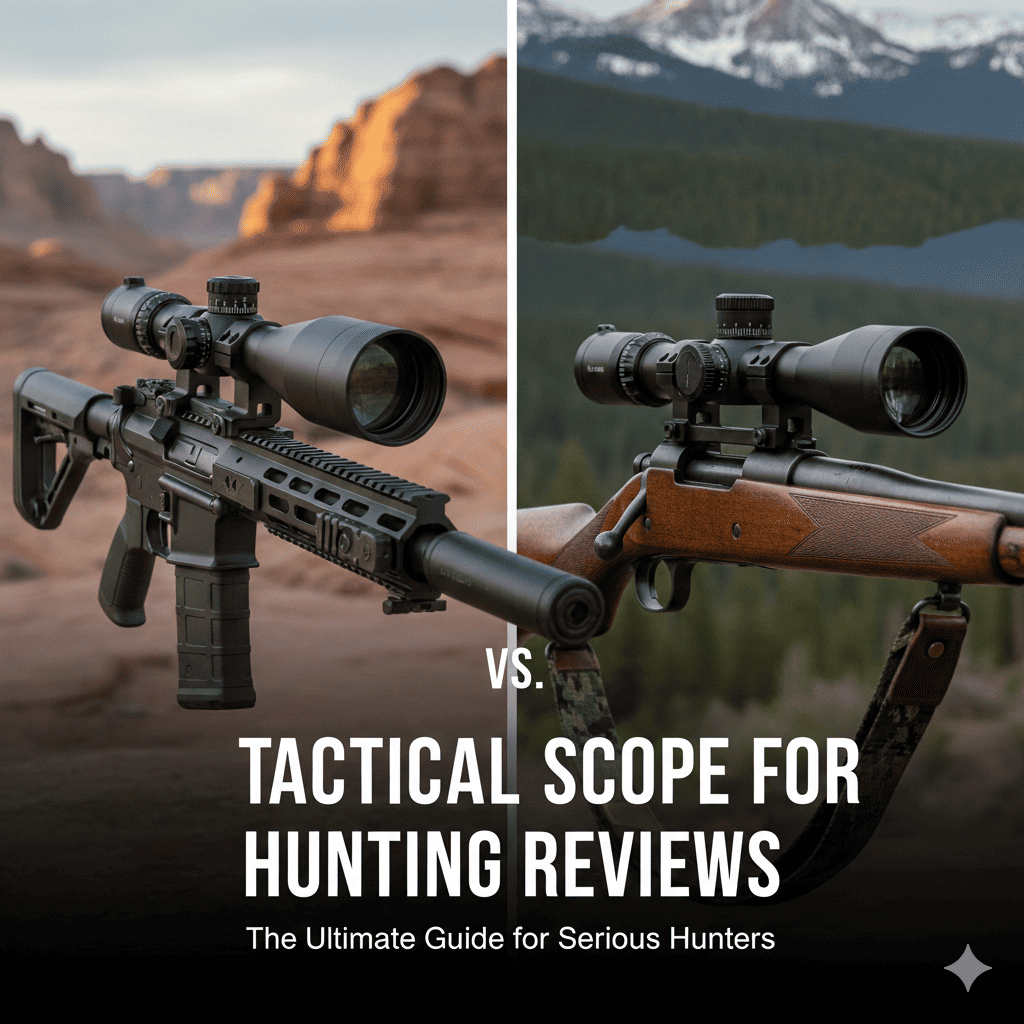
A tactical scope can work for hunting when it fits the rifle, the expected distance, and the way the hunter actually shoots in the field. The right choice is not the scope with the most knobs or the biggest magnification range. It is the optic that gives you a clear sight picture, enough adjustment control, a usable reticle, and reliable eye relief without making the rifle slow or awkward to carry.
For most hunters, a practical tactical hunting scope has moderate magnification, repeatable turrets, a reticle you understand, and low-light glass that stays clear during the first and last legal shooting minutes. If a scope is heavy, hard to zero, or too complicated under pressure, it can hurt field performance even if it looks impressive on paper.
Table of contents
Quick answer
Choose a tactical scope for hunting if you need a more precise aiming system than a simple duplex hunting scope, especially for open-country shots, varmint hunting, target practice with the same rifle, or conditions where dialing or holding for distance matters. Skip the most complex models if your hunting is mostly close-range woods work.
| Hunting need | Scope choice that usually fits | Why it helps |
|---|---|---|
| Close woods hunting | Low-end magnification with simple controls | Faster target pickup and less weight |
| Mixed field and timber | Moderate variable scope with capped or locking turrets | Useful range without snag-prone controls |
| Open country or varmint hunting | Clear reticle with repeatable elevation adjustment | Better hold or dial control at distance |
| Low-light hunting | Good glass, practical objective size, and forgiving eye box | Easier sight picture when light is poor |
What makes a hunting scope tactical
A standard hunting scope is usually built around simplicity. It may use capped turrets, a duplex reticle, and a magnification range that covers common hunting distances. A tactical-style scope usually adds more adjustment control, a more detailed reticle, and features meant for repeatable aiming corrections.
The word tactical is not a quality guarantee. It often means the scope has exposed or more precise turrets, holdover marks, side parallax adjustment, or a reticle designed around measurement systems such as MOA or MRAD. Those features are useful only when the hunter understands them and has practiced with the rifle.
A good hunting optic should still serve the hunt first. Weight, balance, weather resistance, and a quick sight picture matter more in the field than a long list of features you will not use.
Field-ready scope checklist
- Magnification starts low enough for the closest realistic shot.
- Top-end magnification is useful, not excessive for the rifle and terrain.
- Eye relief is comfortable from real shooting positions.
- The reticle remains visible against dark brush and shaded backgrounds.
- Turret clicks match the reticle system, such as MOA/MOA or MRAD/MRAD.
- Parallax adjustment is easy to reach if the scope includes it.
- The scope does not make the rifle too heavy or top-heavy.
- Mounting height lets you keep a natural cheek weld.
- The scope is zeroed and confirmed with the ammunition you will hunt with.
Features that matter most
Magnification range
More magnification is not always better. High power can narrow the field of view, make wobble look worse, and slow you down when an animal appears close. For general hunting, a lower starting magnification is often more useful than an extreme top-end number.
Eye relief and eye box
Eye relief matters because recoil, awkward shooting angles, and heavy clothing can change how your face settles behind the scope. A forgiving eye box helps you find the sight picture quickly from sitting, kneeling, prone, or a field rest.
Reticle visibility
A detailed reticle can help with holds, but it should not disappear against brush, timber, or a dark animal. Fine center marks are useful for careful aiming; bold outer references are helpful when light fades.
Turret style
Exposed turrets are useful when you dial often, but they can also get bumped. Capped or locking turrets are usually better for hunters who set a zero and rely on holdover or a simple point-blank range. If you dial, confirm that the scope tracks reliably during practice before trusting it on a hunt.
Parallax adjustment
Parallax adjustment can help at longer distances and higher magnification. It is less important for short-range hunting, but useful when a scope will also be used for range work, varmint hunting, or target shooting.
Reticle and turret matching
One of the cleanest ways to avoid confusion is to match the reticle and turret system. If the reticle is MOA, MOA turrets make corrections easier. If the reticle is MRAD, MRAD turrets are usually cleaner. Mixed systems can work, but they add mental math when you should be focused on the shot.
For a plain-language background on the optic type itself, the telescopic sight overview is useful. For field use, the more important step is practice: zero the rifle, confirm the reticle subtensions at the magnification they are designed for, and write down real drops for your ammunition instead of relying only on guesses.
Common buying mistakes
- Buying too much magnification for close cover.
- Choosing a reticle that is too fine for low light.
- Using exposed turrets without checking whether they can be locked or protected.
- Ignoring scope weight and rifle balance.
- Mounting the scope too high and losing cheek weld.
- Mixing MOA and MRAD without a clear reason.
- Assuming a tactical label means better hunting performance.
- Hunting with a scope before confirming zero and tracking at the range.
FAQ
Is a tactical scope good for deer hunting?
It can be, especially in open terrain or on a rifle also used for range practice. For short-range woods hunting, a lighter and simpler hunting scope may be faster and easier to carry.
Do hunters need exposed turrets?
Not always. Exposed turrets help when you dial for distance, but capped or locking turrets are often safer for hunters who want a set-and-forget zero.
Is MOA or MRAD better for hunting?
Either can work. The best choice is the one you understand and practice with. Keep the reticle and turret system matched so corrections stay simple.
How much magnification is enough?
Enough magnification depends on terrain, target size, and shooting distance. Many hunters are better served by a clear moderate-power scope than by a very high-power scope that is slow at close range.
Should a tactical hunting scope have an illuminated reticle?
Illumination can help in dim backgrounds, but it should not replace good glass, a usable reticle, and legal-light judgment. Check brightness settings before hunting so the reticle does not flare or wash out the target.
Bottom line
A tactical scope for hunting should make the rifle easier to aim, not harder to manage. Pick the scope around your terrain, realistic distance, rifle weight, and practice habits. Clear glass, a reticle you understand, matched turrets, steady eye relief, and a confirmed zero matter more than a long feature list.