Edible Wild Mushrooms: 10 Safety Checks Before You Forage
Edible wild mushrooms are not safe just because they appear on a beginner list. Many poisonous mushrooms resemble edible species, and some toxins are not removed by cooking, drying, or freezing. Before eating any wild mushroom, get an expert local identification, check the land rules, and keep unknown mushrooms out of the kitchen.
This is a safety-first foraging guide. It is not a field-identification key, not medical advice, and not permission to eat a mushroom from a photo, app, short video, or single article.
Table of contents
Edible Wild Mushrooms: Quick Answer
The safest way to approach edible wild mushrooms is to treat every specimen as unknown until it is confirmed by a qualified local expert. A common name is not enough. Region, tree host, season, cap, gills or pores, stem, bruising, spore print, age, and lookalikes all matter.
Do not eat from one clue
Color, smell, insects, and animal feeding are not proof that a mushroom is edible for people. A mushroom can look familiar and still be the wrong species.
Use local instruction
Learn with an experienced local mycologist, foraging class, or mushroom club. Local lookalikes are the real risk, and they are not the same everywhere.
Keep emergency information ready
In the United States, Poison Help can connect callers to poison specialists at 1-800-222-1222. Save that number before any foraging trip, and seek urgent help if symptoms appear after eating wild mushrooms.
Before You Forage
Good mushroom foraging begins before anyone picks a cap. A cautious plan reduces legal, health, and navigation problems.
Check land rules
Public land, parks, forests, preserves, and private property can have different rules for collecting mushrooms. Some places require permits, limit amounts, or ban harvest entirely. For federal parks, start with the National Park Service foraging guidance, then check the exact unit rules.
Know your region
Edible and poisonous species vary by climate, elevation, forest type, and season. A guide from another region can be misleading.
Bring separate containers
Keep unknown mushrooms separate from any specimen an expert has already confirmed. Do not mix questionable mushrooms into a cooking basket.
Identification Limits
A photo can help with learning, but it cannot replace hands-on identification. Many important traits are missed in quick photos.
Photos hide key traits
The underside, stem base, attachment to wood or soil, bruising, smell, texture, and spore color may not appear in a single photo. Young and old mushrooms can also look different from the same species.
Apps can be wrong
Identification apps may be useful for learning vocabulary, but they should not be used to decide whether to eat a wild mushroom. Treat app output as a question, not an answer.
Cooking does not fix every toxin
Some mushroom toxins can remain dangerous after cooking. CDC reporting on accidental poisonous mushroom ingestions shows why the identification step has to happen before the kitchen.
Commonly Foraged Edible Mushrooms
The mushrooms below are commonly discussed by foragers, but this list is not an eating approval. Each one still needs local expert confirmation.
Morels
Morels are valued spring mushrooms, but false morels and other lookalikes make expert review important. Real morels should still be cooked and checked carefully.
Chanterelles
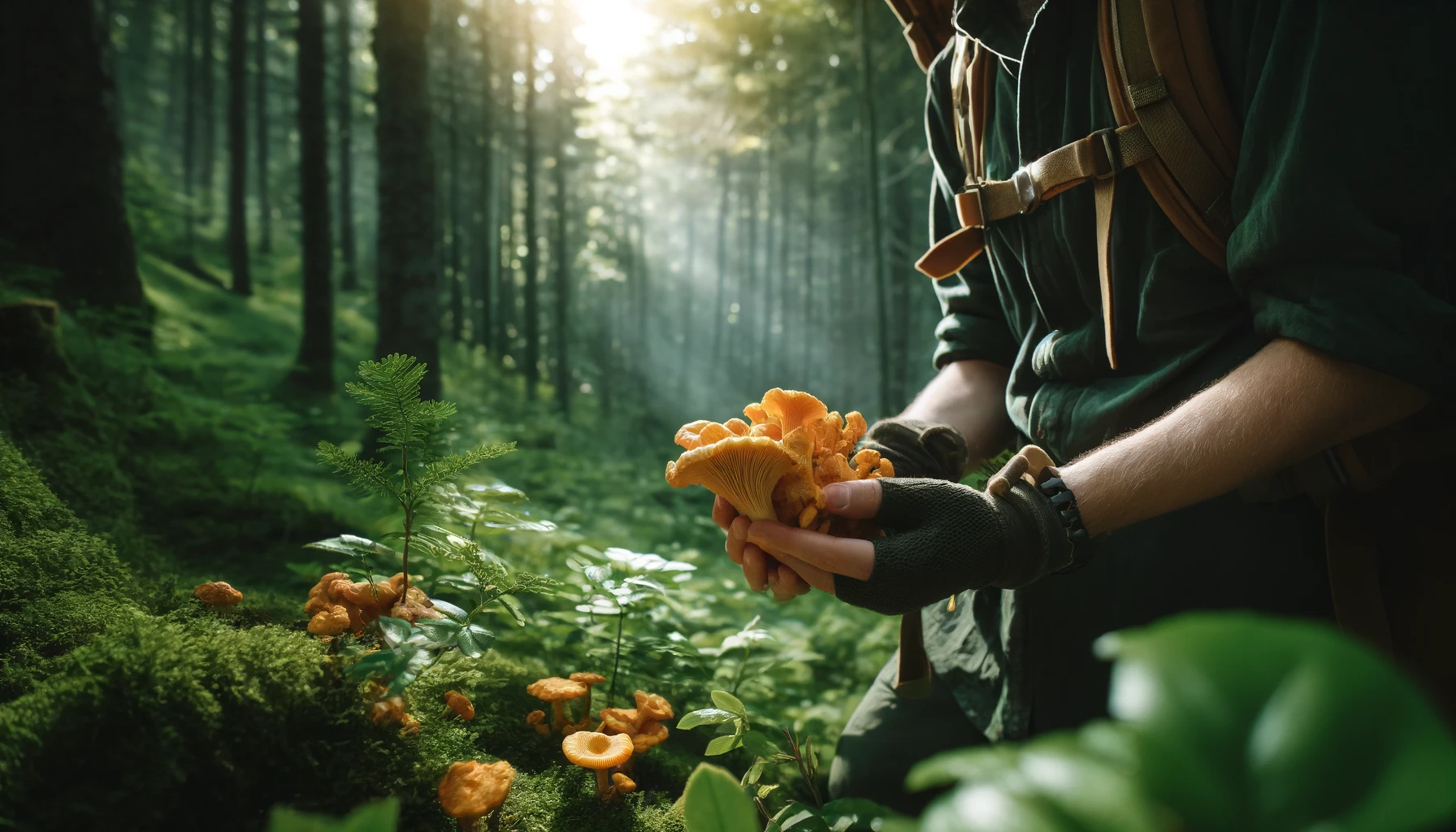
Chanterelles are popular in many regions, but beginners can confuse them with other orange mushrooms. Learn the difference between true ridges and gills from a qualified local source.
Giant puffballs
Large puffballs are sometimes edible when the inside is solid white, but immature poisonous mushrooms can confuse beginners. Cutting the mushroom open is only one check, not the whole identification process.
Oyster mushrooms
Oyster mushrooms often grow on wood in shelves, but similar-looking mushrooms can appear in the same season. Confirm the tree host, gill pattern, smell, and local lookalikes.
Hen of the woods
Hen of the woods is often found near hardwoods such as oak. Even with a recognizable cluster shape, beginners should still verify the specimen locally before eating.
Lookalike Risk
The main danger in mushroom foraging is misidentification. A poisonous lookalike can be close enough to fool a beginner.
Learn the dangerous groups first
Before studying edible species, learn the dangerous mushrooms in your area. Amanita, Galerina, Lepiota, and other groups can include mushrooms with serious toxins. The North American Mycological Association has a useful overview of mushroom poisoning syndromes.
Never rely on folklore
Old rules about silver spoons, insect damage, peeling caps, or bright colors are not reliable safety tests. They can create false confidence.
Use several checks together
Responsible identification uses location, substrate, full structure, underside, stem base, spore print where appropriate, season, and local expert review.
Collection Safety
Foraging safety includes the mushroom, the land, and the condition of the specimen.
Avoid polluted areas
Do not collect mushrooms from roadsides, treated lawns, industrial sites, old dumps, or areas with possible chemical contamination.
Skip old or damaged specimens
Rotten, slimy, insect-damaged, or moldy mushrooms can cause problems even if the species is normally edible.
Label each collection
Record date, location, tree or ground source, habitat, and photos of the mushroom in place. Those notes help an expert review the find.
Preparation and Storage
Preparation should never be used to make an uncertain mushroom seem safe. It only comes after confident identification.
Cook confirmed mushrooms
Many edible wild mushrooms are better tolerated when cooked. Try a small amount the first time, and do not mix several new species in one meal.
Keep a sample
If you eat a wild mushroom, keep a small uncooked sample in the refrigerator in case identification is needed later. Keep notes and photos too.
Do not serve risky food to others
Never serve wild mushrooms to children, guests, pregnant people, older adults, or anyone with health concerns unless you are certain and they understand what they are eating.
Poisoning Plan
Symptoms after eating wild mushrooms should be treated seriously. Delayed symptoms can still matter.
Call for help early
If someone may have eaten a poisonous mushroom, call Poison Help at 1-800-222-1222 or local emergency services. Do not wait for symptoms to become severe.
Save the evidence
Keep leftovers, photos, and location notes. These details can help poison specialists and medical teams identify the mushroom.
Do not self-treat
Do not try home remedies, alcohol, internet cures, or delayed observation when serious poisoning is possible. Follow medical advice.
Legal and Ethical Checks
Foraging can affect land access, other users, and local ecosystems.
Respect harvest limits
Take only what is allowed and only what you can use. Leave small, old, or uncertain specimens in place.
Protect habitat
Avoid trampling sensitive areas, digging unnecessarily, or damaging logs and trees. Stay on legal access routes.
Teach caution, not shortcuts
If you share mushroom photos online, avoid giving strangers eating approval. Encourage local expert confirmation instead.
Common Mistakes
Most wild mushroom mistakes come from confidence moving faster than verification.
Trusting a single photo
A photo can miss the most important identification traits. Use photos for discussion, not final eating decisions.
Eating a mixed basket
Mixing unknown mushrooms with confirmed mushrooms can contaminate the whole meal decision. Separate everything until verified.
Assuming common means harmless
A common mushroom can still be poisonous or confused with a poisonous species. Familiarity is not a safety test.
Related Guides
For field navigation, read how to read a compass. For outdoor emergency planning, see ways to signal for help in the wilderness. For broader outdoor first aid, review how to treat blisters.
FAQ
Are any wild mushrooms safe for beginners?
Beginners should not treat any wild mushroom as safe without expert local confirmation. Some edible species are easier to learn than others, but lookalikes still matter.
Can cooking make poisonous mushrooms safe?
No. Cooking may reduce some irritants in some edible species, but it does not make every poisonous mushroom safe. Some toxins can remain dangerous after cooking.
Can I use an app to identify edible mushrooms?
Use apps only as learning tools. Do not eat a wild mushroom based on an app result.
What should I do if I feel sick after eating wild mushrooms?
Call Poison Help at 1-800-222-1222 in the United States, or contact local emergency services. Keep samples, leftovers, photos, and location notes.
Should I teach kids to forage mushrooms?
Teach children not to eat wild mushrooms. If they learn about mushrooms outdoors, keep it observational and supervised.