10 Best Varmint Scopes
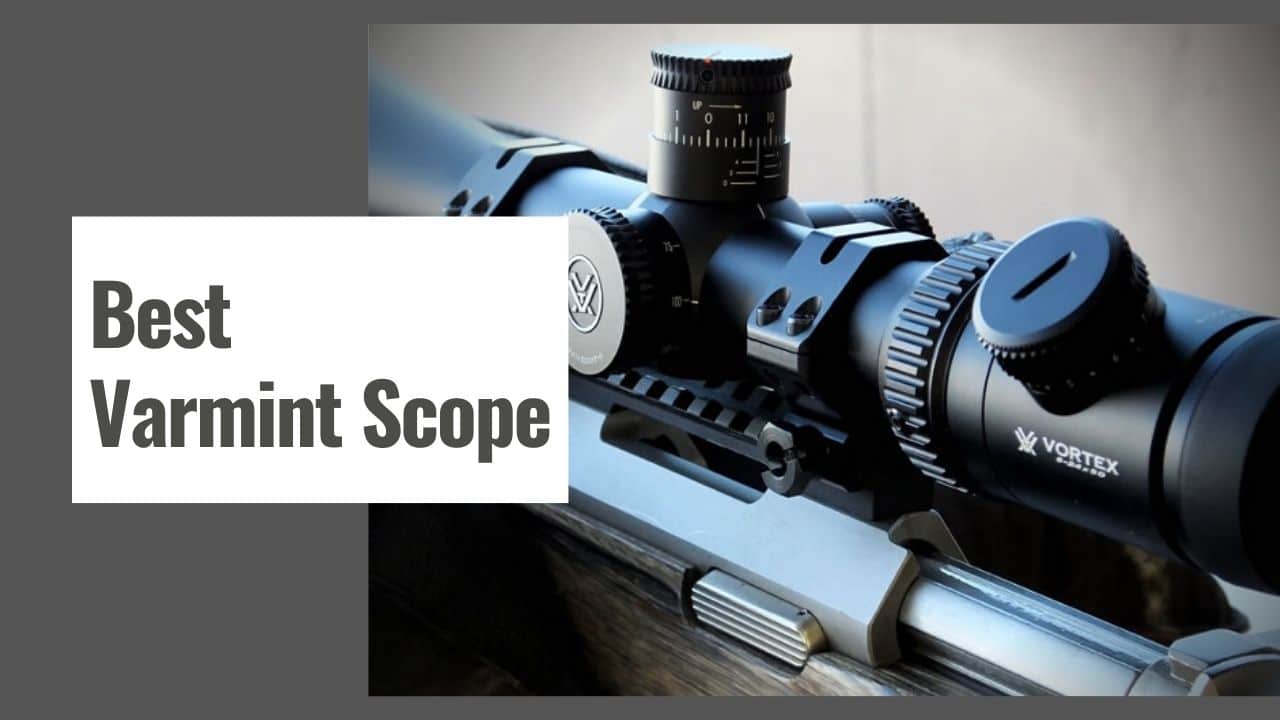
The best varmint scope helps you see small targets clearly at realistic field distance without making the rifle too heavy, slow, or complicated. Varmint shooting usually means small vital zones, changing distance, and far more time behind the glass than a typical big-game hunt, so magnification range, parallax control, and a reticle you can actually use matter more than raw zoom numbers.
We researched current, in-stock varmint and predator scopes and picked nine that cover a real range of needs: a lightweight walking-rifle setup, a bench or prairie dog town rig, and everything in between. Every pick below links straight to its live Amazon listing so you can check current availability and confirm specs before you buy.
This guide also explains how to choose a scope by use case, since the “best” varmint scope depends heavily on whether the rifle rides in a truck, gets carried on foot, or stays on a bench all season.
Table of contents
- Quick picks table
- How we chose these scopes
- 1. Sig Sauer Tango-SPR 6-24x52mm
- 2. Vortex Venom 5-25×56 FFP
- 3. Athlon Argos BTR GEN2 6-24×50 FFP
- 4. Sig Sauer Tango-SPR 4-16x44mm
- 5. Monstrum Hornet 6-24×50 FFP
- 6. Monstrum Beast 6-24×50 Side Focus
- 7. Burris Droptine 4.5-14×42
- 8. Barska Varmint 10-40×50 Mil Dot
- 9. CVLIFE 6-24×50 AO
- Varmint scope buying guide
- FAQ
- Final recommendation
Quick Picks Table
| # | Scope | Magnification | Best for | Check Price |
|---|---|---|---|---|
| 1 | Sig Sauer Tango-SPR 6-24x52mm | 6-24x | Bench and prairie precision work | Check Price |
| 2 | Vortex Venom 5-25×56 FFP | 5-25x | Long-range prairie dog and bench shooting | Check Price |
| 3 | Athlon Argos BTR GEN2 6-24×50 FFP | 6-24x | FFP precision without flagship pricing | Check Price |
| 4 | Sig Sauer Tango-SPR 4-16x44mm | 4-16x | Walking varmint and predator rifle | Check Price |
| 5 | Monstrum Hornet 6-24×50 FFP | 6-24x | Budget-minded FFP shooters | Check Price |
| 6 | Monstrum Beast 6-24×50 Side Focus | 6-24x | Side-focus parallax on a budget | Check Price |
| 7 | Burris Droptine 4.5-14×42 | 4.5-14x | Mixed predator and deer-sized game use | Check Price |
| 8 | Barska Varmint 10-40×50 Mil Dot | 10-40x | Extreme magnification on a tight budget | Check Price |
| 9 | CVLIFE 6-24×50 AO | 6-24x | First varmint scope on a strict budget | Check Price |
How we chose these scopes
We started from live Amazon listings for scopes marketed or clearly suited for varmint and predator work, then narrowed the list using criteria that matter most for small targets at variable range: usable magnification through the middle of the zoom range, a parallax adjustment method that actually works at typical varmint distances, a reticle fine enough for small targets without disappearing in brush, and turret systems that match their reticle. We verified each listing was live and in stock, checked the reticle and focal plane against the manufacturer’s own description, and cross-referenced verified buyer reviews for common complaints like turret feel, edge clarity, and mount compatibility.
We deliberately mixed price tiers. A scope built for a bench or vehicle-mounted rifle can be heavier and pricier than one meant to ride on a walking rifle all day, so the list below spans compact first focal plane optics down to simple adjustable-objective scopes that get a beginner shooting accurately without a large investment.
1. Sig Sauer Tango-SPR 6-24x52mm
Best for: Shooters who want a set-and-dial precision scope for bench and prairie varmint work, with a mount already included.
Key specs (from Amazon product listing): 6-24x magnification, 52mm objective, 30mm tube, second focal plane, MOA BDC-1 reticle, exposed zero-stop elevation turret, capped windage turret, dedicated side focus parallax, factory SPR cantilever mount included, 2.2 lb weight.
Pros
- Bright, clear glass across the full zoom range
- Exposed zero-stop elevation turret returns to zero quickly
- Dedicated side focus dial for small targets at range
- Ships with a factory SPR cantilever mount, ready to install
Cons
- Capped windage turret is less convenient for shooters who dial wind often
- 2.2 lb weight adds up on a rifle meant for carrying
- MOA BDC-1 reticle is not ideal if you prefer mil-based ranging
Skip this if: You carry the rifle more than you shoot it off a rest, or you need a mil reticle for ranging.
2. Vortex Venom 5-25×56 FFP
Best for: Long-range bench and prairie dog shooters who want first focal plane holdovers at every magnification.
Key specs (from Amazon product listing): 5-25x magnification, 56mm objective, 34mm tube, first focal plane, EBR-7C MOA reticle, RevStop Zero System, side parallax knob, 85 MOA max elevation and windage travel, 2.2 lb weight.
Pros
- First focal plane reticle keeps holdover marks accurate at any zoom setting
- Side parallax knob with marked yardages for quick range changes
- RevStop Zero System gives a fast, reliable return to zero
- 34mm tube provides class-leading turret travel for extreme elevation holds
Cons
- Non-locking turrets suit a bench setup better than field carry
- Noticeably heavier and bulkier than a compact hunting scope
- Premium pricing puts it above casual varmint shooters’ budgets
Skip this if: You need a lightweight scope for a walking varmint rifle rather than a stationary or vehicle-mounted setup.
3. Athlon Argos BTR GEN2 6-24×50 FFP
Best for: Shooters who want FFP precision and a true zero stop without paying flagship prices.
Key specs (from Amazon product listing): 6-24x magnification, 50mm objective, 30mm tube, first focal plane, APMR MIL reticle, 0.1 MIL clicks with 18 MIL total adjustment, precision zero stop, argon purged, parallax adjustable from 10 yards to infinity, 30.3 oz weight.
Pros
- First focal plane reticle with fine mil hash marks for precise holdovers
- Parallax adjusts down to 10 yards for genuinely close varmint work
- Precision zero stop returns reliably to point of aim
- Exposed turrets track well according to owners who dial often
Cons
- Magnification ring is stiff out of the box, especially above the midpoint
- Reticle can look thick at full power for some shooters
- 30.3 oz weight is noticeable on a lighter rifle
Skip this if: You want a lighter, simpler scope for a walking rifle rather than a bench or PRS-style build.
4. Sig Sauer Tango-SPR 4-16x44mm
Best for: An all-around varmint and predator setup that still carries well on a walking rifle.
Key specs (from Amazon product listing): 4-16x magnification, 44mm objective, 30mm tube, second focal plane, MOA BDC-1 reticle, exposed zero-stop elevation turret, side focus parallax, factory SPR mount included, 2.1 lb weight.
Pros
- Lighter and more compact than its 6-24×52 sibling, easier to carry all day
- Same clear Sig glass and MOA BDC-1 reticle system
- Exposed zero-stop elevation turret for fast dial-back
- Comes with a factory-installed SPR mount
Cons
- Top-end 16x magnification is lower than dedicated bench scopes
- Reticle design is less suited to mil-based range estimation, per some owners
- Side focus parallax dial adds one more control to manage in the field
Skip this if: You need 24x or more magnification for extreme-range bench work.
5. Monstrum Hornet 6-24×50 FFP
Best for: Budget-minded shooters who still want a first focal plane reticle and a working zero stop.
Key specs (from Amazon product listing): 6-24x magnification, 50mm objective, 30mm tube, first focal plane, X-Tree MOA reticle with 6 illumination levels, 1/8 MOA clicks, zero stop elevation turret, side parallax dial, includes scope rings with bubble level and detachable sunshade.
Pros
- FFP X-Tree reticle keeps holdover references correct at any power
- Zero stop elevation turret with 1/8 MOA clicks
- Includes scope rings with a built-in bubble level and a detachable sunshade
- Backed by a lifetime guarantee from Monstrum
Cons
- Image softens noticeably above roughly 14 to 16x, per owner reports
- The zero stop mechanism has a known design quirk on some production runs
- Illuminated reticle center can look uneven to some users
Skip this if: You plan to shoot regularly at the top of the 24x range and need pristine edge-to-edge clarity there.
6. Monstrum Beast 6-24×50 Side Focus
Best for: Shooters who want side parallax focus and a fiber-optic daylight-bright reticle on a tight budget.
Key specs (from Amazon product listing): 6-24x magnification, 50mm objective, 30mm tube, second focal plane, FIB04-MOA fiber-optic reticle, side focus parallax dial, one-piece cantilever mount included, 1/2 inch-20 UNC thread.
Pros
- Side focus parallax dial is easier to reach than an endbell-mounted adjustment
- Fiber-optic reticle center stays daylight bright without batteries
- Includes a one-piece cantilever mount in the price
- Wide 50mm objective helps with light transmission at dusk
Cons
- The cantilever mount may not fit every picatinny rail without adjustment
- Eye relief runs tighter than some comparable scopes
- Second focal plane design means the reticle does not scale for holdovers at low power
Skip this if: You want a first focal plane reticle for holdover-based ranging instead of a duplex-style crosshair.
7. Burris Droptine 4.5-14×42
Best for: Mixed predator and varmint hunters who also use the same rifle on deer-sized game.
Key specs (from Amazon product listing): 4.5-14x magnification, 42mm objective, second focal plane, Ballistic Plex reticle, adjustable objective parallax, Hi-Lume multicoating, steel-on-steel adjustments, 1.1 lb weight, Burris forever warranty.
Pros
- Adjustable objective parallax is unusual at this price point and genuinely useful as distances change
- Bright, clear glass with Burris’s Hi-Lume multicoating
- Backed by Burris’s no-questions-asked forever warranty
- Compact and light enough for a walking rifle
Cons
- Turret clicks feel mushy to some owners rather than crisp
- No sunshade included, which matters in bright, open varmint country
- Reticle is a simple ballistic plex rather than a fine mil or MOA grid
Skip this if: You want dedicated fine holdover marks instead of a duplex-style reticle.
8. Barska Varmint 10-40×50 Mil Dot
Best for: Shooters who want extreme magnification for stationary bench or prairie dog town work on a tight budget.
Key specs (from Amazon product listing): 10-40x magnification, 50mm objective, 1 inch tube, second focal plane, mil-dot reticle, adjustable objective parallax, 1/8 MOA clicks, easy-grip high-profile turrets, 1.3 lb weight.
Pros
- 10-40x range is well beyond most competitors at this price
- Adjustable objective corrects parallax at both long and short range
- Mil-dot reticle helps with range estimation on small targets
- Large, easy-grip turrets for windage and elevation
Cons
- Clarity and contrast fall off noticeably at the top of the zoom range
- Some owners report the factory zero is far off and needs significant adjustment
- Not shock-rated for magnum-recoil rifles the way pricier scopes are
Skip this if: You need a scope that stays sharp well above 30x, since edge clarity at maximum power is the most common complaint.
9. CVLIFE 6-24×50 AO
Best for: A first varmint scope or backup optic on a strict budget.
Key specs (from Amazon product listing): 6-24x magnification, 50mm objective, 1 inch tube, adjustable objective parallax, red and green illuminated rangefinder reticle with 5 brightness levels, capped turrets with 1/8 MOA clicks, aircraft-grade aluminum tube, nitrogen purged.
Pros
- 6-24x range and an adjustable objective at an entry-level price
- Red and green illumination with five brightness levels
- Includes scope rings, lens cloth, and batteries in the box
- Aircraft-grade aluminum tube with basic nitrogen-purged weatherproofing
Cons
- Focus needs to be re-adjusted often as the objective is repositioned
- Clarity drops at maximum magnification compared to pricier glass
- Turret feel is inconsistent according to some buyers
Skip this if: You want a scope that holds a precise, repeatable zero without periodic double-checking.
Varmint scope buying guide
Varmint hunting often involves smaller animals and more distance variation than close-range hunting setups. That changes what matters in a telescopic sight. You may need more magnification than a woods deer rifle, but you still need a steady image, enough field of view, and controls you can operate without losing focus on the target.
Magnification and reticle for small targets
Varmint shooting benefits from more magnification, but only if the image stays clear and steady. The middle of the zoom range is often more useful than the highest setting, because heat shimmer, wobble, and dim glass become more obvious at high power. A fine reticle helps you hold precisely on a small target, but too fine a reticle can disappear against brush or in low light, so match reticle thickness to the terrain you actually hunt.
Parallax adjustment at close and extended range
Side or objective parallax adjustment is useful when distances change and targets are small. Parallax can make the aiming point appear to shift if your eye is not perfectly centered, so adjustable parallax matters on higher-power varmint optics, and a scope that adjusts down to a genuinely close distance is a real advantage for shooting into a den or burrow at short range.
Turret types: capped, exposed, and zero stop
Capped turrets protect the setting from being bumped and suit a set-it-and-forget-it hunting scope. Exposed turrets, especially with a zero stop, suit shooters who dial elevation often for changing distance and want to return to a known zero by feel. Keep the reticle and turret system matched: if the reticle uses MOA marks, MOA turrets are simpler, and the same is true for MRAD. Mixed systems add extra math when you should be focused on the shot.
First focal plane versus second focal plane
A first focal plane (FFP) reticle grows and shrinks with magnification, so holdover marks stay accurate at any zoom setting. A second focal plane (SFP) reticle stays a constant size and is only calibrated at one magnification, usually the top of the range. FFP scopes suit shooters who dial in and out and need consistent holdovers, while SFP scopes are often simpler to use at a glance for hunters who mostly shoot near one power setting.
Weight, mounting height, and field of view
Large scopes change rifle balance, and a scope mounted too high can hurt cheek weld. A narrow field of view can also make it harder to find a moving animal or recover the sight picture after recoil. If you may shoot at closer distances, make sure the low end of the zoom range is still usable, and confirm the optic, rings, and stock fit together before judging a setup from specs alone.
Field checks before hunting
- Confirm zero with the ammunition you will actually use.
- Check parallax settings at common field distances before the hunt.
- Practice at low and high magnification so target pickup is familiar.
- Confirm the reticle is visible against dark brush and light backgrounds.
- Check that turret caps, locks, or exposed knobs will not shift during carry.
- Make a simple drop note for the distances you actually shoot.
- Review local hunting rules for species, season, land access, and methods.
Common buying mistakes
- Buying the highest magnification number instead of the clearest useful image.
- Skipping parallax adjustment on a high-power scope.
- Mixing reticle and turret systems without a clear reason.
- Choosing a reticle too fine for brush or low light.
- Ignoring rifle balance and mounting height.
- Trusting advertised range claims without confirming zero and drops.
- Using a scope in the field before practicing with its controls.
Frequently Asked Questions
Q: What magnification do I need for a varmint scope?
A: Enough to see small targets clearly at your normal distance, but not so much that the image becomes shaky, dim, or hard to find. For many setups, usable mid-range magnification in the 6-24x class matters more than an extreme top-end number.
Q: Do I need a first focal plane (FFP) scope for varmint hunting?
A: Not always. FFP reticles keep holdover marks accurate at any zoom setting, which helps if you dial magnification often at variable range. A second focal plane scope is simpler and works fine if you mostly shoot near one power setting.
Q: How important is parallax adjustment on a varmint scope?
A: It is one of the most useful features on higher-power varmint optics, since small targets and changing distances make aiming consistency more demanding. A side focus or adjustable objective that reaches close distances is especially useful for near-range shooting.
Q: Should I choose MOA or MRAD for a varmint scope?
A: Either can work. The better choice is the system you understand and practice with. Keep the reticle and turret system matched to reduce confusion under field conditions.
Q: What tube size should a varmint scope have?
A: A 1 inch tube is lighter and common on hunting-focused scopes, while 30mm and 34mm tubes generally offer more internal adjustment travel, which matters more on dedicated long-range or bench setups than on a typical walking rifle.
Q: Can a deer scope work for varmints?
A: Sometimes. A clear deer scope can work at shorter varmint distances, but small targets and longer shots usually benefit from more top-end power, better parallax control, and finer aiming references.
Q: Are illuminated reticles worth it for varmint hunting?
A: They help most at dawn, dusk, or against dark brush where a plain crosshair is hard to see. In bright daylight, illumination adds little, so treat it as a nice-to-have rather than a deciding factor.
Final Recommendation
For most varmint hunters, the Sig Sauer Tango-SPR 6-24x52mm is the strongest all-around pick: a wide, useful zoom range, a reliable zero-stop turret, and a mount already in the box. Shooters who want first focal plane holdovers at long range should look at the Vortex Venom 5-25×56 FFP or the Athlon Argos BTR GEN2, while anyone carrying the rifle on foot all day is better served by the lighter Sig Tango-SPR 4-16x44mm or the Burris Droptine 4.5-14×42. If the budget is tight, the Monstrum Beast, Barska Varmint, and CVLIFE 6-24×50 all deliver usable magnification and parallax control without a large investment, though all three ask for more patience with turret feel and edge clarity than the pricier options above.
Whichever scope you choose, match it to how the rifle is actually used: a bench or vehicle-mounted setup can carry more weight and features than a rifle you walk with all day. Confirm zero with your actual ammunition, practice with the parallax and turret controls before the season starts, and keep a simple drop note for the ranges you shoot most often.