How to Learn Hunting: Safe Beginner Steps
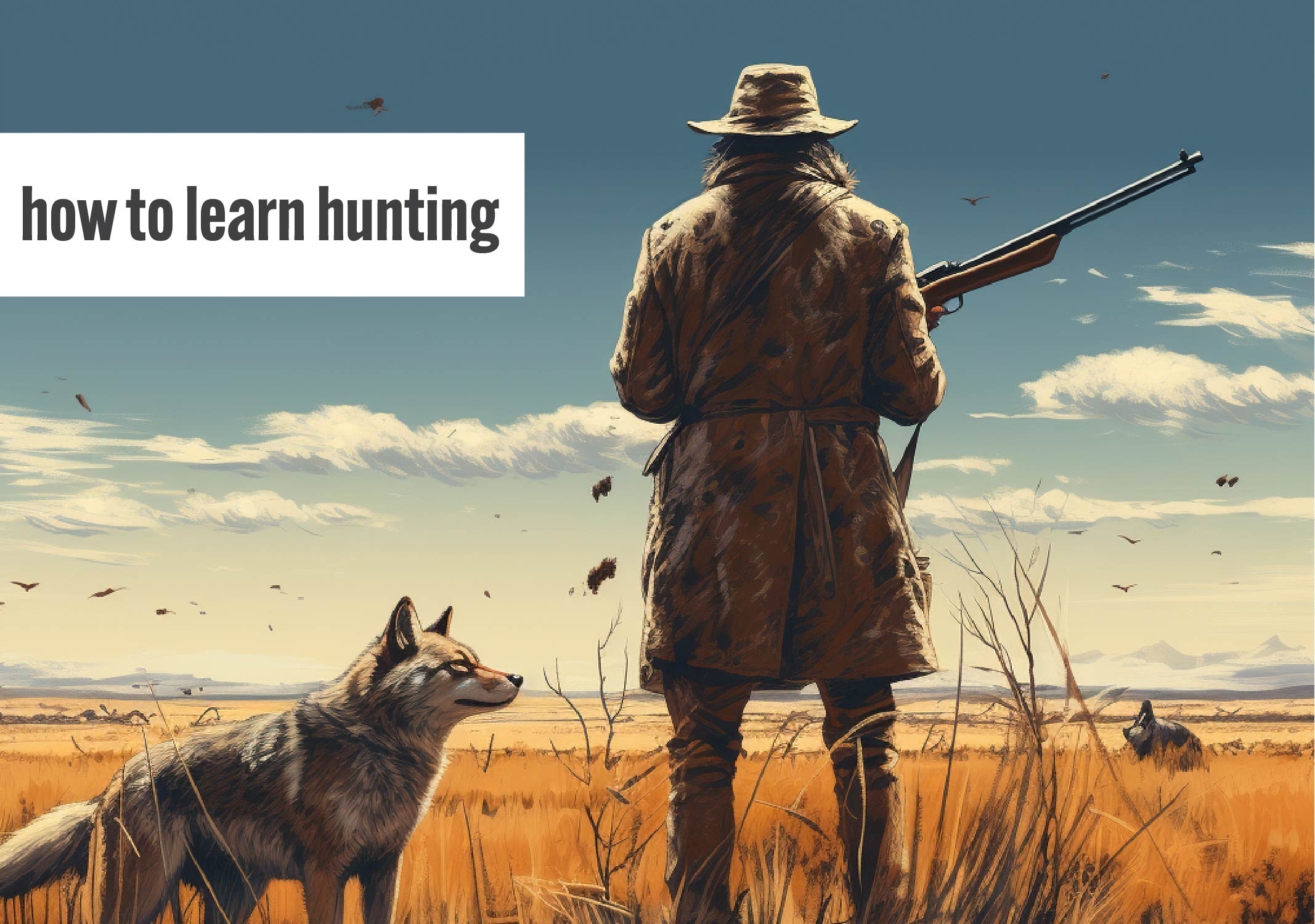
The safest way to learn hunting is to start with hunter education, then build field skills slowly with a mentor or qualified course. A beginner needs to understand laws, safety, wildlife identification, ethics, equipment, weather, land access, and recovery before the first hunt.
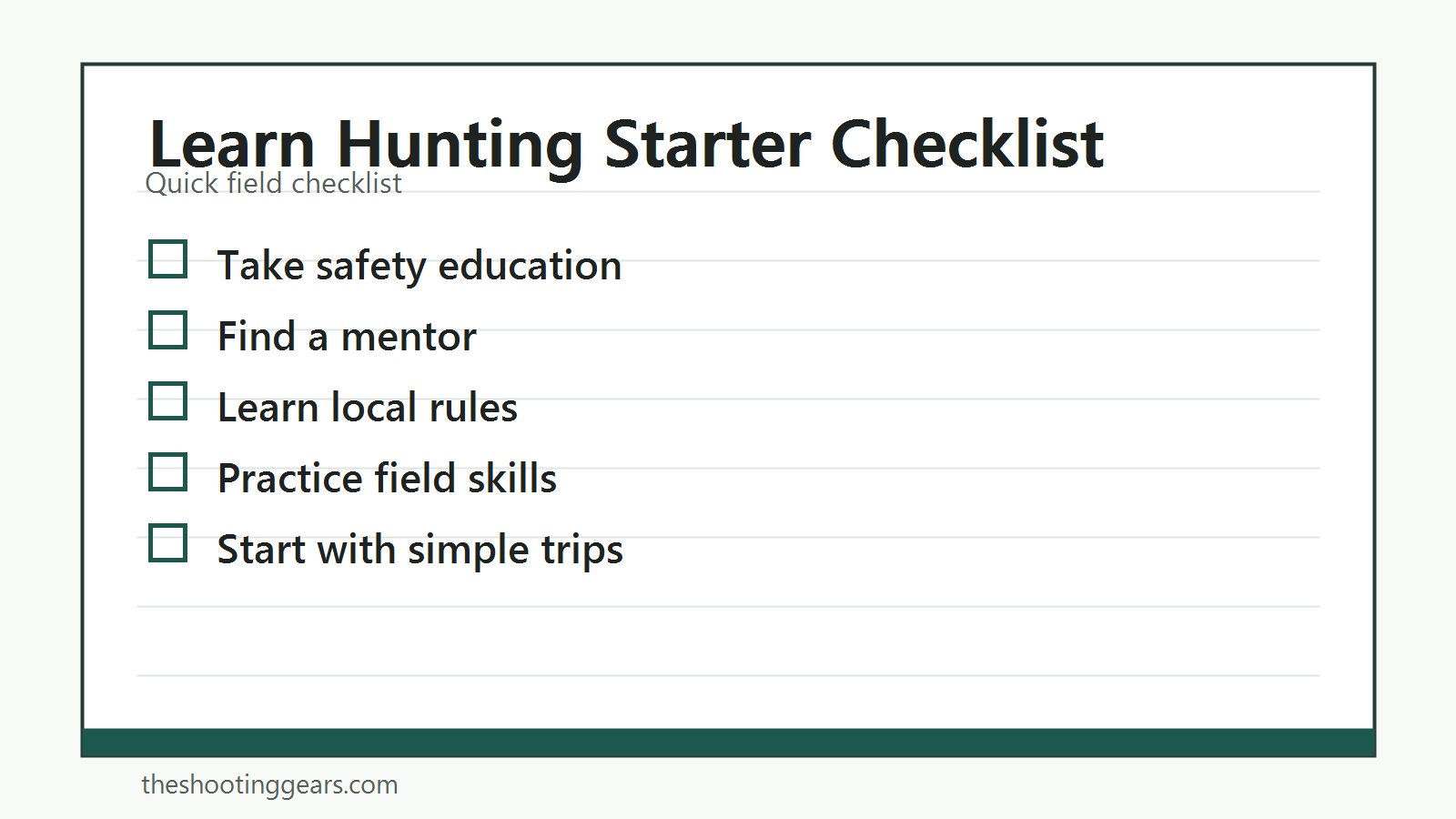
This guide gives new hunters a responsible learning path. It does not replace state regulations, hunter education, landowner permission, firearm or bow manuals, or local conservation-agency guidance.
Table of Contents
Quick Answer
To learn hunting, take hunter education, study current local regulations, practice safe firearm or bow handling, learn wildlife identification, find a mentor, start with simple legal hunts, and focus on ethical shot decisions and recovery. Do not rush into the field with gear alone.
Start With Hunter Education
Hunter education is the best first step because it covers safety, laws, wildlife conservation, ethics, and field responsibility. The Hunter-Ed course platform is one starting point for state-approved education paths, but always confirm your own state or province requirements.
Even if hunter education is not required for your situation, taking a course helps build the right habits early. New hunters should know how to handle equipment safely before thinking about species, locations, or tactics.
Learn Laws, Seasons, and Land Access
Hunting rules change by location, species, season, weapon, public land unit, private property, age, residency, and tag type. Use the current regulation book from your state wildlife agency before making plans. Do not rely on old blog posts, forum comments, or memory.
- License and hunter education requirements.
- Species, season dates, and legal methods.
- Tag, permit, or harvest-reporting rules.
- Public land boundaries and private land permission.
- Blaze-orange or visibility requirements where they apply.
- Transport, storage, and check-in rules after harvest.
The U.S. Fish & Wildlife Service hunting program is useful for understanding hunting on federal wildlife areas, but state and local rules still control the details of most hunts.
Find a Mentor or Local Course
A mentor can shorten the learning curve and reduce unsafe mistakes. Look for someone who explains why a decision is safe, legal, and ethical instead of only showing where to hunt. A good mentor teaches preparation, restraint, recovery, and respect for land.
Local conservation groups, ranges, archery clubs, wildlife agencies, and adult-onset hunter programs may offer beginner events. Ask direct questions before joining: what will be covered, what gear is needed, and whether live-fire or field work is included.
Build Core Hunting Skills
Safe Equipment Handling
Firearm or bow safety comes first. The NSSF firearm safety rules are a strong baseline for gun handling, while bowhunters should also study bow-specific safety and broadhead handling.
Wildlife Identification
Know the species, sex, age-class rules where applicable, and legal identification details before hunting. Never shoot at sound, movement, color, or a partial shape.
Navigation and Weather
Learn maps, boundaries, wind, weather changes, daylight timing, and how to return safely. A simple hunt can become risky if you do not know where you are or how weather affects the plan.
Recovery and Meat Care
Ethical hunting includes recovery effort and care for harvested game. Learn tracking basics, field dressing, cooling, transport, and local reporting requirements before the season.
Plan a Simple First Season
A first season should be simple and realistic. Choose a legal opportunity with clear rules, accessible land, manageable weather, and a mentor if possible. Avoid stacking too many new challenges at once.
- Complete hunter education.
- Pick one species and one legal season.
- Read the current regulation booklet.
- Confirm land access before the hunt.
- Practice with the exact equipment you will use.
- Set a personal shot limit before the hunt.
- Prepare a recovery and meat-care plan.
Beginner Hunting Checklist
- Hunter education completed or scheduled.
- Current state rules downloaded or printed.
- License, tag, and permit requirements confirmed.
- Public or private land access confirmed.
- Safe firearm or bow handling practiced with qualified help.
- Navigation, weather, and emergency plan ready.
- Recovery, field dressing, and meat-care plan understood.
- Mentor, class, or local club contact identified.
FAQ
How should a complete beginner learn hunting?
Start with hunter education, then learn local regulations, safe equipment handling, wildlife identification, land access, and recovery. A mentor or beginner course can make the first season much safer.
Do I need hunter education?
Many places require hunter education for certain hunters, ages, or license types. Requirements vary, so check your current state or provincial wildlife agency rules.
What is the easiest animal to hunt first?
There is no universal answer. A good first hunt is legal, local, well-understood, and supported by a mentor. Small game or beginner waterfowl/upland events may be useful in some areas, but local rules and access matter most.
Can I learn hunting without family experience?
Yes. Many adult beginners learn through hunter education, conservation groups, range programs, archery clubs, agency events, and mentors. Start slowly and ask for help early.
What should I buy first for hunting?
Buy education and practice time before buying lots of gear. The first practical needs are legal documents, safety equipment, weather-appropriate clothing, navigation, and equipment that matches the specific legal hunt.
Final Takeaway
Learning hunting is a step-by-step process. Start with education, read current rules, practice safe handling, find guidance, choose a simple first hunt, and treat ethics and recovery as part of the plan from day one.