Legal Hunting Gear: Responsible Hunter Checklist
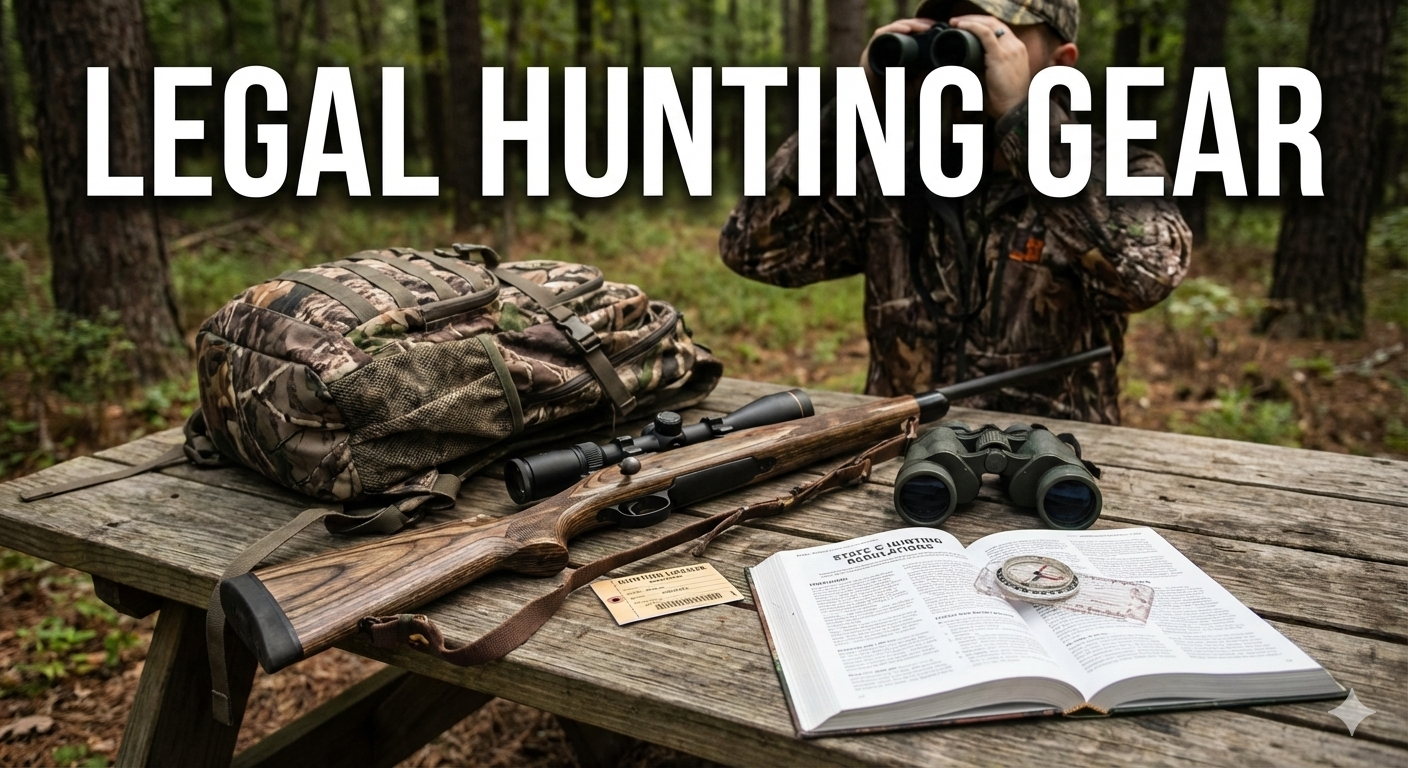
Legal hunting gear is not just the equipment you own; it is the equipment you are allowed to use for the species, season, state, public-land unit, and method of take. Before every hunt, verify current rules with your state wildlife agency, confirm your license and tags, and make sure your firearm, bow, ammunition, clothing, lights, electronics, and transport plan match the regulation booklet for that exact hunt.
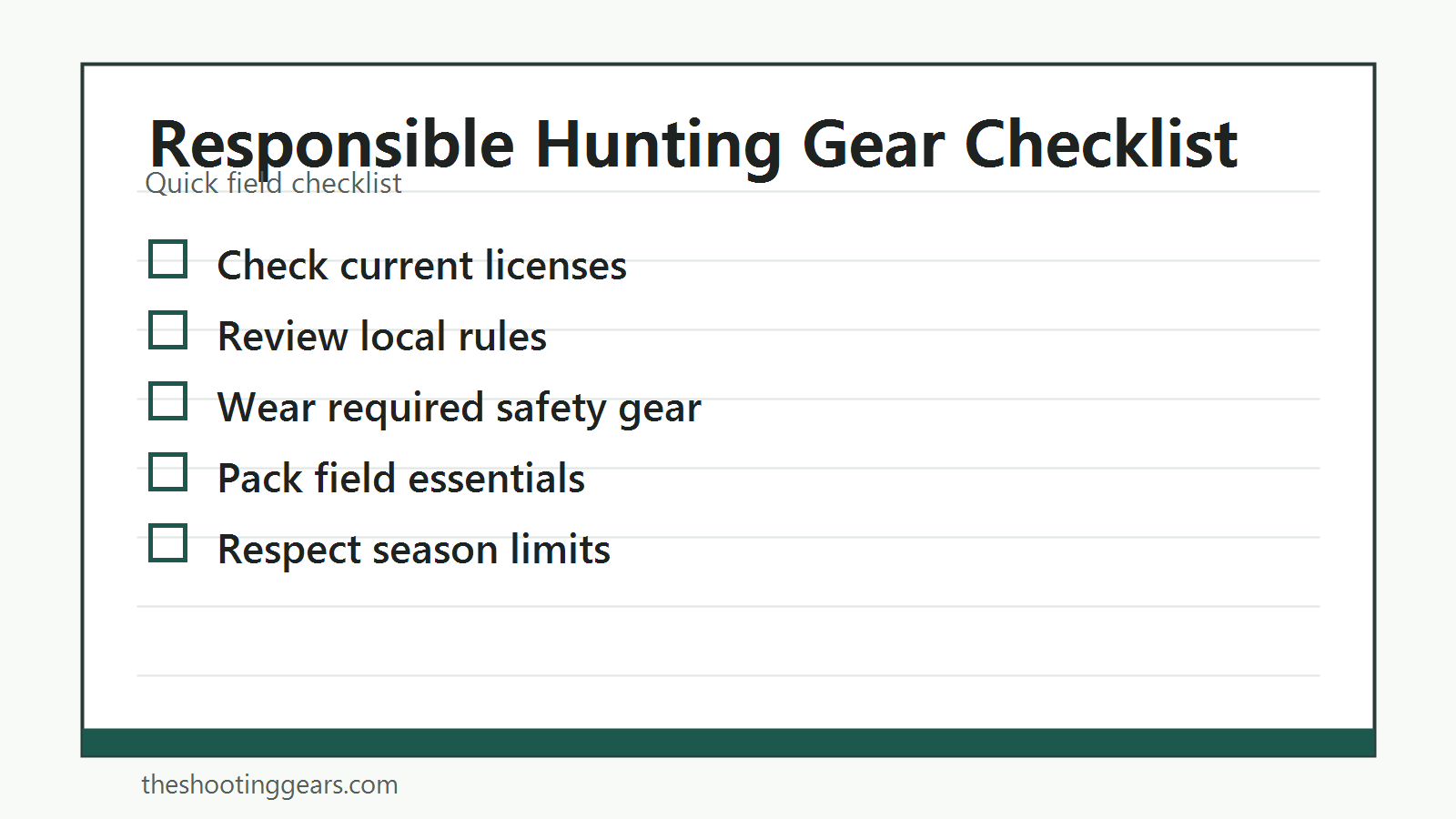
Table of contents
Table of Contents
Quick Answer
The safest way to choose legal hunting gear is to start with the regulation source, not the gear aisle. Check the current season rules, species rules, weapon restrictions, required clothing, ammunition limits, public-land rules, and transport laws before packing. This article is a planning guide, not legal advice.
Use Official Sources First
For hunting rules, your state wildlife agency is the authority. National resources such as the U.S. Fish and Wildlife Service, Hunter-Ed, and the International Hunter Education Association can support learning, but they do not replace current local regulations.
Do Not Assume Last Year Still Applies
Rules can change by year, county, zone, public-land unit, species, and season. If a rule matters to your hunt, verify it again before you go.
Licenses, Tags, and Hunter Education
Legal gear starts with legal permission to hunt. Licenses, permits, tags, stamps, hunter-education requirements, and reporting rules vary by state and species. Carry proof in the format your state accepts, and know whether electronic copies are valid where you hunt.
Hunter Education
Many states require hunter education based on age or hunting method. Even when not required, hunter education is useful because it covers safe handling, ethics, wildlife identification, and basic legal responsibilities.
Tags and Reporting
Know how to validate a tag, attach it if required, report harvest, and meet check-station or digital reporting rules. A successful hunt can still create problems if the reporting step is missed.
Firearms, Bows, and Legal Methods
Legal weapon rules can be specific. A rifle, shotgun, muzzleloader, crossbow, compound bow, or air rifle may be allowed for one hunt and restricted for another. Confirm method-of-take rules before choosing the setup.
Firearm Rules
Check cartridge, caliber, magazine, shotgun, muzzleloader, suppressor, and public-land firearm rules where applicable. For safe handling fundamentals, review the NSSF firearm safety rules.
Archery and Crossbow Rules
Archery seasons may have minimum draw weight, broadhead, bow type, crossbow, or disability-permit rules. Do not assume a crossbow is legal during every archery season.
Ammunition, Arrows, and Broadheads
Ammunition and projectile rules can affect both legality and ethics. Some areas restrict lead ammunition, shot size, broadhead type, bullet type, or minimum energy. Confirm both the law and your equipment’s compatibility.
Ammunition Compatibility
Use ammunition that matches the firearm marking and manual. For safety context, SAAMI publishes information about unsafe firearm and ammunition combinations.
Non-Lead and Area Restrictions
Some places require non-lead ammunition or restrict certain projectiles to protect wildlife. Check the exact unit and species rules before assuming your usual ammunition is allowed.
Blaze Orange and Required Clothing
Many states require blaze orange or blaze pink during firearm seasons, youth hunts, or specific public-land hunts. Requirements may include hat, vest, square inches, visibility from all sides, or exceptions for certain methods.
Pack Required Clothing Early
Do not leave required clothing as a last-minute decision. Keep a dedicated legal-visibility layer in your hunting bag so it is available when the season or property requires it.
Lights, Electronics, and Calls
Electronics rules vary widely. Electronic calls, night-vision devices, thermal optics, artificial lights, drones, trail cameras, radios, GPS units, and tracking devices may be regulated differently depending on state and species.
Night and Predator Hunting
Night hunting rules are especially variable. Some states allow lights or thermal optics for certain predators, while others restrict them. Verify the species, season, weapon, and land type before using any night equipment.
Drones and Trail Cameras
Drones and cellular trail cameras can create legal and fair-chase issues. Confirm current rules before using electronic scouting tools in connection with a hunt.
Public-Land and Access Rules
Public land can add its own requirements. A gear setup that is legal statewide may still be restricted on a wildlife management area, national wildlife refuge, park, forest, or private-access program.
Check Unit-Specific Rules
Look for access permits, parking rules, weapon restrictions, stand rules, camping limits, retrieval rules, and vehicle restrictions. Read the unit page, not just the statewide season summary.
Transport and Storage
Transport rules can cover unloaded firearms, cases, vehicles, boats, public roads, ammunition storage, and crossing state lines. Secure storage also matters at home, camp, and in vehicles. Project ChildSafe offers firearm storage resources for responsible owners.
Before You Drive
Before leaving, confirm how your firearm or bow must be transported, where ammunition should be stored, and whether local rules differ across your route. Crossing jurisdictions can change the rules.
How To Verify Gear Rules
Do your rule check in layers. First, confirm the statewide season and method-of-take rules. Second, check the species page or regulation table for weapon, ammunition, tag, and reporting requirements. Third, read the public-land, refuge, or private-access page for property-specific restrictions. Finally, check the date on the source and make sure you are reading the current season, not an old PDF or cached search result.
Save Proof the Right Way
If your state allows digital proof, keep offline copies or screenshots of licenses, tags, permits, and key regulation pages. If your state requires paper copies or physical tags, pack them before the trip. Digital convenience does not help if the phone battery dies, there is no service, or the rule requires a physical document.
Ask Before You Guess
If a rule is unclear, contact the wildlife agency, land manager, or local conservation officer before the hunt. Guessing on gear legality can cost more than a missed hunt; it can risk citations, confiscated gear, or unsafe decisions in the field.
Pre-Hunt Compliance Checklist
- Verify current state wildlife agency rules for species, season, unit, and method.
- Confirm license, tags, permits, stamps, and reporting requirements.
- Check legal weapon, ammunition, arrow, broadhead, and magazine rules.
- Pack required blaze orange or other visibility clothing.
- Confirm electronic device, light, call, and trail-camera rules.
- Read public-land or property-specific access rules.
- Confirm transport and storage requirements before traveling.
- Keep screenshots or printed references where allowed, but rely on official current sources.
FAQ
Is this article legal advice?
No. This is a planning guide. Always verify current rules with the state wildlife agency or official land manager for your specific hunt.
Can hunting gear be legal in one state and illegal in another?
Yes. Firearm, bow, ammunition, lighting, electronics, and clothing rules vary by state and sometimes by unit, season, or species.
Do I need blaze orange for every hunt?
Not always. Requirements depend on state, season, land type, weapon, and species. Check the current regulation booklet before you hunt.
Are electronic calls and thermal optics legal?
Sometimes, but not everywhere or for every species. These rules change often enough that you should verify them directly with the current state or land-manager source.
Final Takeaway
Responsible hunters choose gear after checking the rules, not before. Build your setup around current official regulations, safe handling, ethical shot choices, and the specific species and place you plan to hunt.
Related reading: seat back gun rack roundup.