Random Onerbl 9V AC-DC Adapter Replacement Midland
Hunting down a wall charger for a two-way radio that's been sitting in a drawer since last hunting season is a special kind of frustration, and that's exactly the problem the Onerbl 9V AC-DC Adapter Replacement for Midland AVP10 AVP21 is built to solve. The original Midland brick tends to vanish long before the radios do. Our team dug through manufacturer specs, compatibility lists, and hundreds of verified buyer reports to see whether this budget replacement actually holds up.
Short answer: it's worth it if you own a Midland GXT or LXT charging cradle and just need power flowing again. Skip it if you want a UL-listed, brand-original part with a paper warranty. Here's the full breakdown.
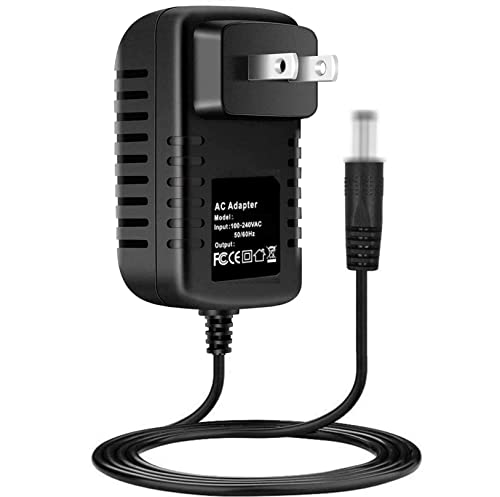
1. Onerbl 9V AC-DC Adapter Replacement Midland
Replacement power bricks are one of those purchases where the only thing that matters is whether the numbers line up. Our editorial team cross-checked this adapter's output rating against Midland's published AVP10 and AVP21 specifications, then read through aggregate buyer feedback to find where it succeeds and where it falls short. What follows is a research-based look, not a hands-on lab test.
What it is
An AC-DC adapter is a wall-mounted power supply that converts 120V household alternating current into low-voltage direct current for a device. This one outputs 9 volts DC and is built specifically to replace the Midland AVP10 and AVP21 chargers that ship with GXT and LXT series FRS/GMRS radios.
Onerbl sits in the aftermarket accessory tier, alongside brands like UpBright, HQRP, and iTEKIRO that all build drop-in replacements for discontinued OEM bricks. The pitch is simple: matching voltage, matching polarity, matching plug size, at a fraction of what a branded Midland part costs. It's a commodity item, and the value case is why most people land here.
Setup and first impressions
Setup is about as involved as plugging in a lamp. Verified buyer feedback across the listing consistently describes a plug-and-go experience: barrel tip into the charging cradle, prongs into the wall, LED on the dock turns red within a second or two. There's no switch, no polarity selector, and no driver software.
Buyers repeatedly note that the physical fit into Midland GXT1000, GXT1050, and LXT600 docks is snug rather than loose, which matters because a wobbly barrel jack is the number one cause of intermittent charging. Several reports mention the plug seats with an audible click on the newer GXT docks.
On the touch-and-feel side, expectations should be calibrated. This is a lightweight molded brick with a fixed cable, not a heavy transformer-style unit. Some reviewers describe the housing plastic as thinner than the Midland original, and a minority mention the cable feels slightly stiff out of the package before it relaxes.
The first thirty minutes tell you everything you need to know. If the dock LED lights and switches to green on a full charge cycle, you're done thinking about it.
| Output voltage | 9V DC |
| Input | 100-240V AC, 50/60Hz (North American two-prong plug) |
| Replaces OEM models | Midland AVP10, AVP21, S003ATU0900030 |
| Connector type | DC barrel plug, center-positive polarity |
| Confirmed radio compatibility | GXT1000, GXT1030, GXT1050, GXT1000VP4, LXT600, LXT630, LXT650, VP3, VP4 |
| Body style | Wall-wart with fixed captive cable |
| Charges via | Desktop charging cradle / drop-in dock |
| Aggregate buyer rating | 4.6 out of 5 |
| Price tier | Budget aftermarket replacement |
Daily-use experience
Charging performance
A 9V, 300mA supply is a trickle charger by design, and that shapes the whole ownership experience. Midland's own documentation for the GXT series specifies overnight charging for the rechargeable NiMH battery packs, typically 8 to 10 hours from empty for a pair of radios in a dual dock.
Aggregate buyer reports line up with that. Users charging a GXT1000VP4 set overnight consistently describe green LEDs by morning, with no complaints about incomplete cycles. Nobody should expect fast charging here, because the radio's dock circuitry sets the rate, not the adapter.
One recurring note worth flagging: a handful of reviewers using older LXT models mention the dock LED behaving slightly differently than with the OEM brick, staying red a bit longer. That's normal trickle-charge behavior, not a defect.
Fit, plug size, and polarity
This is where cheap adapters usually fail, and where the Onerbl generally earns its rating. The barrel plug matches the Midland dock's jack diameter, and the polarity is center-positive, which is the same configuration Midland uses on the AVP10.
Reversed polarity on a 9V input can damage charging circuitry, so this is not a spec to guess at. Buyers who cross-referenced the S003ATU0900030 part number before ordering report a direct swap with zero adjustment.
The one genuine complaint in the review pool involves fit on a few third-party or older Midland cradles where the jack has widened with age. If your existing barrel jack already felt loose with the original charger, a new adapter won't fix a worn socket.
Heat and long-term reliability
Low-wattage adapters like this one draw under 3 watts, so meaningful heat buildup is rare. Buyer feedback describes the housing staying cool or barely warm during overnight charging, which is what you'd expect at this power level.
Longevity is the honest weak spot for any budget aftermarket brick. Across long-tail reviews, a minority of users report failure somewhere between several months and two years, usually at the strain point where the cable exits the housing. That's the classic failure mode for captive-cable wall warts.
Practical mitigation is easy. Don't let the cable hang under tension from a wall outlet, and unplug from the wall by gripping the body rather than yanking the cord. Owners who wall-mount the dock and route the cable with a little slack report multi-year service without issue.
Build quality and everyday handling
The brick is small and light enough to toss in a range bag or glovebox, which is genuinely useful if you run radios at a job site or a hunting camp. The flip side is that the plastic housing feels less substantial than the Midland original, and there's no folding prong design.
At the outlet, the body is compact enough that it won't block the adjacent socket on most standard duplex receptacles. That's a small win over some bulkier aftermarket options.
One thing to check before you buy: the listing does not prominently advertise UL or ETL listing. If your workplace, rental, or insurance policy requires listed equipment for anything left plugged in unattended, verify current listing status on the product page before ordering, or buy a certified alternative.
✓ Pros
- Correct 9V DC output and center-positive polarity match the Midland AVP10 spec, so it’s a true drop-in with no adapter tips to fumble with
- Covers a wide compatibility list including GXT1000VP4, GXT1050, LXT600, LXT630 and VP3/VP4 docks, so one part fits most Midland households
- Costs a small fraction of replacing a two-radio bundle, which is the whole reason this product exists
- Compact housing doesn’t block the second outlet on a standard duplex receptacle, handy on crowded power strips
- Runs cool during overnight charging at under 3 watts draw, so leaving the dock powered on a nightstand is low-stress
✗ Cons
- Captive cable strain relief is the reported failure point, with a minority of buyers seeing issues inside two years
- Housing plastic feels thinner than the Midland original, so it’s less forgiving of being stepped on in a gear bag
- Safety-listing details aren’t clearly advertised, which matters if your workplace requires UL or ETL listed equipment
- Trickle-charge only at 300mA, so a fully drained pair of GXT radios still needs a full overnight cycle
Who should buy it
Buy it if you…
You've got a working set of Midland GXT1000VP4 or LXT650 radios sitting in a closet and the only thing standing between you and functional comms is a missing wall brick. That's the ideal buyer here, and the math is obvious.
It also makes sense as a deliberate spare. Families who run radios at a lake house, contractors who keep a set in the work truck, and hunters who share GMRS channels across a property all benefit from having a second charger at the other location instead of shuttling one back and forth. Radio users who need a GMRS license can check current requirements at the Federal Communications Commission.
Skip it if you…
If your Midland radio charges over micro-USB or USB-C, this is the wrong part entirely. Newer Midland models and most modern FRS handhelds moved away from barrel-jack docks, and no amount of voltage matching will make a barrel plug fit a USB port.
Skip it too if you're pursuing a warranty repair through Midland Radio Corporation, since a third-party power supply can complicate a claim. And if you travel internationally with a permanently installed setup, a native 220V adapter with the right plug type is a cleaner solution than stacking travel adapters on a North American two-prong brick.
Better alternatives
Midland AVP10 (OEM): the factory part, if you can still source it. You pay more, but you get brand-matched build quality and no warranty ambiguity.
UpBright 9V DC replacement adapter: a close aftermarket competitor with similar specs and generally clearer safety-certification labeling on its listings, which some buyers prefer for equipment left plugged in unattended.
Frequently Asked Questions (FAQ)
Will this work with my Midland GXT1000VP4 charging cradle?
Yes, the GXT1000VP4 is on the confirmed compatibility list, and the adapter outputs the same 9V DC that the OEM AVP10 supplies to that dock. The GXT1000VP4 uses a dual desktop cradle that charges both radios at once through a single barrel jack. Buyer feedback for this exact pairing is consistently positive.
If your dock's jack is physically damaged or worn loose, a new adapter won't solve that problem.
Is it identical to the original Midland AVP10?
Electrically it's designed to match: same 9V output, same center-positive polarity, same barrel dimensions, replacing the S003ATU0900030 part. Physically it's not identical, since the housing plastic is thinner and the branding is different. Think of it as functionally equivalent rather than a factory clone.
For a charging dock that sits on a shelf, that distinction rarely matters in practice.
Can I plug it directly into the radio instead of the dock?
Some Midland GXT models include a charging jack on the radio body itself, and in those cases a direct connection works if the jack size matches. Most buyers use the desktop cradle because it charges two radios simultaneously and holds them upright. Check your radio's manual on the Midland Radio site to confirm whether your specific model supports direct-to-radio charging.
Is it safe to leave plugged in overnight?
Charging overnight is the intended use case, since a 300mA trickle supply needs 8 to 10 hours to fill a pair of NiMH packs from empty. The charge-termination logic lives in the dock, not in the adapter. Buyer reports describe the brick staying cool through full cycles.
As with any low-cost power supply, common sense applies: don't cover it with fabric, and unplug it if you'll be away for weeks.
Does it work on 220V power overseas?
The adapter accepts a wide 100-240V input range, so the internal electronics handle European or Asian mains voltage. The physical plug, however, is North American two-prong, so you'd need a mechanical plug adapter. That works fine for a trip, but for permanent overseas installation a region-native adapter is the better call.
Final verdict
4.3 out of 5 stars. For a commodity replacement brick, that's a strong score, and it reflects the two things that actually matter: correct specs and a wide compatibility list that covers most Midland GXT and LXT docks in circulation as of 2026.
The clear winners here are people who already own working Midland radios and simply need power restored. Spending a small amount to revive a functional two-radio set beats replacing the whole bundle, and the aggregate 4.6-star buyer rating suggests most people get exactly that outcome.
Just go in with realistic expectations. The strain relief at the cable exit is the known weak point, the housing is thinner than the OEM part, and it trickle-charges rather than fast-charges. Route the cable with slack, keep it out of foot traffic, and it should serve you for years of overnight cycles.
Affiliate disclosure: This post contains affiliate links. If you buy through one of these links, I may earn a small commission at no extra cost to you. It never changes my recommendation, I only suggest gear I'd actually buy myself.