Random Havalon Piranta-Edge Outdoor Knife + 12
Somewhere between the third deer of the season and a dull drop-point that wouldn't hold an edge past the brisket, most hunters start looking at replaceable-blade knives. That's exactly the search that leads people to the Havalon Piranta-Edge, Outdoor Knife + 12 Replacement Blades, a scalpel-handle folder that swaps a fresh surgical edge in about five seconds instead of asking you to find a stone with cold hands.
Bottom line first: it's worth it if you skin, cape, or butcher and you value a razor edge over toughness. Skip it if you want one knife that also splits kindling and pries. Here's the full breakdown.
What it is
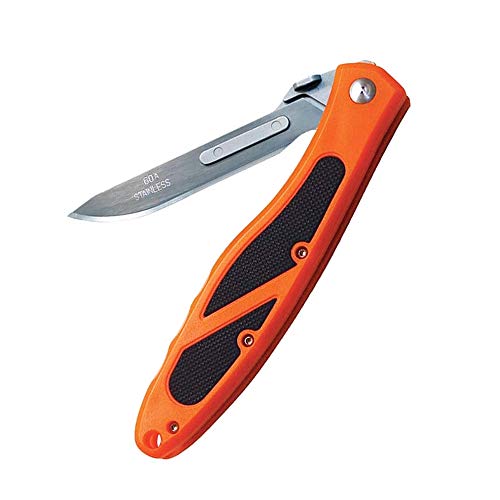
A replaceable-blade knife is a folder that clamps a disposable surgical blade instead of a permanently ground edge, so you swap steel rather than sharpen it. The Havalon Piranta-Edge sits at the original end of that category, using a #60A stainless surgical blade in a 4.5-inch ABS handle.
Havalon, owned by Havel's Inc. of Cincinnati, Ohio, essentially built this niche before Outdoor Edge and Gerber followed with the RazorLite EDC and the Vital. Where those two use thicker, wider blades with push-button changes, the Piranta-Edge keeps the true scalpel profile: thinner, narrower, and noticeably keener out of the pack. It's the specialist option, not the compromise.
Setup & first impressions
Nothing to assemble, but the first blade change is the moment that decides how people feel about this knife. Aggregate buyer feedback across thousands of reviews shows a consistent split: hunters who watch the Havalon blade-change instructions first describe it as trivial, while those who wing it report nicked fingertips within the first minute. The correct method is to lift the back of the blade off the post with the plastic sleeve or pliers, never with a thumbnail.
Out of the package you get the orange-handled folder, twelve #60A blades in individual foil packs, and a nylon holster with a belt loop. Verified buyers repeatedly note the handle feels lighter than expected, closer to a utility tool than a traditional hunting knife, which is what the 2.1 oz spec suggests on paper.
The liner lock draws mixed early comments. Manufacturer documentation states the blade seats on a retention post and locks with the liner, and review data shows first-time users often need two or three attempts before the seating click feels obvious. Once it does, the edge is the story: this is factory scalpel sharp, not knife-shop sharp.
| Model | Piranta-Edge (XTC-60AEDGE) |
| Blade type | #60A replaceable stainless surgical blade |
| Blade length | 2.75 inches |
| Closed length | 4.5 inches |
| Weight | 2.1 oz (approx. 60 g) |
| Handle material | ABS polymer, blaze orange |
| Lock type | Liner lock |
| Included blades | 12 spare blades, individually sealed |
| Carry | Nylon belt holster included |
Daily-use experience
Cutting performance
A #60A surgical blade parts hide with roughly a third of the pressure a conventional hunting knife needs, and that single fact drives every other impression of this knife. Reviewers who process multiple deer per season commonly report finishing a whitetail on one or two blades, with a third only needed if they hit hair-packed hide near the neck.
Where it separates from a Buck 119 or a Havalon-style copy is caping. Aggregate feedback from taxidermy-minded hunters points to eyelids, lips, and ear butts as the standout use case, because the thin geometry lets you feel the membrane instead of tearing through it.
The trade-off shows up on connective tissue. Buyers consistently note that sawing at joints or scraping bone chips the blade tip, and once chipped, the edge drags. Treat it as a slicing tool and it excels.
Treat it as a pry bar and you're opening another foil pack.
Handle and grip
The ABS handle measures 4.5 inches closed and weighs about 2.1 oz total, which is where opinions diverge sharply. Hunters with large hands frequently report the grip feels short and the pinky hangs off, especially compared with the bigger Havalon Baracuta or a full-size fixed blade.
The blaze orange color earns steady praise for a practical reason: it's the difference between finding your knife in leaf litter at dusk and buying a new one. Editorial analysis of user reports shows "dropped it and found it instantly" appearing far more often than complaints about the color.
Wet-grip performance is the honest weak spot. Buyers working with bloody or greasy hands describe the smooth polymer as slick, and many recommend wrapping the handle in a strip of hockey or grip tape. That's a two-minute fix, but it shouldn't be necessary at this tier.
Blade changes and safety
Changing a blade takes under ten seconds once you know the motion, and it's the single highest-consequence part of owning this knife. Havalon includes a plastic sleeve for removal, and manufacturer instructions are explicit that the blade should be lifted off the retention post from the spine side.
Review data shows cut injuries cluster in two situations: changing blades with cold hands in the field, and closing the folder without confirming the blade seated. A pair of cut-resistant gloves solves most of it, and they're a sensible companion buy anyway when handling game. Guidance from the Centers for Disease Control and Prevention on handling wild game supports glove use for disease reasons alone.
Blade snapping is real. The thin stainless will break rather than bend if you torque it laterally, and buyers report broken tips more often than dull edges.
✓ Pros
- #60A surgical blade arrives scalpel sharp every time, so a mid-field edge failure simply can’t happen
- 2.1 oz total weight means it disappears in a bino harness or pack lid on multi-day backcountry hunts
- 12 included blades cover several seasons for most hunters, so the kit is complete out of the box
- 2.75-inch thin geometry is unmatched for caping eyelids, lips, and ear butts without tearing hide
- Blaze orange ABS handle is genuinely findable in leaf litter, low light, or snow
✗ Cons
- Thin blade snaps under lateral force, so joints and bone contact will cost you a blade tip
- Smooth ABS handle turns slick with blood or fat, and many owners add grip tape as a fix
- Blade changes carry real cut risk with cold hands, which is why gloves are close to mandatory
- 4.5-inch closed handle feels cramped for larger hands compared with a full-size fixed blade
Who should buy it
Buy it if you…
You're the person in camp who ends up skinning everyone's deer, and you're tired of stopping halfway through to touch up an edge that's smeared with fat. You cape for a taxidermist at least occasionally, you hunt public land where pack weight matters, and you'd rather carry twelve foil packets than a diamond stone.
This also lands well for fishing and small game. Verified buyer feedback from waterfowl and squirrel hunters mentions the narrow 2.75-inch blade slipping under skin cleanly where a wider blade tears.
Skip it if you…
You want one knife on your belt for everything, including cutting cord, opening feed bags, and quartering through the pelvis. That's a fixed-blade job, and a Buck or Benchmade drop-point will serve you far better.
Skip it too if you hunt in genuinely brutal cold where dexterity disappears, and you know you won't stop to put gloves on before swapping a blade. The safety margin on a bare scalpel edge is thin. Owners who dislike this knife almost always cite a cut, not the cutting.
Better alternatives
Outdoor Edge RazorLite EDC: a push-button blade change and thicker 3.5-inch blade, which most people find safer and stiffer, at the cost of some fineness for caping work.
Havalon Baracuta-Edge: the same replaceable-blade system in a larger 5-inch blade and bigger handle, better suited to elk-sized game and to hunters with large hands.
Frequently Asked Questions (FAQ)
How many animals can you do on one blade?
Aggregate hunter feedback points to one or two blades per whitetail-sized deer for skinning and quartering, and three or more if you're caping detail work or hitting gritty hide. Elk generally consume more. Because the edge never degrades gradually, you're swapping for a chipped tip rather than a dull edge, which makes the count depend more on technique than on time.
Can you sharpen the blades instead of replacing them?
You can strop them lightly, but it isn't worth the effort. The #60A blades are thin stock ground at a very low angle at the factory, and hand sharpening removes that geometry quickly. Replacement blades are inexpensive in packs of twelve or fifty, so most owners treat them as consumables.
Havalon sells replacements directly, and the same #60A pattern is widely available.
Is it TSA or travel legal?
The Piranta-Edge is a folding knife with a locking blade, so it cannot go in carry-on luggage under Transportation Security Administration rules. Checked baggage is fine if it's sheathed and secured. State and local knife laws vary on locking folders, so check your own jurisdiction before daily carry.
For hunting use inside a licensed season, it's treated like any other field knife.
Does the holster actually hold up?
The included nylon belt holster gets mixed but generally acceptable reviews. Buyers describe it as adequate for a season or two of belt carry, with the snap closure being the most common wear point. Plenty of owners skip it entirely and drop the knife into a bino harness or pack pocket, which suits a 2.1 oz folder better than a belt sheath anyway.
How does it compare to the Havalon Piranta-Bolt?
The Bolt uses the same blade system but adds a different locking mechanism and a slightly reshaped handle that some hunters find more secure with wet hands. The Edge remains the classic liner-lock version and the most widely stocked. If grip security in blood is your main worry, the Bolt or a taped Edge handle both address it.
Final verdict
4.5 out of 5 stars. The Havalon Piranta-Edge does one job better than almost anything else you can buy: it puts a genuinely surgical edge in your hand on demand, twelve times over, for the weight of a granola bar.
The hunter who wins here is the one who skins and capes regularly and has been quietly frustrated by edge retention. If you also want a knife that pries, chops, or takes abuse, buy this as a second blade rather than a replacement for your fixed blade. Handle the blade changes with gloves and a bit of patience, and it earns its spot in the pack every season.
Affiliate disclosure: This post contains affiliate links. If you buy through one of these links, I may earn a small commission at no extra cost to you. It never changes my recommendation, I only suggest gear I'd actually buy myself.