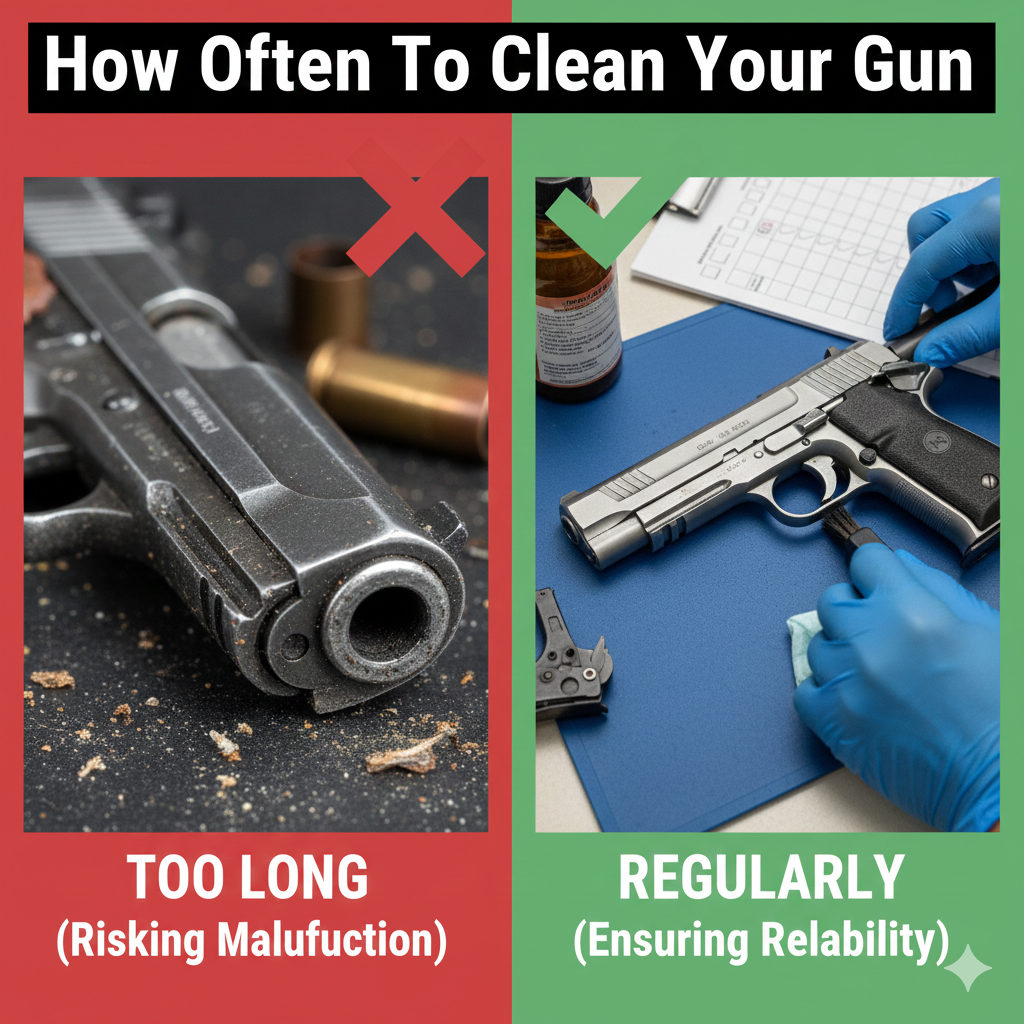
Gun owners regularly hear that maintaining their firearm is essential, but many still wonder exactly how often a gun should be cleaned. Proper cleaning is not just about keeping a firearm looking polished; it is a critical part of ensuring long-term reliability, accuracy, and safety. Whether you use your gun for hunting, sport shooting, home protection, or casual range trips, understanding the correct cleaning frequency helps avoid malfunctions and keeps your firearm performing at its best.
Cleaning matters because every shot leaves behind various residues such as burnt powder, carbon, and copper fouling. These deposits can accumulate inside the barrel and action, reducing accuracy and affecting the movement of internal components. Additionally, environmental factors like moisture or dirt can lead to rust or corrosion. For these reasons, regular cleaning protects your investment and ensures the firearm operates smoothly when needed.
Table of Contents
A firearm begins to collect residue from the moment it’s fired, and even guns that sit unused can be affected by dust and humidity. Over time, buildup from shooting can cause friction, slow mechanical movement, and even lead to failures such as misfeeds or misfires. Moisture from rain, sweat, or humid air can also create rust patches that spread if not treated in time. Consistent cleaning removes these contaminants before they cause lasting damage, extending the lifespan of your gun and preserving performance.
Most experienced shooters follow a simple rule: clean your firearm after every shooting session. This applies whether you fired a single practice round or went through several boxes of ammunition. Cleaning immediately after use prevents fouling from hardening and makes maintenance easier. It also ensures your gun is always stored in optimal condition. Developing a habit of cleaning after every range visit helps eliminate guesswork and keeps the firearm dependable.
Firearms kept for personal or home defense require the highest level of reliability. These guns must function perfectly at a moment’s notice, which means maintenance is non-negotiable. If you use your defensive firearm at the range, it should be cleaned as soon as you return home. Even if the gun remains unfired for weeks, it is wise to inspect and lightly lubricate it every two to four weeks. Carry guns are exposed to sweat, dust, clothing fibers, and humidity, all of which can affect internal components over time.
If you use your firearm occasionally and shoot smaller round counts, such as during weekend range visits, it is still recommended to clean after each session. However, if your gun has been stored without use, a monthly inspection and light maintenance are generally enough. Handguns and rifles can accumulate dust or moisture even when untouched, so routine checks ensure there are no early signs of rust or stiffness in moving parts.
Competitive shooters and high-volume trainers often fire several hundred rounds in a single day. Although these firearms are designed to handle heavy use, they still require regular attention. Many high-volume shooters perform a quick cleaning and lubrication after every training session, followed by a deeper cleaning every 500 to 1,000 rounds. The goal is to maintain smooth cycling without interrupting training schedules. Regular cleaning also ensures consistent accuracy during competitions where performance matters most.
Hunting firearms experience harsher environmental conditions than most guns. Exposure to mud, rain, snow, and sudden temperature changes can accelerate rust and wear. Even if a hunting rifle or shotgun was not fired during the trip, it should be cleaned once you return home because moisture or dirt may still be present. During extended hunting trips, applying a light protective oil helps prevent corrosion. At the end of the hunting season, a full deep cleaning should be done before the firearm is stored for several months.
Firearms kept in storage for long periods still require periodic inspection. Even inside a gun safe, humidity and dust can affect the metal components. Checking stored guns every three to six months ensures that no rust spots or mechanical stiffness have developed. Using a dehumidifier or silica gel inside the safe helps maintain a stable environment, but routine visual inspection is still necessary to guarantee the firearm stays in excellent condition.
The kind of ammunition you use plays a major role in determining how often you need to clean. Cheap bulk ammunition tends to burn dirtier, leaving behind more carbon residue that requires sooner cleaning. Corrosive ammunition, although less common today, must be cleaned immediately because its residue absorbs moisture and can produce rust within hours. Higher-quality ammunition generally burns cleaner, but even premium ammo still leaves deposits that must eventually be removed.
Where and how you shoot affects cleaning frequency. Guns used in coastal regions, high-humidity environments, or extremely dusty areas need more frequent maintenance. Salt in the air from coastal locations accelerates corrosion, while desert-like ranges introduce fine particles that can invade the internal parts. Cold, wet conditions also create condensation that can lead to rust. Shooters should always clean more often when using firearms in harsh or unpredictable environments.
Sometimes you can determine the need for cleaning simply by observing how your firearm behaves. Difficulty chambering or extracting rounds, reduced smoothness in cycling, decreased accuracy, or visible fouling are strong indicators that a cleaning session is due. Any unusual noise, stiffness, or appearance of rust means maintenance is required without delay.
Neglecting gun maintenance leads to a variety of issues. Accuracy gradually decreases as fouling collects inside the barrel. Internal components may begin to wear faster due to friction from carbon and unburned powder. Rust can develop, weakening the metal and affecting reliability. In extreme cases, the firearm may fail to fire or suffer dangerous malfunctions. Regular cleaning prevents these problems and keeps your gun functioning safely and consistently.
The simplest and most effective practice is to clean your gun after every use and inspect it regularly even when it has not been fired. A clean firearm lasts longer, performs better, and remains far safer than one that is neglected. Whether you shoot daily, monthly, or only during hunting season, making cleaning part of your routine ensures your firearm stays dependable whenever you need it.
Selecting the best scope magnification for shooting at 300 yards is a decision that directly…
Traveling with a firearm whether for hunting, competitive shooting, professional training, or lawful personal protection…
Preparing for a successful day at the shooting range involves much more than simply bringing…
Selecting the right tactical scope for hunting is one of the most important decisions a…
Hunting has always been deeply connected to nature, patience, and self-reliance. For generations, success in…
Choosing the right rifle scope is one of the most important decisions a shooter or…
This website uses cookies.
