Best Bifocal Safety Glasses: Reader Strength, Fit, and Eye Protection Guide
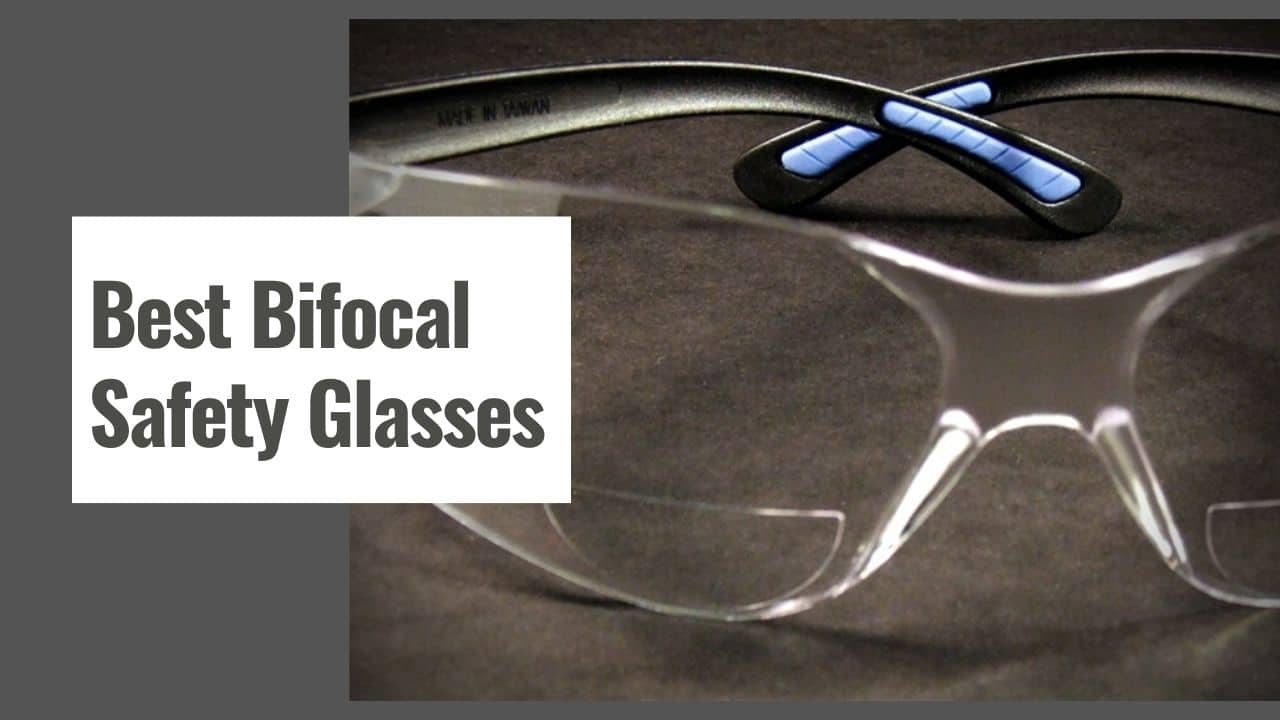
The best bifocal safety glasses protect your eyes and give you the close-up reader strength you need without swapping between safety eyewear and reading glasses. For range work, shop tasks, reloading notes, labels, small parts, and outdoor use, choose by safety rating, reader placement, diopter strength, lens tint, fit, and whether the frame works with hearing protection.
Amazon carries verified in-stock listings for the SSP Eyewear bifocal kits and the Gateway Safety over-glasses model recommended below, so Amazon buttons are active for those products. Where a specific model could not be confirmed as an in-stock Amazon match, this guide uses a direct manufacturer link instead.
Table of Contents
Quick Picks
If you need a fast answer, decide where you need the magnifier. Bottom-focal readers are the familiar choice for reading labels, small parts, and notes below your normal line of sight. Top-focal readers are more specialized and can help when the detail you need to see is above or closer to your sight line, such as a front sight or overhead task.
| Need | Best direction | Why it helps | Check price |
|---|---|---|---|
| General shop or range reading | Bottom-focal bifocal safety glasses | Works like normal reader placement for labels and small parts. | SSP Denial Kit |
| Front-sight or high-line detail | Top-focal reader safety glasses | Places magnification higher in the lens. | SSP Top Focal AST Kit |
| Changing tasks | Kit with multiple reader lenses | Lets you tune strength without buying a new frame each time. | SSP Top Focal Ultra Kit |
| Outdoor use | Safety-rated frame with appropriate tint | Protects eyes while improving visibility in sun or glare. | See picks below |
| Prescription user | Prescription safety eyewear or over-glasses option | Protects eyes without giving up clear vision. | Gateway Safety Cover2 |
Source-Backed Picks
SSP Eyewear is a small-business bifocal shooting-glasses maker, and its Denial (bottom-focal) and Top Focal (front-sight) kits are sold and verified in stock on Amazon. Gateway Safety, a long-running personal-protection manufacturer, covers the over-glasses route with an Amazon-verified OTG model.
1. SSP Denial Bottom Focal Kit – Best Bottom-Focal Reader Kit
The SSP Denial Bottom Focal Kit is the cleanest current pick for buyers who want a normal bottom-reader layout. The Amazon listing shows the Denial kit as a frame plus three bottom cheater lenses, with reader-strength variants including 1.25, 1.50, 1.75, 2.00, 2.25, 2.50, and 3.00. That range is useful because many buyers do not know their exact range-day reader strength until they test it with real tasks.
Choose this direction if your main problem is reading ammo labels, range cards, small screws, reloading notes, maps, tool markings, or instructions while still wearing safety eyewear. Bottom focal placement keeps the reader area low, so your normal forward view remains clearer than it would with full-reader lenses.
- Best for: traditional reading tasks below the normal line of sight.
- Reader strengths on the listing: 1.25 through 3.00 variants.
- Check before buying: lens color, reader strength, return policy, and whether the frame shape fits your face.
- Amazon status: verified in stock, sold by SSP Eyewear, LLC.
2. SSP Top Focal AST Kit – Best for Front-Sight and High-Line Detail
The SSP Top Focal AST Kit is more specialized. The Amazon listing identifies it as a front-sight top-focal kit with a frame plus three top-focal lenses. Reader-strength variants on the listing include 1.00, 1.25, 1.50, 1.75, 2.00, 2.25, 2.50, and 3.00.
Top-focal readers are not for everyone. They make the most sense when the detail you need to sharpen sits higher in your field of view. Some shooters use this style when normal bottom readers do not help with the front sight or when the task requires looking upward through the magnifier. If you mainly read labels and notes, bottom focal may feel more natural.
- Best for: front-sight visibility and task work where the magnifier needs to sit higher.
- Reader strengths on the listing: 1.00 through 3.00 variants.
- Check before buying: whether top-focal placement matches your shooting style and head position.
- Amazon status: verified in stock, sold by SSP Eyewear, LLC.
- Buyer caution: top focal can feel odd if you only need normal reading help.
3. Gateway Safety Cover2 OTG – Best If You Already Wear Prescription Glasses
If you already wear prescription glasses, bifocal safety readers may not solve your problem. An over-glasses safety model or prescription safety eyewear is usually the better route. The Gateway Safety Cover2 OTG safety glasses are a verified in-stock Amazon listing built to fit over most prescription frames, meet ANSI Z87.1+ and CSA Z94.3 impact standards, and use a one-piece polycarbonate lens with adjustable temples.
The key is not to stack random eyewear and assume you are protected. Your everyday glasses may help you see, but they are not automatically safety-rated protective eyewear. If you need prescription correction, choose a rated OTG option that protects from front and side hazards, and pair it with your own prescription lenses instead of a fixed bifocal strength.
4. SSP Top Focal Ultra Kit – Best If You Want Both Placements in One Kit
The SSP Top Focal Ultra Kit is a verified in-stock Amazon listing that bundles both bottom-focal and top-focal lenses, six lenses total in amber, clear, and smoked for each placement, with one frame. It costs more than the single-placement kits, but it removes the guesswork if you are not sure yet whether bottom or top focal will work better for your eyes and tasks.
- Best for: buyers who want to test both bottom and top focal placement before committing to one.
- Reader strengths on the listing: 1.00 through 3.00 variants.
- Amazon status: verified in stock, sold by SSP Eyewear, LLC.
Bottom Focal vs Top Focal
Bottom-focal lenses place the magnifier near the lower part of the lens. That feels familiar if you have used normal bifocal readers. You look down through the reader section for small text, labels, tools, and close-up work, then look through the upper part for normal distance vision.
Top-focal lenses place magnification higher. That can help with front-sight focus or tasks where the close detail is not below your line of sight. It can also feel unusual at first. If possible, choose a seller with clear returns or test the placement before buying several pairs.
How to Choose Diopter Strength
Reader strength is personal. A higher number is not automatically better. Too little magnification will not solve the close-up problem. Too much can make the focal distance feel cramped and can cause you to move your head awkwardly.
| Reader strength | Common use direction | Watch out for |
|---|---|---|
| 1.00 to 1.25 | Light close-up help | May not be enough for very small text. |
| 1.50 to 2.00 | General reader use for many adults | Still needs testing at your actual task distance. |
| 2.25 to 2.50 | More close-up magnification | Can feel too strong for longer distances. |
| 3.00 | High magnification needs | May narrow the comfortable focus distance. |
Test reader strength with the actual task: reading the sight adjustment mark, checking a range card, seeing a small screw, or reading a reloading label. A strength that feels fine with a book may not be right for your shooting stance or workbench distance.
Fit, Coverage, and Safety Rating
Bifocal safety glasses are still safety glasses first. Look for impact-rated eyewear, side coverage, a stable nose bridge, and temples that do not create pressure under earmuffs. OSHA’s eye and face protection guidance is a useful authority reference for why protective eyewear matters around impact and flying-particle hazards.
Fit should be secure without pinching. The lenses should cover the front and sides of the eyes without leaving large gaps. If you shoot with earmuffs, check whether the arms of the glasses break the muff seal. Thin, comfortable temples usually work better for long sessions.
Shooting and Range Use
For shooting, the main question is where your eyes need help. If you struggle to read controls, boxes, labels, or notes, bottom focal can be enough. If the front sight is the problem, top focal may be worth trying. Red dots, scopes, and iron sights can each change what type of reader placement feels best.
For range safety context, the NSSF range safety guidance is a good reminder that eye and ear protection are standard range habits. Bifocal lenses should support those habits, not replace good firearm handling or proper instruction.
Workshop and Field Use
Bifocal safety glasses are also useful away from the range. They can help with tools, small screws, trail cameras, labels, optics adjustments, fishing tackle, knives, and maintenance tasks. The same rule applies: choose rated protection first, then choose reader strength and lens placement.
If you work outdoors, consider tint and glare. If you work indoors, clear lenses may be more practical. If you move between both, an interchangeable kit can be worth more than a single fixed pair.
Product Comparison Details
The old page listed many models, but several rows were not safe to keep as live recommendations without fresh proof. The cleaner rebuild compares product directions instead of pretending every old row is current. This is still useful for buyers because bifocal safety glasses are easy to buy wrong: reader placement, lens tint, and fit can matter more than brand name alone.
When Denial Bottom Focal Makes More Sense
Choose a bottom-focal kit when you mostly need to look down at close details. Examples include reading cartridge boxes, checking small printed markings, handling screws or pins, adjusting tools, reading trail-camera menus, or looking at a bench card. The reader area stays low, so your distance view stays cleaner when you look forward.
The Denial route is also helpful when more than one reader strength may be needed. A kit with multiple lenses can be more forgiving than buying a single fixed-strength pair and discovering the strength is wrong after one range trip.
When Top Focal Makes More Sense
Choose top focal only when you know the magnifier needs to sit high. Some shooters look through the upper part of the lens when checking a front sight, and some work tasks place the detail above a normal reading position. In those cases, normal bottom readers can miss the problem entirely.
The tradeoff is adaptation. A top reader can feel strange if your brain expects the magnifier at the bottom. Buyers should test it during a low-pressure session before relying on it for competition, hunting prep, or work where eye protection is critical.
When a Fixed Pair Is Enough
A fixed bifocal safety-glasses pair can be enough if you already know your reader strength and do the same task repeatedly. For example, if you always use 2.00 readers and only need clear indoor protection at a bench, a simple fixed pair may be more economical than an interchangeable kit.
The risk is that fixed pairs can become drawer clutter when the strength, tint, or placement is wrong. That is why product verification should include not only the model name, but the exact reader strength and lens color.
Lens Color and Light Conditions
Lens color is not decoration. Clear lenses are usually best indoors, under range cover, in low light, or when you need true color. Smoke or gray lenses reduce bright sun. Amber, bronze, or yellow-style lenses may help contrast in some conditions, but they can also distort color or feel too bright for long sessions.
| Lens style | Good use | Possible downside |
|---|---|---|
| Clear | Indoor range, shop, low light | No glare reduction. |
| Smoke or gray | Bright outdoor work or range time | Can be too dark in shade. |
| Amber/yellow | Contrast in some low-light conditions | May change natural colors. |
| Interchangeable kit | Changing light or mixed tasks | More pieces to protect and clean. |
How to Test Reader Strength Before Buying
If you already own reading glasses, start with that strength as a reference, not as a final answer. Put a box, range card, tool, or small label at the same distance you will use in real life. Then test whether you can read it without moving your head into an awkward position.
For shooting, test while wearing your normal hat and hearing protection. A reader strength that works at a desk may not work behind a shotgun, handgun, rifle, optic, or workbench. Head position changes everything.
- Test with the actual small text or part you need to see.
- Use the same lighting you expect at the range or bench.
- Check distance vision through the non-reader part of the lens.
- Make sure the reader section does not block your normal view.
- Try the glasses with earmuffs before buying multiples.
Care, Maintenance, and Replacement
Reader safety glasses need the same care as any protective lens. Keep them in a case, rinse dust before wiping, and use a microfiber cloth. Grit can scratch lenses quickly, and scratches in the reader segment can make small text harder to read.
Replace safety glasses when the lenses are cracked, deeply scratched, cloudy, loose in the frame, or no longer fit securely. Do not keep an old pair only because the reader strength still works. Protection and clarity both matter.
Amazon Verification Standard for This Page
Each Amazon link on this page was checked against the live product listing for exact model name, current stock status, lens color and reader-strength options, and safety-rating language before it was added. Any product that could not be matched this way stays a direct manufacturer link instead of an Amazon button.
This page intentionally uses a short, verified list instead of a random top-ten. A short list with correct reader-strength details is more useful than a longer list padded with stale, unclear, or unavailable listings.
Buying Checklist
- Confirm the glasses are safety-rated, not only reading glasses.
- Choose bottom focal for normal reading tasks.
- Choose top focal only if high-line detail or front-sight work is the real problem.
- Pick reader strength based on actual task distance.
- Check fit with earmuffs, hats, and normal range gear.
- Look for enough side coverage.
- Confirm tint before buying for indoor use.
- Use prescription safety eyewear or over-glasses protection if needed.
- Replace scratched, cracked, loose, or cloudy lenses.
- Do not trust old marketplace listings without current product verification.
Mistakes to Avoid
Do not buy only by magnification number. Placement matters as much as strength. A 2.00 bottom reader and a 2.00 top reader can solve different problems because your eyes look through different parts of the lens.
Do not assume every tinted pair works indoors. Dark lenses can make indoor ranges or shaded benches harder to see. Do not assume every clear pair works outdoors either; glare can become tiring during long sessions.
Finally, do not keep using damaged lenses. Scratches and cracks can reduce clarity and may affect protection. Safety eyewear is consumable gear. Replace it when it no longer gives clear vision and secure coverage.
Match the Glasses to the Use Case
A buyer who needs bifocal safety glasses for trap shooting does not have the same problem as a buyer reading small labels in a workshop. The product may look similar, but the best reader placement, tint, and frame shape can change. That is why this page now treats the purchase like a fit decision instead of a generic ranking.
For Range Bags
For a range bag, durability and repeatable fit matter. The glasses may get tossed beside earmuffs, ammo boxes, magazines, tools, and targets. A hard case helps. Clear or lightly tinted lenses are more versatile than very dark lenses if you move between indoor lanes, shaded benches, and outdoor light.
For Reloading and Bench Work
For reloading, cleaning, and bench work, bottom-focal readers are usually the natural choice. You need close-up clarity for small print and parts, but you still want normal vision when looking across the bench. Anti-scratch care matters because small scratches become distracting when you are reading through the magnified segment.
For Shotgun Sports
For trap, skeet, and sporting clays, make sure the reader segment does not interrupt target pickup. Some shooters need reader help only for scorecards and controls, while others are trying to sharpen the bead or front sight. Test the glasses with your normal mount before relying on them in a round.
For Outdoor Work
For outdoor work, tint and wrap coverage can matter as much as reader strength. Wind, dust, glare, and branch contact are common reasons to wear safety eyewear even when you are not on a shooting range. If you move between bright sun and shade, avoid going too dark unless you also carry a clear pair.
How Product Rows Are Verified
Each product row on this page is checked the way a buyer would check it: current product page, exact model name, exact reader strength range, lens color, safety-rating language, and current availability. If any of those pieces are unclear for a given item, that row uses a direct manufacturer link instead of an Amazon button.
This standard protects readers and revenue. A direct Amazon link is only valuable if it goes to the right product. For bifocal safety glasses, the wrong strength or wrong focal placement can make the glasses useless even if the brand is good.
FAQs
Are bifocal safety glasses the same as reading glasses?
No. Reading glasses help close-up vision, but they are not automatically impact-rated safety eyewear. Bifocal safety glasses combine reader magnification with protective eyewear design.
Should I choose top focal or bottom focal?
Choose bottom focal for normal reading tasks below your line of sight. Consider top focal if you need magnification higher in the lens, such as for front-sight focus or overhead close-up work.
What reader strength should I buy?
Start with the strength you normally use for reading, then test it at the real task distance. Many people land in the 1.50 to 2.50 range, but your eyes and task distance decide the right answer.
Can I use bifocal safety glasses for shooting?
Yes, if they are safety-rated, fit securely, and help with your actual sight or reading problem. Test them at the range before relying on them for an important session.
Are the Amazon links on this page verified?
Yes. Each Amazon link on this page was checked against the live listing for exact model, current stock status, and reader-strength or lens options before publishing. If a product could not be verified as an in-stock Amazon match, this guide uses a direct manufacturer link instead.
Bottom Line
The best bifocal safety glasses match your task, reader strength, and safety needs. For normal close-up reading, bottom focal is usually easiest. For front-sight or high-line focus, top focal may be the better tool. The SSP Eyewear and Gateway Safety picks above are verified in-stock Amazon listings, so you can compare reader strength and buy directly from this guide.