The Importance of Proper Gun Cleaning Solvents and Oils

Table of contents

Introduction

A clean and well-maintained firearm is essential for optimal performance, accuracy, and safety. One of the key aspects of maintaining your firearm is using the right cleaning solvents and oils. This article will discuss the importance of proper gun cleaning solvents and oils, as well as provide guidance on how to choose and use them effectively. Let’s get started!

Understanding Gun Cleaning Solvents and Oils

Cleaning Solvents

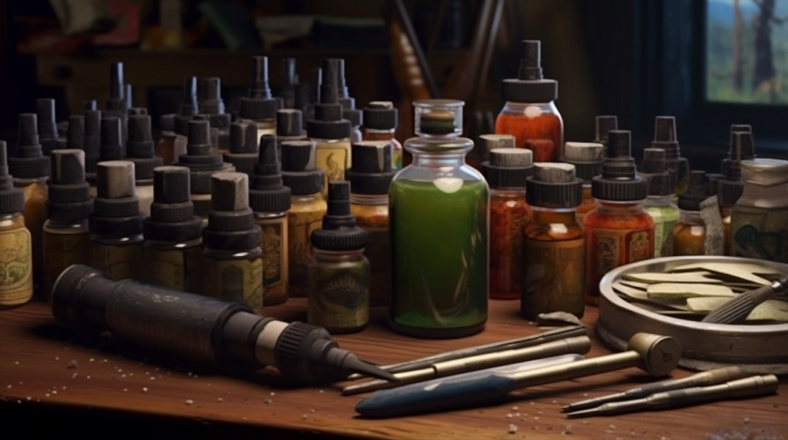
Cleaning solvents are specifically designed to eliminate dirt, grime, and powder residue from your gun’s barrel and other components. These solvents effectively dissolve and remove contaminants, enhancing the efficiency of your gun cleaning. Various types of cleaning solvents are available, such as water-based, petroleum-based, and synthetic solvents, each offering unique benefits and drawbacks.

Gun Oils

Gun oils, also called firearm lubricants, are essential for reducing friction between moving parts and protecting against rust and corrosion. Using the right oil ensures your gun functions smoothly, accurately, and safely. There are various types of gun oils, such as petroleum-based, synthetic, and bio-based oils, each with different properties to suit various firearms and uses.

Choosing the Right Cleaning Solvents and Oils

Consider Your Firearm Type

When choosing cleaning solvents and oils, it’s important to take into account the type of firearm you have. Certain firearms may necessitate particular solvents or lubricants depending on their design, materials, or manufacturer’s recommendations. Therefore, it is crucial to consult your firearm’s manual for guidance on the suitable cleaning and maintenance products.

Evaluate the Product Properties

Different solvents and oils have distinct cleaning and lubricating properties. For instance, some solvents are good at removing copper buildup, while others are effective against powder residue. Likewise, certain oils provide excellent protection against corrosion and can handle high temperatures. When choosing solvents and oils, consider your specific cleaning and lubrication needs.

Consider Environmental and Health Factors

Some gun cleaning solvents and oils may contain harsh chemicals or produce strong odors that can be harmful to your health or the environment. Opt for products with low toxicity, low odor, and eco-friendly properties whenever possible.

Proper Use of Gun Cleaning Solvents and Oils

Follow Manufacturer’s Instructions

Always follow the instructions provided by the cleaning solvent and oil manufacturers, as well as your firearm’s manual, to ensure proper cleaning and maintenance. Using too much or too little solvent or oil can lead to poor cleaning results or even damage your firearm.

Use Appropriate Cleaning Tools

Ensure you have the right tools for cleaning and lubricating your firearm, such as cleaning rods, brushes, patches, and jags. Using the correct tools will help you apply solvents and oils effectively and prevent damage to your gun’s components.

Establish a Cleaning Routine

Regularly clean and lubricate your firearm based on your usage and the manufacturer’s recommendations. Consistent cleaning and maintenance will help prolong your gun’s lifespan, improve its performance, and ensure its safety.

Conclusion

Using the right solvents and oils is crucial for keeping your firearm in top shape. It ensures performance, accuracy, and safety. By selecting the appropriate products, understanding their uses, and using them correctly, you can maintain your gun’s reliability and safety. Remember, a clean and well-maintained firearm is a reliable and safe one!

How to choose the perfect rifle scope for your rifle

Table of contents

The Role of a Rifle Scope

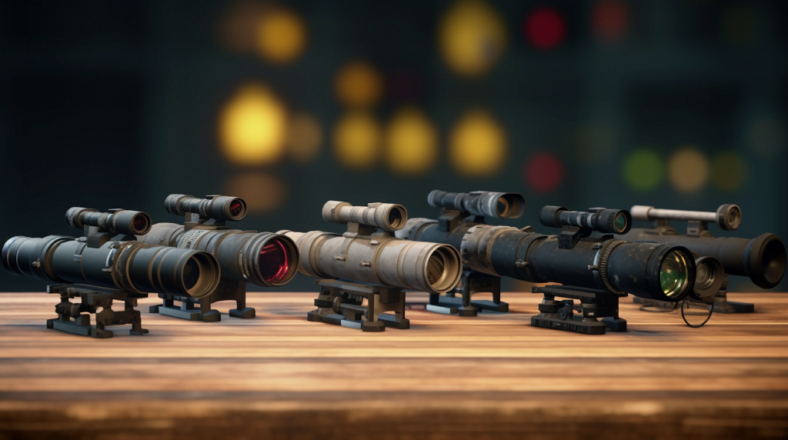
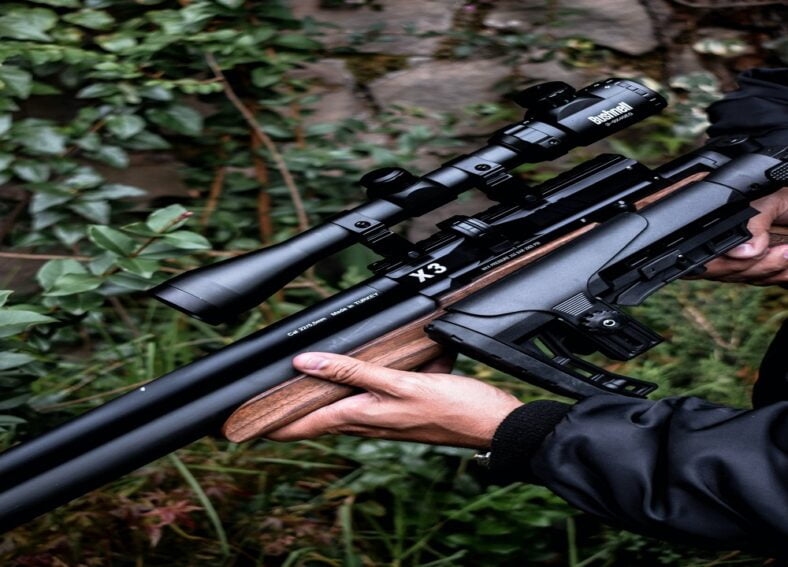
A perfect rifle scope is an essential piece of equipment that can significantly improve your shooting accuracy and overall experience. Whether you’re a hunter, target shooter, or a long-range shooting enthusiast, choosing the right scope for your rifle is crucial. In this article, we’ll discuss the factors you should consider when selecting a scope and offer tips for finding the perfect match for your needs.

Factors to Consider When Choosing a Rifle Scope

Magnification

The magnification of a scope is one of the most important factors to consider. Magnification determines the power of the scope and how much it can enlarge the image of your target. Low magnification scopes (e.g., 1-4x) are suitable for close-range shooting, while high magnification scopes (e.g., 6-24x) are ideal for long-range shooting. Determine your primary shooting distance and choose a scope with appropriate magnification.

Objective Lens Size

The size of the objective lens affects the amount of light that enters the scope, influencing image brightness and clarity. Larger objective lenses allow for more light transmission, resulting in brighter and clearer images. However, they also make the scope heavier and bulkier. Consider the balance between image quality and weight when choosing a scope with the right objective lens size.

Reticle Type

The reticle, or crosshair, is the aiming point within the scope. There are numerous reticle types available, including duplex, mildot, and BDC (bullet drop compensator). Each reticle type serves a specific purpose and caters to different shooting styles. Consider your shooting needs and preferences when selecting a reticle type.

Focal Plane

Rifle scopes can have either a first focal plane (FFP) or second focal plane (SFP) reticle. In FFP scopes, the reticle size changes with magnification, maintaining the same relationship to the target. In SFP scopes, the reticle size remains constant, regardless of magnification. FFP scopes are generally better for long-range shooting, while SFP scopes are more suitable for close to medium-range shooting.

Turret Adjustments

Turret adjustments allow you to zero your scope and make windage and elevation adjustments for accurate shooting. Choose a scope with reliable, precise, and easy-to-use turrets. Look for features like locking or zero-reset turrets, which can make it easier to make adjustments in the field.

Durability and Quality

A good rifle scope should be durable and able to withstand harsh conditions. Look for scopes that are waterproof, fog-proof, and shockproof to ensure reliable performance in various environments. Additionally, consider the overall build quality, materials, and lens coatings, as these factors can influence the scope’s performance and longevity.

Trying Out Different Scopes

Test Before You Buy

Before committing to a rifle scope, it’s a good idea to test out different models to find the one that suits your needs best. Visit local shooting ranges or stores that allow you to try out various scopes to get a feel for their performance and handling. This hands-on experience will help you make a more informed decision when purchasing a scope.

Conclusion

Choosing the right scope for your rifle is essential for optimizing your shooting experience and accuracy. By considering the factors discussed in this article, such as magnification, objective lens size, reticle type, focal plane, turret adjustments, and durability, you’ll be better equipped to select the perfect rifle scope for your needs. Don’t forget to test out different models before making a decision, as hands-on experience can provide valuable insights into what works best for you. Happy shooting!

How To Adjust Scope Parallax for Better Accuracy

Scope parallax adjustment helps reduce aiming error when your eye is not perfectly centered behind the scope. If your scope has a side-focus or adjustable-objective control, the practical goal is to make the reticle stay still on the target when your eye moves slightly behind the eyepiece.

This guide explains parallax in practical shooter language. It is not a replacement for your optic manual, safe firearm handling, or live-fire confirmation. Start with the NSSF firearm safety rules before any scope setup or range work.

Table of Contents
  1. Quick Parallax Adjustment Checklist
  2. What Scope Parallax Is
  3. When Parallax Matters
  4. How To Adjust Parallax
  5. Common Mistakes
  6. Parallax and Zero
  7. Field Use
  8. Related Guides
  9. FAQ
  10. Final Recommendation

Quick Parallax Adjustment Checklist

StepWhat to doWhy it matters
Confirm safetyUnload during setup and follow range commands during live fireOptic adjustment never comes before firearm safety.
Set reticle focusAdjust the diopter so the reticle looks sharpA blurry reticle makes parallax harder to judge.
Set magnificationUse the magnification you plan to shoot or testParallax sensitivity can feel different at higher power.
Aim at targetUse a stable rest and a clear target at known distanceA stable rifle makes reticle movement easier to see.
Move eye slightlyShift your eye behind the scope without moving the rifleReticle movement on target shows parallax error.
Adjust side focus/AOTurn until the reticle appears stable on the targetThis reduces aiming error from imperfect eye position.
Confirm with shotsVerify groups at the rangeAdjustment is only useful if real shots confirm it.

What Scope Parallax Is

Parallax happens when the target image and reticle do not appear on the same optical plane. When that happens, the reticle can seem to shift on the target as your eye moves behind the scope, even if the rifle itself has not moved.

Parallax is not the same as focus, but the controls can feel related. Reticle focus is usually adjusted with the diopter near the eyepiece. Parallax or side-focus adjustment is usually on the side turret or objective bell when the scope includes that feature.

When Parallax Matters

Parallax matters more at longer distances, higher magnification, and smaller targets. It is less noticeable at short distances or low magnification, but it can still affect precision. Many hunting scopes are factory-set for a common distance and may not have a parallax control.

If your scope does not have a parallax adjustment, focus on consistent cheek weld, proper eye relief, and confirmed zero. Those fundamentals still matter even with an adjustable scope.

How To Adjust Scope Parallax

Set up on a stable rest with the firearm pointed safely at the target. Make sure the reticle is sharp first. Then aim at a clear target at the distance you plan to shoot. Without touching the rifle, move your eye slightly up, down, left, and right behind the scope.

If the reticle appears to move across the target, adjust the side-focus or adjustable objective control. The distance numbers on the knob are a starting point, not a guarantee. The practical test is whether the reticle stays still on the target as your eye moves slightly.

Common Parallax Mistakes

  • Using the side-focus knob only to make the target look sharp.
  • Skipping reticle focus before checking parallax.
  • Trusting the knob’s yardage number without verifying on target.
  • Trying to diagnose parallax while the rifle is wobbling.
  • Ignoring cheek weld and eye position.

Parallax and Zero

Parallax adjustment does not replace zeroing. You still need to confirm point of impact with live fire at the range. For ammunition terminology and standards, SAAMI is a useful authority reference, but your actual zero comes from your rifle, scope, ammunition, and shooting position.

When testing zero, use careful groups instead of single shots. If groups shift when your eye position changes, parallax or inconsistent cheek weld may be part of the issue.

Field Use

In the field, you may not have time for perfect adjustment. Set the scope for a practical distance range, keep magnification reasonable, and build a repeatable cheek weld. For formal marksmanship pathways and training culture, USA Shooting is a useful resource.

For hunting, the ethical choice is always to pass on shots where distance, target ID, backstop, or stability are uncertain. Parallax adjustment helps precision, but it cannot fix unsafe conditions.

FAQ

What does scope parallax look like?

It looks like the reticle moving across the target when your eye shifts behind the scope, even though the rifle is still.

Is parallax the same as focus?

No. Focus makes the reticle or target look sharp. Parallax adjustment helps align the reticle and target image so the reticle does not appear to shift with eye movement.

Do all rifle scopes have parallax adjustment?

No. Many hunting scopes are factory-set and do not include a side-focus or adjustable objective control. In that case, consistent eye position is especially important.

Can parallax cause missed shots?

Yes, especially at longer distances, high magnification, or on small targets. It is one possible source of error along with wind, zero, ammunition, trigger control, and shooting position.

Final Recommendation

Adjust parallax by watching reticle movement, not just by reading the yardage number on the knob. Set reticle focus first, use a stable position, verify with live-fire groups, and keep your safety and shot conditions ahead of any optic setting.

Low-Light Shooting Tips: Safety and Accuracy Guide

Low-light shooting is harder because the target, sights, background, and safety risks are all less obvious. The safest improvement is not simply “add more light.” It is learning when not to shoot, how to identify the target and what is beyond it, how your sights behave in dim light, and how to practice under controlled range conditions.

This guide is written for responsible range practice, hunting preparation, and general marksmanship awareness. Always follow your firearm manual, local laws, range rules, and the core safety rules. The NSSF firearm safety rules are the baseline before any low-light practice.

Table of Contents
  1. Quick Low-Light Shooting Checklist
  2. Why Low Light Is Different
  3. Identify Before Shooting
  4. Sights and Optics
  5. Safe Practice Plan
  6. Hunting Considerations
  7. Common Mistakes
  8. Related Guides
  9. FAQ
  10. Final Recommendation

Quick Low-Light Shooting Checklist

CheckWhat to confirmWhy it matters
Legal lightHunting or range activity is allowed at that time and locationLow light can create legal and ethical problems fast.
Target IDYou can clearly identify the target, not just a shape or soundNever shoot at an uncertain target.
BackstopYou know what is behind and around the targetBackgrounds are harder to read in dim light.
Sight pictureYour sights, reticle, or dot are visible without covering the targetAiming errors increase when contrast drops.
Light disciplineYou know how your light affects vision and target visibilityToo much or too little light can both cause problems.
Practice settingLow-light drills happen only at an approved range or safe setupControlled practice beats guessing in the field.
Stop ruleYou know when visibility is too poor to continueThe best low-light skill is knowing when not to shoot.

Why Low Light Is Different

Low light reduces contrast. That makes it harder to judge distance, see sight alignment, read terrain, and confirm what is beyond the target. It can also change how your eyes respond to muzzle flash, bright lights, shadows, and reflective surfaces.

Accuracy problems in low light are often decision problems before they are trigger problems. If the target is unclear, the backstop is uncertain, or the sight picture is not reliable, the correct choice is to stop. Better equipment cannot fix a bad identification decision.

Identify the Target Before Shooting

Target identification is the central rule. A shooter must know what the target is, where the safe backstop is, and what else is nearby. Low-light conditions make shapes and movement easier to misread, so do not treat movement, noise, or outline alone as enough information.

For secure storage and safe firearm habits around the home, Project ChildSafe is also worth referencing. Low-light awareness should include the full safety picture, not only aiming technique.

Understand Your Sights and Optics in Dim Light

Iron sights, illuminated reticles, red dots, scopes, and night sights all behave differently as light fades. A bright dot can bloom and cover detail. A non-illuminated reticle may disappear against a dark target. A scope can show a clearer image than the naked eye, but it does not remove the need to identify the target and background.

Practice with the same sighting system you plan to use. Check brightness settings, battery status, reticle visibility, and how the sight appears from different positions. If your optic has illumination, use the lowest setting that gives a clear aiming reference without washing out the target.

Build a Safe Low-Light Practice Plan

Low-light practice should happen only where it is allowed and controlled. Confirm range rules, target setup, backstop, emergency lighting, and supervision if needed. Start with simple drills: clear target identification, slow groups, sight visibility checks, and safe reload or handling practice only if the range permits it.

Do not add speed until safety and visibility are reliable. Record what worked: lighting level, sight setting, distance, target color, and whether you could call your shots. That information is more useful than trying to “win” a dark practice session.

Low-Light Hunting Considerations

Hunting adds legal and ethical limits. Shooting hours, species identification, blaze-orange rules, artificial-light rules, and property boundaries vary by place. Check your local wildlife agency before relying on any general advice. When visibility is marginal, passing the shot is often the responsible choice.

For competitive and formal marksmanship pathways, USA Shooting is a useful authority source. For hunting, pair marksmanship practice with local regulations and hunter education before field use.

Common Low-Light Shooting Mistakes

  • Shooting before the target and backstop are clearly identified.
  • Using an optic illumination setting that is too bright.
  • Assuming a scope can replace safe visual confirmation.
  • Practicing low-light handling in an unsafe or unapproved place.
  • Ignoring local hunting-hour or artificial-light laws.
  • Forgetting that fatigue and darkness make judgment worse.

FAQ

What is the most important low-light shooting rule?

The most important rule is target identification. If you cannot clearly identify the target and what is beyond it, do not shoot.

Do illuminated reticles help in low light?

They can help, but only when set correctly. Too much brightness can cover detail or reduce your ability to see the target clearly.

Can I practice low-light shooting at home?

Live-fire practice belongs only in approved safe locations. Dry practice should follow your firearm manual, strict unloading procedures, safe direction, and secure ammunition separation.

Is low-light hunting always legal?

No. Legal shooting hours, artificial-light rules, and species rules vary by location. Check your local wildlife agency before hunting in low-light conditions.

Final Recommendation

Low-light shooting should be treated as a decision-making and safety problem first, and an accuracy problem second. Practice in controlled settings, learn how your sights behave, verify every target and backstop, and stop when visibility is not good enough. That discipline matters more than any single piece of gear.

How to Choose the Right Ammunition for Your Firearm Safely

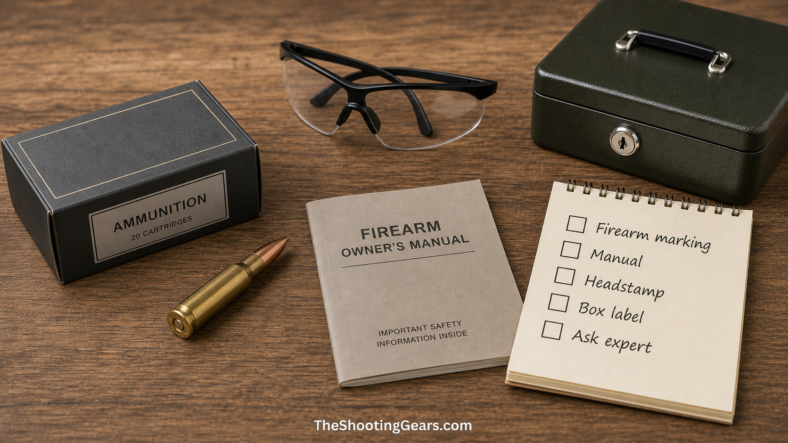
The safe rule for ammunition is simple: use only the ammunition the firearm manufacturer designates for that specific firearm, confirmed by the markings on the gun, the ammunition headstamp, the box label, and the owner’s manual. A cartridge fitting into the chamber or action does not prove it is safe.

This guide explains how to verify a match the right way. It is a safety explainer, not a caliber recommendation, reloading guide, legal guide, or product guide. It does not replace your firearm manufacturer’s instructions, range safety officer, or a qualified gunsmith.

The Safe Rule: Match the Ammunition to the Firearm

Firearms should be used only with ammunition designated by the manufacturer for that firearm. This is one of the core safety rules published by SAAMI firearm safety rules and echoed in the NSSF rules of safe gun handling. The ammunition must match the firearm manual and the markings on the firearm. If those do not line up clearly, do not shoot it.

Check the Firearm Markings and Ammunition Headstamp

Start by reading the firearm’s own markings, which usually appear on the barrel, frame, slide, or receiver and state the cartridge the firearm is chambered for. Then compare that to the headstamp on the cartridge case and the original ammunition packaging.

According to SAAMI’s ammunition interchangeability guidance, the safest verification path is to check the ammunition headstamp against the firearm markings and manufacturer information. If the designation is uncertain or does not clearly match, do not use it until a qualified person examines it.

Read the Manual and Ammunition Box Warnings

The owner’s manual and ammunition box carry specific warnings. The manual tells you what the firearm is chambered for and may also list cartridges, pressure levels, or ammunition types to avoid. The ammunition box states the cartridge designation and warnings from the ammunition maker.

If you do not have the manual, check the firearm manufacturer’s website or contact the manufacturer. Treat manufacturer documentation as the authority, not a forum comment, a friend’s memory, or a visual guess.

Do Not Trust Fit Alone

A round fitting in the chamber or cycling through the action does not mean it is safe to fire. Some cartridges are dimensionally similar but operate at different pressures or have other compatibility limits. Chambering a round is not proof that it belongs in that firearm.

If you are tempted to try ammunition because it physically fits, stop and verify it by firearm markings, manual, headstamp, box label, and qualified guidance.

Watch for Shotgun Shell Length and Gauge

Shotguns add two specific traps: shell length and gauge. Loading a longer shotshell into a shorter chamber can create dangerous pressure conditions, so the shell length must match what the shotgun chamber is marked for. Gauge matters just as much, and different gauges are not interchangeable.

Confirm both the gauge and chamber length stamped on the barrel before loading any shotshell. If the marking is unclear, stop and ask a qualified person.

Be Careful With Military, +P, Reloaded, or Unknown Ammunition

Some ammunition needs extra caution. Military-standard ammunition should be used only in firearms explicitly marked or documented for that specific cartridge. Higher-pressure loads such as +P should be used only if the firearm manufacturer’s markings or manual support them.

Reloaded, remanufactured, surplus, inherited, or loose unknown ammunition should be treated carefully because the components, storage history, and pressure assumptions may not be clear. When a cartridge’s history or designation is uncertain, do not fire it.

Inspect Every Cartridge Before Use

Examine each cartridge before loading. Look for dents, corrosion, split cases, loose or missing components, oil or solvent exposure, water damage, and anything that looks irregular. Keep solvents and excessive lubricants away from ammunition.

If ammunition has been submerged, badly wet, contaminated, damaged, or stored under unknown conditions, set it aside and follow manufacturer or qualified guidance for disposal. Do not try to test questionable ammunition by firing it.

When to Stop and Ask a Qualified Person

If anything is uncertain, stop. A qualified gunsmith, the firearm manufacturer, a range safety officer, or a knowledgeable retailer can help confirm whether ammunition is correct for your firearm. SAAMI also publishes a library of ammunition and firearm advisories for further safety reading.

There is no downside to checking. The cost of guessing wrong can be severe.

Frequently Asked Questions

How do I know what ammunition my gun takes?

Read the cartridge designation marked on the barrel, frame, slide, or receiver, then confirm it against the owner’s manual, ammunition headstamp, and box label. If anything is unclear, ask the manufacturer or a qualified gunsmith.

If a cartridge fits in the chamber, is it safe to shoot?

No. Fit alone is not proof of safety. Some cartridges are similar in size but not safe in the same firearm. Always verify by manufacturer markings, the manual, the headstamp, and qualified guidance.

Can I shoot +P or military ammunition in my firearm?

Only if the firearm manufacturer’s markings or manual specifically support that ammunition. Higher-pressure +P loads and military cartridges are not universal substitutes.

Is it safe to use ammunition that got wet?

Ammunition that has been very wet, submerged, contaminated, or exposed to oil or solvents should not be fired unless the manufacturer or another qualified source says it is safe. When in doubt, do not use it.

What should I do if I am not sure the ammunition is correct?

Stop and do not fire it. Have the firearm and ammunition checked by a qualified gunsmith, the manufacturer, a range safety officer, or another qualified person.

Final Safety Recommendation

Choosing ammunition is a verification task, not a guessing game. Match the cartridge to the firearm’s markings, confirm it against the manual and headstamp, inspect every round, and treat fit as meaningless on its own. When anything is unclear, stop and ask a qualified person before loading or firing.

Shooting Range Trip Checklist: Safe Preparation Guide

A good shooting trip starts before you leave home. Whether you are going to a public range, a private range, or a supervised field session, the safest plan is to confirm rules, pack verified gear, transport firearms and ammunition correctly, and know what you will practice before the first shot.

This guide is a practical pre-trip checklist for responsible shooters. Always follow local laws, range rules, firearm manuals, and the basic safety rules. The NSSF firearm safety rules are the baseline for every range day or shooting activity.

Table of Contents
  1. Quick Pre-Trip Checklist
  2. Confirm Rules and Purpose
  3. Pack Safety Gear
  4. Transport Firearms and Ammunition
  5. Plan Your Practice
  6. Range Etiquette
  7. After-Trip Checks
  8. Related Guides
  9. FAQ
  10. Final Recommendation

Quick Pre-Trip Checklist

CategoryWhat to confirmWhy it matters
RulesRange hours, allowed firearms, allowed ammunition, target rules, and required safety gearEvery range has its own operating rules.
Firearm statusFirearms are unloaded, cased, functional, and legal to transportSafe transport starts before the vehicle moves.
AmmunitionCorrect caliber/gauge, safe condition, and enough for the practice planWrong ammunition is a serious safety risk.
Eye and ear protectionEveryone has suitable protection before shooting startsHearing and eye protection are non-negotiable.
Targets and toolsApproved targets, stapler/tape, marker, spotting aid, and basic maintenance itemsSmall missing items waste range time.
Practice planZeroing, grouping, position work, safety drills, or gear checkA plan makes practice more useful and safer.
Storage after tripFirearms and ammunition return to secure storageThe trip is not over until everything is secured.

Confirm Rules and Purpose Before You Go

Before packing gear, decide what the trip is for. Are you sighting in a rifle, testing a new optic, practicing trigger control, checking hunting gear, or introducing a beginner to safe range habits? A clear purpose keeps the session focused and prevents random gear piles.

Next, check the rules for the location. Public ranges may limit ammunition types, target materials, rapid fire, drawing from a holster, steel target distance, or shotguns. Private land also needs a safe backstop, permission, and compliance with local law.

Pack Safety Gear First

Eye and ear protection should be packed before optional accessories. Bring protection for every person attending, not only the shooter. Electronic earmuffs, foam plugs, wraparound eye protection, a brimmed hat, and a small first-aid kit are basic range-day items.

For secure storage and responsible firearm ownership reminders, Project ChildSafe is a useful resource. Good preparation includes how firearms are stored before and after the trip, not just what happens at the firing line.

Transport Firearms and Ammunition Carefully

Transport rules vary by location, so check your state and local requirements. As a general safety habit, firearms should be unloaded, actions checked, and gear organized so there is no confusion at the range. Keep ammunition in the correct packaging or clearly labeled containers.

Before leaving, confirm that the ammunition matches the firearm. Do not rely on memory or similar-looking cartridges. A quick caliber/gauge check is one of the simplest ways to prevent a serious mistake.

Plan Your Practice Session

A good practice plan is short and specific. Examples include confirming zero, shooting three careful groups, practicing safe loading and unloading, checking optic settings, or working on one accuracy fundamental. Trying to practice everything in one session usually makes progress harder to measure.

Write down firearm, ammunition, distance, weather, optic setting, group size, and any issues. Those notes help you spot patterns later. For organized marksmanship and competition pathways, USA Shooting is a good authority source to keep in your learning path.

Range Etiquette and Communication

Listen to the range officer, follow cease-fire commands immediately, and communicate clearly with the people around you. Do not handle firearms while people are downrange. Keep gear organized so benches, walkways, and firing points stay clear.

If you bring a new shooter, explain the safety rules before arriving and keep the first session simple. A calm, predictable session builds better habits than overwhelming someone with too many firearms, targets, or drills.

After-Trip Checks

When the session is over, confirm firearms are unloaded before casing them, collect targets and trash, and account for ammunition and accessories. At home, clean or inspect firearms as needed, record notes, and return firearms and ammunition to secure storage.

Post-trip notes are especially useful after sight-in work or gear testing. If a scope shifted, ammunition grouped poorly, or a piece of gear failed, write it down before the details fade.

FAQ

What should I bring to a shooting range?

Bring the firearm, correct ammunition, eye protection, ear protection, approved targets, target tools, a range bag, identification or membership card if required, and any manuals or tools needed for the session.

Should I plan drills before going to the range?

Yes. A simple plan helps you use ammunition and time wisely. Focus on one or two goals, such as zero confirmation, group size, trigger control, or safe handling.

How should firearms be transported to the range?

Follow local law and range rules. As a safety habit, firearms should be unloaded, cased, and separated from confusion with loose gear. Ammunition should be clearly identified and matched to the firearm.

What is the most common range-day mistake?

One common mistake is packing gear without a purpose. Another is forgetting small essentials such as eye protection, ear protection, targets, a stapler, or the correct ammunition.

Final Recommendation

A safe shooting trip is built around preparation: rules, safety gear, correct ammunition, organized transport, a clear practice plan, and secure storage afterward. Keep the plan simple, respect the range, and use every trip to build safer habits.

Can a Felon Hunt in Texas?

Can a felon hunt in Texas? Sometimes, but it depends on the person’s exact conviction, supervision status, restoration of rights, hunting method, and current federal and Texas law. A hunting license does not automatically make it legal for a person with a felony conviction to possess a firearm or ammunition.

This article is a plain-English starting point, not legal advice. If you or someone in your hunting party has a felony conviction, confirm the answer with a Texas criminal-defense attorney, Texas Parks and Wildlife, and the current official statutes before handling any weapon or buying a hunting license.

Table of Contents

Quick Answer

A person with a felony conviction may be able to hunt in Texas only if the hunting method, license, supervision terms, location, and weapon possession are all lawful for that person. The risky part is usually not the hunting license itself. The risky part is possession of a firearm, ammunition, or another regulated weapon.

Federal law is especially important. Under 18 U.S.C. 922, people convicted of certain crimes punishable by imprisonment for more than one year are generally prohibited from possessing firearms or ammunition. Texas law also has its own unlawful-possession rules, including Texas Penal Code Chapter 46.

So the safest short answer is this: do not assume. Check your exact case before hunting, especially before touching a gun, ammunition, or a borrowed firearm in camp.

Hunting License vs. Weapon Rights

A Texas hunting license is not the same thing as firearm eligibility. Texas Parks and Wildlife lists hunting licenses, permits, and endorsements through its official Hunting Licenses, Permits & Endorsements page, but buying or holding a license does not erase federal or state weapon restrictions.

That difference matters. A person could meet license requirements for a season and still be prohibited from possessing a firearm or ammunition. A person could also be under probation, parole, bond, protective order, or court conditions that are stricter than general hunting rules.

For content quality and reader safety, we should be direct here: if a person with a felony conviction wants to hunt in Texas, the first question is not “Can I buy a license?” The first question is “What weapons and hunting methods am I legally allowed to possess and use right now?”

Federal Firearm Rule

Federal firearm law can apply even when someone is standing on private land in Texas. In general, federal law prohibits certain convicted people from possessing firearms or ammunition. The exact details depend on the conviction, sentence exposure, rights restoration, and other legal facts.

This is why “Texas allows it after five years” is too simple and can mislead readers. Even if someone has heard about a Texas-specific rule, federal law may still create a separate problem. A hunting trip that includes a rifle, shotgun, handgun, or ammunition can become legally dangerous very quickly.

Do not rely on advice from a friend, a forum, or an old blog post for this. Read the current federal rule, then get case-specific legal advice before possessing any firearm or ammunition.

Texas Firearm Rule

Texas also has unlawful-possession rules in Penal Code Chapter 46. The Texas rule is often discussed because it includes timing and location language for people with felony convictions. But this is exactly why the article must be careful: the state rule does not automatically cancel federal law, and small details can change the answer.

For a hunter, the practical issue is simple. Before planning any firearm hunt, confirm whether the person can legally possess the firearm, possess ammunition, transport it, be in a vehicle with it, handle it at camp, and use it on the property where the hunt happens. A “yes” to one part does not guarantee a “yes” to all parts.

If there is any uncertainty, contact a qualified Texas attorney. Texas Parks and Wildlife can help with hunting regulations, seasons, tags, methods, and license questions, but a criminal-law attorney is the safer source for individual firearm-rights questions.

What About Bows, Crossbows, and Airguns?

Some people ask whether a felon can hunt with a bow, crossbow, or airgun instead of a firearm. That may be possible in some situations, but it still depends on the person’s court conditions, supervision terms, local rules, hunting season, species, and legal method of take.

Do not assume that “not a firearm” means “automatically allowed.” Some probation or parole terms may restrict weapons more broadly. Some hunting seasons allow only specific legal methods. Some public lands have additional rules. Always check the current Texas Outdoor Annual and the land-specific rules before choosing the method.

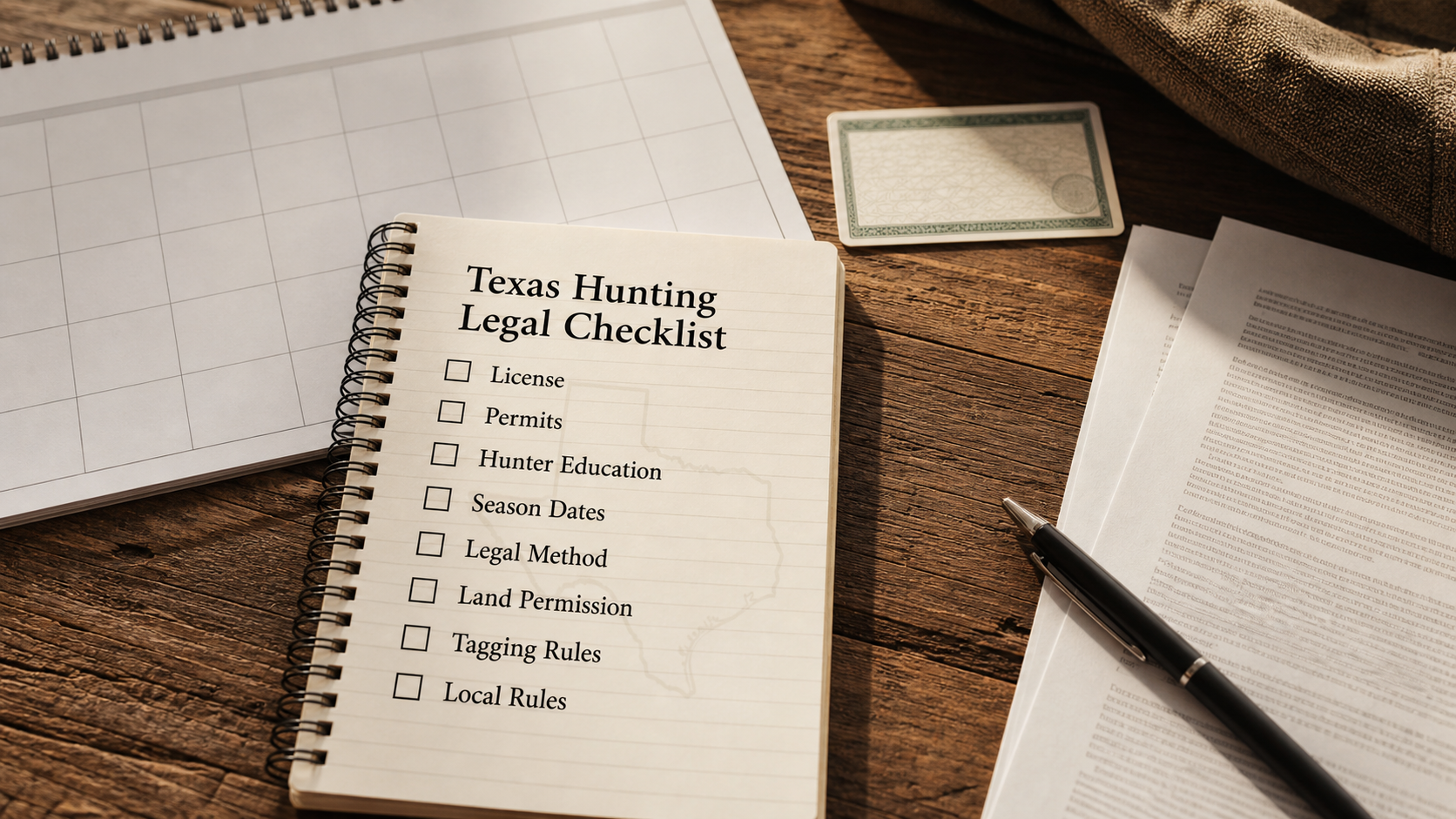
Texas Hunting Checklist

Before a person with a felony conviction hunts in Texas, use this checklist as a starting point. It does not replace legal advice, but it helps identify the decisions that must be verified.

  • Conviction details: Know the exact conviction, sentence, release date, and whether rights were restored.
  • Federal law: Check whether federal firearm and ammunition restrictions still apply.
  • Texas law: Check Texas Penal Code Chapter 46 and any current updates.
  • Supervision terms: Review probation, parole, bond, court orders, and written conditions.
  • Hunting license: Confirm the required Texas license, endorsement, tag, or permit.
  • Legal method: Confirm the species, season, county, property type, and allowed equipment.
  • Land rules: Check public-land, lease, ranch, outfitter, and local restrictions.
  • Transport and camp: Confirm whether the person can be around firearms or ammunition owned by others.

What Not To Do

Do not borrow a rifle “just for the hunt” without confirming legality. Do not ride in a truck with guns and ammunition if possession or access could be a problem. Do not assume that private land makes the issue disappear. Do not rely on a hunting-license sale as proof that every weapon method is legal.

Also, do not treat online comments as legal clearance. This topic is fact-specific. Two people can both have felony records and still have different answers because of the conviction type, dates, rights restoration, supervision terms, and weapon involved.

FAQ

Can a felon buy a Texas hunting license?

A hunting license question is separate from weapon possession. Even if a license is available, the person still must verify whether they can lawfully possess the weapon, ammunition, and equipment used for the hunt.

Can a felon hunt with a gun in Texas?

Do not assume so. Federal and Texas firearm laws can both matter, and federal firearm restrictions may still apply even if someone has heard about a Texas timing rule. Get case-specific legal advice first.

Can a felon hunt with a bow in Texas?

Possibly, but it depends on supervision terms, court orders, hunting season, species, property rules, and whether that equipment is legal for the hunt. Verify before going.

Does a hunting license restore gun rights?

No. A hunting license does not restore firearm rights or override federal or state weapon laws.

Who should a person call before hunting?

For hunting rules, contact Texas Parks and Wildlife or review the Texas Outdoor Annual. For felony-related weapon rights, contact a qualified Texas criminal-defense attorney.

Final Recommendation

A felon may be able to hunt in Texas in some situations, but the answer is not a simple yes. The safe approach is to separate the questions: license eligibility, legal hunting method, firearm and ammunition possession, supervision restrictions, property rules, and current state/federal law.

If any part is uncertain, do not handle the weapon or go hunting until the answer is verified through official sources and legal advice. That protects the hunter, the landowner, the hunting party, and the future of the hunt.

How to Hunt Groundhogs Safely and Legally

To hunt groundhogs well, start with permission, current local regulations, and a safe shooting plan before you ever think about gear. Groundhog hunting is usually a field-edge and pasture hunt: you find active burrows, watch feeding windows, use the wind and cover, and take only shots with a clear backstop.

This guide is written for hunters who want a practical, legal, and ethical approach. Rules can change by state, county, land type, and season, so treat the field method below as hunting strategy and confirm the legal details with your state wildlife agency before you go.

Table of Contents
  1. Quick Answer
  2. Check the Rules First
  3. Where to Find Groundhogs
  4. How to Read Groundhog Sign
  5. Groundhog Hunting Gear Checklist
  6. How to Set Up Safely
  7. Common Groundhog Hunting Methods
  8. Mistakes to Avoid
  9. Frequently Asked Questions
  10. Final Recommendation

Quick Answer

The best way to hunt a groundhog is to scout active burrows, set up downwind with a clear view of feeding areas, wait during cooler parts of the day, and only take a shot when the groundhog is fully visible with a safe backstop behind it. The most important parts are landowner permission, regulation checks, and safe shot angles.

Groundhog and woodchuck rules are not identical everywhere. Some states treat them as furbearers, some list them with small game, and some allow landowners more flexibility for damage control. Before hunting, check seasons, license requirements, allowed methods, public-land rules, and local firearm restrictions.

A good starting habit is to read your state wildlife agency page every season. For example, Pennsylvania publishes current hunting seasons and limits through the Pennsylvania Game Commission seasons and bag limits. Use that kind of official source for the state where you will actually hunt.

Safety rules are not optional. Review the NSSF firearm safety rules, know what is beyond the target, and avoid shots toward roads, houses, livestock, equipment, or any skyline where the bullet path is unknown.

Where to Find Groundhogs

Groundhogs prefer areas where food, burrow sites, and visibility overlap. Productive spots often include hay fields, pasture edges, orchards, garden edges, brushy fencerows, old barns, pond banks, and raised ground near crop fields. They like to feed where they can quickly return to a burrow if alarmed.

Wildlife agencies and extension resources often describe woodchucks as burrowing animals that can cause property or crop issues. The Massachusetts woodchuck profile and the Missouri Department of Conservation woodchuck page are useful background references for behavior and habitat.

How to Read Groundhog Sign

Look for fresh dirt around a burrow entrance, clipped vegetation, worn trails, tracks in soft soil, and droppings near feeding areas. An active den often has a clean entrance and fresh disturbance. An old or inactive hole may look washed in, covered with leaves, or surrounded by tall undisturbed grass.

Scout From a Distance

Do not walk directly to every hole right before hunting. Use binoculars from a distance and mark likely burrows on a map or phone. Groundhogs can be alert around their den sites, and too much foot traffic can make them stay underground longer.

Use a simple field checklist before the hunt: permission, rules, wind, burrows, safe backstop, and exit path.

Groundhog Hunting Gear Checklist

You do not need a complicated setup to hunt groundhogs, but you do need gear that supports observation, safe shooting, and legal compliance. Keep the kit simple and avoid carrying more than you can use quietly.

  • Valid license, written permission if needed, and current regulation notes.
  • Binoculars for watching burrows without walking into the area.
  • Rangefinder or confirmed distance markers where legal and appropriate.
  • Stable rest such as a bipod, shooting sticks, or pack support.
  • Hearing and eye protection when firearms are used.
  • Orange or high-visibility clothing where required or smart for the property.
  • Water, sun protection, insect control, and a small first-aid kit.
  • Notebook or phone note for burrow locations, wind, and safe shooting lanes.

How to Set Up Safely

A safe setup starts behind the trigger. Pick a position where the field of fire ends in a reliable backstop such as a dirt bank or downward angle into the ground. Avoid low-angle shots across flat fields unless you can clearly account for the entire path beyond the target.

Use Wind and Cover

Groundhogs rely heavily on alert behavior near their burrows. Set up with the wind in your favor, avoid unnecessary movement, and use shade, fence lines, hay bales, or terrain to break up your outline. If the animal ducks into the burrow, wait quietly instead of rushing the spot.

Confirm the Target

Do not shoot at movement, partial shapes, or sound. Confirm the groundhog clearly, confirm that hunting it is legal at that time and location, and confirm the backstop. If any part of that chain is uncertain, pass the shot.

Common Groundhog Hunting Methods

Still-Hunting Field Edges

Move slowly along field edges and pause often to glass. This works best when you already know where burrows are located. Keep your route quiet, stay out of the open when possible, and avoid cresting hills where your outline appears against the sky.

Watching Active Burrows

The simplest method is to sit where you can watch one or more active burrows and feeding strips. Cooler morning and evening periods can be productive, but weather, pressure, and local food sources matter. Patience usually beats constant walking.

Working With Landowners

Many groundhog opportunities come from farms, gardens, hay fields, and private land. Be clear about where you may park, where you may shoot, what buildings or livestock must be avoided, and whether the landowner wants you to report burrow locations or damage areas after the hunt.

Mistakes to Avoid

  • Assuming one state’s groundhog rules apply everywhere.
  • Shooting without a clear backstop.
  • Walking directly over active burrows before setting up.
  • Using a field position that points toward roads, houses, barns, or livestock.
  • Ignoring wind and movement around the den site.
  • Failing to communicate boundaries with the landowner.

Frequently Asked Questions

Is groundhog hunting legal?

It depends on your state, land type, season, license status, and local rules. Always check your current state wildlife agency regulations before hunting groundhogs or woodchucks.

What time of day is best for groundhog hunting?

Groundhogs are often easier to spot when they are feeding outside the burrow, commonly during cooler parts of the day. Local weather and pressure matter, so scout your specific property rather than relying on one fixed time.

Where should I set up for groundhogs?

Set up where you can see active burrows and feeding areas while keeping a safe backstop behind any possible shot. Downwind, shaded, and slightly elevated positions can help if they are safe and legal.

Can beginners hunt groundhogs?

Beginners can hunt groundhogs if they are licensed, supervised where required, trained in firearm or bow safety, and disciplined about backstops and legal rules. A mentor or hunter education course is strongly recommended.

Final Recommendation

The best groundhog hunt is planned before the first shot opportunity appears. Confirm permission and regulations, scout burrows from a distance, choose a safe backstop, and keep the setup simple. If the shot angle, rule, or target is not clear, wait. Good groundhog hunting rewards patience and field discipline more than rushing.

Mountain Hunting in Kazakhstan: Planning Guide

Mountain hunting in Kazakhstan can be a serious, high-altitude adventure, but it is not a trip to plan casually. The country has huge mountain country, remote hunting areas, changing weather, protected landscapes, and paperwork that must be confirmed before you ever pack gear or book flights.

This updated guide turns the old trip story into a practical planning checklist. It does not replace a licensed outfitter, local wildlife authority, customs broker, or current legal advice. Use it to understand the questions you must answer before hunting in Kazakhstan.

Table of Contents

Quick Answer

Kazakhstan mountain hunting is best approached as an international expedition, not a normal weekend hunt. Before booking, confirm the hunting area, legal species, licensed outfitter, permit process, travel advisory, protected-area boundaries, trophy/export paperwork, firearm or bow transport rules, and emergency plan.

For travel risk, start with the current U.S. State Department Kazakhstan Travel Advisory. For conservation boundaries and protected landscapes, check country-level resources such as Protected Planet’s Kazakhstan profile. If a trophy export is involved, verify whether CITES or other wildlife trade paperwork applies before the hunt.

Why Kazakhstan Draws Mountain Hunters

Kazakhstan appeals to mountain hunters because the landscape is big, remote, and physically demanding. Depending on the region and legal program, hunters may be looking at steep climbs, glassing from ridges, long vehicle approaches, horseback support, and weather that changes quickly. The attraction is not only the trophy. It is the scale of the country, the altitude, the camp experience, and the challenge of moving safely in unfamiliar terrain.

That same appeal is also the risk. A beautiful mountain hunt can become a poor decision if the outfitter is vague, the permit process is unclear, the hunting boundary is not documented, or the travel plan has no backup. Treat the destination with respect before treating it as an adventure.

What to Confirm Before Booking

Before paying a deposit, get clear written answers. Ask what species is being hunted, what legal quota or permit supports the hunt, who holds the license, what land or concession is involved, and what paperwork you receive before arrival. A serious outfitter should be able to explain the process without vague promises.

  • Legal species: Confirm the exact species and whether the hunt is currently open.
  • Hunting area: Ask for the region, boundary, concession, or reserve relationship in writing.
  • Outfitter credentials: Verify who is licensed, who guides, and who handles permits.
  • Weapon import: Confirm firearm, ammunition, bow, or optic transport rules before flights.
  • Trophy/export process: Confirm veterinary, customs, CITES, and shipping steps if applicable.
  • Emergency plan: Ask about satellite communication, evacuation, medical care, and weather delays.

Do not accept “we handle everything” as the only answer. Good operators may handle much of the process, but you still need to understand what documents exist, whose name is on them, and what happens if a border, airline, or wildlife officer asks questions.

The legal side is the most important part of any Kazakhstan mountain hunt. You need to know whether the outfitter is operating legally, whether the animal is covered by a valid quota or permit, and whether you can legally transport your equipment into and out of the country.

If a protected or internationally regulated species is involved, trophy export may require additional paperwork. CITES requirements can change by species and country, so verify the exact scientific/common species name before the hunt and confirm the export path with the outfitter and destination authorities. The official CITES Appendices page is the starting point for checking whether international wildlife trade controls may apply.

Also verify local protected-area rules. Kazakhstan has many protected and conserved areas, and the exact boundary matters. A hunt that is legal in one concession or management area may be illegal in another. Protected Planet’s country data shows why hunters should take boundaries seriously before assuming open mountain country is huntable.

Travel Safety and Remote Country

International hunting travel has two layers of risk: normal travel risk and remote-country risk. Before departure, review the current travel advisory, passport validity, visa or entry rules, medical insurance, local contacts, and communication options. In the mountains, ask how the guide team handles weather, vehicle failure, altitude issues, injury, and delayed extraction.

Do not assume mobile service will exist. A satellite communicator, medical evacuation plan, and clear camp check-in routine are not luxuries on a remote mountain hunt. They are part of the plan.

Gear and Fitness Realities

Kazakhstan mountain hunts can punish weak boots, poor layering, and unrealistic fitness. Your gear list should be built around terrain, temperature swings, snow or rain, wind, long glassing sessions, and recovery from steep climbs. A flatland packing list is not enough.

Boots and Clothing

Break in mountain boots before the trip. Bring a layering system that handles sweat on climbs and cold during glassing. Ask the outfitter what previous hunters actually wore during that same season, not only what looks good on a generic gear list.

Optics and Glassing

Good binoculars, a stable tripod, and a spotting scope can matter more than extra gadgets. In mountain country, finding the animal is often harder than taking the shot. Plan for long periods of glassing in wind and cold.

Fitness and Altitude

Train with elevation, pack weight, and repeated climbs if possible. If you have medical concerns, talk to a physician before booking. A guide can slow the pace, but they cannot make up for poor preparation in steep country.

Ethical Hunting Expectations

Ethical international hunting starts before the shot. Confirm that the hunt supports legal wildlife management, does not cross protected boundaries, uses a qualified local team, and has a clear plan for meat, recovery, and documentation. If the outfitter cannot explain where the animal may be hunted and how the paperwork works, walk away.

In the field, take only shots you have practiced for and that conditions allow. Mountain wind, distance, angle, fatigue, and excitement can all distort judgment. Passing a poor shot is part of doing the trip right.

FAQ

Is mountain hunting in Kazakhstan good for beginners?

Usually no. It is better for hunters who already understand mountain travel, physical preparation, optics, and international paperwork. A beginner should build experience closer to home first.

Do you need a local outfitter in Kazakhstan?

For most visiting hunters, yes. A licensed outfitter or local operator is essential for permits, area access, language, logistics, and field safety. Verify credentials before paying.

Should you check CITES before a Kazakhstan hunt?

Yes, if any trophy or wildlife part may be exported. CITES rules depend on the species and country, so check the exact species and paperwork before the hunt.

What is the biggest planning mistake?

The biggest mistake is treating the hunt like a normal outfitted trip and not verifying permits, travel risk, protected-area boundaries, export rules, and emergency plans in writing.

What gear matters most?

Boots, layering, optics, communication, and weatherproof organization matter most. The best gear list depends on season, region, elevation, and outfitter logistics.

Final Recommendation

Mountain hunting in Kazakhstan can be memorable for the landscape, challenge, and people you share camp with. But the trip only makes sense when the paperwork, travel plan, outfitter, conservation boundaries, and emergency plan are clear before you go.

Choose the operator carefully, verify current rules from official sources, train for the mountains, and keep ethics ahead of excitement. That is how a hard international hunt becomes a good story instead of a preventable problem.


Where to Shoot a Whitetail Deer With a Crossbow

The ethical answer is simple: with a crossbow, only take a whitetail deer shot when the deer is calm, broadside or slightly quartering away, within your proven effective range, and there is a clear path to the heart-lung area with a safe backstop beyond. If the angle, distance, movement, or recovery plan is uncertain, pass the shot.

This guide is about ethical shot selection, not forcing a risky opportunity. Crossbow bolts kill by cutting tissue and causing blood loss, so shot angle, penetration, broadhead sharpness, and recovery discipline matter more than bravado.

Table of Contents
  1. Quick Answer
  2. Before You Think About Aiming
  3. Best Crossbow Shot Angles
  4. Shots to Pass
  5. Know Your Proven Range
  6. Crossbow Deer Shot Checklist
  7. After the Shot
  8. Common Mistakes
  9. Frequently Asked Questions
  10. Final Recommendation

Quick Answer

The best crossbow shot on a whitetail deer is usually a calm broadside or slight quartering-away shot aimed through the vital chest area, with the exact hold adjusted for angle and height. Avoid frontal, hard-quartering-to, running, obstructed, and long shots beyond your practiced limit.

Why Crossbow Shot Placement Is Different

A crossbow bolt does not create the same effect as a high-powered rifle bullet. It relies on sharp broadhead cutting, penetration, and a clear path through vital tissue. That makes angle and discipline especially important. A small change in deer position can turn a good opportunity into a shot you should pass.

Crossbows can be accurate, but accuracy on a target is not the same as field judgment on a live deer. Clothing, rest position, tree-stand angle, animal movement, brush, low light, and nerves all reduce the margin for error. Build your hunting limit around real field practice, not the advertised speed of the crossbow.

Before You Think About Aiming

Good shot placement starts before the deer appears. Confirm your state crossbow rules, legal light, tag requirements, broadhead rules, and property boundaries. Crossbow regulations vary widely, so use your state wildlife agency as the final authority.

Also confirm your equipment. A crossbow should be sighted in with the same bolts and broadheads you plan to hunt with, and the shooter should know the actual point of impact at hunting distances. For general equipment safety, review resources such as the National Bowhunter Education Foundation crossbow safety page.

Best Crossbow Shot Angles

Broadside

A broadside deer gives the clearest path through the chest cavity. Wait until the front leg position and body angle leave a clean path, and avoid forcing the shot through heavy shoulder bone. The goal is a fast, humane kill and a trackable recovery.

Slightly Quartering Away

A slight quartering-away angle can be very effective when the bolt can pass forward through the chest. The key is thinking about the exit path, not just the entry point. If the angle becomes steep or uncertain, wait for the deer to turn.

From an Elevated Stand

Tree-stand height changes the angle through the deer. Do not simply aim at the same visual spot you would from ground level. Think through the path of the bolt and avoid steep angles that reduce the chance of both-lung penetration.

Before taking a crossbow shot, confirm angle, distance, legal light, backstop, broadhead readiness, and recovery plan.

Shots to Pass

Passing a shot is part of ethical hunting. Do not shoot because you are excited, cold, or afraid the deer will leave. A poor shot can wound an animal and create a difficult recovery.

  • Frontal shots, especially with a crossbow.
  • Hard quartering-to shots where the shoulder blocks the chest path.
  • Running or alert deer that may jump the string.
  • Shots through brush, grass, limbs, or unknown cover.
  • Long shots beyond your proven range.
  • Steep downward shots where the path may hit only one lung.

Bowhunting education materials often emphasize patience, close-range discipline, and ethical shot selection. If you use online education references such as Bowhunter Ed, pair them with your state rules and in-person practice.

Know Your Proven Range

Your ethical range is not the farthest distance your crossbow can launch a bolt. It is the distance where you can repeatedly place hunting broadheads into the vital-size target from realistic positions, under pressure, with the same rest and clothing you will use in the field.

Practice from sitting, kneeling, elevated, and awkward positions if those match your hunt. Practice with a rangefinder, because guessing distance is a common source of missed or poor hits. If you cannot verify the range, do not shoot.

Crossbow Deer Shot Checklist

  • Is the deer legal and clearly identified?
  • Is the deer calm enough for a clean shot?
  • Is the angle broadside or slightly quartering away?
  • Is the distance inside your practiced limit?
  • Is there a clear path with no brush or limbs?
  • Is there a safe backstop and no people, roads, buildings, or livestock beyond?
  • Do you have a recovery plan and enough daylight?

After the Shot

After the shot, watch and listen carefully. Mark where the deer was standing and the direction it traveled. Do not rush into the area blindly. Give the animal appropriate time, inspect sign carefully, and follow local best practices for recovery.

If sign is poor or the hit is uncertain, consider calling an experienced tracker where legal. Recovery discipline is part of ethical hunting, not an afterthought.

Common Mistakes

  • Aiming at the deer as if crossbow bolts behave like rifle bullets.
  • Taking frontal or hard-quartering-to shots.
  • Shooting beyond practiced broadhead range.
  • Ignoring stand angle and exit path.
  • Forgetting to check state crossbow rules before the hunt.
  • Leaving without a recovery plan.

Frequently Asked Questions

Where should you aim at a deer with a crossbow?

Only take a shot that gives a clear path through the heart-lung area, usually on a calm broadside or slightly quartering-away deer. The exact hold depends on angle, height, and distance.

Should you take a frontal shot with a crossbow?

No. Frontal shots leave little margin for error and can be poor choices with crossbow bolts. Wait for a better angle.

How far should you shoot a deer with a crossbow?

Your limit is the distance where you can consistently place hunting broadheads from realistic field positions. If you have not proven that distance in practice, it is too far for hunting.

What if the deer is quartering toward you?

Pass the shot. Quartering-toward angles often put heavy bone and shoulder structure in the way of the chest path, especially for archery equipment.

Final Recommendation

The best crossbow shot on a whitetail is the one you are willing to pass if conditions are not right. Wait for a calm broadside or slight quartering-away deer, stay inside your proven range, think through the bolt path, and commit to a careful recovery. Ethical restraint is what turns crossbow shot placement into responsible hunting.

Exit mobile version