
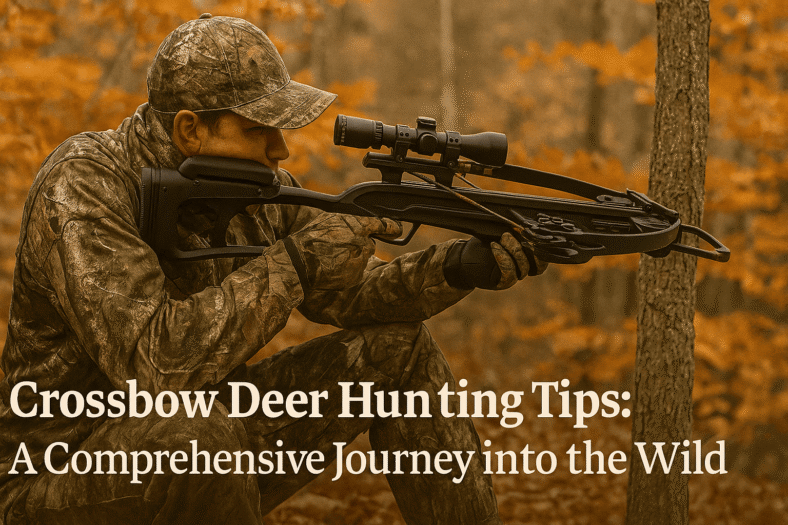
Crossbow deer hunting starts with three checks before you ever sit in a stand: current state regulations, hunter-safety fundamentals, and the setup instructions in your exact crossbow manual. Those three sources decide what is legal, what is safe, and what your equipment is built to do.
This guide covers legal checks, manual-first setup, pre-season practice, and ethical shot planning. It does not give state-specific legal advice, model-specific bolt numbers, guaranteed harvest claims, or product recommendations. Use it as a planning framework, then verify the details for your state, property, crossbow model, and season.
Table of Contents
Quick Answer: How To Prepare For Crossbow Deer Hunting
Prepare for crossbow deer hunting by confirming your current legal requirements, reading your crossbow manual, checking bolt and broadhead compatibility, practicing with the actual hunting setup, and setting a personal effective range before the season. A responsible hunter passes any shot that is obstructed, low-light, outside practiced limits, or legally uncertain.
The best crossbow deer hunting tips are not shortcuts. They are habits: verify the rules, handle the crossbow safely, practice early, keep equipment compatible, and let shot discipline matter more than excitement.
Check Crossbow Laws Before You Hunt
Crossbow legality for deer hunting changes by state, season, age or eligibility rules, property type, and equipment definition. Start with your state wildlife agency’s current deer regulations every year. Do not assume a crossbow rule from one state, forum, video, or old article applies where you hunt.
Hunter education is also part of responsible preparation. IHEA-USA provides hunter-education context, and Hunter-Ed explains why hunter education matters for safety, responsibility, and laws.
State Rules, Seasons, Tags, And Legal Equipment
Confirm season dates, tags, reporting, legal equipment, broadhead rules, hunter orange, and crossbow-specific restrictions from official sources. For example, Texas Parks and Wildlife publishes current hunting means and methods, but that is only a Texas example. Check your own state’s current rulebook before you hunt.
Public Land, Private Land, And Access Rules
Land access can add another layer of rules. Public land units, managed areas, leases, and private property may limit stand placement, parking, access hours, trimming, recovery routes, or use of equipment. If you are hunting public land, our public land deer hunting guide is a useful next read.
Start With The Crossbow Manual
Your crossbow manual is the authority for that model. Crossbows differ in draw weight, power stroke, bolt requirements, nock style, cocking method, decocking method, safety mechanism, and maintenance boundaries. General advice should never override the manufacturer’s instructions for your exact crossbow.
Bolt Weight, Length, Nock, And Spine Compatibility
Bolts need to match the manufacturer’s specifications for weight, length, nock style, and spine. Using bolts that are too light, the wrong length, or the wrong nock type can be unsafe and can damage the crossbow. For buying background, see our source-checked guide to crossbow bolts for deer hunting, but always confirm compatibility against your manual.
Broadhead Compatibility And Practice Heads
Broadheads must fit your crossbow setup and state rules. Practice with a setup that matches your hunting weight and point of impact, while handling broadheads carefully and storing them in a protective case. Do not assume a broadhead is safe or legal simply because it fits on the end of a bolt.
Cocking, Decocking, And Dry-Fire Cautions
Follow the manufacturer-approved cocking and decocking process. Dry-firing a crossbow can be dangerous and can damage equipment. Keep fingers and thumbs below the rail and away from the string path, keep the crossbow pointed in a safe direction, and never improvise a decocking method because it seems faster.

Practice Before Deer Season
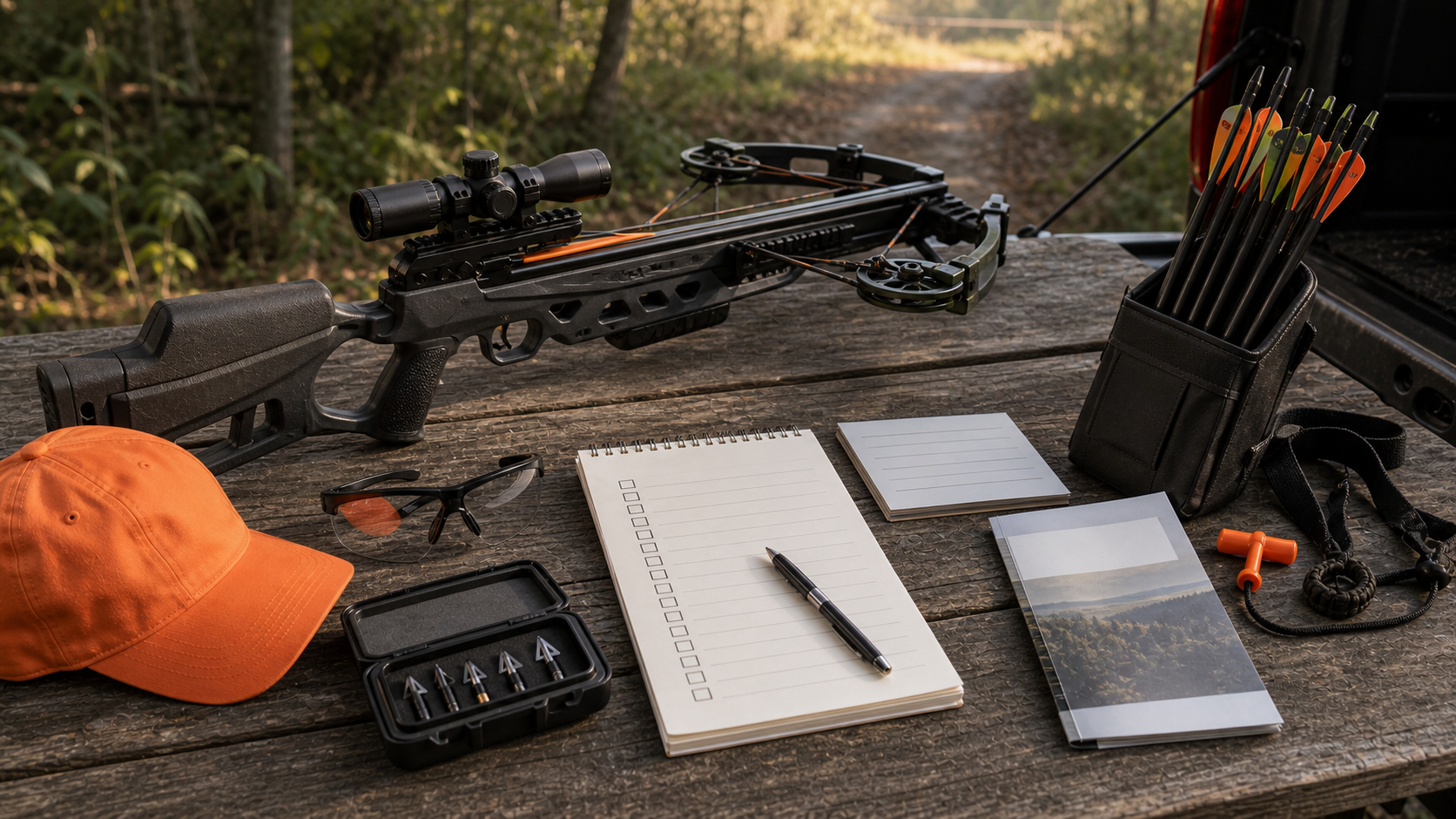
Practice well before deer season so opening day is not your first real test with the hunting setup. Shoot at known distances with a safe target and backstop. Confirm your scope or sight, your bolts, and your broadhead-weight setup before you rely on them in the field.
Confirm Ranges With The Hunting Setup
Practice with the bolts, point weight, and crossbow you plan to hunt with. Point of impact can change when bolt weight, broadhead style, or range changes. Keep notes on where your groups stay consistent instead of relying on the maximum distance printed in marketing material.
Know Your Personal Limit Before Taking A Shot
Your personal effective range is the distance where you can place shots consistently under realistic conditions. It is usually shorter than the distance a crossbow can physically launch a bolt. Decide that limit during practice, not when a deer is in front of you.
Plan Ethical Shot Opportunities
Ethical shot planning means staying inside your demonstrated ability, the crossbow manufacturer’s instructions, and current legal rules. Wait for a clear, legal, high-confidence opportunity with no obstruction and a safe background. If the shot is low-light, rushed, blocked by brush, or outside your practiced limit, pass.
For broader first-season context, pair this page with our deer hunting tips for beginners. The crossbow is only one part of a safe hunt; scouting, access, weather, recovery planning, and restraint all matter too.
Crossbow Deer Hunting Checklist
| Planning Step | What To Confirm | Why It Matters |
|---|---|---|
| Rules | State crossbow, deer, tag, reporting, and orange requirements | Prevents outdated or location-wrong assumptions |
| Manual | Manufacturer setup, cocking, decocking, and bolt requirements | Keeps setup model-specific and safer |
| Bolts | Weight, length, spine, and nock match the manual | Wrong bolts can be unsafe or damage equipment |
| Broadheads | Compatible with setup and legal for the season | Prevents bad assumptions about equipment |
| Practice | Known ranges, safe backstop, actual hunting setup | Builds a real personal shot limit |
| Shot discipline | Clear, legal, high-confidence opportunity only | Supports ethical hunting and safety |
Common Crossbow Deer Hunting Mistakes
The most common mistakes are assuming crossbows are legal without checking rules, buying bolts before reading the manual, practicing with a different setup than the one used for hunting, ignoring decocking instructions, and taking long or obstructed shots beyond practiced ability.
Another mistake is turning equipment confidence into shot confidence. A fast crossbow does not make a poor angle, poor visibility, or uncertain background acceptable. The responsible choice is often to wait.
Related Deer Hunting Guides
Frequently Asked Questions
Are crossbows legal for deer hunting?
It depends on the state, season, and sometimes the hunter or property type. Check your state wildlife agency’s current deer regulations before planning a crossbow hunt.
What bolts should I use for crossbow deer hunting?
Use bolts that match your crossbow manufacturer’s specifications for weight, length, spine, and nock style. There is no single correct bolt for every crossbow.
Can I use any broadhead with a crossbow?
No. Broadhead compatibility depends on your crossbow and current state equipment rules. Check the manufacturer’s guidance and legal requirements before hunting.
How far should I shoot at a deer with a crossbow?
Only as far as you can place shots consistently under realistic conditions with your hunting setup. Decide that personal limit during practice and pass shots outside it.
Should I decock a crossbow by firing it?
Follow your manufacturer’s instructions. Dry-firing can damage a crossbow and can be dangerous, so use the approved decocking method for your model.